

Skin that feels tight after every shower, fine lines that show more by the afternoon, a face that looks tired even after a good night: dryness often shows before any real wrinkle does. Creams help on the surface, but many people wonder whether something taken by mouth can help from the inside. This guide shows what the newer trials measured and how to judge a course fairly.
Hyaluronic acid almost always conjures the same image: an aesthetics clinic, a syringe, instant volumising. That route exists and has its indications — it falls strictly within the domain of medical professionals. But it leaves a quieter, longer-term approach in the shadow: hyaluronic acid taken orally, in a course, to support skin hydration from within. This is precisely the territory — still poorly understood in Morocco — that this guide explores.
Our editorial team regularly receives the same question: “Does hyaluronic acid in capsule form actually do anything, or do you really need injections?” Rather than answer with a slogan, we did the work — reading the clinical studies, understanding the mechanism, and cross-referencing all of it with the reality of skin subjected to Morocco’s sun and dry air. Here is our honest reading.
By Houda Khaldi, Natural Nutrition Editorial Advisor · Published 14 September 2026 · 19-minute read
Contenu de la page
- 1 Key Takeaways
- 2 Hyaluronic Acid: The Hidden Water Reservoir Beneath Your Skin
- 3 Oral Hyaluronic Acid: What the Studies Say
- 4 The True Strength: The Collagen–Hyaluronic Acid–Biotin Synergy
- 5 Hydrating Your Skin Through Diet and Daily Habits
- 6 When an Inside-Out Beauty Course Genuinely Makes Sense
- 7 Making Your Course a Success: The Practical Guide
- 8 Three Readers Share Their Experience
- 9 Hyaluronic acid supplements: what newer trials measured
- 10 Hyaluronic acid capsules, serum, or both?
- 11 How to take a hyaluronic acid supplement and judge it fairly
- 12 Before you start: four points specific to a complete beauty formula
- 13 Frequently Asked Questions About Oral Hyaluronic Acid
- 13.1 Is oral hyaluronic acid genuinely effective?
- 13.2 What is the difference from hyaluronic acid injections?
- 13.3 Why combine hyaluronic acid with collagen and biotin?
- 13.4 How long before the first effects are noticed?
- 13.5 Does oral hyaluronic acid have side effects?
- 13.6 Is one course sufficient, or should you continue?
- 13.7 Can you support your hyaluronic acid through diet alone?
- 13.8 Is a hyaluronic acid supplement only for older skin?
- 13.9 Is it safe to take hyaluronic acid capsules for a long time?
- 13.10 Do hyaluronic acid capsules help with acne marks or oily skin?
- 14 In Summary
Key Takeaways
- Hyaluronic acid is a molecule naturally present in the skin, where it retains water like a sponge: a single molecule can bind a quantity of water far exceeding its own weight. It is what gives young skin its bounce and suppleness.
- Its levels decline with age and under the effect of sunlight. Skin then retains less water, becomes drier, and fine dehydration lines sharpen — a phenomenon that is pronounced under the Moroccan climate.
- Taken orally in a regular course, hyaluronic acid has shown in clinical trials an improvement in skin hydration2 and a reduction in fine lines over twelve weeks1.
- It works in synergy with collagen (the structural framework) and biotin, which contributes to the maintenance of normal skin according to European authorities5, along with zinc and vitamin C.
- Alphavital offers a Beauté Intégrale formula combining hyaluronic acid, collagen, biotin, zinc and vitamin C — designed as an inside-out beauty routine, in a regular course, without injections.

Hyaluronic Acid: The Hidden Water Reservoir Beneath Your Skin
Picture a fresh sea sponge. When soaked with water it is soft, plump, and springs back the moment you press it. Leave it to dry: it turns rigid, brittle, and dull. That is precisely what plays out in our skin, and hyaluronic acid is the orchestrator. This molecule, naturally present in the dermis, possesses an exceptional capacity for water retention. A single molecule can bind a quantity of water hundreds of times its own weight.
This invisible reservoir plays a decisive role. It keeps skin hydrated from within, gives it that characteristic softness of youth, and cushions the micro-aggressions of daily life. Alongside collagen — which forms the structural framework — hyaluronic acid is the water cushion that fills the space between fibres. The two work together: one holds, the other hydrates.
Hyaluronic acid is not a surface product. It is a natural constituent of the skin, a water reservoir the body manufactures itself — and produces less and less of with age.
The problem, as so often, is time. Our natural supply of hyaluronic acid begins to decline from our thirties, and the process accelerates thereafter. Skin then holds onto water less effectively. It looks drier, less plump, and those fine lines known as dehydration wrinkles appear — particularly around the eyes and mouth. This is not an absolute inevitability, but it is a biological reality that no one escapes entirely.
Why the Moroccan Climate Empties the Reservoir Faster
Morocco offers magnificent light, but that light carries a cost for the skin. Ultraviolet radiation is one of the primary factors in the degradation of cutaneous hyaluronic acid, just as it is for collagen. The long, sun-drenched days of Marrakech, Agadir or Ouarzazate stress this water reservoir far more than a temperate, overcast climate.
Add to that the dry air of inland regions, the wind, and the air conditioning that further dehydrates modern interiors. Skin then loses water through evaporation, and the natural reservoir struggles to compensate. This is one reason why so many Moroccans describe skin that feels “tight” and lacking in comfort, especially in summer and in inland cities. Supporting deep hydration makes particularly good sense here.
Injections or Oral Route: Two Logics Not to Confuse
Before going further, let us clarify a point that causes widespread confusion. Injectable hyaluronic acid, administered in a medical setting, is a regulated aesthetic procedure: it fills locally, visibly and immediately, and falls exclusively within the remit of a qualified healthcare professional. This guide does not address that route. The oral route follows an entirely different logic: it is not about filling, but about supporting skin hydration and suppleness from the inside, progressively, over several weeks, through a course of supplementation. Two distinct approaches, two different timeframes — and only the second concerns us here.
Oral Hyaluronic Acid: What the Studies Say
One question invariably arises: can a molecule as large as hyaluronic acid genuinely act after it has been swallowed? Research provides concrete elements of an answer, and this is what deserves close attention — without embellishment.
Skin Hydration: Encouraging Data
This is the best-documented area. Several clinical trials have observed that a daily oral intake of hyaluronic acid over six to twelve weeks is associated with a measurable improvement in skin hydration, particularly in dry skin. A frequently cited study demonstrated that oral hyaluronic acid improved the hydration of dry skin, as described in this clinical study referenced on PubMed2.
The mechanism, as researchers envision it, is more subtle than a simple “swallow and top up the reservoir”. Once ingested, hyaluronic acid is partially broken down by digestion. These fragments, together with the organism stimulated by the intake itself, would help support the production and retention of water in the skin. In other words, the effect operates via a biological signal as much as via a direct supply of material. A second study over twelve weeks observed a reduction in fine lines, detailed in this double-blind, placebo-controlled study available on PubMed1.

Elasticity and Fine Lines: Progressive Support
Beyond hydration, certain studies have examined the appearance of fine lines and skin elasticity. A randomised, double-blind, placebo-controlled trial conducted over twelve weeks reported that oral hyaluronic acid intake was associated with a reduction in fine lines compared with placebo1. A more recent trial on a full-spectrum form also observed an improvement across several surface and suppleness parameters, as reported by this clinical study referenced on PubMed3.
These findings align with what many people describe intuitively after a few weeks of supplementation: skin that appears more “plumped”, more comfortable, especially on dry areas. As always, the magnitude of benefit varies from person to person, and nothing appears in a matter of days.
What Remains to Be Confirmed
Rigour demands stating this clearly. The data on oral hyaluronic acid are encouraging but younger than those on collagen. Protocols vary across studies, the forms used differ, and the magnitude of effects is not identical for everyone. A narrative review on supplements and skin ageing highlights the need for additional data whilst noting favourable signals, as recalled by this narrative review available on PubMed4. Our editorial policy is consistent: we present these topics as promising fields of study, never as definitive certainties.
The True Strength: The Collagen–Hyaluronic Acid–Biotin Synergy
Reducing skin beauty to a single molecule is to miss the essential point. Skin is a system, and its constituents work together. This is where hyaluronic acid reveals its full value: not alone, but as part of a team.
The Core Trio: Framework, Water and Support
Think of a high-quality mattress. It needs a solid spring structure, foam that retains air, and a fabric that holds everything together. Skin works on the same principle. Collagen is the framework, the lattice that provides firmness. Hyaluronic acid is the water cushion filling the space and providing bounce. And nutrients such as biotin, zinc and vitamin C are the craftspeople who maintain the whole structure day in, day out.
This holistic logic is not a marketing argument: it derives from the biology of skin. This is why pairing hyaluronic acid with collagen makes sense. Our team detailed the collagen dimension in a dedicated guide, worth reading as a complement: marine collagen: reviews and results in Morocco.
Collagen holds, hyaluronic acid hydrates, biotin, zinc and vitamin C maintain. It is the full team — not the solo star — that makes for comfortable skin.
Biotin: The Ally of Skin, Hair and Nails
Biotin, sometimes called vitamin B8, is one of those understated nutrients whose role is nonetheless recognised by the relevant authorities. The European health claims register states that biotin contributes to the maintenance of normal skin and participates in normal energy metabolism. This role is recorded in the EFSA health claims register5. This is precisely why it naturally accompanies an inside-out beauty approach, where skin, hair and nails are addressed together. For those whose primary concern is hair health, our team has devoted a comprehensive guide to biotin for hair in Morocco.
Zinc and Vitamin C: The Unsung Workers
Two nutrients complete the team. Zinc contributes to the maintenance of normal skin, and vitamin C — indispensable — contributes to the normal formation of collagen for the normal functioning of the skin, an effect validated by EFSA6. Without vitamin C, the body simply cannot assemble its collagen fibres: the production line seizes. This is why a coherent beauty formula never makes do with a single isolated molecule. Our team has also detailed this pivotal role in its guide on vitamin C, immunity and collagen in Morocco.
Hydrating Your Skin Through Diet and Daily Habits
Before any supplement, there is the water in your glass and the food on your plate. The body supports its hyaluronic acid and hydration from what we provide it, and certain simple reflexes count as much as a supplementation course.
Drink Water and Eat It Too
It sounds obvious, yet it is the first lever. Well-hydrated skin begins with a well-hydrated body. In the Moroccan climate, where heat and wind accelerate water loss, drinking regularly throughout the day is a foundational habit. To that, add “plate water”: cucumber, tomato, watermelon, courgette, fresh herbs, leafy greens. These foods, laden with water and micronutrients, support hydration from within.
Nutrients That Support Skin
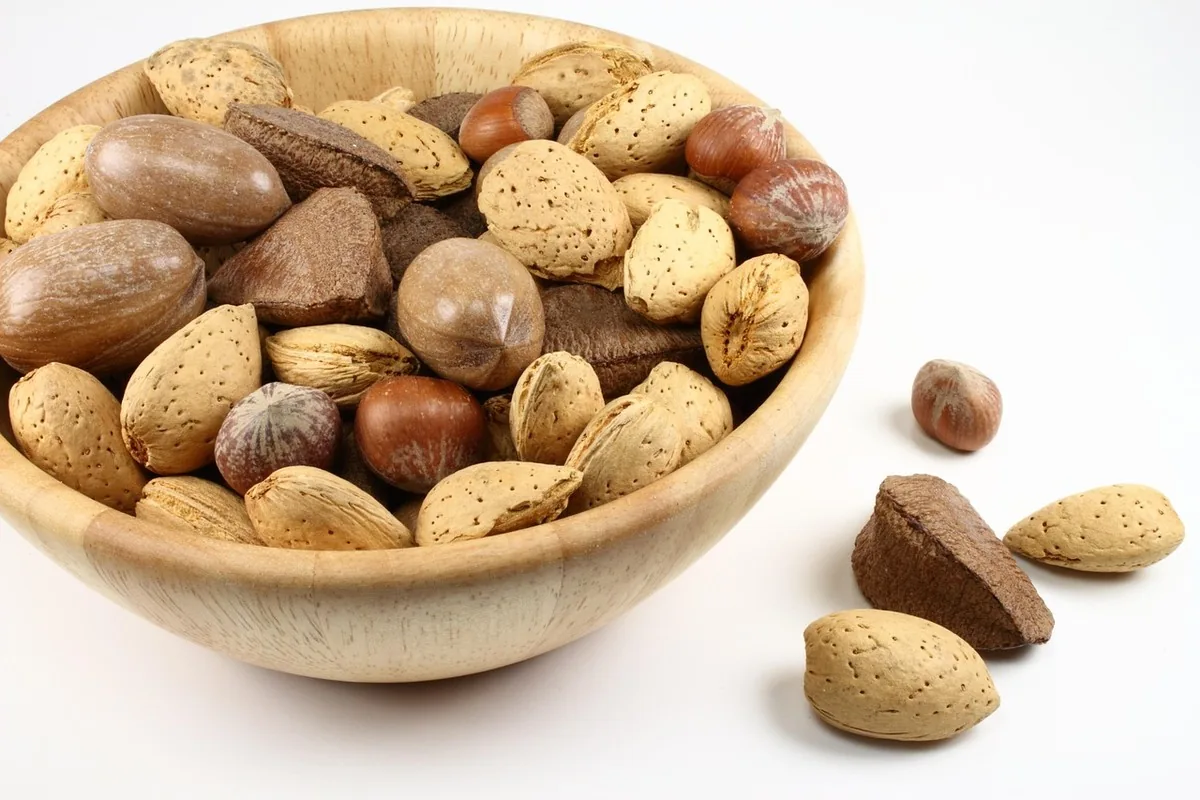
Beyond water, certain nutrients help skin build and protect itself. Vitamin C sources — abundant on Moroccan market stalls: orange, lemon, bell pepper, parsley — support collagen formation. Zinc and biotin are found in eggs, tree nuts and legumes. The beneficial fatty acids in fish, olive oil and almonds participate in the comfort of the skin barrier. A colourful, varied plate is, at its core, a plate that supports skin.
| Category | Examples accessible in Morocco | Skin benefit |
|---|---|---|
| Water-rich foods | Cucumber, watermelon, tomato, courgette | Hydration from within |
| Vitamin C sources | Orange, lemon, bell pepper, parsley | Normal collagen formation |
| Zinc and biotin | Eggs, almonds, legumes | Maintenance of normal skin |
| Beneficial fatty acids | Fish, olive oil, walnuts | Skin barrier comfort |
Aggressors to Limit
Conversely, certain factors accelerate skin dryness and ageing. Unprotected sun exposure is the number-one enemy under the Moroccan sun: it degrades both collagen and hyaluronic acid. Tobacco, excess sugar and inadequate sleep also weigh on skin quality. Limiting these aggressors is protecting existing capital, complementing any external input. An appropriate sunscreen remains, here more than anywhere, the most cost-effective anti-ageing gesture available.

When an Inside-Out Beauty Course Genuinely Makes Sense
Diet first, always. But there are moments when a well-formulated course provides a meaningful boost. Understanding these situations helps choose the right time, without being swayed by excessive promises.
Signals That Invite You to Consider a Course
Several situations recur frequently: skin that loses its bounce and comfort from the thirties onwards, fine dehydration lines becoming more pronounced around the eyes, skin that feels tight after sun exposure or air conditioning, or simply the desire to maintain one’s beauty capital proactively, from within. Inside-out beauty is not reserved for a specific age, but its value naturally grows as internal reserves decline.
The Criteria for a Good Formula (and a Fair Price)
If you decide to take the step, a few criteria make all the difference. First, a synergy logic: hyaluronic acid gains from being paired with collagen and supporting nutrients such as biotin, zinc and vitamin C, rather than taken in isolation. Second, a transparent composition, where you know exactly what you are taking. Third, a logic of regular courses over several weeks, and a price consistent with the formula. Before comparing reviews or prices in Morocco, these are the benchmarks to keep in mind.
The Alphavital Response
Alphavital has designed a formula that brings the essentials together in a single daily gesture: hyaluronic acid for hydration, collagen for the framework, and the trio biotin, zinc and vitamin C to maintain skin, hair and nails. This choice of assembly is not accidental. It directly reflects the biology of skin, which functions as a system, and what research establishes about the complementarity of these actives.
The formula is used in regular courses over several weeks, because it is consistency that instils benefits — never haste. It belongs to our Beauty and Anti-Ageing range, conceived as a coherent whole in service of the skin. For skin and nails specifically, our team also offers guidance in the Skin and Nails category.
A good inside-out beauty course does not stake everything on a single molecule. It brings hyaluronic acid, collagen and supporting nutrients together, and counts on consistency to do the rest.
For those wishing to complement this routine with targeted hair support, our team also offers a Biotin concentrate for hair, skin and nails, which ideally extends an inside-out beauty approach.
Making Your Course a Success: The Practical Guide
A few practical pointers help avoid common mistakes and draw the most from an inside-out beauty course. These details often separate an enthusiastic outcome from a disappointed one.
Dosage and Timing
A beauty course is taken as 1 to 2 capsules a day, with a meal. Regularity matters more than the precise moment. A large glass of water accompanies the dose, which is fitting since hydration is at the heart of the matter. The advantage of a complete formula is that it combines hyaluronic acid, collagen and supporting nutrients in one single gesture, without multiplying products.
How Long Should a Course Last
This is the most important point, and the most poorly understood. An inside-out beauty course is measured in weeks, not days. Allow at minimum eight to twelve weeks of daily intake before assessing early results on skin comfort and hydration. Many then opt for regular maintenance, through courses spaced throughout the year. It is duration, as much as formula quality, that makes the difference. No credible source promises a transformation in a matter of days.
| Common misconception | What it reveals | The right approach |
|---|---|---|
| “Visible results in one week” | Unrealistic expectation | Target 8 to 12 weeks |
| Hyaluronic acid alone | Incomplete approach | Prioritise collagen + nutrient synergy |
| Abandoning the course too early | Premature verdict | See the course through |
| “It replaces injections” | Confusion between logics | Oral route = deep support, not volumising |
| No sun protection | Capital unprotected | Protect skin from the sun |
Precautions to Be Aware Of
Oral hyaluronic acid is generally well tolerated. A few common-sense precautions apply nonetheless. If the formula contains an ingredient of marine origin, those with fish allergies should verify the composition. In cases of pregnancy or breastfeeding, chronic illness or ongoing medication, the advice of a healthcare professional is indispensable before starting. A supplementation course never replaces a balanced diet, good hydration or appropriate sun protection — especially under the Moroccan sun.

The feedback our team receives is worth more than any discourse. Here are three testimonials, shared with the agreement of their authors, faithful to exactly what they wrote — without exaggeration.
At thirty-eight, I could feel my skin becoming drier, especially in summer in Marrakech where the air is scorching. I was afraid of injections; they are not for me. I followed a beauty course for nearly three months. What I gained was skin that pulls far less, more comfortable day to day. Not a magic wand, but a real improvement. — Salma, Marrakech
I wanted something that would act on both skin and hair without stacking three different products. The complete formula won me over for that reason. After two months, my nails are noticeably stronger, and my skin feels more supple. I continue — it has become a habit. — Imane, Rabat
I was sceptical about swallowing hyaluronic acid, convinced it was pointless without injections. A close friend persuaded me to try a regular course. After ten weeks, my facial and hand skin looks less dull, more rested. Not spectacular — progressive — but real. — Karim, Casablanca
These accounts illustrate a simple truth, the same one the studies echo: the most lasting results come from consistency, a thoughtfully synergistic formula and realistic expectations. Have a question before you start? Our team answers directly through the Alphavital contact page.
Hyaluronic acid supplements: what newer trials measured
The earlier studies on oral hyaluronic acid are described above. More trials have been published since, including a larger one with 150 adults, and a review that is less enthusiastic. Here is the full picture, good and less good.
| Study (author, year) | Who, how much, how long | What was found |
|---|---|---|
| Dolečková, 2025 | 150 healthy adults; 60 or 120 mg a day, or placebo; 12 weeks | At 120 mg: better hydration and elasticity, less water loss and shallower wrinkles around the eyes. At 60 mg: similar but smaller effects. No change in pores or skin tone.7 |
| Hsu, 2021 | 40 healthy adults aged 35 to 64; 120 mg a day, or placebo; 12 weeks | Wrinkles, skin water content and elasticity improved versus placebo, with differences seen from week 8.8 |
| Göllner, 2017 | 20 women aged 45 to 60; a daily drink of hyaluronic acid with biotin, vitamin C, copper and zinc; 40 days | Elasticity and hydration rose, roughness and wrinkle depth fell. No placebo group, so a cautious result. No side effects noted.9 |
| Yang, 2025 (meta-analysis) | 40 placebo-controlled trials of supplements for sun-aged skin | Hyaluronic acid showed no significant benefit on sun-ageing measures; collagen did. All supplements studied were safe for up to 24 weeks.10 |
What this does not show. The clearest results concern skin hydration and fine lines over 8 to 12 weeks, in healthy adults. They do not show that hyaluronic acid capsules reverse sun damage: the review that focused on sun-aged skin found no clear benefit from hyaluronic acid alone. Most trials were small, several were run by staff of hyaluronic acid makers, and the forms used were not the same. One trial suggests that the daily amount matters, with clearer effects at the higher dose. That is why the honest promise of an oral course is more comfortable, better-hydrated skin over time, alongside sun protection, not a filler effect.
Hyaluronic acid capsules, serum, or both?
Many people already use a hyaluronic acid serum and wonder whether capsules add anything. The two work in different places, and they can be combined.
| Form | Where it acts | What to expect |
|---|---|---|
| Serum or cream | The outer layers of the skin, where it holds water on the surface | A plumper, more comfortable feel within minutes, which fades if you stop |
| Capsules | From the inside, as part of the diet | Studied for hydration and fine lines over 8 to 12 weeks |
| Both, plus sunscreen | Surface and inside, with protection from the sun | The most complete routine for skin that feels dry and tight |
A useful tip for serums in a dry climate: apply them on slightly damp skin, then seal with a moisturiser. In very dry, hot air, a serum left alone on dry skin has little water to hold on to.
How to take a hyaluronic acid supplement and judge it fairly
Alphavital’s hyaluronic acid comes in the Complete Beauty Pack, which brings five actives together in each capsule: hyaluronic acid, marine collagen, biotin, zinc and vitamin C. The idea is that they work as a team: collagen gives the skin its structure, hyaluronic acid holds water inside it, and vitamin C contributes to normal collagen formation for the normal function of the skin. The advice is one to two capsules a day, with a meal and a large glass of water, over two to three months.
- Day one: take a photo of your face near a window, with a clean face, and note how tight your skin feels after a shower.
- Week 4: the trials measured little at this stage. Keep going, even if you see nothing yet.
- Week 8: the first point where the trials saw a difference in wrinkles and skin water content. Compare with your photo in the same light.
- Week 12: the length of most trials, and the fair moment to decide whether to continue.
What a realistic result looks like. Skin that pulls less after washing. A face that looks less tired by the end of the day. Fine lines around the eyes that look a little softer in your week-12 photo. What a supplement will not do is fill deep folds, lift the face like an injection, or undo years of sun without protection. Keeping your expectations at this level is what lets you decide calmly whether the course is worth continuing.
Before you start: four points specific to a complete beauty formula
Because the pack contains more than hyaluronic acid, a few checks apply that do not appear in studies on hyaluronic acid alone.
- Biotin and blood tests. Biotin can make some lab tests, including thyroid tests, read wrong. Tell the lab and your doctor that you take it before any blood test.
- Zinc from all sources. If you already take zinc or a multivitamin, add up the total. Keep to the amount on each label, and ask a pharmacist if you combine several zinc products.
- Marine collagen comes from fish. People allergic to fish or seafood should not start without advice.
- Vitamin C from all sources. If you also take a separate vitamin C tablet, count it. People with a history of kidney stones should ask a health professional before taking extra vitamin C.
Collagen is the other half of this routine. If you want to understand what it does for skin and hair on its own, read our guide to marine collagen benefits for skin and hair.
Frequently Asked Questions About Oral Hyaluronic Acid
Is oral hyaluronic acid genuinely effective?
Several clinical trials observe an improvement in skin hydration and a reduction in fine lines following a regular oral hyaluronic acid course, particularly in dry skin. The condition is always the same: a course of several weeks, ideally combined with collagen and supporting nutrients. No immediate result should be expected, and effects vary from one person to another.
What is the difference from hyaluronic acid injections?
These are two distinct logics. Injections, administered in a medical setting, fill locally and visibly, and fall strictly within the remit of a healthcare professional. The oral route, by contrast, supports skin hydration and suppleness from the inside, progressively, over several weeks. A supplementation course does not replace an aesthetic procedure: it is a deep-support approach, different in nature and non-medical.
Why combine hyaluronic acid with collagen and biotin?
Because skin functions as a system. Collagen forms the framework, hyaluronic acid provides hydration, and biotin, zinc and vitamin C maintain skin, hair and nails. EFSA recognises notably that biotin contributes to the maintenance of normal skin and that vitamin C contributes to the normal formation of collagen. Synergy therefore makes more sense than a single isolated molecule.
How long before the first effects are noticed?
Allow generally eight to twelve weeks of daily intake before assessing early results on skin comfort and hydration. Benefits are established over time, not in a matter of days. Regularity is the determining factor, ahead of the quantity taken.
Does oral hyaluronic acid have side effects?
It is generally well tolerated. If the formula contains an ingredient of marine origin, those with fish allergies should verify the composition. In cases of pregnancy, breastfeeding, chronic illness or ongoing medication, seek advice from a healthcare professional before beginning a course.
Is one course sufficient, or should you continue?
A first course of eight to twelve weeks allows early effects to be observed. Many then opt for regular maintenance, through courses spaced throughout the year, as the natural hyaluronic acid reserve continues to decline over time. It is a long-term approach rather than a one-off intervention.
Can you support your hyaluronic acid through diet alone?
Diet and good hydration are the foundation: water, water-rich foods, vitamin C sources, zinc and beneficial fatty acids all support skin. But with age, natural reserves decline and dietary intake does not always compensate. An inside-out beauty course can then provide targeted support, as a complement to a balanced plate.
Is a hyaluronic acid supplement only for older skin?
No. One trial included adults from 35 to 64, and the largest one studied healthy adults. A course can suit people in their thirties whose skin feels dry in summer, busy parents with little time for skincare, and older adults alike.
Is it safe to take hyaluronic acid capsules for a long time?
The trials lasted up to 12 weeks, and a review of 40 supplement trials found no safety problems for up to 24 weeks. Data beyond that are limited.
Do hyaluronic acid capsules help with acne marks or oily skin?
The trials did not study acne marks, so no claim can be made. In the largest trial, sebum decreased at the higher daily amount, but pores and skin tone did not change. For acne, see a health professional.
In Summary
Hyaluronic acid is not reducible to the syringe. Taken orally, in a regular course, it supports skin hydration and suppleness from within, with encouraging clinical data on hydration and fine lines. Not in three days, but over several weeks, with patience and consistency. And its true strength emerges as a team player: paired with collagen that holds and the nutrients — biotin, zinc, vitamin C — that maintain.
In Morocco, where sun and dry air dehydrate skin more than most climates, supporting deep hydration is a well-informed act of common sense guided by research. This is the path Alphavital has chosen, with a transparent and complete formula, faithful to the science and honest about its promises. An inside-out beauty routine, unhurried and consistent, without injections — perhaps one of the most simple yet meaningful gestures for preserving your skin’s long-term capital.
About the author. Houda Khaldi is Natural Nutrition Editorial Advisor at Alphavital. She translates scientific research into clear, actionable guidance for everyday Moroccan life.
Disclaimer. The information presented is provided for guidance purposes, based on sourced research (PubMed, EFSA). The Alphavital team does not comprise healthcare professionals. Consult a qualified healthcare professional before any use, in the event of ongoing treatment, pregnancy, breastfeeding, chronic illness or allergy. Food supplements are not a substitute for a varied, balanced diet and a healthy lifestyle.
Sources and References
- Oe M. et al. — Oral hyaluronan relieves wrinkles: double-blind, placebo-controlled trial over 12 weeks. PubMed
- Kawada C. et al. — Ingested hyaluronan moisturizes dry skin. PubMed
- Michelotti A, Cestone E, De Ponti I, et al. Oral intake of a new full-spectrum hyaluronan improves skin profilometry and ageing. Eur J Dermatol. 2021;31(6):798-805. PubMed
- Morgado-Carrasco D, et al. — Oral Supplementation and Systemic Drugs for Skin Aging: narrative review. PubMed
- Health claims register (biotin: maintenance of normal skin; normal energy metabolism). EFSA
- Health claims register (vitamin C, normal collagen formation). EFSA
- Dolečková I, Kušnierik P, Berka V, et al. Oral sodium hyaluronate improves skin hydration, barrier function and signs of aging: a randomized, double-blind, placebo-controlled trial in 150 healthy adults. Sci Rep. 2025;16(1):2941. PubMed 41422283
- Hsu TF, Su ZR, Hsieh YH, et al. Oral Hyaluronan Relieves Wrinkles and Improves Dry Skin: A 12-Week Double-Blinded, Placebo-Controlled Study. Nutrients. 2021;13(7):2220. PubMed 34203487
- Göllner I, Voss W, von Hehn U, Kammerer S. Ingestion of an Oral Hyaluronan Solution Improves Skin Hydration, Wrinkle Reduction, Elasticity, and Skin Roughness: Results of a Clinical Study. J Evid Based Complementary Altern Med. 2017;22(4):816-823. PubMed 29228816
- Yang Q, Li H, Zhang H, et al. Effectiveness of dietary supplements for skin photoaging in healthy adults: a systematic review and meta-analysis of randomized controlled trials. Front Med (Lausanne). 2025;12:1582946. PubMed 40761858
Food supplements do not replace a varied, balanced diet or a healthy lifestyle. The Alphavital team is not made up of healthcare professionals. Consult a qualified healthcare professional before use.