

Everyone has advice for a person who stays thin: eat more, have seconds, add bread. Yet the plate already feels full halfway through, and the scale has not moved in months. Gaining weight is rarely about willpower. It depends on where the extra energy comes from, how it reaches you and what your body is asked to do with it. This guide shows what the studies measured and gives you a plan, week by week.
There are two body types that society comments on without embarrassment: the one deemed “too much” and the one deemed “not enough.” The latter, however, remains largely absent from nutrition conversations. People are endlessly told how to eat less; rarely is anyone told how to eat more, better, and in a sustainable way. For a constitutionally lean person, gaining three or four kilograms can require just as structured an effort as a weight-loss programme for someone else.
In Morocco, this need is very real and largely unmet. Young adults who want to fill out their frame, athletes who have plateaued in terms of mass, people emerging from a period of fatigue or suppressed appetite, teenagers in the middle of a growth spurt whose parents are worried — all run into the same wall: a lack of reliable information. Our team receives these questions every week. How do you gain weight quickly and naturally when you are underweight? Should you force yourself on calories? How do you revive a dormant appetite? And what are natural supplements actually worth? This article answers these questions with cited sources and one simple principle: promise nothing that science does not support. For the other side of the scales, you can also read our guide to natural weight loss and metabolism.
By Houda Khaldi, Editorial Nutrition Advisor · Published 17 June 2026 · 19 min read
Contenu de la page
- 1 Key takeaways
- 2 Being “underweight”: far more than an appearance issue
- 3 The fast metabolism: understanding the obstacle
- 4 A fragile appetite: the most underestimated obstacle
- 5 The physiological principle: the controlled caloric surplus
- 6 Macros: protein, carbohydrates and fats in service of mass
- 7 Muscle rather than fat: the role of effort
- 8 Natural supports: what science allows us to say
- 9 Alphavital’s Weight Gain & Growth hub
- 10 A concrete daily plan
- 11 The mistakes that waste time
- 12 Three readers share their experiences
- 13 Muscle-Building Science: Five Evidence-Based Principles the Research Agrees On
- 14 Gaining Weight in Morocco: Cultural and Seasonal Factors
- 15 When to Consult a Healthcare Professional
- 16 What the weight-gain studies actually measured
- 17 Why a drink is the easiest extra meal for a small appetite
- 18 How to take Mass Plus and maca so they help, not fill you up
- 19 Your 8-week weight-gain plan
- 20 Frequently asked questions about weight gain
- 20.1 How do you gain weight quickly and naturally when you are underweight?
- 20.2 Why am I not gaining weight despite everything I eat?
- 20.3 Do you need to take protein to gain weight?
- 20.4 Does maca help with weight gain?
- 20.5 How do you restore appetite when you have no desire to eat?
- 20.6 How long before seeing results from a weight-gain approach?
- 20.7 How much weight can I gain in a month?
- 20.8 Does creatine make you gain fat or just water?
- 20.9 When should I take Mass Plus: before or after training?
- 20.10 Can I take maca and Mass Plus together?
- 21 In summary
Key takeaways
- Being underweight is not merely a question of aesthetics: insufficient body mass can bring fatigue, fragility and slower recovery. Regaining weight in a healthy way is a legitimate goal.
- Weight gain rests on a clear physiological principle: a moderate regular caloric surplus combined with an adequate intake of protein and a resistance-training programme, to favour muscle rather than fat alone.
- A fast metabolism and a fragile appetite are the two most common obstacles: they are overcome with denser, more frequent and more appealing meals — not by force.
- Certain natural supplements — such as maca, the Andean root — are studied for their role in energy, mood and appetite: useful levers when the desire to eat is lacking.
- Alphavital offers a Weight Gain & Growth hub with clean, traceable formulas: a pure maca at 300 mg and a growth and mass formula (L-Arginine, creatine, calcium, proteins), to be used within the framework of an adequate diet.

Being “underweight”: far more than an appearance issue
Let us set the scene first, because this subject is often treated too lightly. A person described as underweight is generally someone whose body mass falls below reference benchmarks without that being the result of illness. This is called constitutional leanness: a tendency, sometimes familial, in which the body burns quickly and stores little. It is neither a fatality nor a flaw — it is a starting point to work with.
But the stakes are not purely cosmetic. Insufficient muscle mass can affect energy levels, recovery after exertion and everyday comfort. Public health bodies remind us that a weight that is too low deserves to be taken just as seriously as excess weight, as detailed in the World Health Organization’s fact sheet on malnutrition and undernutrition1. Before taking any action, one golden rule applies: recent, rapid or unexplained weight loss should always prompt a visit to a healthcare professional, as it may signal something other than a simply fast metabolism.
Gaining weight when you are underweight is not an aesthetic whim. For many people, it is a quest for energy, strength and comfort.
This distinction matters, because it shapes everything that follows. The goal is not to “get bigger” in some vague sense: it is to rebuild quality mass in which muscle plays its part, in a body that feels better. That is precisely the underlying logic — not the quick fix — that guides Alphavital’s editorial approach across its entire Energy & Vitality range.
The fast metabolism: understanding the obstacle
If you eat “normally” without gaining a gram, you are already familiar with the culprit: metabolism. It is the set of reactions that convert the energy in food into usable energy — while burning some of it at rest. In certain people, this engine runs faster: higher resting energy expenditure, spontaneous fidgeting, marked thermogenesis. The result: calories vanish.
Resting energy expenditure, which accounts for the largest share of calories burned each day, varies from person to person depending on muscle mass, age, sex and genetics. This variability is well documented in physiology research, as shown in this reference study on resting energy expenditure indexed on PubMed2. On top of that, non-exercise activity thermogenesis — moving, fidgeting, simply not staying still — can on its own create a substantial gap between two people eating identical amounts.
The good news: a fast metabolism is not a closed door. It is simply an equation to rebalance. If the body spends a great deal, the answer is to provide it, consistently and without sudden spikes, with a little more than it consumes. That is the entire principle of the controlled caloric surplus, which we detail below.

A fragile appetite: the most underestimated obstacle
It sounds simple: just “eat more.” In reality, the number-one obstacle is not willpower — it is appetite. When you are naturally lean, satiety arrives quickly, the stomach settles at small volumes, and the idea of having second helpings becomes an effort. Forcing it does not work; it creates aversion. The key is to work on appetite intelligently, not to bully it.
Several factors suppress appetite: stress, poor sleep, low mood, meals spaced too far apart, or the habit of filling the stomach with high-volume but low-calorie foods. Conversely, certain levers awaken it: regular meals, gentle physical activity that opens up hunger, well-presented dishes and a more settled general state. Appetite is not simply a digestive signal — it also reflects overall energy and mood.
You do not regain weight by forcing yourself. You get there by giving the body back its desire to eat, meal by meal.
This is precisely where certain natural supports come into play. Plants studied for energy and wellbeing, such as Andean maca, are valued for their role in supporting appetite and drive — two conditions often necessary when weight tends to be lost rather than gained. They never replace the meal; they help you look forward to it.
The physiological principle: the controlled caloric surplus
Here is the heart of the matter, and it fits in one sentence: to gain weight, the body must be supplied with a little more energy than it expends, on a regular basis. Think of it like a bank account: you do not build savings by spending everything you earn. The caloric surplus is the inescapable condition of any weight gain, and no plant or supplement can substitute for it.
But “surplus” does not mean anarchic excess. An overly aggressive surplus tends to favour fat storage and disrupts digestive comfort. A moderate, consistent surplus — on the order of a few hundred additional calories per day — allows for gradual, higher-quality weight gain in which muscle takes its share. Regularity, once again, matters more than intensity.
How many extra calories?
There is no universal figure, since everything depends on metabolism, activity level and starting point. In practice, a moderate, sustained surplus over several weeks — tracked via body weight and waist measurement — is far more valuable than a few days of overfeeding. The idea is to add energy without blunting the appetite for the next meal: density is the goal, not revulsion. Regular monitoring of progress, without obsessing over the scale to the gram, is enough to make adjustments.
Density without fullness: the key strategy
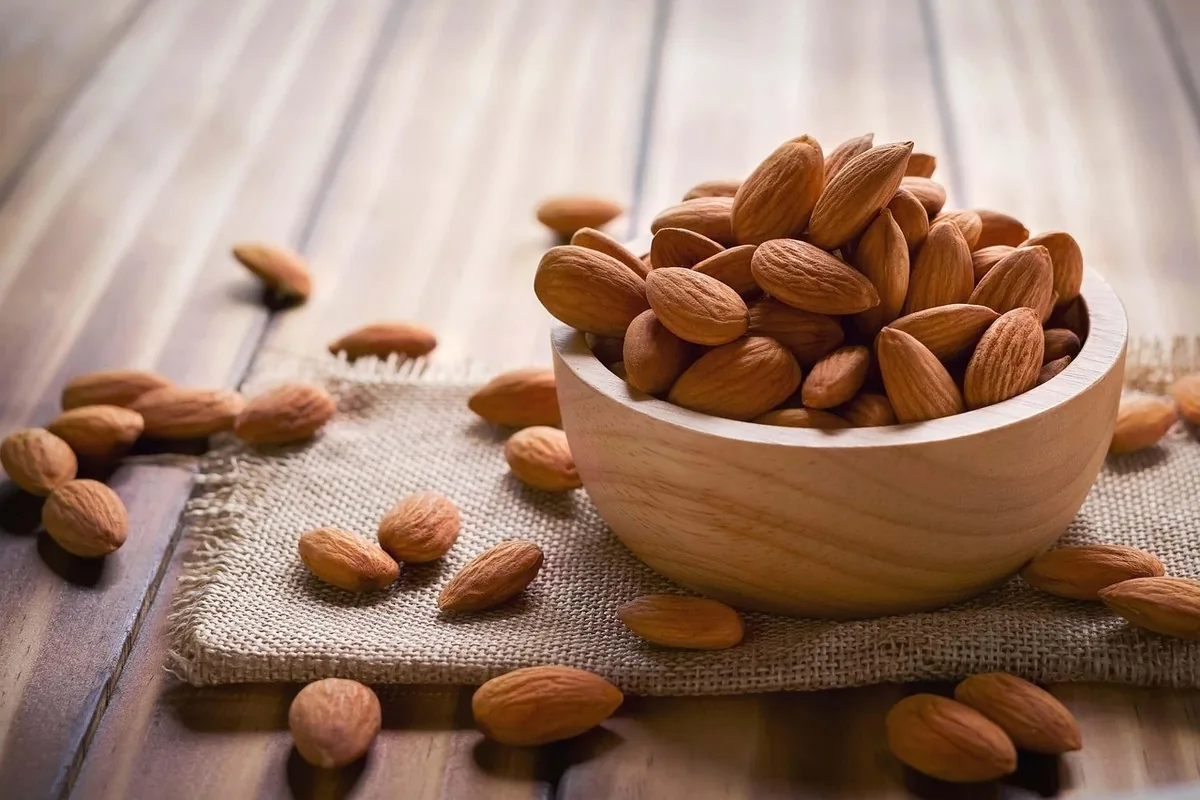
When the stomach is small, volume becomes the enemy. The solution is to choose energy-dense foods with a low volume: dried fruits and nuts, quality oils, avocado, pulses, whole-grain starches, full-fat dairy products, nut butters. A drizzle of olive oil over a dish, a handful of almonds as a snack, a spoonful of almond butter in a bowl: these are extra calories that do not “fill you up.” That is the difference between a large, poorly nourishing salad and a dense plate — twice as caloric for a comparable volume.
Macros: protein, carbohydrates and fats in service of mass
The caloric surplus answers the question “how much.” Macronutrients answer the question “from what.” And that is where the quality of weight gain is decided: gaining muscle rather than fat alone depends largely on the balance between protein, carbohydrates and fats.
Protein: the building block of muscle
If one nutrient deserves attention above all others, it is protein. Proteins supply the amino acids used to build and repair muscle. For someone seeking to gain mass through training, research-based recommendations in sports physiology place protein needs well above sedentary levels, as recalled in this full-text review on protein requirements and muscle mass on PubMed Central3. Animal sources (eggs, meats, fish, dairy) or plant-based ones (pulses, soya, grain-legume combinations) all work, provided intake is spread throughout the day.
When appetite limits solid intake, concentrated protein sources are invaluable. This is one of the advantages of a dedicated mass formula, which delivers quality protein in low volume — particularly useful when eating “more meat” becomes an effort.
Carbohydrates: the fuel that spares muscle
Often demonised in weight-loss regimens, carbohydrates become allies here. They supply immediate energy, refill muscle glycogen stores and, in doing so, “spare” proteins — which can then be used to build rather than burn. Whole-grain starches, rice, pasta, bread, potatoes, fruit: dense carbohydrates are welcome in a weight-gain approach, especially around physical exercise.
Fats: the most energy-dense macro
At roughly nine calories per gram, fats are the most energy-concentrated macronutrient — ideal for adding density without inflating meal volume. The focus is on healthy fats — olive oil, nuts, avocado, oily fish — which also supply essential fatty acids. A spoonful of oil here, a handful of walnuts there: fats are the simplest lever for adding calories gently.
| Macro | Role in mass gain | Dense sources |
|---|---|---|
| Protein | Build and repair muscle | Eggs, meats, fish, dairy, pulses |
| Carbohydrates | Energy, muscle refuelling, protein sparing | Rice, pasta, wholegrain bread, potatoes, fruit |
| Fats | Most energy-dense macro, low volume | Olive oil, nuts, avocado, oily fish |
Energy balance decides “how much.” Macros decide “from what.” And it is the “from what” that separates quality mass gain from mere fat gain.
Muscle rather than fat: the role of effort
You can gain weight without exercising: it will mostly be fat. To direct the gain towards muscle, a stimulus is required — resistance work. Lifting loads, progressing gradually, engaging major muscle groups: that is the signal that tells the body to use the surplus to build lean tissue rather than to store it.
There is no need to aim for endless sessions. A few well-structured, progressive resistance-training sessions per week are enough to trigger the process. The frequent mistake among lean people is to multiply endurance cardio, which increases energy expenditure without building mass. The priority here is strength training and recovery: it is at rest, not during exercise, that muscle is built.
Recovery deserves a special mention. Sleep in particular is a quiet pillar of muscle building: it is during the night that the body repairs and constructs. Insufficient sleep undermines the effort, suppresses appetite and disrupts overall balance. On this topic, our team has detailed the natural levers for rest in its guide to stress, sleep and natural serenity.
Natural supports: what science allows us to say
No supplement “makes you gain weight” on its own. Let us state this plainly, because that is the boundary separating an honest message from a hollow promise. That said, certain natural supports act on levers that are useful to the process: appetite, energy, protein intake, and the foundations of growth in young people. Here, in plain language, is what the research allows us to say.
Maca: appetite, energy and drive
Maca (Lepidium meyenii) is an Andean root — a food dense in carbohydrates and nutrients, traditionally consumed for endurance and vitality. Its interest in a weight-gain approach comes from two simple mechanisms: it is first a nourishing food which, when incorporated into adequate meals, provides quality calories; it is also a support for energy and mood, which helps to restore appetite and drive. Several clinical trials are synthesised in this reference review on Lepidium meyenii indexed on PubMed4. Maca accompanies the approach; it does not replace it.
L-Arginine: an amino acid studied for growth
L-Arginine is an amino acid involved in numerous processes in the body, including the physiological secretion of growth hormone — particularly active during childhood and adolescence. It is one of the core actives in growth formulas. Its profile and nutritional role are described in this L-Arginine entry on NCBI Bookshelf (NIH)5. As always, supplying an amino acid fits within an overall nutritional framework — it supports a foundation; it does not produce an isolated effect.
Creatine: the documented ally of lean mass
Creatine is one of the most thoroughly studied supplements in the world for supporting lean muscle mass and performance when combined with resistance training. Its scientific robustness is summarised in this International Society of Sports Nutrition position stand on creatine, full text on PubMed Central6. Combined with protein and exercise, it helps direct weight gain towards muscle — making it a logical active in a formula designed for mass and growth.
Calcium and vitamins D and K: the bone foundation
A sturdier frame also relies on strong bones. Calcium is the “building block” of bone tissue, and its utilisation depends on cofactors such as vitamins D and K, which support its absorption and proper deposition. This synergy is especially relevant during growth, the period in which bone structure is being built. The recognised role of these nutrients is framed by the opinions of the European Food Safety Authority (EFSA) on health claims7.
Good natural supports do not force the body. They nourish a foundation: appetite, energy, muscle, bone.
Alphavital’s Weight Gain & Growth hub
Diet and training first, always. But when a natural support makes sense, you still need a serious formula. That is precisely the logic that guided our team when it brought together, in a single universe, the components of a weight-gain and growth approach.
For growth and mass: Mass Plus
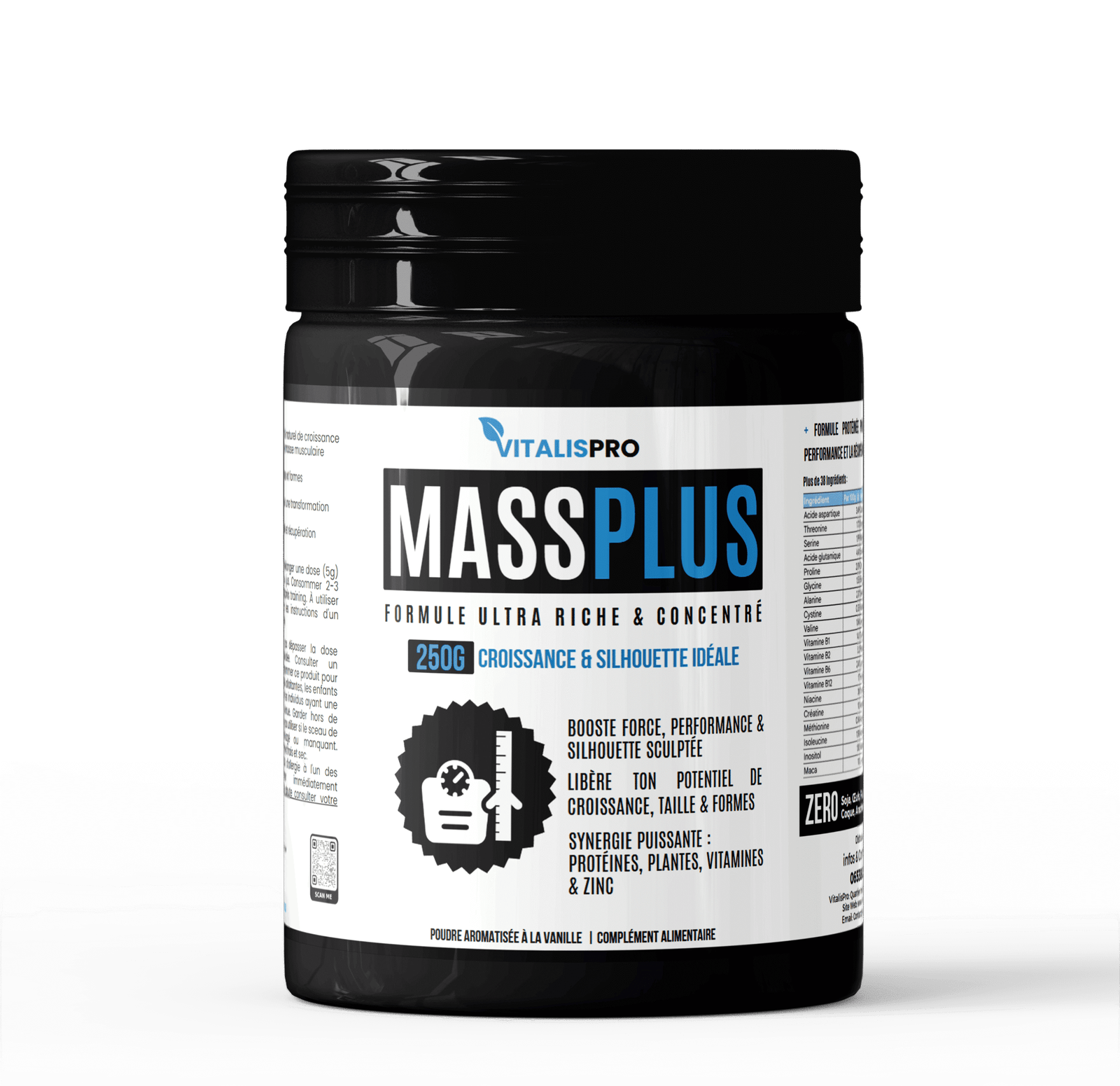
Alphavital offers Mass Plus, a formula designed to support growth and the building of lean muscle mass, alongside an adequate diet and appropriate physical activity. It combines actives with complementary roles: L-Arginine, an amino acid studied for growth; creatine, the documented ally of lean mass during training; calcium and vitamins for the bone foundation; and a supply of quality proteins, invaluable when appetite limits solid portions. The goal is not to replace meals, but to fill intelligently — in low volume — what a small appetite struggles to provide.
This formula is aimed in particular at young people during growth phases, at athletes seeking to build mass, and more broadly at those whose frame remains lean despite adequate nutrition. It fits within a holistic approach: dense nutrition, strength training, recovery and targeted support. A question before you start? Our team responds directly via the Alphavital contact page.
For appetite and energy: maca
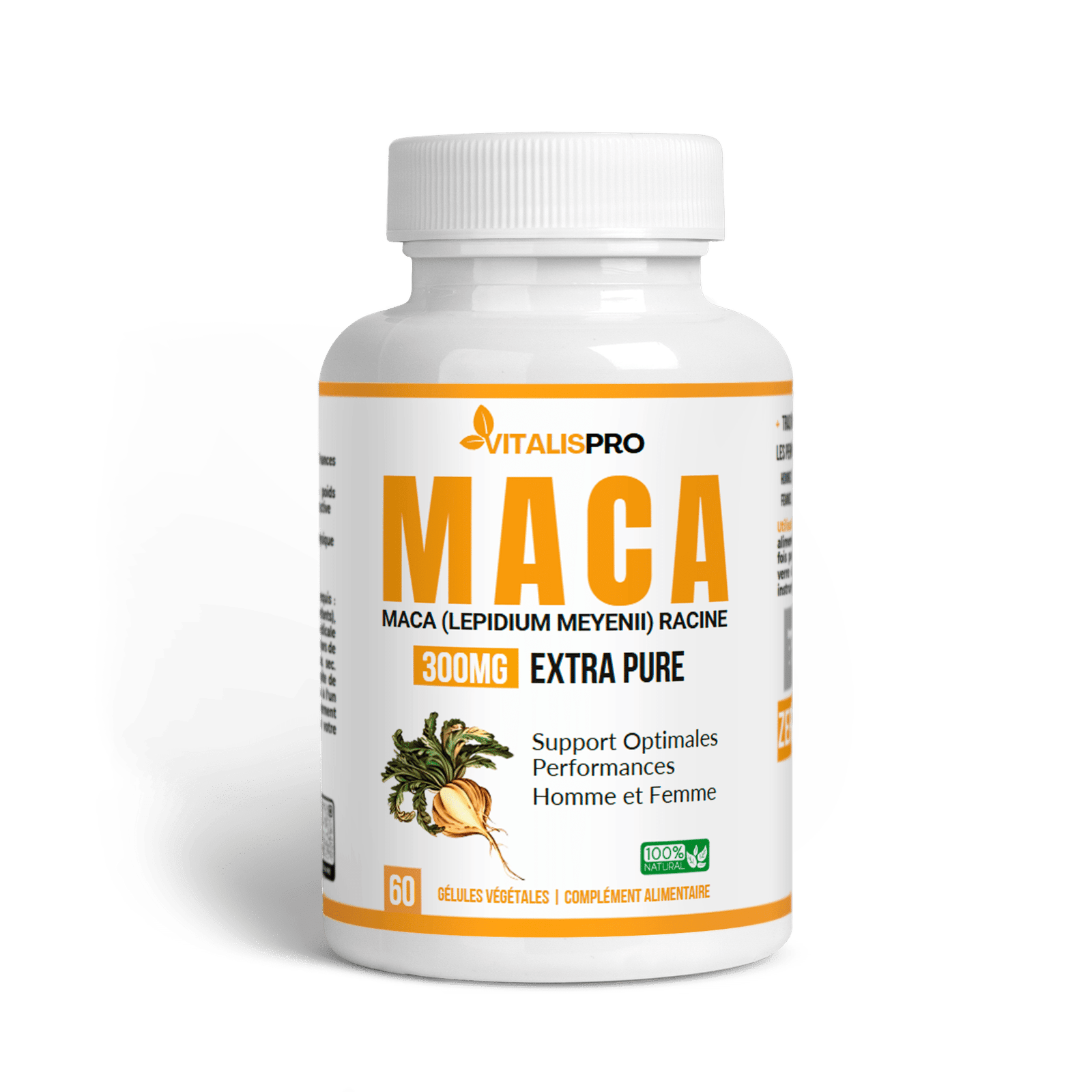
Before mass comes the desire to eat. For those whose appetite is the primary barrier, Alphavital maca — a pure root at 300 mg of Lepidium meyenii per vegetable capsule — offers a clean entry point: support for energy, mood and appetite, in a traceable formula free from overstatement. It is taken as 2 to 4 capsules a day with meals, over several weeks, alongside adequate nutrition.
Maca and Mass Plus are not competing products: they illuminate two complementary stages of the same journey. The first rekindles the desire; the second nourishes the build. Together, they form the backbone of the Weight Gain & Growth hub — designed as a pathway rather than a simple product list.

A concrete daily plan
Theory is only valuable when it translates into action. Here, for guidance, is how a weight-gain day can be organised, respecting one principle: eat more often rather than more heavily, to protect a fragile appetite.
- Dense breakfast: a protein source (eggs, full-fat dairy), starches (wholegrain bread, oats), a fat (nut butter), a piece of fruit. Start the day without skipping this first refuel.
- Mid-morning snack: a handful of nuts, dried fruit, a full-fat yoghurt. Small in volume, rich in energy.
- Complete lunch: proteins, whole-grain starches, vegetables, a drizzle of good oil. Do not neglect the carbohydrate portion — it is often overlooked.
- Afternoon snack: a protein-based snack, ideally timed around a resistance-training session.
- Regular dinner: following the same structure as lunch, without restricting starches in the evening.
- Before bed: a small protein snack can support overnight recovery — the window during which muscle is built.
This framework is not rigid: it adapts to each person’s rhythm. During Ramadan, for example, when schedules are inverted, the same logic applies by concentrating dense, well-spaced meals between iftar and suhoor, with careful hydration. The goal remains the same: a regular surplus, adequate protein, and an appetite that is nurtured rather than forced.
Eat more often rather than more heavily: the golden rule when the stomach fills up quickly.
The mistakes that waste time
Many approaches fail not from lack of effort, but from an excess of poor strategies. Here are the pitfalls our team encounters most often.
- Bingeing on ultra-processed foods: they may move the scale upward, but mostly as fat, and they disrupt digestive comfort. The quality of calories matters as much as the quantity.
- Neglecting protein: without adequate protein, the surplus is stored as fat rather than building muscle. This is the most costly mistake.
- Stacking up endurance cardio: it increases energy expenditure without building mass. Strength training is the priority.
- Wanting everything at once: healthy weight gain is gradual. Drastic transformations come at the cost of discomfort and unstable results.
- Forgetting sleep and recovery: muscle is built at rest. Poor sleep undermines everything else.
- Expecting a quick fix from a supplement: no product replaces the plate. Natural supports accompany an approach — they do not create one from nothing.
The feedback our team receives is worth more than any discourse. Here are three testimonials, shared with their authors’ consent.
I have always been very lean — I ate a lot without gaining anything. I realised I was short on protein and regularity. By restructuring my meals and adding the right support, I gained a few kilograms over two months without forcing myself. — Mehdi, Casablanca
My appetite had disappeared after a period of fatigue. I started with maca in the morning and denser snacks. Gradually, the desire to eat came back, and the rest followed. — Khadija, Fes
My son, in the middle of a growth phase, remained frail despite eating well. With guidance from our doctor and a support formula, he regained energy and a sturdier frame. — Nadia, Rabat
These stories illustrate a simple truth: the most lasting results come from combining nutrition, training, rest and, where appropriate, a well-chosen support.
Muscle-Building Science: Five Evidence-Based Principles the Research Agrees On
Gaining weight on the scale is achievable for almost anyone with enough patience and the right approach. But gaining functional mass — muscle rather than fat — requires understanding a handful of mechanisms that exercise physiology has studied extensively. Here are five principles backed by a substantial body of peer-reviewed literature.
1. Mechanical Overload Is Non-Negotiable
Muscle grows in response to a physical demand that exceeds what it is accustomed to. This is the principle of progressive overload: you must gradually ask more of the muscle — more weight, more repetitions, less rest — for it to adapt and grow. Two to four resistance-training sessions per week, separated by adequate recovery, form the structural backbone of any lean-mass programme. Without that stimulus, additional calories convert overwhelmingly to fat rather than muscle.
2. Protein Timing Matters — But Not as Much as Total Intake
A popular myth holds that consuming protein within the first thirty minutes post-workout is critical. The evidence tells a more nuanced story. While distributing protein intake across meals (every three to four hours) does appear to optimise muscle protein synthesis, total daily protein intake matters more than precise timing. For underweight individuals aiming to gain, a target of 1.6–2.2 g of protein per kilogram of body weight per day is well-supported by the scientific literature on resistance exercise and muscle hypertrophy.
3. Sleep Is When Muscle Is Built
Growth hormone — one of the primary anabolic signals that drives muscle repair and growth — is secreted predominantly during the deepest stages of sleep. Chronic sleep restriction (less than seven hours per night) measurably blunts recovery, reduces lean-mass gains, and increases the proportion of any caloric surplus stored as fat. For hard gainers specifically, prioritising eight to nine hours of quality sleep is as important as any supplement or training protocol.
4. The Caloric Window Is Narrow
The body can only synthesise a limited amount of new muscle tissue per day, regardless of how many excess calories are consumed. Research suggests that gains of 0.2–0.5 kg of lean mass per week are at the upper limit of what is physiologically achievable for natural athletes. Attempting to accelerate beyond that ceiling primarily generates fat. This is why a moderate surplus of 300–500 kcal above your total daily energy expenditure is consistently recommended: enough to fuel adaptation, not so much as to produce unwanted fat gain.
5. Consistency Beats Intensity
The training literature is remarkably consistent on one point: adherence over time outperforms any specific protocol. A moderate training plan followed for twelve months produces superior results to an intensive programme abandoned after six weeks. For underweight people who may lack the baseline energy or appetite to sustain high-intensity approaches, building habits that are sustainable in the long run — moderate sessions, regular meals, consistent sleep — is the most evidence-based strategy available.
Gaining Weight in Morocco: Cultural and Seasonal Factors
The Moroccan context adds specific dimensions to the challenge of gaining weight that rarely appear in international nutrition literature. Understanding them helps calibrate a realistic approach.
Ramadan. For many Moroccan families, the holy month involves a profound restructuring of mealtimes, sleep patterns, and physical activity. For people with a lean constitution, this disruption can result in measurable weight loss: one large daily meal (Iftar) followed by a lighter one (Suhoor) is structurally different from the multiple-small-meals strategy that is optimal for lean-mass gain. If you are underweight and concerned about maintaining or gaining mass during Ramadan, the priorities shift: maximise protein at Iftar, include a high-protein Suhoor (Greek yogurt, eggs, legumes), and reduce high-intensity exercise during fasting hours.
The social dimension of food. In Moroccan family culture, meals are a central social ritual. Being “too thin” often carries a social weight — comments from relatives, pressure to “eat more,” unsolicited advice. Recognising that this is a physiological challenge, not a question of effort or willpower, is the first psychological step. Eating more is not simply a matter of appetite: for people with a lean constitution, the hunger signal is genuinely weaker, and building meals around caloric density (adding olive oil, almond butter, tahini, avocado) is a more practical strategy than forcing larger portions.
Local nutrition sources. Morocco offers excellent natural resources for lean-mass nutrition: beldi eggs (high-quality protein and fats), sardines (protein and omega-3), dried figs and dates (caloric density with micronutrients), khobz bread with olive oil (carbohydrates and healthy fats), and an abundance of legumes — lentils, chickpeas, and split peas — that combine protein with complex carbohydrates. A culturally attuned nutrition plan integrates these sources rather than ignoring them in favour of supplements. For broader context on the energy and vitality dimension of weight gain, our guide to maca, energy and weight gain explores one of the most relevant natural supports.
These context-specific elements do not change the fundamental biology of lean-mass gain — but they help shape a plan that is both scientifically grounded and practically applicable in the Moroccan everyday.
When to Consult a Healthcare Professional
This article addresses the situation of people who are constitutionally lean: fast metabolism, modest appetite, difficulty building mass despite regular eating. It does not apply to situations of rapid, unexplained weight loss, which always warrant a medical consultation to rule out underlying causes (thyroid dysfunction, digestive malabsorption, inflammatory conditions, and others).
The following situations require prompt professional evaluation — they fall entirely outside the scope of a nutritional support approach:
- Loss of more than 5 % of body weight over three to six months without dietary change.
- Persistent fatigue unrelated to sleep debt, with no obvious cause. (For more on natural energy support, see our guide to fatigue, anaemia and natural energy.)
- Digestive symptoms (chronic bloating, diarrhoea, abdominal pain) that could suggest malabsorption.
- Appetite loss combined with changes in mood or prolonged stress. (Our article on stress and sleep addresses the link between mental load and appetite regulation.)
- BMI below 17.5 in adults, which may indicate a medical situation requiring specialist follow-up.
A qualified healthcare professional can perform a complete assessment, rule out underlying causes, and advise on a safe and adapted protocol. Nutritional support — however well designed — is complementary to, not a substitute for, professional medical evaluation when it is warranted.
What the weight-gain studies actually measured
Most advice on how to gain weight is repeated without its source. Here are five human studies that looked at the questions thin people ask most: why some bodies resist weight gain, how to get more food in, and how to make sure the gain is muscle, not only fat.
| Study (author, year) | Who, how much, how long | What was found |
|---|---|---|
| Levine, 1999 | 16 adults of normal weight; 1,000 extra calories a day; 8 weeks | Fat gain varied about tenfold between people. Those who moved more without noticing, through standing and fidgeting, stored the least.8 |
| DiMeglio, 2000 | 15 adults; the same extra calories as a sweet drink or as a solid snack; 4 weeks each | With the snack, people ate less at meals. With the drink, they did not, and body weight went up.9 |
| Bray, 2012 | 25 adults aged 18 to 35; about 950 extra calories a day, with low, normal or high protein; 8 weeks | The low-protein group gained about half the weight and no lean mass. The other two groups gained about 3 kg of lean mass.10 |
| Helms, 2023 | 17 trained adults lifting 3 days a week; no surplus, a small surplus or a large one; 8 weeks | The larger surplus mainly added more fat under the skin. Muscle size did not clearly differ, though bench press strength rose a little more.11 |
| Delpino, 2022 (meta-analysis) | 35 trials, 1,192 adults; creatine compared with placebo | With strength training, creatine added about 1.1 kg of lean mass. Without exercise, it made no difference.12 |
What this does not show. None of these studies recruited people who were underweight, so they explain the mechanisms rather than promise a result. The overfeeding trials ran in research units where every meal was weighed, which is far stricter than daily life. The drink study used a sugary soft drink; the lesson is that liquid calories slip past appetite, not that soda is a good idea. In the creatine analysis, the gain in lean mass was clear in men but smaller and uncertain in women, so expectations should stay modest. Finally, no study here tested maca or Mass Plus itself.
Why a drink is the easiest extra meal for a small appetite
The drink study points to the simplest change for anyone who fills up fast: put part of the extra energy in a glass. A drink does not trigger the same “I am full” signal as a plate, so the next meal is not pushed away. Choose drinks that also bring protein and good fats:
- Milk blended with avocado and dates, the avocado juice sold in many Moroccan juice bars, made at home with a few almonds added.
- Lben or a drinking yoghurt with a spoon of amlou or peanut butter stirred in.
- Mass Plus in milk rather than water, which adds the energy and protein of the milk to the serving.
Drink these between meals, not just before them. Keep sugary sodas out of the plan: they add weight, but none of the protein your muscles need.
How to take Mass Plus and maca so they help, not fill you up
Alphavital’s Mass Plus growth and mass powder combines protein, creatine and L-arginine with zinc, vitamins and plants. The serving is 15 g a day, mixed in water or milk, ideally right after training. Creatine is the part with the strongest evidence: at 3 g a day it increases physical performance during repeated short, intense efforts, a role recognised by EFSA. That extra strength in each session is what then pushes muscle to grow, as long as you train. One 250 g tub lasts about two weeks, and a full programme runs two to three months.
Alphavital Maca goes with meals. Start with 2 capsules, one at breakfast and one at lunch, and move up to 4 after the first week if your stomach is comfortable. The aim is simple: make sitting down to eat feel easier, meal after meal.
Your 8-week weight-gain plan
- Before you start. Weigh yourself three mornings in a row, after the toilet and before breakfast, and write down the average. Measure your waist and your relaxed upper arm with a tape. Daily weight jumps up and down; the weekly average is what counts.
- Weeks 1 and 2. Add one drink from the list above between lunch and dinner, and start maca with meals. Change nothing else yet, so you can see what each step does.
- Week 3. Start strength training three days a week, like the lifters in the surplus study. Take your Mass Plus serving after each session, and at the same time of day on rest days.
- Week 4 check. Compare your weekly average with the first one. If it has not moved for two weeks, add a second drink or a dense snack. If your waist is growing much faster than your arms while your lifts stay the same, reduce the extras a little, as the larger surplus in the Helms study mostly added fat.
- Weeks 5 to 8. Keep the routine and add a little weight to your lifts each week. A quick rise on the scale in the first weeks of creatine is partly water stored in the muscles, which is normal.
- After week 8. Take stock with your three measures. Most people continue to the end of the two-to-three-month programme, then keep the habits that worked.
One precaution the plan needs: people with kidney disease should not take creatine without medical advice. If you take regular medicine, show the label to your pharmacist first.
Frequently asked questions about weight gain
How do you gain weight quickly and naturally when you are underweight?
The foundation is a moderate, regular caloric surplus combined with adequate protein intake and a resistance-training programme. Concretely: eat more often rather than more heavily, add density with energy-rich, low-volume foods (nuts, oils, whole-grain starches) and prioritise sleep. A natural support can accompany this approach — it can never replace the plate.
Why am I not gaining weight despite everything I eat?
Most often, a fast metabolism and an appetite that fills up quickly are the culprits: high energy expenditure combined with low-calorie, high-volume foods. The solution is to increase the energy density of meals and their frequency. If weight loss is recent or unexplained, consult a healthcare professional, as other causes may exist.
Do you need to take protein to gain weight?
Protein does not “make you gain weight” on its own, but it is essential for ensuring that the caloric surplus builds muscle rather than fat. When appetite limits solid intake, a formula concentrated in quality proteins helps meet needs in low volume, as a complement to regular meals.
Does maca help with weight gain?
Maca is not a product for gaining weight in any medicinal sense. As a nutrient-dense food, it provides quality calories and — by supporting energy, mood and appetite — can accompany a weight-gain approach. This support works within the framework of an adequate diet, never in its place.
How do you restore appetite when you have no desire to eat?
Several levers help: regular and fractioned meals, gentle physical activity that opens up hunger, well-presented and appealing dishes, better sleep and stress management. From a natural perspective, plants studied for energy and wellbeing, such as maca, are valued for supporting appetite. Regularity matters more than quantity.
How long before seeing results from a weight-gain approach?
Healthy weight gain is gradual: we are talking weeks, not days. By maintaining a moderate, consistent caloric surplus, adequate protein and a resistance-training routine, the first results are generally visible within several weeks. Tracking weight and waist circumference — without obsessing — is enough to make adjustments along the way.
How much weight can I gain in a month?
Less than most people hope, and that is a good sign. In a research unit where adults ate about 950 extra calories every day, they gained about 6 kg in 8 weeks, and half or more of it was fat.10 Outside a lab, a steady rise in your weekly average weight, with your waist growing slowly, is the target.
Does creatine make you gain fat or just water?
Neither, in the way people fear. Creatine itself brings almost no calories, so it does not add fat. Early on, some water is stored in the muscles. With strength training, trials also show a real gain in lean mass.12
When should I take Mass Plus: before or after training?
After training, mixed in water or milk, is the routine Alphavital advises: 15 g once a day. On rest days, take the same serving at a time that suits you. Consistency over the two to three months matters more than the exact minute.
Can I take maca and Mass Plus together?
Yes. They do different jobs at different times. Maca goes with your meals to make eating easier, and Mass Plus goes after training to support the work your muscles do. Keep to the daily amount of each.
In summary
Gaining weight when you are naturally lean is neither a mystery nor a fatality: it is an equation. On one side, a fast metabolism that burns through energy; on the other, a fragile appetite that fills up early. The answer lies in a few principles: a moderate, regular caloric surplus; adequate protein; denser, more frequent meals; a resistance-training programme to direct the gain towards muscle; and restorative sleep to do the building.
Natural supports find their place within this framework — never instead of it. Maca helps rekindle appetite and energy; a growth and mass formula, rich in L-Arginine, creatine, calcium and proteins, accompanies the building of a sturdier frame. That is precisely the philosophy of Alphavital’s Weight Gain & Growth hub: clean, traceable formulas grounded in science, in service of a legitimate goal that is too often overlooked. Regaining weight in a healthy way is not a trend: it is a long-term investment in strength and energy.
About the author. Houda Khaldi is an Editorial Nutrition Advisor at Alphavital. She translates scientific research into clear, practical benchmarks for everyday life in Morocco.
Disclaimer. The information presented is provided for informational purposes only, based on sourced research (PubMed, EFSA, WHO). The Alphavital team is not composed of healthcare professionals. Recent, rapid or unexplained weight loss should always prompt a visit to a healthcare professional. Consult a qualified healthcare professional before any use, if you are undergoing treatment, pregnant, breastfeeding, or if the product is intended for a child or adolescent. Food supplements are not a substitute for a varied, balanced diet and a healthy lifestyle.
To accompany energy and natural vitality, Alphavital offers Maca for energy, stamina and natural vitality, to be included within a varied diet.
Sources and references
- World Health Organization — Malnutrition (including undernutrition), fact sheet. WHO
- Resting energy expenditure and inter-individual variability, physiology study. PubMed
- Protein requirements and muscle mass: a review, full text. PubMed Central
- Gonzales GF. Ethnobiology and ethnopharmacology of Lepidium meyenii (Maca), a plant from the Peruvian highlands. Evid Based Complement Alternat Med. 2012;2012:193496. PubMed
- L-Arginine: profile and nutritional role. NCBI Bookshelf (NIH)
- International Society of Sports Nutrition — Position stand on creatine, full text. PubMed Central
- EFSA — European framework on health claims (calcium, vitamins D and K). European Food Safety Authority (EFSA)
- Levine JA, Eberhardt NL, Jensen MD. Role of nonexercise activity thermogenesis in resistance to fat gain in humans. Science. 1999;283(5399):212-4. PubMed 9880251
- DiMeglio DP, Mattes RD. Liquid versus solid carbohydrate: effects on food intake and body weight. Int J Obes Relat Metab Disord. 2000;24(6):794-800. PubMed 10878689
- Bray GA, Smith SR, de Jonge L, et al. Effect of dietary protein content on weight gain, energy expenditure, and body composition during overeating: a randomized controlled trial. JAMA. 2012;307(1):47-55. PubMed 22215165
- Helms ER, Spence AJ, Sousa C, et al. Effect of Small and Large Energy Surpluses on Strength, Muscle, and Skinfold Thickness in Resistance-Trained Individuals: A Parallel Groups Design. Sports Med Open. 2023;9(1):102. PubMed 37914977
- Delpino FM, Figueiredo LM, Forbes SC, et al. Influence of age, sex, and type of exercise on the efficacy of creatine supplementation on lean body mass: A systematic review and meta-analysis of randomized clinical trials. Nutrition. 2022;103-104:111791. PubMed 35986981
Food supplements do not replace a varied, balanced diet or a healthy lifestyle. The Alphavital team is not made up of healthcare professionals. Consult a qualified healthcare professional before use.