

Bloating after every meal, a belly that swells throughout the day, a bowel pattern that swings without warning between constipation and diarrhoea, pain that eases the moment you reach the bathroom: for hundreds of thousands of Moroccans, this picture has a name — irritable bowel syndrome. Here is the complete guide to this widespread digestive disorder, the decisive role of the gut-brain connection, and the natural approach Alphavital has built to support everyday digestive comfort.
It is one of the most common digestive disorders, and one of the most poorly understood. Irritable bowel syndrome — long referred to as functional colopathy or spastic colon — affects a considerable proportion of the adult population without ever being talked about openly. People endure it in silence, reorganise their lives around it, avoid certain meals, certain outings, certain journeys. And too often, in the absence of clear information, they conclude that nothing can be done.
The reality is more encouraging. Research has profoundly shifted our understanding of IBS. It is not a serious illness, not an inevitability, not an imaginary disorder. It is a genuine dysregulation of the dialogue between the intestine, its microbiome and the brain — one for which concrete levers exist. In Morocco, where hearty meals, urban stress and rhythmic disruptions like Ramadan put the gut to the test, understanding this condition has never been more valuable.
By Houda Khaldi, Editorial Advisor in Natural Nutrition · Published 17 September 2026 · 21-minute read
Contenu de la page
- 1 Key Takeaways
- 2 What Irritable Bowel Syndrome Actually Is
- 3 Bloating, Pain, Disrupted Transit: How the Disorder Works
- 4 The Gut-Brain Axis: When Stress Moves Into Your Belly
- 5 What Science Has Established — and What It Is Still Exploring
- 6 The Natural Approach: Three Pillars That Reinforce Each Other
- 7 The Moroccan Table and Irritable Bowel Syndrome
- 8 Ramadan, Travel, Stress: The Moments When the Gut Falters
- 9 The Alphavital Response: A Comfort Programme in Three Actions
- 10 Building Your Routine: The Practical Guide
- 11 Three Readers Tell Their Stories
- 12 Frequently Asked Questions About Irritable Bowel Syndrome
- 12.1 Is irritable bowel syndrome a serious illness?
- 12.2 What is the link between stress and IBS?
- 12.3 Do probiotics help with IBS?
- 12.4 Can ashwagandha relieve IBS?
- 12.5 Which foods should be avoided with IBS?
- 12.6 Is moringa useful for digestion?
- 12.7 How long before feeling better?
- 12.8 Should I see a doctor for IBS?
- 13 In Summary
Key Takeaways
- Irritable bowel syndrome (IBS) combines recurrent abdominal pain with bowel disturbances (bloating, diarrhoea, constipation, or both alternating).
- It is not a serious illness and causes no structural damage to the gut, yet it weighs heavily on quality of life. It is a fully real functional disorder.
- At the heart of the mechanism: a dysregulation of the gut-brain axis, visceral hypersensitivity, and often an imbalance in the microbiome.
- Stress is not an imaginary cause: it acts physically on the motility and sensitivity of the gut, and the influence runs in both directions.
- The natural approach draws on diet, stress management, sleep, and targeted support centred on probiotics, ashwagandha and moringa.
- Alphavital is building a coherent digestive comfort programme conceived as long-term support — never as a substitute for professional healthcare advice.

What Irritable Bowel Syndrome Actually Is
Let us begin with precise language, because confusion abounds. Irritable bowel syndrome is a functional disorder. This means the intestine works poorly but is not damaged: examination reveals no lesion, no visible inflammation, no structural abnormality. And yet the symptoms are entirely real — sometimes debilitating. This very discrepancy is what long confused patients and clinicians alike.
Browse our Purifying & Wellness range.
Diagnosis rests on an internationally agreed set of clinical criteria known as the Rome criteria, which describe recurrent abdominal pain associated with changes in bowel habits. The French High Authority for Health dedicates a full fact sheet to irritable bowel syndrome1 covering its definition, prevalence and management. The condition ranks among the most common reasons for a digestive consultation worldwide.
Irritable bowel syndrome is not in your head, and it does not harm your body. It is a disorder of function, in which a perfectly healthy gut overreacts to the ordinary signals of daily life.
The Three Main Forms of IBS
Not all irritable bowels look the same. Three profiles are classically distinguished, based on the dominant bowel disturbance. The diarrhoea-predominant form, characterised by frequent, loose stools often accompanied by urgency. The constipation-predominant form, in which transit is slow and difficult, leaving the abdomen heavy. And the mixed form — arguably the most bewildering — which alternates between the two, sometimes within a single week.
Identifying your own profile is not a minor detail; it is the first step towards meaningful relief. The measures that ease chronic constipation are not always those that calm functional diarrhoea. This distinction then guides the dietary adjustments and lifestyle changes that will suit each individual.
Symptoms That Demand Immediate Attention
One point requires absolute clarity, because it concerns safety. IBS is characterised by recurrent digestive symptoms, but certain signals do not belong to it and require prompt medical consultation. Unexplained weight loss, blood in the stool, persistent fever, pain that wakes you at night, or the onset of symptoms after age fifty should never automatically be attributed to a simple irritable bowel.
In the presence of these signs, professional healthcare advice is essential and takes absolute priority. This article does not replace a diagnosis or a consultation: it illuminates a common disorder so that it can be better managed once correctly identified by a healthcare professional.
Bloating, Pain, Disrupted Transit: How the Disorder Works
To soothe what you understand, you must first understand what you feel. IBS symptoms do not arise at random. They reflect three dysfunctions that combine — dysfunctions that research has learnt to name precisely.
Visceral Hypersensitivity
The first mechanism is heightened sensitivity. In someone without a digestive disorder, the normal passage of gas and food through the intestine causes no particular discomfort. In someone with IBS, these same sensations — perfectly unremarkable — are perceived as painful or uncomfortable. This is visceral hypersensitivity. The gut is not more distended than anyone else’s, but it sends the brain an alarm signal where there is no cause for alarm.
This hypersensitivity explains why bloating is experienced so intensely. The abdomen distends, certainly, but it is above all the perception of it that is amplified. Understanding this mechanism already defuses some of the anxiety, because pain ceases to be a danger signal and becomes instead a poorly calibrated signal — one on which you can act.
Dysregulated Motility
The second mechanism concerns movement. The intestine contracts continuously to propel its contents forward, in a rhythm of contractions called intestinal motility. In IBS, this rhythm goes awry. Sometimes it accelerates and transit speeds to diarrhoea. Sometimes it slows and everything stagnates, producing constipation and a heavy belly. These variations explain the disorienting alternation of the mixed form.

A Frequently Imbalanced Microbiome
The third mechanism is arguably the most promising, because it is here that the most concrete levers are available. Many people with IBS present a depleted or imbalanced gut microbiome — what researchers call dysbiosis. This flora, the vast ecosystem of bacteria inhabiting our intestine, loses diversity and harmony.
Yet this flora does far more than digest. It produces gases whose excess fuels bloating, it modulates wall sensitivity, it communicates constantly with the nervous system. A landmark scientific review details the role of the microbiome in the pathophysiology of irritable bowel syndrome.2 It is precisely because the flora is modifiable that the probiotic approach attracts such interest. To go deeper on this topic, our team has prepared a reference guide on probiotics and the microbiome in Morocco, a natural companion to this article.

The Gut-Brain Axis: When Stress Moves Into Your Belly
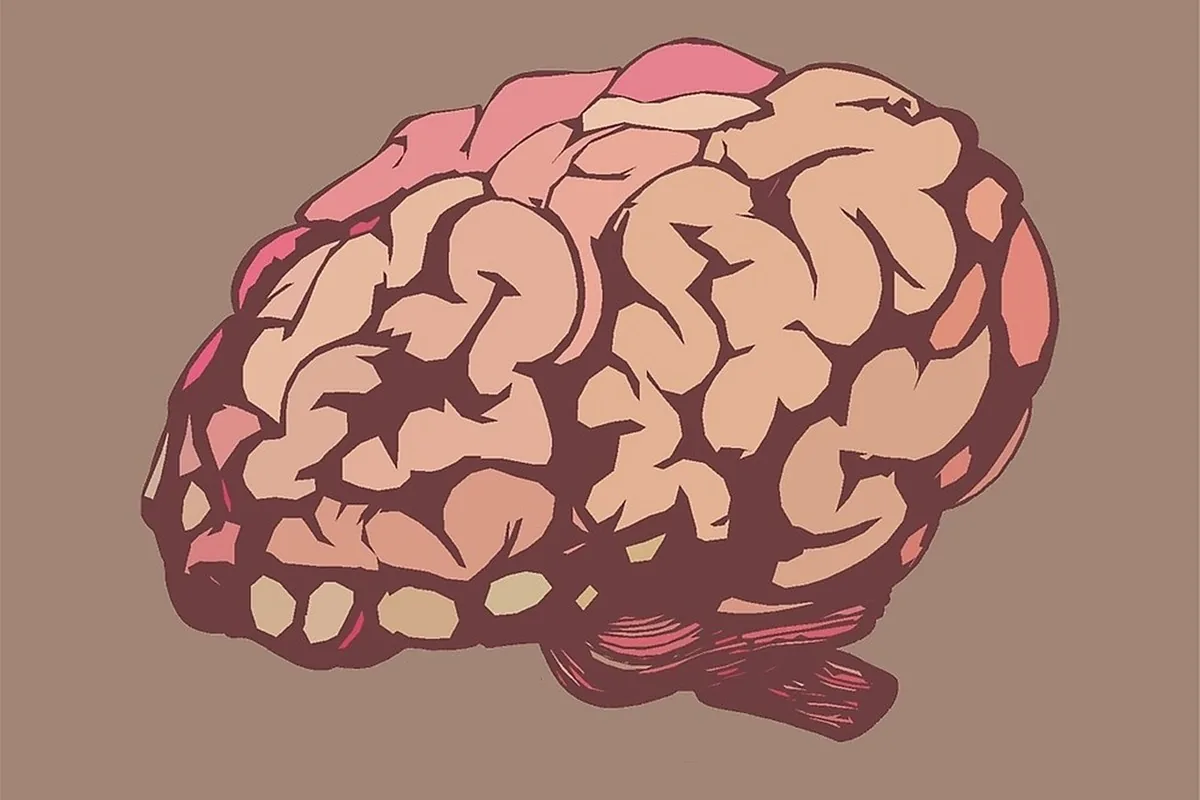
Here is the heart of the subject and the key that illuminates everything else. If one idea were to be carried away from this article, it would be this: the intestine and the brain form a single circuit in permanent dialogue. This connection is known as the gut-brain axis, and it is the cornerstone of the modern understanding of IBS.
The intestine is sometimes described as our second brain, and the expression is no mere metaphor. Its wall houses a network of hundreds of millions of neurons — a genuine autonomous nervous system — connected to the brain via large nerves and a multitude of chemical messengers. Information travels in both directions without interruption. When the brain is under tension, the gut knows it. When the gut is dysregulated, the brain feels it.
Stress is not an imaginary cause of IBS. It is a physical signal that alters gut motility and sensitivity through a perfectly real nerve circuit.
Why Stress Is Felt in the Belly
Everyone has experienced a knotted stomach before an exam, a disrupted bowel pattern triggered by some worry, an appetite cut short by anxiety. These reactions are not coincidences: they are the direct translation of the gut-brain axis at work. Faced with tension, the brain sends signals to the gut that accelerate or slow its motility and lower its pain threshold. A stressed gut becomes more reactive and more sensitive. That is exactly the terrain of IBS.
In Morocco, this connection resonates powerfully. Casablanca traffic, the pressure of a tight month-end budget in Rabat, the weight of family responsibilities, exam season: these tensions so often settle in the belly before they find words. Recognising this mechanism is not resignation — it is identifying one of the most powerful levers available for change.
A Loop That Can Be Reversed
The dialogue runs in both directions, and this is excellent news. If stress worsens digestive symptoms, digestive discomfort in turn sustains anxiety, fatigue and irritability. Many people live inside this loop without naming it. But what closes can be opened: acting on one side relieves the other. Calming the mind soothes the gut, and soothing the gut lightens the mind.
It is on this dual lever that the interest in adaptogenic plants such as ashwagandha rests — plants whose action on the stress response both tradition and research are exploring. We will return to this, but note already that digestive comfort passes through, perhaps first and foremost, the serenity of daily life.
What Science Has Established — and What It Is Still Exploring
Honesty is a form of respect, and it is rare in a field where easy promises abound. Let us draw clear lines, in plain language, between what research considers solid and what it continues to investigate.
Where the Evidence Is Robust
The role of diet is today well established. Certain fermentable foods grouped under the acronym FODMAP ferment abundantly in the intestine and produce gases that fuel bloating and pain in sensitive individuals. A dietary approach identifying these foods — undertaken with professional support — is among the best-documented strategies for digestive comfort. The reference documentation on the low-FODMAP dietary approach3 details its principles.
The link between stress and digestive symptoms is equally well supported. Approaches that act on stress management and the gut-brain axis are among the most promising pathways for supporting IBS, as a synthesis examining the global management of the disorder confirms.4 Gut and mind are treated together, and research now confirms this without ambiguity.
Where Research Is Still Refining Its Conclusions
Probiotics represent an active and encouraging field. Several reviews report that certain bacterial strains contribute to improved intestinal comfort in people with IBS, with reduced bloating and better transit for a proportion of them. But the benefits are strain-specific: not all bacteria are equivalent, and the response varies from person to person. This is a field where caution accompanies optimism.
Ashwagandha, the major adaptogenic plant of the Ayurvedic tradition, is the subject of growing research on the reduction of perceived stress, with promising results on stress markers.5 Its relevance to IBS follows logically from the role of stress in the disorder, but specific research remains in its early stages. Our editorial stance is consistent: we present these avenues as promising fields of study, never as guaranteed outcomes.
The Natural Approach: Three Pillars That Reinforce Each Other
Understanding IBS means grasping that no single isolated action is enough. The disorder forms at the intersection of diet, microbiome and stress: it is therefore at that intersection that action must be taken. The natural approach Alphavital favours rests on three complementary pillars, designed to reinforce each other rather than compete.
First Pillar: Soothing the Flora with Probiotics
Since dysbiosis lies at the heart of the disorder, supporting the flora is a logical priority. Probiotics supply live cultures that help rebalance the intestinal ecosystem, while prebiotics — the fibres that feed them — give them the means to settle in durably. This alliance between live cultures and fibres is today regarded as the most coherent way to maintain a diverse and resilient microbiome.
The goal is not to silence symptoms overnight, but to act on the underlying terrain. A better-balanced flora produces fewer excess gases, communicates more quietly with the nervous system, and supports a calmer intestinal wall. It is foundational work that demands regularity and patience — as with all things that touch the living.
Second Pillar: Calming the Gut-Brain Axis with Ashwagandha
Since stress fuels the disorder through the gut-brain axis, acting on the stress response is the second lever. Ashwagandha, the adaptogenic root used for millennia, is studied for its capacity to help the body face the tensions of daily life. By helping to calm the mind, it indirectly addresses one of the primary drivers of digestive discomfort.

This logic is valuable because it addresses IBS for what it actually is: a disorder where body and mind are intertwined. Supporting inner calm is not a peripheral concern — it is a central part of the relief. Our team has dedicated a full dossier to this plant in its guide to stress and sleep the natural way, recommended reading alongside this article.

Third Pillar: Nourishing the Terrain with Moringa
The third pillar supports the overall terrain. Moringa, a tree whose leaves carry a remarkable nutritional density, has long been valued for its plant-based contribution and its role in vitality. Its fibres support bowel transit comfort, while its botanical richness sustains a body often drained by persistent IBS. It thus complements the action of flora support and inner calm, working on energy and overall equilibrium.
These three pillars do not conflict: they outline a coherent strategy. Soothe the flora, calm the stress, nourish the terrain. This systemic vision is what distinguishes a serious approach from a succession of isolated remedies — and it is what guided Alphavital’s formulation work.
The Moroccan Table and Irritable Bowel Syndrome
Before any supplement, there is the table. And on the terrain of IBS, diet is arguably the most immediate lever. Moroccan cuisine offers genuine assets — provided you know its pitfalls.
Foods That Soothe
Several simple habits support digestive comfort. Gentle fibres, found in well-cooked vegetables — courgette, carrot, vegetable soups — are generally better tolerated than the raw fibre of large amounts of crudités. Fermented foods from the culinary heritage, such as lben (traditional fermented milk), provide cultures that support the flora. Regular hydration between meals supports healthy bowel function.

Triggers to Identify
Conversely, certain foods ferment intensely and tend to amplify bloating in sensitive individuals. High-FODMAP foods, as discussed, fall into this category: certain pulses in large quantities, raw onion and garlic, some very sugary fruits, carbonated drinks. Fatty meals, fried food and heavy late-evening dishes also weigh on an already unpredictable gut. Caffeine and meals eaten too fast under stress frequently feature among overlooked triggers.
The point is not to eliminate everything — which would impoverish both diet and flora — but to identify your own personal triggers. Keeping a brief food and symptom diary over two to three weeks often reveals unexpected patterns. This personal process, ideally guided by a healthcare professional, is among the most effective available.
| Category | Moroccan examples | Comfort guide |
|---|---|---|
| Gentle fibres | Courgette, carrot, vegetable soups | Generally well tolerated |
| Fermented foods | Lben, plain yoghurt | Support the flora |
| High-FODMAP to monitor | Raw onion and garlic, excess pulses | Test individually |
| Frequent triggers | Fried food, heavy late meals, sodas | Limit during sensitive periods |
Meal Rhythm: An Underrated Lever
Beyond what is on the plate, how you eat matters just as much. Meals taken at regular times, in calm, chewed slowly, place far less strain on a hypersensitive gut than meals eaten standing, rushed, mind elsewhere. Taking the time to sit down, to breathe before beginning, to rest cutlery between bites: these tiny gestures soothe the gut-brain axis at every meal. Their power lies in their repetition.
Ramadan, Travel, Stress: The Moments When the Gut Falters
The irritable bowel does not like abrupt disruption. Our calendar holds several — and it is better to anticipate them than to be blindsided.
The Month of Ramadan
During Ramadan, the digestive clock is entirely reorganised. Meals are concentrated into a few hours, often rich and plentiful at the breaking of the fast. For a sensitive gut, this upheaval is a challenge. Many find their bloating and pain intensify, especially in the first days, while the body adjusts.
Several habits help considerably. Breaking the fast gently, with a light soup — a moderate harira rather than a cascade of fried foods. Reintroducing a fermented dairy. Staying well hydrated between iftar and suhoor. And resisting the temptation of endless festive evenings that the irritable bowel handles poorly. These simple adjustments often make an enormous difference to comfort across the entire month.
Travel and Changes in Routine
Travel brings new foods, unfamiliar water and disrupted schedules — all factors that can wake a sensitive gut. Anticipating means setting out with better-supported flora, maintaining some soothing dietary habits and protecting sleep quality. Equally, periods of professional or emotional overload deserve particular vigilance: it is often then that the gut protests most loudly, and when anti-stress tools show their full value.

The Alphavital Response: A Comfort Programme in Three Actions
Diet comes first, always, with stress management running in parallel. But there are situations where a well-formulated supplement offers meaningful support: persistent IBS, a period of intense tension, chronically unpredictable transit. What is needed is a serious approach, faithful to the real mechanics of the disorder.
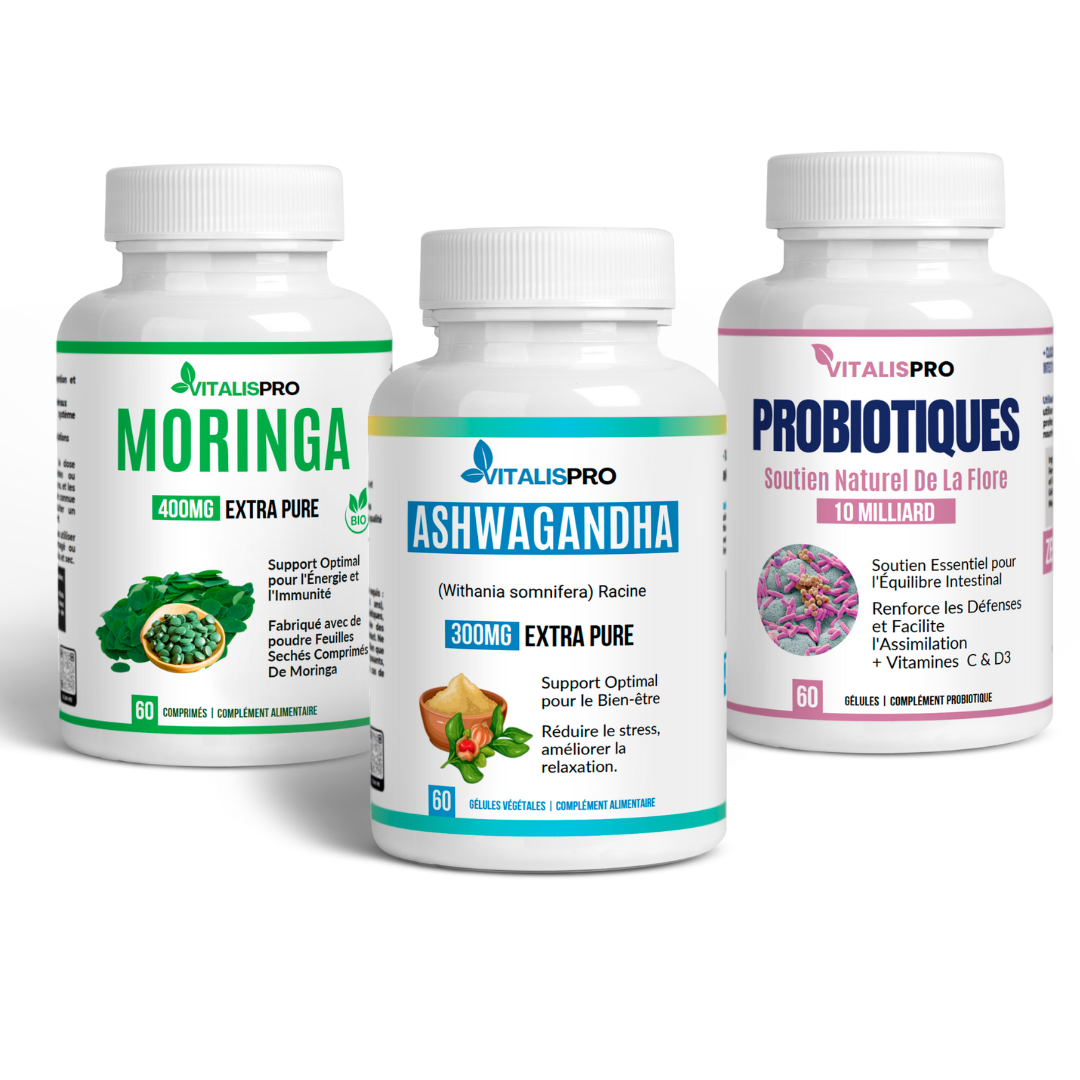
This is the philosophy that guided our team’s work. Rather than multiplying isolated promises, Alphavital has built a programme that maps onto the three pillars described above. Soothe the flora, calm the gut-brain axis, nourish the terrain: these three actions, brought together in a single approach, form coherent long-term support for digestive comfort.
The programme brings together probiotics to support microbiome balance, ashwagandha to support calm and the nervous dimension of the disorder, and moringa to nourish the terrain and sustain energy. This trio is not chance: each ingredient responds, specifically, to one of the three mechanisms of IBS. Each works on a distinct dimension — and it is their combination that makes sense.
A soothed irritable bowel does not come from a effective product. It comes from a whole strategy: nourishing your flora, calming your stress, caring for your plate, and — when useful — choosing targeted, coherent support.
Alphavital recommends inscribing this programme over time, in regular courses, because it is in the terrain and through duration that comfort takes hold. Every batch is traced and analysed, in a demand for transparency that is central to our approach. And this support never replaces the advice of a healthcare professional, particularly when symptoms are intense or new.
Have a question before starting? Our team responds directly via the Alphavital contact page to point you towards the support best suited to your situation. And for those looking for a broader perspective on inner balance, our complete guide to digestion and immunity in Morocco is a valuable extension of this reading.
Building Your Routine: The Practical Guide
A few practical reference points help avoid the most common mistakes and draw the most from an IBS-relief approach.
Where to Start
Always with the foundations. Identify your dietary triggers using a symptom diary. Slow your meal pace. Stay hydrated between eating. Protect your sleep — that great restorer of the gut-brain axis. Build in a daily moment of calm, however brief: a few minutes of breathing, a quiet walk. Once these foundations are in place, a well-chosen supplement strengthens the whole — it never replaces it.
Consistency Above All
Regularity matters more than intensity. It is daily repetition over several weeks that establishes the benefits of a balancing approach. The occasional missed dose does not undo the effort, but chronic irregularity does. IBS is a deep-seated disorder: it is addressed over time, through regular courses, with patience and self-compassion.
Precautions Worth Knowing
Digestive-balance supplements are well tolerated by most people. A few precautions apply nonetheless. During pregnancy or breastfeeding, in the presence of a chronic condition, an ongoing treatment, or the warning symptoms described above, professional healthcare advice is essential before starting. At the beginning of a live-culture course, mild gurgling or bloating may appear — these typically subside within a few days as the flora adjusts.
Three Readers Tell Their Stories
The feedback our team receives is worth more than any speech. Here are three testimonials, shared with the consent of their authors.
For years I thought my bloated belly was just something I had to live with. Understanding the connection with my stress changed everything. I slowed down my meals, looked after my sleep, and gave my body some support. Bloating no longer dictates my day. — Salma, Casablanca
My bowel swung from one extreme to the other for no apparent reason. Keeping a diary helped me spot my triggers and support my flora. Regularity came back — and with it a sense of calm I had stopped hoping for. — Karim, Rabat
Ramadan was an ordeal for my gut every single year. This time I broke the fast gently and supported my terrain in advance. I am not claiming a effective, but the difference is real. — Fatima, Marrakech
These accounts illustrate a simple truth: the most lasting results come from combining the right diet, lifestyle, stress management and, when useful, a well-chosen support.
To understand more deeply how the gut and brain communicate continuously, this video from France’s Inserm institute explains the role of the microbiome and the gut-brain axis clearly and accessibly.
Frequently Asked Questions About Irritable Bowel Syndrome
Is irritable bowel syndrome a serious illness?
No. IBS is a functional disorder: the gut works poorly but is not damaged, and it does not progress to a serious illness. It can, however, weigh heavily on quality of life. Certain symptoms — unexplained weight loss or blood in the stool, for example — do not belong to IBS and require prompt consultation with a healthcare professional.
What is the link between stress and IBS?
The link runs through the gut-brain axis, a nerve and chemical circuit that continuously connects the intestine and the brain. Stress physically alters gut motility and sensitivity, worsening bloating, pain and bowel disturbance. This dialogue runs in both directions: calming the mind often soothes the gut, and the reverse is equally true.
Do probiotics help with IBS?
Many people with IBS have an imbalanced microbiome. Certain bacterial strains contribute to improved intestinal comfort, with reduced bloating for some individuals. The benefits are strain-specific and vary between people. Probiotics are part of a long-term approach, complementing diet and stress management.
Can ashwagandha relieve IBS?
Ashwagandha is an adaptogenic plant traditionally associated with easing stress — one of the primary drivers of IBS through the gut-brain axis. By supporting calm, it acts on the nervous dimension of the disorder. Specific research is still in its early stages: it is part of an overall strategy and does not replace treatment or professional advice.
Which foods should be avoided with IBS?
This varies from person to person, which is why a food diary is so useful. Common triggers include highly fermentable foods (raw onion and garlic, excess pulses, very sugary fruits, sodas), fatty food and fried food, heavy late-evening meals, and excess caffeine. The goal is not to eliminate everything, but to identify personal sensitivities — ideally with professional guidance.
Is moringa useful for digestion?
Moringa is valued for its nutritional density and its fibre content, which supports bowel transit comfort. Its botanical richness sustains the terrain and energy that persistent IBS so often depletes. It complements the action of probiotics and ashwagandha, working on overall balance rather than any isolated symptom.
How long before feeling better?
For dietary adjustments and lifestyle changes, comfort can improve within a few days to a few weeks. For a course of live cultures or foundational support, many people notice better comfort after several weeks of regular use. IBS is a deep-seated disorder: consistency over time is the determining factor.
Should I see a doctor for IBS?
Yes — especially at the outset. Only a healthcare professional can make the diagnosis, rule out other causes and guide management. This is particularly important in the presence of warning symptoms (weight loss, blood in the stool, fever, night pain, onset after age fifty). Once the diagnosis is established, natural approaches and lifestyle adjustments serve as supportive companions for everyday comfort.
In Summary
Irritable bowel syndrome is neither inevitable nor imaginary. It is a real dysregulation of the dialogue between the gut, its flora and the brain — marked by hypersensitivity, dysregulated motility and often a depleted microbiome. Stress is not a shameful cause: it acts physically through the gut-brain axis, and it is precisely this that opens the door to concrete, actionable levers.
The natural approach rests on four reinforcing pillars: a diet adapted to personal triggers, attentive stress management, protected sleep, and targeted support centred on probiotics, ashwagandha and moringa. This is the path Alphavital has chosen — with a transparent approach, grounded in science and anchored in Moroccan daily life. Looking after your digestive comfort is not following a trend. It is, perhaps, reclaiming a freedom that irritable bowel syndrome had quietly taken away.
About the author. Houda Khaldi is Editorial Advisor in Natural Nutrition at Alphavital. She translates scientific research into clear, actionable guidance for everyday Moroccan life.
Disclaimer. The information presented is provided for informational purposes, based on sourced research (HAS, PubMed, EFSA, NIH). The Alphavital team is not composed of healthcare professionals. Irritable bowel syndrome must be diagnosed by a healthcare professional who will rule out other causes. Consult a qualified healthcare professional before any use, in the presence of an ongoing treatment, during pregnancy or breastfeeding, or in the event of a chronic condition. Food supplements do not substitute for a varied, balanced diet or a healthy lifestyle.
Sources and References
- Irritable bowel syndrome — definition, prevalence and management. French High Authority for Health (HAS)
- Gut microbiome and pathophysiology of irritable bowel syndrome, synthesis review. PubMed Central
- Low-FODMAP dietary approach and digestive comfort. Academy of Nutrition and Dietetics
- Global management of irritable bowel syndrome and the gut-brain axis. PubMed
- Ashwagandha and reduction of perceived stress, randomised controlled trial. PubMed Central
Food supplements do not replace a varied, balanced diet or a healthy lifestyle. The Alphavital team is not made up of healthcare professionals. Consult a qualified healthcare professional before use.