

Plenty of people in Morocco feel sure they get enough vitamin D. The sun is out most of the year, after all. Then a routine blood test comes back low, and nobody around them can explain why. Here is what Moroccan studies actually found, what vitamin D3 K2 can and cannot change, and how to read your own result calmly.
This is one of the most puzzling paradoxes in Moroccan public health. We live under one of the most generous skies on the planet, with close to three hundred sunny days a year in Marrakech or Agadir. And yet nutritional surveys consistently describe widespread vitamin D deficiency across the population. The sun is there, abundant — but blood levels do not always follow.
How do we explain this gap? And above all, why do scientists increasingly pair vitamin D with a second molecule, vitamin K2, that was barely discussed a decade ago? Research over the last ten years has profoundly renewed our understanding of these two vitamins, showing that they work hand in hand, and that caring for one without the other sometimes amounts to doing only half the job. Our editorial team receives weekly questions about vitamin D3 K2 in Morocco, and the subject deserves better than the shortcuts found everywhere online.
By Houda Khaldi, Editorial Adviser in Natural Nutrition · Published 10 July 2026 · 18-min read
Contenu de la page
- 1 Key Takeaways
- 2 Vitamin D: a hormone in vitamin clothing
- 3 The Moroccan paradox: so much sun, so much deficiency
- 4 Why combine D3 with K2: the story of calcium put in the right place
- 5 Bones, immunity, heart: what the science actually says
- 6 Finding D3 and K2 on your plate
- 7 When a vitamin D3 and K2 supplement in Morocco is warranted
- 8 Using your vitamin D3 and K2 correctly: practical guidance
- 9 Three readers share their experience
- 10 Vitamin D3 K2: what the studies actually measured
- 11 What 10 µg of vitamin D3 a day can and cannot do
- 12 Vitamin D deficiency: how to read your blood test
- 13 Who should check with a doctor before taking vitamin D3 K2
- 14 Going further: D3 + K2 with magnesium
- 15 Frequently asked questions about vitamin D3 and K2
- 15.1 Why combine vitamin D3 and vitamin K2?
- 15.2 Does the sun in Morocco not provide enough vitamin D?
- 15.3 What is the difference between vitamin D2 and D3?
- 15.4 Which foods are rich in vitamin K2?
- 15.5 How should you take the Alphavital vitamin D3 K2 course in Morocco?
- 15.6 Are there precautions or contraindications?
- 15.7 Does vitamin D3 and K2 genuinely help immunity?
- 15.8 Is 400 IU of vitamin D a day enough?
- 15.9 How long does it take for vitamin D levels to go up?
- 15.10 What vitamin D level is considered low?
- 15.11 Can I take vitamin D3 K2 together with magnesium?
- 16 In summary
Key Takeaways
- Vitamin D3 (cholecalciferol) is the most readily absorbed form of the “sunshine vitamin.” It contributes to the normal absorption of calcium, the maintenance of normal bones, and the normal functioning of the immune system — health claims validated by EFSA.
- Vitamin K2 (menaquinone) activates proteins that direct calcium toward bones and teeth, and contributes to the maintenance of normal bone structure.
- The pairing is logical: D3 helps bring calcium into the body, K2 helps place it in the right location. That is the entire rationale for a synergistic formula.
- In Morocco, despite the sun, vitamin D deficiency is common: indoor living, covering clothing, sunscreen, skin pigmentation and a diet low in D sources all explain this paradox.
- Alphavital has developed a Vitamin D3 and K2 formula — one capsule a day — designed as daily support for bones, immunity and cardiovascular health.

Vitamin D: a hormone in vitamin clothing
Let us start by clearing up a common misunderstanding. We call it a vitamin, but vitamin D actually behaves like a hormone. Our body knows how to make it from scratch, starting from cholesterol present in the skin when it is exposed to ultraviolet rays. No other vitamin shares this property. That is why it is nicknamed the “sunshine vitamin.”
Once synthesised or obtained from food, vitamin D does not stay inert. It undergoes a two-stage transformation — first in the liver, then in the kidneys — to become its active form. In this form it travels throughout the body and acts on hundreds of genes. For a long time its role was confined to the skeleton. We know today that it also communicates with the immune system, the muscles and many other tissues.
Among the forms of vitamin D, two dominate: D2 (ergocalciferol), of plant origin, and D3 (cholecalciferol), which our skin produces and which is found in certain animal-derived foods. Comparative research shows that vitamin D3 raises and sustains blood levels more effectively than D2, as reported in this meta-analysis comparing D2 and D3 indexed on PubMed3. That is why D3 has become the reference standard in serious supplements.
Vitamin D is not a simple comfort micronutrient. It is a genuine metabolic conductor, capable of influencing bone, immunity and muscle.
For a clear, jargon-free overview, this France Télévisions report gives a balanced picture of vitamin D: its role in the body, the most common deficiency situations and practical reference points for addressing them.
Let us be precise and honest about recognised benefits. In Europe, the European Food Safety Authority (EFSA) decides — after examining the literature — what a nutrient is permitted to claim. For vitamin D, several health claims have been validated and entered in the official register. Vitamin D contributes to the normal absorption and utilisation of calcium and phosphorus. It contributes to normal blood calcium levels. It contributes to the maintenance of normal bones and teeth. And it contributes to the normal functioning of the immune system. All of these opinions are available in the EFSA register of health claims for vitamin D1.
These formulations may seem cautious. They are, and that is a good thing. Our editorial line mirrors exactly this restraint: we speak of contribution and support, never of miraculous promises. Vitamin D is not a cure. It simply helps the body to function normally — which is already considerable when one is deficient.
The Moroccan paradox: so much sun, so much deficiency
Here is the heart of the matter, and the reason this guide exists. Morocco is bathed in sunshine, yet vitamin D deficiency is widely documented there. Several factors combine to explain this paradox, and understanding them already helps you to situate yourself.

The first factor is lifestyle. We spend most of our days indoors: offices, cars, schools, shops. Yet vitamin D synthesis requires the skin to be directly exposed to UVB rays. Spending an entire day behind a window, however sunny it may be, produces almost nothing, because glass filters those very UVB rays.
The second factor relates to dress habits and cultural practices. A large portion of skin surface remains covered, for modesty, comfort or protection from the heat. This is entirely legitimate, but it mechanically reduces the area of skin that could synthesise the vitamin. Sunscreen, precious for protecting the skin on a daily basis, also decreases vitamin D production.
The third factor is skin colour. Melanin, the protective pigment, acts like a natural sunscreen. Darker skin tones, common in our population, require longer exposure to synthesise the same amount of vitamin D as lighter skin. This is an advantage against sunburn, but an additional risk factor for deficiency.
To this we can add latitude, which reduces the sun’s effectiveness in winter, and a traditional diet low in natural sources of vitamin D. Oily fish, the main dietary source, do not feature at the centre of every meal. The result of this combination is well documented: a common, often silent deficiency that passes unnoticed in the absence of clear symptoms.
| Moroccan factor | Effect on vitamin D | Lever of action |
|---|---|---|
| Indoor living | Little UVB reaching skin | Short outdoor sun breaks |
| Covered skin | Reduced synthesis surface | Expose hands and forearms |
| Darker skin (melanin) | Slower synthesis | Slightly longer exposure |
| Winter and latitude | Less effective sunlight | Increased seasonal vigilance |
| Diet low in vitamin D | Low dietary reserve | Oily fish, eggs, supplements |
A word of honesty is essential here. The only way to know your true status is a blood test for 25-hydroxyvitamin D, prescribed and interpreted by a healthcare professional. No supplement, no article, replaces this measurement. Our role is to inform, not to diagnose. On the chronic fatigue that sometimes accompanies these imbalances, our team has compiled its reference insights in the guide on fatigue, anaemia and natural energy in Morocco.

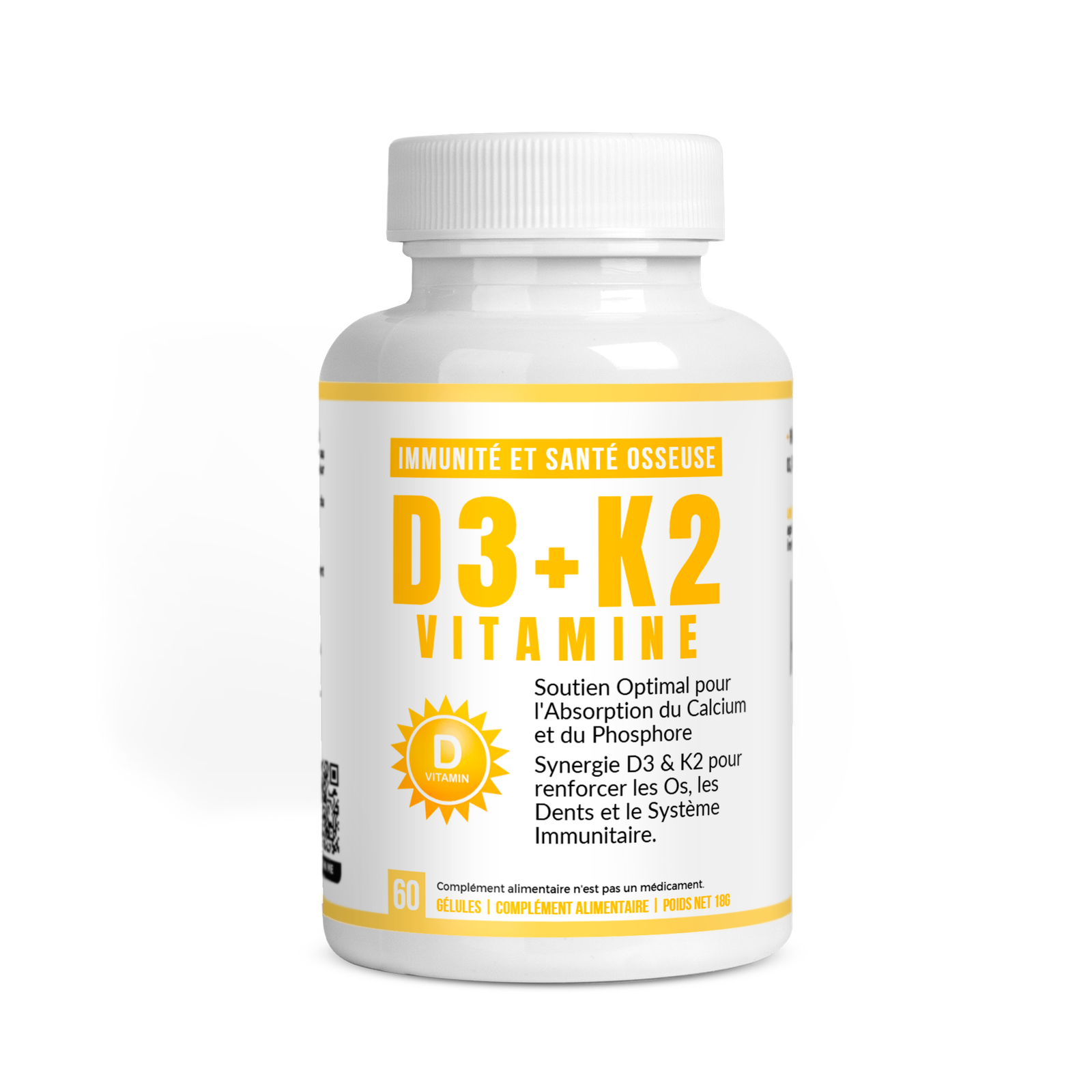
Why combine D3 with K2: the story of calcium put in the right place
Here is the most important idea in this entire guide, and the one that changes how you look at these two vitamins. For a long time, vitamin D was thought of alone. Recent research has shown that it performs better when accompanied by vitamin K2. To understand why, one image is worth a thousand mechanisms.
Imagine that calcium is a distinguished guest you want to welcome into your home — that is, into your bones. Vitamin D3 plays the role of the gatekeeper: it opens the door of the intestine and allows calcium to enter the bloodstream. Without it, most of that calcium stays outside and is never absorbed. D3 is therefore essential for calcium to enter the body.
But once calcium is inside, it still needs to be directed to the right place. That is where vitamin K2 comes in, the intelligent guide. It activates specific proteins, including osteocalcin, which fix calcium in bones and teeth where it is useful. It also activates another protein that helps prevent calcium from depositing where it should not — notably on arterial walls.
Vitamin D3 brings calcium in. Vitamin K2 places it in the right location. One without the other is only half the work.
This complementarity is not theoretical. The K-dependent proteins, such as osteocalcin, only become active in the presence of K2. A landmark scientific review details how these proteins direct calcium towards the skeleton, in this synthesis on vitamin K2 and bone available on PubMed Central4. On the regulatory side, EFSA also acknowledges that vitamin K contributes to the maintenance of normal bones, as stated in its scientific opinion on vitamin K health claims2.

The right K2 profile: menaquinone
Not all vitamin K forms are equal. We distinguish vitamin K1 (phylloquinone), mainly linked to coagulation and abundant in green vegetables, from vitamin K2 (menaquinone), which is more involved in managing calcium in bones and arteries. Within K2 itself, several sub-forms exist, including the well-known menaquinone-7, recognised for its good bioavailability and long duration of action in the body.
This logic of precise profiling ties in with a principle our team upholds for all supplements: what matters is not just the presence of a nutrient, but its exact form, dosage and traceability. A label that mentions “vitamin K” without specifying which profile says too little. Transparency about composition is, in our view, the mark of a serious brand.
Bones, immunity, heart: what the science actually says
Let us now enter the three major areas where the D3 and K2 duo makes sense. For each, we separate what is solidly established from what remains under investigation. That is the condition for honest information.
Bone health: the historical domain
This is the best documented and least debatable area. Vitamin D is essential for calcium absorption, and calcium is the basic building material of bone. Prolonged vitamin D deficiency weakens the skeleton, especially in older adults in whom it is associated with an increased fracture risk, as noted by the French biomedical research institute’s resource on osteoporosis7. Vitamin K2, for its part, supports the activity of bone-building cells and the fixation of calcium in the bone matrix.

This bone foundation explains why the duo is of particular interest to women post-menopause, a period when bone capital declines, and to ageing individuals generally. Maintaining adequate intakes of vitamin D and vitamin K then becomes a long-term strategy for preserving a strong skeleton for as long as possible. For the joints themselves, which go hand in hand with bone, our team offers a dedicated supplement for joint comfort with marine collagen and vitamin D3.
Immunity: a modulatory role
Vitamin D occupies a recognised place here. The cells of our immune system carry vitamin D receptors, which means they “listen” to its signal. Vitamin D participates in the regulation of natural defences, helping the body mount a measured response — neither too weak nor excessive. This is precisely the contribution to the normal functioning of the immune system that EFSA has validated.1
It is important to remain nuanced, however. Having a sufficient level of vitamin D helps the immune system function normally; it does not turn anyone into an impenetrable fortress against infections. Vitamin D is not a magic shield — it is a foundational nutrient. To strengthen immune ground throughout the year, this guide pairs well with the one dedicated to digestive balance and immunity in Morocco, two closely related dimensions.

The heart and arteries: K2’s domain
This is the newest and most exciting area, where K2 truly comes into its own. The central idea is simple: calcium is good for bones but harmful when it deposits on arterial walls, making them rigid. Vitamin K2 activates a protein that helps limit these unwanted deposits — a kind of traffic officer preventing calcium from parking in the wrong place.

Several observational studies have associated good vitamin K2 intakes with a better cardiovascular profile, and clinical research in this area continues actively. The biological coherence is strong, even if caution is still warranted regarding the precise extent of benefits. Our team therefore presents this aspect as a solid and logical avenue, without turning it into a prevention promise. This honesty is, in our view, non-negotiable.
To visualise the whole subject in a few minutes, this video from an international French-language media outlet reviews vitamin D’s functions and possible sources, complementing our reading.
Finding D3 and K2 on your plate
Before any supplement, there is always the table. And even if the Moroccan diet is not the richest in vitamin D, a few well-chosen foods make a real difference. Let us look at where these two vitamins hide.

Dietary sources of vitamin D3
Dietary vitamin D3 comes primarily from animal products. Oily fish are the champions: sardines, mackerel, tuna and salmon contain appreciable quantities. Sardines, abundant and accessible on our coasts, are in this respect a national treasure — also rich in omega-3 and calcium when the bones are eaten. Egg yolk, liver and certain full-fat dairy products provide more modest but useful amounts.
The most rewarding reflex is therefore to put small oily fish back at the centre of the plate, several times a week. This is a simple, economical gesture deeply rooted in our coastal cuisine. No capsule replaces a varied diet; it simply fills what the plate and the sun do not provide sufficiently.
Dietary sources of vitamin K
Vitamin K1 is easy to find: it abounds in dark leafy greens — spinach, Swiss chard, parsley, cabbage and broccoli. Moroccan cuisine, rich in herbs and green vegetables, naturally provides good quantities. Vitamin K2, on the other hand, is rarer in the Western and Mediterranean diet. It is found mainly in certain fermented foods, eggs, liver and aged cheeses, where it is produced by fermentation bacteria.
| Vitamin | Dietary sources | Moroccan presence |
|---|---|---|
| Vitamin D3 | Oily fish, egg yolk, liver | Sardine, mackerel, eggs |
| Vitamin K1 | Dark leafy green vegetables | Spinach, parsley, chard, cabbage |
| Vitamin K2 | Fermented foods, aged cheeses, eggs | Aged cheeses, farm eggs |
Looking at this table, it becomes clear why K2 deserves special attention: it is the hardest to obtain in sufficient quantity from diet alone. This is one of the reasons why a formula combining D3 and K2 from the outset makes sense, rather than relying on dietary luck to bring the two together.
When a vitamin D3 and K2 supplement in Morocco is warranted
Food first, sun next, always. But there are situations where a well-formulated supplement becomes a relevant support. Our team distinguishes several, without ever losing sight of the fact that a blood test and the advice of a healthcare professional remain the best compass.

The first case is seasonal. As autumn approaches and during winter, the sun becomes rarer and less effective. This is a window in which maintaining one’s intakes makes complete sense, alongside adequate sleep and a varied diet. The second case concerns people with limited sun exposure due to their lifestyle or occupation. The third touches the stages of life where needs increase: pregnancy and breastfeeding, under strict medical supervision, and advancing age, where the skin synthesises vitamin D less efficiently and bones become more fragile.
A serious formula is still required. Three criteria make the difference: vitamin D3 in its most absorbable form, vitamin K2 with a good profile to accompany calcium, and genuine traceability of the composition. This is precisely the philosophy that has guided our team’s work.
The Alphavital answer
Alphavital has designed a formula that brings together the essentials in a single daily gesture: vitamin D3, the gatekeeper that helps calcium enter the body, paired with vitamin K2, the guide that helps direct it toward bones and teeth. This pairing is far from incidental: it translates, in a simple capsule, the complementarity logic that research has brought to light.
Vitamin D contributes to the normal absorption of calcium, the maintenance of normal bones and the normal functioning of the immune system — effects recognised by the European food safety authorities.1 Vitamin K, for its part, contributes to the maintenance of normal bones.2 Alphavital recommends one capsule per day, preferably after a meal with a large glass of water, as these vitamins are better absorbed in the presence of a little dietary fat. This formula is part of our Bone and Joint Health range, designed as a coherent whole.
A good D3 and K2 formula is not just a number on the label. It brings together the right form of each vitamin, the right dosage and genuine traceability.
For those who also aim for bone comfort and relaxation, our magnesium glycinate, dedicated to sleep and bone support, complements this approach well — magnesium also contributes to the maintenance of normal bones. And to support immune ground on a daily basis, Alphavital’s vitamin C 500 mg extends this reading usefully.
Using your vitamin D3 and K2 correctly: practical guidance
A few practical reference points help avoid the most common mistakes and allow you to get the best out of a course of supplementation, with complete peace of mind.
Vitamin D3 K2: when and how to take it
Vitamin D and vitamin K are fat-soluble: they dissolve in fats and are absorbed better in the presence of a little dietary fat. Taking them during or just after a meal containing a drizzle of olive oil, eggs or fish therefore improves absorption. The time of day matters less than consistency: one capsule per day, at a fixed time, integrated into a routine, is worth more than irregular intake.

How long should a vitamin D3 K2 course last
This depends on the objective and starting status. To support the winter season, a course of several weeks — from the start of autumn to spring — makes sense. For ongoing maintenance, a regular approach can be discussed with a healthcare professional in the light of a blood test. There is no universal duration: a blood measurement and professional advice remain the best guides, particularly for fat-soluble vitamins that are stored in the body.
Precautions to be aware of
Vitamin D3 and vitamin K2 are well tolerated at the doses present in supplements intended for the general public, which comply with the reference points set by regulatory authorities. The US National Institutes of Health details reference intakes in its fact sheet on vitamin D5, and the French food safety agency sets out reference points for calcium6, the mineral directly concerned by this duo. Some precautions are nevertheless required. Vitamin K can interact with anticoagulant medications of the anti-vitamin K type: anyone on this kind of treatment must consult their doctor before considering any supplement containing K2. In cases of pregnancy, breastfeeding, kidney disease, high-dose calcium intake or any ongoing treatment, a healthcare professional’s advice is indispensable before starting. And one should never combine multiple sources of vitamin D without guidance, as this vitamin is stored in the body.
The feedback our team receives is often worth more than lengthy explanations. Here are three testimonials, shared with the permission of their authors, illustrating common situations.
My blood work showed very low vitamin D despite all the sunshine where we live. My doctor explained that I spent too much time indoors. I adjusted my lifestyle and supported the winter with a course. At my next check, my level had come back up nicely. — Younes, Casablanca
At sixty, I was thinking mainly about my bones. I heard about K2’s role in properly directing calcium, something I had absolutely no idea about. I appreciate having both vitamins together in a single daily dose — it is much easier to keep up. — Fatima, Fès
I work at a desk all day and barely went outside. Every winter I dragged around a diffuse tiredness. After discussing it with a healthcare professional and getting a blood test, I built a regular routine. Nothing spectacular — just calmer winters. — Hicham, Tangier
These accounts share a common lesson: the best results come from combining sensible sun exposure, a thoughtful diet and, when useful and properly overseen, a well-chosen supplement. A question before you start? Our team responds directly via the Alphavital contact page.
Vitamin D3 K2: what the studies actually measured
Most pages on vitamin D3 K2 repeat the same three promises. Here we look at the numbers instead: what researchers measured in Moroccan adults, how much a daily dose moves blood levels, and what vitamin K2 does in the body at different amounts.
| Study (author, year) | Who, how much, how long | What was found |
|---|---|---|
| Allali, 2009 | 415 healthy Moroccan women aged 24 to 77, blood tested from July to September | 91% were below 30 ng/mL, in summer. Under 30 minutes outdoors a day and covering clothing were among the main factors, with age over 55 and low calcium intake. |
| El Maataoui, 2016 | 254 healthy Moroccan adults aged 50 and over (186 women, 68 men) | Insufficient levels in 85% of men and 77% of women, plus a smaller group in deficiency. No real gap between the sexes. |
| Heaney, 2003 | 67 healthy men, 0 to 250 µg of D3 a day, about 20 winter weeks | Each extra 1 µg a day raised the blood level by about 0.7 nmol/L once it had settled. |
| Theuwissen, 2012 | 42 healthy adults aged 18 to 45, 10 to 360 µg of K2 (MK-7) a day | Doses around the EU daily reference activated more of the K2-dependent proteins found in bone and arteries. Clotting tests did not change. |
| Knapen, 2013 | 244 healthy postmenopausal women, 180 µg of MK-7 a day, 3 years | Slower age-related loss of bone density at the spine and the hip neck, but not at the total hip. |
The first two studies explain the Moroccan picture: low vitamin D is the norm in these groups, not the exception, and it shows up even in the sunniest months8. It concerns men as much as women once people pass 509. The Heaney trial gives a useful rule of thumb on how blood levels respond to a daily dose10. The two K2 trials show that the body uses extra K2 to switch on calcium-handling proteins11, and that over three years this was linked to slower bone loss in one group of women12.
What this does not show. The Moroccan studies are snapshots of specific groups, not proof that every reader is low. They also used 30 ng/mL as the line. The NIH fact sheet cited earlier in this guide considers 20 ng/mL adequate for most people, so the share of “low” results depends on where the line is drawn. The K2 bone trial used 180 µg a day, far more than a daily foundation capsule, so its bone results cannot be carried over to a smaller amount. No trial in this table tested D3 and K2 together in one capsule. What the research does support is the logic of the pairing: vitamin D needs a daily supply when the sun does not do its part, and K2 is what the body uses to put calcium-handling proteins to work.
What 10 µg of vitamin D3 a day can and cannot do
The Alphavital Vitamin D3 & K2 capsule provides 10 µg of vitamin D3 (400 IU) and 7.5 µg of vitamin K2 (MK-7). It is taken once a day, during a meal that contains some fat. It is a fixed daily amount, easy to take every day without counting.
Using the Heaney figure, 10 µg a day lifts the blood level by roughly 7 nmol/L (about 3 ng/mL) once it has settled. The same team calculated that about 12.5 µg a day was needed simply to hold the autumn level through a winter with little sun10. In plain terms, this capsule is a maintenance amount. It helps you hold your level through months when the sun does little, such as winter, long office weeks or a summer spent indoors to escape the heat. It is not a catch-up dose for a deficiency confirmed by a blood test. In that case, the amount and the length of the course are set by your doctor.
The Alphavital Vitamin D3 & K2 capsule is built for that daily job: one fixed habit, the two vitamins together, no mental arithmetic.
Vitamin D deficiency: how to read your blood test
The test is called 25-hydroxyvitamin D, often written 25(OH)D. Labs in Morocco give it in ng/mL or in nmol/L. To switch from ng/mL to nmol/L, multiply by 2.5. So 20 ng/mL equals 50 nmol/L.
- Below 12 ng/mL (30 nmol/L): the NIH considers this a risk of deficiency. This is a result to discuss with your doctor, not to manage alone.
- Between 12 and 20 ng/mL: a grey zone where intakes and sun habits deserve attention.
- 20 ng/mL and above: adequate for most people by NIH standards, even if some labs flag anything under 30.
Two practical points are often missed. First, timing: blood levels climb slowly and only settle after many weeks. The Heaney team waited about 20 weeks for levels to stabilise, so a retest after three weeks tells you very little. Plan the next check after about three months of steady intake. Second, the season of the test matters. A result taken in September and one taken in February are not directly comparable.
Daily habits count as much as the capsule. In a study of women aged 18 to 45 living in Meknes, a simple sun-exposure score, built on time spent indoors, time outdoors and sun protection habits, tracked closely with blood levels13. A short daily walk with hands and forearms uncovered, at a time of day that suits you, is worth building in. During Ramadan, take the capsule with iftar or with suhoor, as long as the meal contains a little fat: olive oil, eggs, sardines or a glass of milk.
Who should check with a doctor before taking vitamin D3 K2
- People on vitamin K antagonist blood thinners (such as acenocoumarol or warfarin). In healthy volunteers on acenocoumarol, as little as 10 µg of MK-7 a day lowered the INR in a clinically relevant way in at least 40% of people, and 20 µg did so in 60%14. Even a small amount of K2 can matter here. Do not start without your doctor’s agreement. If you take another type of blood thinner, ask as well.
- People already taking vitamin D from another source: prescribed high-dose ampoules, a multivitamin, or a formula that already contains D3, such as some probiotic formulas. Vitamin D is stored in the body, so the total counts.
Going further: D3 + K2 with magnesium
Bones rely on more than calcium. The Immunity & Bone Bundle pairs the D3 + K2 capsule with magnesium glycinate, so the routine covers bone upkeep from three sides. D3 helps the body take in calcium, K2 helps put it to use in bone, and magnesium also contributes to the maintenance of normal bones under EU-approved wording. Vitamin D also supports normal immune function through the darker months. In practice: one D3 + K2 capsule with a meal, and one to two magnesium glycinate capsules in the evening. To see every formula built around the skeleton and the joints, browse our Bone & Joint Health range.
Frequently asked questions about vitamin D3 and K2
Why combine vitamin D3 and vitamin K2?
Because they act in relay. Vitamin D3 helps calcium to be absorbed by the intestine and enter the bloodstream. Vitamin K2 then helps direct that calcium toward bones and teeth, and to limit its deposit on arterial walls. Taking D3 alone ensures calcium entry, but not necessarily its correct placement. That is why a synergistic formula brings both together.
Does the sun in Morocco not provide enough vitamin D?
Not always, and that is the whole paradox. Deficiency remains common despite the sunshine, because synthesis requires the skin to be directly exposed to UVB rays. Indoor living, covering clothing, sunscreen, skin pigmentation and winter all substantially reduce this production. Only a blood test, ordered by a healthcare provider, reveals actual status.
What is the difference between vitamin D2 and D3?
Vitamin D2 (ergocalciferol) is of plant origin; vitamin D3 (cholecalciferol) is what our skin produces and what is found in animal-derived sources. Studies show that D3 raises and maintains blood levels more effectively. That is why it is preferred in quality supplements, including Alphavital’s.
Which foods are rich in vitamin K2?
Vitamin K2 is rarer than K1. It is found mainly in certain fermented foods, aged cheeses, egg yolk and liver, where it is produced by bacteria. Dark leafy greens are rich in vitamin K1. Since K2 is difficult to obtain in sufficient quantity from diet alone, a formula that combines it with D3 from the outset has practical value.
How should you take the Alphavital vitamin D3 K2 course in Morocco?
Alphavital recommends one capsule per day, preferably after a meal with a large glass of water. Since these vitamins are fat-soluble, taking them with a meal containing a little fat — olive oil, eggs or fish — promotes absorption. Consistency over time matters more than the precise moment of the day.
Are there precautions or contraindications?
Yes. Vitamin K can interact with anticoagulant medications of the anti-vitamin K type: those concerned must consult their doctor before any supplement containing K2. In cases of pregnancy, breastfeeding, kidney disease, high-dose calcium intake or any ongoing treatment, a healthcare professional’s advice is essential. Since vitamin D is stored in the body, do not combine multiple sources without guidance.
Does vitamin D3 and K2 genuinely help immunity?
Vitamin D contributes to the normal functioning of the immune system, an effect recognised by European food safety authorities. This means that a sufficient level helps the body mobilise its defences normally. It is not a shield against infections, but a foundational support — particularly useful in winter and for people with limited sun exposure.
Is 400 IU of vitamin D a day enough?
For daily upkeep, often yes. For correcting a confirmed deficiency, usually not on its own. A US trial found that each extra 1 µg a day raises blood levels by about 0.7 nmol/L once stable, so 10 µg (400 IU) adds roughly 7 nmol/L10. That suits holding a level through low-sun months. If your blood test is very low, your doctor sets a stronger plan first.
How long does it take for vitamin D levels to go up?
Weeks to months. Blood levels rise gradually and only settle after many weeks of steady intake; in the Heaney trial, doses ran for about 20 weeks. Retest after roughly three months, ideally in the same season as your first test so the two results can be compared.
What vitamin D level is considered low?
The US NIH considers a level under 12 ng/mL (30 nmol/L) as a risk of deficiency and 20 ng/mL (50 nmol/L) or more as adequate for most people. Many labs and the Moroccan studies quoted above use 30 ng/mL as their line. Always read your result with the reference range printed by your lab.
Can I take vitamin D3 K2 together with magnesium?
Yes, the two fit well together. D3 and K2 are taken with a meal that contains a little fat, and magnesium glycinate is usually taken in the evening. Magnesium contributes to the maintenance of normal bones, which is why Alphavital offers the three in the Immunity & Bone Bundle. If you take medicines, check spacing with your pharmacist.
In summary
Vitamin D3 and vitamin K2 form a coherent duo rooted in the most recent research. The first helps calcium enter the body and supports bones, immunity and mineral absorption. The second helps place that calcium in the right location — in bones and teeth rather than in arteries. In Morocco, where vitamin D deficiency persists despite the sun, the subject is far from trivial: it directly concerns our bones, our defences and our hearts.
We maintain this duo first through sensible sun exposure and diet: oily fish for D3, leafy greens and fermented foods for the K family. When extra support is useful and properly guided, a serious formula — combining the right form of each vitamin with genuine traceability — comes into its own. That is the path Alphavital has chosen, with a transparent approach faithful to the science.
About the author. Houda Khaldi is Editorial Adviser in Natural Nutrition at Alphavital. She translates scientific research into clear, actionable reference points for everyday Moroccan life.
Disclaimer. The information presented is provided for guidance purposes, based on sourced research (PubMed, EFSA, ANSES). The Alphavital team does not comprise healthcare professionals. Consult a qualified healthcare professional before any use — in case of ongoing treatment (particularly anticoagulants), pregnancy or breastfeeding, or any medical condition. Food supplements do not replace a varied and balanced diet or a healthy lifestyle.
Sources and references
- EFSA Panel on Dietetic Products, Nutrition and Allergies — Scientific opinion on health claims related to vitamin D (calcium absorption, bones, teeth, immunity). EFSA Journal
- EFSA Panel on Dietetic Products, Nutrition and Allergies — Scientific opinion on health claims related to vitamin K (maintenance of normal bone structure, normal coagulation). EFSA Journal
- Tripkovic L. et al. — Comparison of vitamin D2 and vitamin D3 supplementation in raising serum 25(OH)D, meta-analysis. PubMed
- Vitamin K2 and bone metabolism, synthesis review. PubMed Central
- Vitamin D — consumer fact sheet (reference intakes, sources, status). NIH Office of Dietary Supplements
- Calcium — reference points, needs and role in bone health. ANSES
- Osteoporosis — bone fragility, risk factors and prevention. INSERM
- Allali F, et al. High prevalence of hypovitaminosis D in Morocco: relationship to lifestyle, physical performance, bone markers, and bone mineral density. Semin Arthritis Rheum. 2009;38(6):444-51. PubMed 18336870
- El Maataoui A, et al. Vitamin D status in healthy Moroccan men and women aged 50 years and older: a cross-sectional study. Arch Osteoporos. 2016;11(1):24. PubMed 27378487
- Heaney RP, et al. Human serum 25-hydroxycholecalciferol response to extended oral dosing with cholecalciferol. Am J Clin Nutr. 2003;77(1):204-10. PubMed 12499343
- Theuwissen E, et al. Low-dose menaquinone-7 supplementation improved extra-hepatic vitamin K status, but had no effect on thrombin generation in healthy subjects. Br J Nutr. 2012;108(9):1652-7. PubMed 22289649
- Knapen MH, et al. Three-year low-dose menaquinone-7 supplementation helps decrease bone loss in healthy postmenopausal women. Osteoporos Int. 2013;24(9):2499-507. PubMed 23525894
- Lhilali I, et al. Sun Exposure Score and Vitamin D Levels in Moroccan Women of Childbearing Age. Nutrients. 2023;15(3):688. PubMed 36771395
- Theuwissen E, et al. Effect of low-dose supplements of menaquinone-7 (vitamin K2) on the stability of oral anticoagulant treatment: dose-response relationship in healthy volunteers. J Thromb Haemost. 2013;11(6):1085-92. PubMed 23530987