

Firmness rarely goes all at once. It shows in small things: a pillow crease that stays longer in the morning, a face that looks more tired in photos, hair that feels finer when you tie it. Marine collagen is studied for exactly these slow changes. This guide shows what the trials measured for skin and for hair, how long each one takes, and how to fit a course into your day.
One word keeps appearing in the messages our team receives: firmness. Skin that looks a little looser, facial contours that seem to be giving way, hair that feels thinner than before, knees that crack at the first step of the day. All these signals share a common denominator that has long been overlooked: collagen, the protein that quite literally holds our body together.
In Morocco, the subject has become unavoidable. The generous Marrakech sun, the dry Atlas air, occasionally hard water, the pace of urban life in Casablanca or Rabat: these are all factors that put skin and tissues under constant pressure. Marine collagen, once confined to the shelves of European pharmacies, is now finding its place in Moroccan beauty routines. Yet between marketing promises and what science actually says, a gap remains. This article is our honest attempt to close it.
By Houda Khaldi, Natural Nutrition Editorial Advisor · Updated June 11, 2026 · 18-minute read
Contenu de la page
- 1 Key Takeaways
- 2 Collagen, the living framework we tend to forget
- 3 Marine collagen: why the ocean changes the equation
- 4 What science actually establishes about skin
- 5 Hair, nails, and joints: beyond the skin
- 6 The Moroccan factor: a demanding climate for skin
- 7 Feeding your collagen through diet: Moroccan habits that help
- 8 When a marine collagen course in Morocco makes sense
- 9 Using collagen correctly: a practical guide
- 10 Three readers share their experience
- 11 Marine collagen benefits: what the trials actually measured
- 12 Collagen for skin and collagen for hair: what to expect, and when
- 13 How to take marine collagen: the morning and afternoon routine
- 14 Who should check with a health professional first
- 15 Frequently asked questions about marine collagen in Morocco
- 15.1 Is marine collagen really effective on the skin?
- 15.2 What is the difference between marine collagen and bovine collagen?
- 15.3 Why pair vitamin C with collagen?
- 15.4 Does biotin make hair grow?
- 15.5 How long before a collagen course shows results?
- 15.6 Is collagen suitable for everyone?
- 15.7 Can collagen be replaced by diet alone?
- 15.8 Do the benefits last if I stop taking collagen?
- 15.9 Can I take marine collagen with my other supplements?
- 16 In summary
Key Takeaways
- Collagen is the most abundant protein in the body. It forms the framework of the skin, hair, nails, bones, tendons, and cartilage.
- Natural production declines by approximately 1% per year from age 25, a decline accelerated by sun exposure, tobacco, sugar, and stress.
- Marine collagen, derived from the skin and scales of fish, is composed predominantly of type I collagen — the same type that dominates in our skin — and is recognised for its good assimilation.
- Vitamin C is indispensable: it contributes to the normal formation of collagen for the skin, bones, and cartilage, an effect validated by European authorities.
- Biotin (vitamin B7) contributes to the maintenance of normal hair and skin. It completes the inside-out beauty approach.
- Alphavital offers formulas combining marine collagen and vitamin C, designed as comprehensive support for skin, hair, and joints.

Collagen, the living framework we tend to forget
Picture the invisible skeleton of a building. Without it, the walls sag, the floors give way, and the whole structure loses its form. Collagen plays exactly that role in our body. It is a fibrous protein, organised into long interwoven fibres, that lends resistance and elasticity to almost every tissue we have.
It accounts for nearly one third of all the body’s proteins, and up to 70% of the dry matter in skin. In other words, when we speak of firm, bouncy skin, we are speaking first and foremost of collagen. Researchers have identified many types, but three predominate. Type I, the most widespread, structures the skin, bones, tendons, and ligaments. Type II lines the cartilage. Type III accompanies type I in young, supple tissues.
Collagen is not merely a cosmetic ingredient. It is the biological framework that gives skin its firmness, joints their flexibility, and bones their strength.
This protein never works alone. It associates with elastin, which provides the spring, and with hyaluronic acid, which retains water like a sponge. Together, these three pillars form the skin’s support cushion — the dermis. When that cushion stays dense and well-nourished, the skin looks smooth and plump. When it becomes depleted, wrinkles settle in and sagging appears.
How the body manufactures its own collagen
Collagen production is a permanent construction site. Specialised cells in the dermis called fibroblasts continuously assemble amino acids to generate new fibres. Three amino acids sit at the heart of this process: glycine, proline, and hydroxyproline. The last of these is distinctive, because its formation depends directly on vitamin C. Without it, the machinery stalls.
This is precisely why sailors of old, deprived of fresh fruit on long ocean crossings, developed scurvy: a vitamin C deficiency that disrupts collagen structure, weakening the gums and the skin. That historical example illustrates a simple truth. Vitamin C does not merely help absorb collagen — it is indispensable to its very synthesis.
Why collagen declines with age
This is the point that concerns everyone. From the mid-twenties onward, collagen production begins to slow. The decline is estimated at roughly 1% per year. The figure seems modest, but it accumulates. By age fifty, a large share of the collagen capital of youth has been spent, and fibroblasts are working at a reduced pace.
This natural decline is worsened by external factors that research has documented thoroughly. Repeated sun exposure is by far the primary driver of skin ageing: ultraviolet rays actively degrade collagen fibres, a mechanism documented in the scientific literature under the name of photoageing, described in detail on PubMed Central1. Tobacco, excess sugar, pollution, and chronic stress also accelerate this erosion.

Marine collagen: why the ocean changes the equation
Not all collagens are equal, and this is where the subject becomes genuinely interesting. The collagen used in supplements comes from different sources, and the source largely determines the type of collagen, its molecular size, and the way it is absorbed.
Marine collagen is extracted from the skin and scales of fish. Its great strength lies in its composition: it consists predominantly of type I collagen — exactly the type that dominates in our skin, bones, and tendons. When the goal is to support skin luminosity, this natural correspondence is a valuable asset.
The peptide advantage: a matter of size
In its raw state, this protein is a very large molecule, far too large to easily cross the intestinal barrier. This is why quality formulas use collagen broken down into small fragments called peptides. These collagen peptides are short enough to be absorbed, then carried via the bloodstream to the dermis and cartilage.
Research shows that marine collagen offers excellent bioavailability. Once absorbed, these peptides do not simply serve as building material. They also act as a signal: they encourage fibroblasts to produce more collagen and hyaluronic acid. This dual role — raw material and messenger — is one of the most robust findings of recent studies, as summarised in this collagen reference guide published by the Cleveland Clinic5.
Marine collagen is not just one more building block. It is a signal sent to the skin to restart its own production.

To visualise the mechanics of skin ageing and the role of collagen, a well-crafted explanation is worth a thousand words. In this France Télévisions report, a physician reviews the documented benefits of collagen — what science establishes about skin, joints, and bones, and what remains to be confirmed.
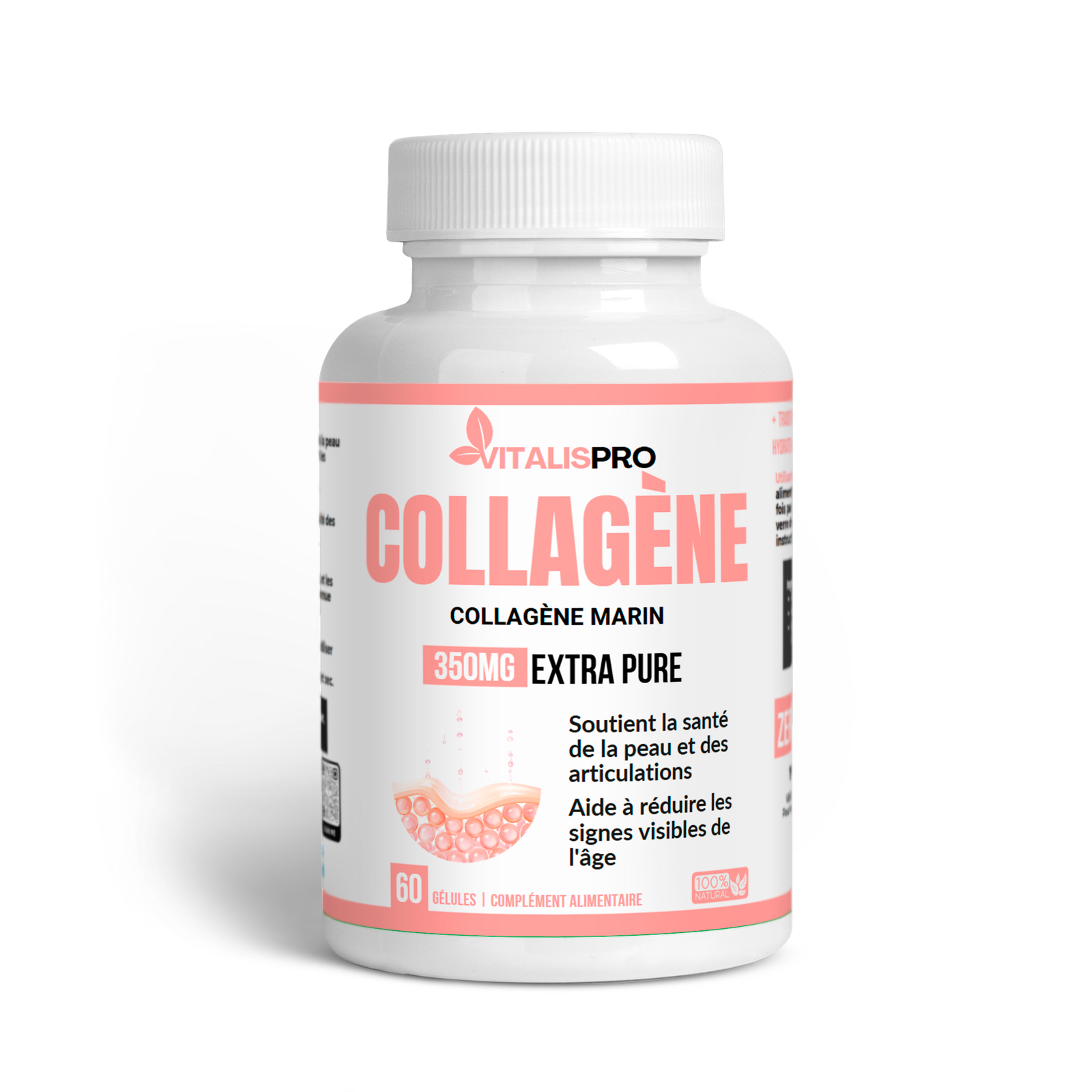
It is by building on this logic of type I collagen and strong bioavailability that our team developed its reference formula, systematically pairing it with vitamin C. Because a well-absorbed peptide is of limited value if the cofactor indispensable to synthesis is missing.
What science actually establishes about skin
The internet overflows with collagen promises. Our role is to remain honest about what the research demonstrates, and about what remains to be confirmed. Here, in plain language, are the areas where the data are most solid — beginning with the domain that concentrates the most studies: the skin.
Hydration, elasticity, and wrinkles
This is the best-documented ground. Several controlled clinical trials have evaluated the effect of oral collagen peptides on skin quality. A rigorous systematic review, pooling results from numerous studies involving thousands of participants, observed improvements in skin hydration and elasticity after several weeks of regular intake. This reference work is accessible through this meta-analysis on collagen and the skin indexed on PubMed2. The public-facing synthesis by Harvard Health on collagen supplements6 reaches the same nuanced conclusion: real benefits on firmness and hydration, but gradual ones.
In practice, the observed benefits are not spectacular overnight. They build progressively, generally after four to eight weeks, and relate primarily to skin suppleness and comfort. It is sustained support, not a magic wand. Our team always stresses this point: consistency matters more than intensity.
The pivotal role of vitamin C
No discussion of collagen is complete without returning to vitamin C. The European Food Safety Authority has validated a specific health claim: vitamin C contributes to the normal formation of collagen to support the normal function of skin, bones, cartilage, gums, teeth, and blood vessels. This official recognition appears in the EFSA register on the functions of vitamin C3.
This is why Alphavital has never designed a collagen formula without a paired vitamin C component. The two form a logical duo: one provides the raw material, the other makes its assembly possible. Offering collagen alone would be like delivering bricks without mortar. That is the entire spirit of our Marine Collagen & Vitamin C formula, conceived as an inseparable pair.
| Nutrient | Role in inside-out beauty | Dietary sources |
|---|---|---|
| Marine collagen | Primary skin raw material, type I | Fish skin, bone broths |
| Vitamin C | Normal formation of collagen | Citrus, peppers, parsley |
| Biotin | Maintenance of normal hair and skin | Eggs, nuts, legumes |
| Zinc | Maintenance of normal skin and nails | Meat, seeds, seafood |

Antioxidants: the bodyguards of collagen
Producing collagen is not enough. It also needs protection. Free radicals — those unstable molecules generated by sun exposure, pollution, or an unbalanced diet — attack and break down existing fibres. This is where antioxidants step in. Vitamin C is itself a potent antioxidant, making it doubly useful. The colourful fruits, aromatic herbs, and olive oil from our culinary heritage also contribute protective polyphenols.
Hair, nails, and joints: beyond the skin
Collagen is often reduced to an anti-wrinkle product. That is a narrow view. This protein is everywhere, and its potential benefits extend well beyond the face.
Stronger hair and nails
Hair and nails are made of keratin, but they take root in tissue rich in collagen. The hair follicle — that small factory from which every strand grows — is embedded in the dermis and depends on it being well nourished. A dense, well-supported dermis offers a more favourable environment for growth.
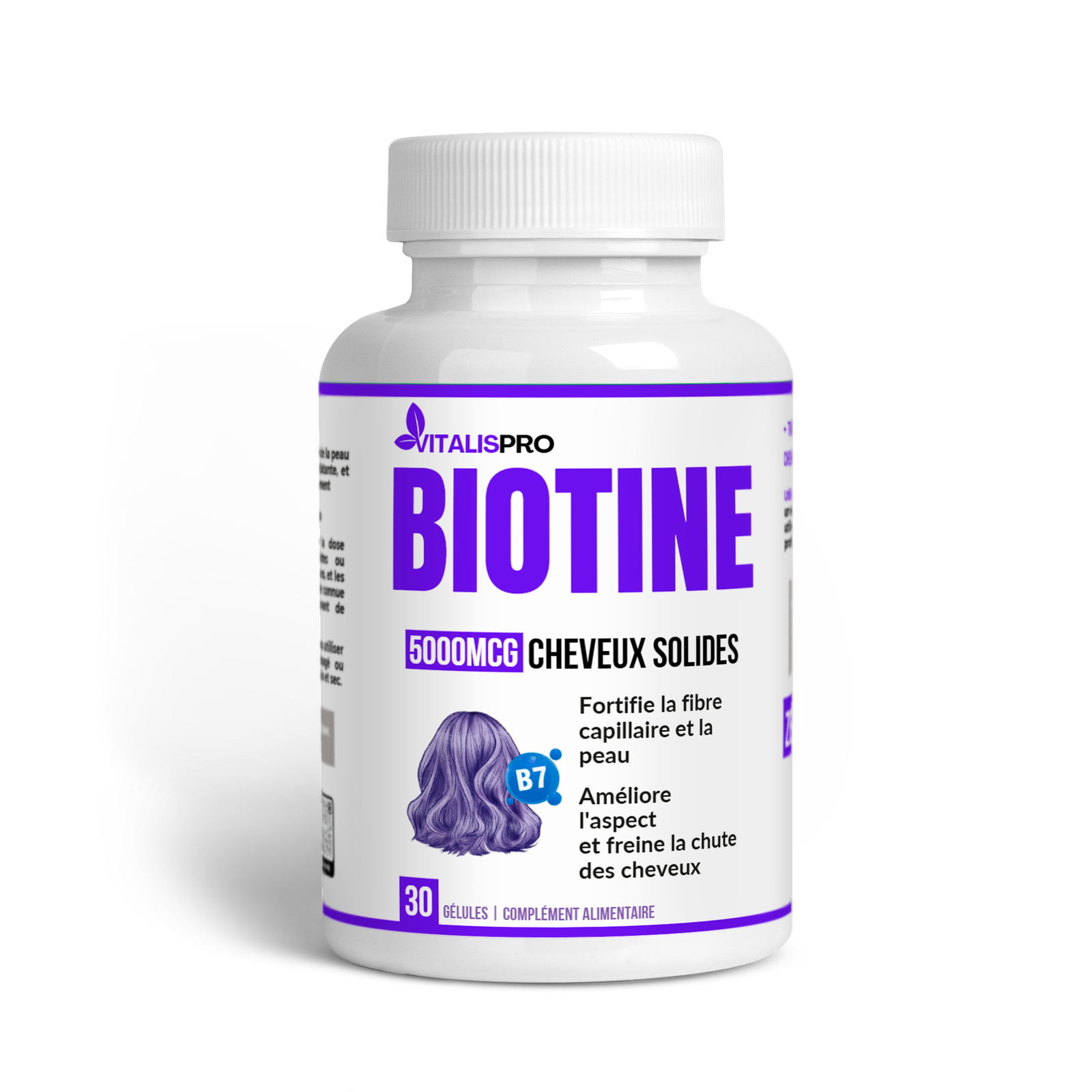
This is where biotin, vitamin B7, enters the picture. European authorities recognise that it contributes to the maintenance of normal hair and normal skin. Many Moroccans turn to it when they notice hair that seems finer or more brittle, particularly after summer or a period of fatigue. Biotin does not cause miraculous regrowth, but it supports the normal structure of hair.

For those whose priority is their hair, our team has developed a dedicated biotin concentrate to integrate into an overall routine. It is a complement to collagen, not a substitute: one nourishes the structure, the other supports the skin environment from which hair grows. To explore the full hair-care routine, our Hair collection brings together all the dedicated actives.
Joints: type II collagen as support
The cartilage that covers our joints is itself composed largely of collagen, principally type II. With age and wear, this cartilage thins, which translates into stiffness and discomfort, particularly in the knees and hips. This is a topic very present in Morocco, where people remain active for a long time and walking is part of daily life.
Several studies have examined the value of collagen peptides for the joint comfort of active individuals. A review found that supplementation could accompany improved comfort during physical activity, as detailed in this synthesis on collagen and joints indexed on PubMed4. The data are encouraging, even if research in this area is younger than that on skin.

Our team emphasises one principle of caution. A supplement is never a treatment. In the event of established, persistent, or debilitating joint pain, the advice of a healthcare professional remains the essential first step. Collagen fits within an approach of comfort and support, not medical care.
This video from Le Point magazine reviews the documented benefits of collagen for the skin: what research confirms, and how to distinguish marketing promises from solid scientific data.
Bones and density: a quiet contribution
It is often forgotten, but our bones are not simply blocks of calcium. Their matrix is built on collagen, on which minerals are deposited. It is this protein framework that gives bone its resilience to impact. Preserving this framework also means caring for one’s bone capital over the long term, alongside the classics of calcium and vitamin D.
The Moroccan factor: a demanding climate for skin
Marine collagen’s appeal in Morocco is no coincidence. Our environment accumulates several challenges for skin and tissues that are worth examining honestly.
| Local factor | Effect on collagen | Protective reflex |
|---|---|---|
| Intense sunshine | Degrades fibres (photoageing) | Daily sun protection |
| Dry air, wind, altitude | Dehydrates and weakens skin | Hydration, ample water intake |
| High-sugar diet | Stiffens collagen (glycation) | Limit fast-release sugars |
| Urban stress | Accelerates oxidative stress | Sleep, antioxidants |
The sun deserves special mention. Morocco enjoys exceptional sunshine — a real asset, but also a significant demand on the skin. Consistent sun protection remains the number-one anti-ageing gesture, well ahead of any supplement. No supplementation compensates for unprotected exposure.
Sugar is the other silent enemy. When consumed in excess, it attaches to collagen fibres and stiffens them, a phenomenon called glycation. The very sweet pastries so present in our moments of conviviality are best kept as an occasional pleasure rather than a daily habit. Here too, caring for one’s collagen begins on the plate, as we note in our Beauty & Anti-Ageing collection.

Feeding your collagen through diet: Moroccan habits that help
Before any supplement, there is the table. And Moroccan cuisine, in many respects, is a natural ally of collagen — provided certain habits are revived.
Broths and slow cooking
Our grandmothers had a beauty secret without knowing it: slow-cooked dishes. Long-simmered harira, meat tagines cooked on the bone, chicken or fish broths — all naturally release collagen and gelatin from animal tissues. This patient, unhurried cooking is an ancestral source of structural proteins. Reviving it is as much a reconnection with culinary tradition as it is a nutritional gesture.
Vitamin C in our pantry
Since vitamin C is indispensable to collagen synthesis, let us make the most of it. The Moroccan pantry is generous: seasonal oranges and clementines, the lemon that flavours so many dishes, peppers, fresh parsley and coriander, ripe tomatoes. A simple freshly squeezed glass of orange juice in the morning or a well-herbed Moroccan salad delivers a useful dose of this precious cofactor.

Proteins, antioxidants, and good fats
Collagen production requires amino acids. Eggs, fish, lean meats, and legumes such as chickpeas and lentils supply these building blocks. Add colourful fruits and vegetables for antioxidants, and olive oil for its healthy fats, and you have a remarkably favourable foundation for inside-out beauty. The Mediterranean diet, of which our cuisine is a close relative, is among the most studied for its benefits on skin and ageing.
Water, the overlooked ally
No support fibre stays supple in a dehydrated tissue. Water is the solvent of life, and healthy skin is saturated with it. In a dry, warm climate like ours, drinking enough is not a detail — it is a cornerstone. The gesture seems ordinary; it is nonetheless among the most rewarding for a radiant complexion.

When a marine collagen course in Morocco makes sense
The plate comes first, always. But there are situations where a well-formulated supplement provides a relevant boost. This is the case from one’s thirties onward, when the natural decline begins; after a period of intense sun exposure; at a change of season; or simply when one wishes to maintain skin luminosity and joint comfort on a regular basis.
A serious formula is essential. Three criteria make the difference. First, a collagen, broken down into peptides for genuine absorption. Second, the presence of vitamin C, without which synthesis cannot proceed properly. Third, real traceability and clear dosing. This is exactly the philosophy that guided our team’s work.
The Alphavital approach
Alphavital has developed a reference formula that unites the essentials: type I marine collagen, naturally close to the collagen in our own skin, paired with vitamin C which contributes to its normal formation. This duo is not a coincidental assembly. It translates into practice what science teaches about collagen production.
Every batch is traced and analysed, and the dosages respect the framework established by the relevant authorities. Alphavital recommends 2 capsules a day, 1 in the morning and 1 in the afternoon during a meal, as part of a course lasting several weeks. Consistency is decisive: skin benefits generally appear after four to eight weeks of sustained intake. This formula is part of our Skin & Nails collection, conceived as a coherent whole.
A good collagen formula is not about a weight on the label. It brings together a well-absorbed collagen, the vitamin C that enables its synthesis, and genuine traceability.
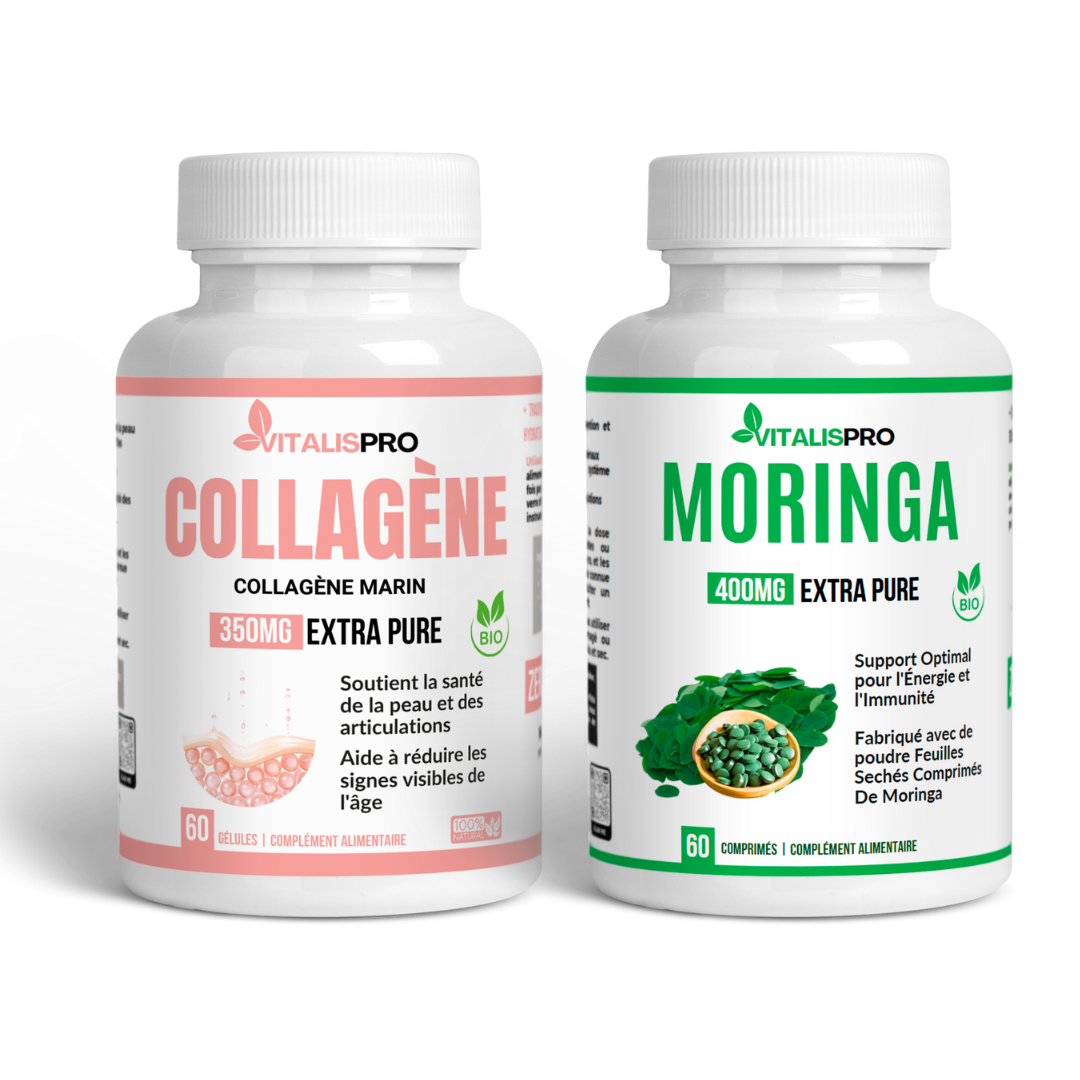
For those seeking broader support — covering both beauty and joints — our team also offers a formula enriched with moringa, combining marine collagen with the nutritional richness of this plant. It usefully extends the approach within our Bone & Joint Health collection. The specific contribution of vitamin C, beyond collagen, merits a full dedicated article that our team is currently developing. Skin beauty is also shaped by digestive balance: our guide on probiotics and the microbiome sheds light on the often underestimated link between gut health and a radiant complexion.
Using collagen correctly: a practical guide
A few practical reference points help avoid the most common mistakes and allow you to get the most from a course.
Dosage and timing
Alphavital’s collagen is taken as 2 capsules a day: 1 in the morning and 1 in the afternoon, during a meal. The key is daily consistency. The associated vitamin C optimises the use of peptides — one of the advantages of a combined formula over separate products.
How long does a course last
Patience is the golden rule. Fibroblasts need several weeks to integrate new peptides and restart their production. Allow at least one month for the first signs, and two to three months for a more accurate assessment. For sustained maintenance, a course-based approach — at a change of season or ahead of summer, for example — makes good sense.
Precautions to know
Marine collagen is well tolerated by most people. A few precautions are nevertheless necessary. In the case of an allergy to fish or shellfish, marine collagen is not indicated. During pregnancy, breastfeeding, a chronic condition, or ongoing medical treatment, the advice of a healthcare professional is essential before starting. A question before you begin? Our team responds directly via the Alphavital contact page.
The feedback our team receives is worth more than any argument. Here are three testimonials, shared with the permission of their authors.
At forty-five, I found my skin looking duller and less firm, especially after summers in Agadir. I started a marine collagen and vitamin C course, combined with a more consistent approach to sun protection. After two months, my skin felt more supple and my complexion looked more luminous. Nothing dramatic — just a comfort regained. — Latifa, Agadir
My knees were reminding me of my age at every staircase. I paired collagen with a little more walking and home-cooked stews. I won’t claim a miracle, but the stairs have become ordinary again. — Hassan, Fès
After breastfeeding, my hair was falling out and my nails were breaking. I took biotin alongside a diet richer in protein. The consistency paid off: stronger nails and hair that regained its density. — Nawal, Tangier
These accounts illustrate a simple truth: the most lasting results come from combining the right diet, a considered lifestyle, and — when genuinely useful — a well-chosen supplement. Collagen is not a standalone solution; it is one piece of a larger puzzle.
Marine collagen benefits: what the trials actually measured
Most collagen trials look at skin. A few now look at hair. Here are four studies that used fish collagen or pooled many trials, with what they found and what they did not.
| Study (author, year) | Who, how much, how long | What was found |
|---|---|---|
| Pu, 2023 (meta-analysis) | 26 placebo-controlled trials, 1,721 people, various collagen sources and amounts | Skin hydration and elasticity improved versus placebo. The hydration effect varied with the collagen source and the length of use.7 |
| Sangsuwan, 2021 | 36 women after menopause; 5 g of marine collagen a day; 4 weeks | Cheek elasticity improved versus placebo, and the difference was still there 4 weeks after stopping.8 |
| Hwang, 2026 | 114 women aged 20 to 50 with thinning hair; 1 g of fish-skin collagen peptides a day; 24 weeks | Skin elasticity improved from week 12. Hair diameter increased at week 24, not before.9 |
| Milani, 2023 | 83 people with hair loss already under medical care; fish collagen with amino acids, iron and selenium; 12 weeks | Hair looked better in photos than with medical care alone. It was a combination, so collagen’s own share is unknown.10 |
What this does not show. The skin results are the most consistent, but they concern hydration and elasticity, not the disappearance of deep wrinkles. The hair data are early: one trial measured thicker hair after six months, and another tested collagen mixed with other nutrients. Amounts and forms differ a lot from one trial to the next, from about one gram to several grams a day, so a single study never transfers exactly to another product. One of the hair trials was run by staff of the company that sells the product. And no collagen study replaces daily sun protection, which remains the first thing that keeps skin collagen intact.
Collagen for skin and collagen for hair: what to expect, and when
Skin and hair do not renew at the same speed, so they should not be judged at the same moment. The table below follows the timing used in the trials.
| Goal | What trials measured | When to judge fairly |
|---|---|---|
| Skin that feels tight or dry | Hydration, measured on the face or forearm | From week 4, clearer at weeks 8 to 12 |
| Skin that feels less firm | Elasticity, measured with a suction device | From week 4 in some trials, more often at week 12 |
| Fine, thinning hair | Hair diameter, under magnification | Not before week 24 in the only trial on this point |
| Nails that split | Few trials on collagen alone | After 2 to 3 months, as nails grow slowly |
A simple way to keep track: take two photos on day one, one of your face near a window and one of your hairline or parting. Take them again at week 8 and at week 24, in the same light. Memory is a poor judge of slow change, and photos help you decide calmly whether to continue.
What a realistic result looks like. Skin that pulls less after a shower or a day in the wind. Fine lines around the eyes that look a little softer in the same light. Hair that feels a bit fuller when you tie it, after several months. What collagen will not do is erase deep folds, replace sunscreen or bring back hair where it has stopped growing. Keeping your expectations at this level is what lets you judge the course fairly.
How to take marine collagen: the morning and afternoon routine
Alphavital’s advice for Marine Collagen & Vitamin C is two capsules a day: one in the morning and one in the afternoon, each with a meal and a large glass of water. Tying each capsule to a meal you already eat makes the habit easy to keep, which is what counts over several months. Each capsule pairs marine collagen with vitamin C, which contributes to normal collagen formation for the normal function of the skin. That pairing is the point of the formula: one brings the building material, the other is needed to assemble it.
- Morning: one capsule with breakfast.
- Afternoon: one capsule with lunch or an afternoon snack that includes food.
- During Ramadan: one with iftar, one with suhoor.
- Forgot one? Take it with the next meal. Do not double up the next day.
Some people want more vitamin C in the same routine, for example when they eat little fruit. The Complete Beauty Bundle adds one vitamin C 500 mg tablet in the morning to the two collagen capsules. Together, they give the skin both the collagen supply and a fuller vitamin C intake, from one breakfast habit. Others want to support skin and everyday comfort in the joints at the same time: the Marine Collagen & Moringa pack pairs the two collagen capsules with one to two moringa tablets, a leaf rich in vitamins and minerals. You can compare every option in our Skin & Nails range.
Who should check with a health professional first
- People allergic to fish or seafood. Marine collagen comes from fish.
- People with a history of kidney stones, before adding the vitamin C 500 mg tablet of the bundle.
- Anyone who is pregnant or breastfeeding. Moringa in particular is not advised during pregnancy.
- People taking medicines for the thyroid or for blood sugar, before starting the moringa pack, as moringa may interact with them.
- Anyone with a chronic condition or a long-term treatment.
If your main question is how collagen performs in real life and how to plan a full course, our guide to marine collagen results and the full course answers that in detail. This page stays on the evidence for skin and hair, and on the daily routine.
Frequently asked questions about marine collagen in Morocco
Is marine collagen really effective on the skin?
Several clinical trials and a reference meta-analysis have observed improvements in skin hydration and elasticity following several weeks of regular collagen peptide intake. The effects are gradual, generally appearing between four and eight weeks. Marine collagen, rich in type I, is well suited to a skin-focused objective. The regularity of the course is decisive.
What is the difference between marine collagen and bovine collagen?
Marine collagen, derived from fish skin and scales, is predominantly type I — the type that dominates in the skin — and is recognised for its good assimilation. Bovine collagen contains higher proportions of type I and type III. For a skin beauty objective, type I marine collagen is a consistent choice. Alphavital has selected marine collagen for its formulas oriented towards skin luminosity.
Why pair vitamin C with collagen?
Vitamin C is indispensable to the body’s collagen synthesis: European authorities recognise that it contributes to the normal formation of collagen for skin, bones, and cartilage. Without it, the body cannot correctly assemble new fibres. This is why Alphavital formulas systematically pair marine collagen with vitamin C.
Does biotin make hair grow?
Biotin, or vitamin B7, contributes to the maintenance of normal hair and normal skin according to European authorities. It supports the normal structure of hair, which is useful when hair seems finer or more brittle. It does not trigger miraculous regrowth, but it supports a favourable foundation alongside a protein-rich diet.
How long before a collagen course shows results?
For skin, allow four to eight weeks of regular intake before appreciating the first effects on suppleness and hydration. For hair and nails, which grow slowly, two to three months are often necessary. Patience and consistency are the two keys to a successful collagen course.
Is collagen suitable for everyone?
Marine collagen is well tolerated by most people. It is not recommended in the case of an allergy to fish or shellfish. During pregnancy, breastfeeding, chronic conditions, or ongoing medical treatments, seek advice from a healthcare professional before starting a course.
Can collagen be replaced by diet alone?
Partly. Bone broths, bone-in tagines, and slow-cooked dishes provide collagen and gelatin, while citrus fruits supply vitamin C. A diet rich in protein, antioxidants, and water supports natural production. A well-formulated supplement provides a practical, dosed contribution, especially from the thirties onward or during periods of heightened demand.
Do the benefits last if I stop taking collagen?
In one trial, the gain in skin elasticity was still measurable four weeks after people stopped taking marine collagen. Over a longer time, the body’s natural collagen loss continues, so the benefits are likely to fade gradually. Many people repeat a course before summer or at a change of season.
Can I take marine collagen with my other supplements?
Yes, in most cases. Collagen is a protein, so it does not compete with vitamins or minerals. Count your total vitamin C if you take several products. If you are on medication, show the full list of your supplements to a health professional.
In summary
Collagen is the living framework of our skin, hair, joints, and bones. Its production declines with age, a decline accelerated by sun, sugar, and stress — factors all very present under the Moroccan climate. We maintain it first through the plate: broths and slow-cooked dishes from our culinary heritage, vitamin C from citrus fruits, antioxidants, good fats, and generous hydration.
When a boost is needed, a serious formula combining a well-absorbed marine collagen with the vitamin C indispensable to its synthesis takes its full meaning. This is the path Alphavital has chosen, with a transparent approach faithful to the science. Taking care of one’s collagen is not giving in to a trend. It is investing, day after day, in the beauty that comes from within.
About the author. Houda Khaldi is the Natural Nutrition Editorial Advisor at Alphavital. She translates scientific research into clear, actionable guidance for everyday Moroccan life.
Disclaimer. The information presented is provided for informational purposes only, based on sourced research (PubMed, EFSA, regulatory authorities). The Alphavital team does not include healthcare professionals. Consult a qualified healthcare professional before use, in the case of ongoing treatment, pregnancy, breastfeeding, or a pre-existing medical condition. Food supplements are not a substitute for a varied and balanced diet or a healthy lifestyle.
Sources and references
- Rittié L, Fisher GJ. Natural and sun-induced aging of human skin. Cold Spring Harb Perspect Med. 2015;5(1):a015370. PubMed
- de Miranda RB, et al. Effects of hydrolyzed collagen supplementation on skin aging: a systematic review and meta-analysis. Int J Dermatol. 2021. PubMed
- Functions of vitamin C (normal formation of collagen for skin, bones, cartilage). EFSA
- Clark KL, et al. 24-week study on the use of collagen hydrolysate as a dietary supplement in athletes with activity-related joint pain. Curr Med Res Opin. 2008;24:1485-1496. PubMed
- Collagen: types, function, and benefits — reference health guide. Cleveland Clinic
- Collagen drinks and supplements: what the research says about skin. Harvard Health
- Pu SY, Huang YL, Pu CM, et al. Effects of Oral Collagen for Skin Anti-Aging: A Systematic Review and Meta-Analysis. Nutrients. 2023;15(9):2080. PubMed 37432180
- Sangsuwan W, Asawanonda P. Four-weeks daily intake of oral collagen hydrolysate results in improved skin elasticity, especially in sun-exposed areas: a randomized, double-blind, placebo-controlled trial. J Dermatolog Treat. 2021;32(8):991-996. PubMed 32009486
- Hwang S, Won J, Kim S, Kang W, Park M. Low-Molecular-Weight Collagen Peptide Supplementation Improves Cellulite Severity, Skin Elasticity, and Hair Shaft Diameter: A Clinical Study with Pharmacokinetic Evaluation. J Med Food. 2026;29(4):187-195. PubMed 41788055
- Milani M, Colombo F; GFM-O-Trial Investigators Group. Efficacy and tolerability of an oral supplement containing amino acids, iron, selenium, and marine hydrolyzed collagen in subjects with hair loss (androgenetic alopecia, AGA or FAGA or telogen effluvium). A prospective, randomized, 3-month, controlled, assessor-blinded study. Skin Res Technol. 2023;29(6):e13381. PubMed 37357646