

Some tiredness has no clear cause. The blood test is normal, the nights are long enough, and yet the afternoon feels heavy and focus slips by four o’clock. Red ginseng is one of the few plants tested on exactly this kind of everyday fatigue. Here is what those trials measured, how strong the results really are, and how to take it so it fits your day.
هل تُفضّل قراءة هذا الدليل باللغة العربية؟ اطلع على نسختنا الكاملة عن الجنسنج الأحمر بالعربية.
There is a plant whose root, after spending six long years in the earth, takes a form uncannily close to that of a human body. The Chinese gave it a name that says it all: rénshēn, “the man-root.” Its botanical name is Panax ginseng, and that word “Panax” shares the same origin as “panacea.” For two thousand years, traditional medicine across the Far East made it its sovereign plant — reserved for emperors before becoming one of the most rigorously studied supplements in the world.
In Morocco, the name comes up constantly. In the pharmacies of Casablanca, on forums where people try to understand a fatigue that will not lift, in conversations between friends in Rabat ahead of an exam or a high-pressure period — red ginseng surfaces as a recurring topic. Our team receives questions about it every week. Is there real science behind it? What does the research say? Does it genuinely help with fatigue, focus, and libido? This article answers those questions on the basis of available studies and a simple principle: never promise what the science does not support. For a broader view of the subject, you can also read our pillar guide on vitality, energy, and performance.
By Houda Khaldi, Natural Nutrition Editorial Advisor · Published 17 June 2026 · 18-minute read
Contenu de la page
- 1 Key Takeaways
- 2 Red Ginseng: One Root, Two Thousand Years of History
- 3 What Red Ginseng Actually Contains
- 4 The Science: What the Studies Actually Say
- 5 The Alphavital Formulation: Purity Before Promises
- 6 Red Ginseng Day to Day: Dosage, Course of Use, and Precautions
- 7 Red Ginseng Within a Complete Approach to Vitality
- 8 What Those Who Have Tried It Report
- 9 Red ginseng benefits: what the studies actually measured
- 10 Ginseng for energy: how to take it and what to expect
- 11 Frequently Asked Questions About Red Ginseng
- 11.1 What are the benefits of red ginseng in Morocco?
- 11.2 What is the difference between red ginseng and white ginseng?
- 11.3 Does red ginseng support libido?
- 11.4 How long before red ginseng shows effects?
- 11.5 What is the recommended dosage for red ginseng in Morocco?
- 11.6 Are there precautions for using red ginseng?
- 11.7 Can I take red ginseng with tea or coffee?
- 11.8 What are the side effects of red ginseng?
- 11.9 Is red ginseng only for men?
- 12 In Summary
Key Takeaways
- Red ginseng (Panax ginseng, steam-dried) is the reference adaptogen: a plant that helps the body better cope with different forms of stress — physical and mental alike.
- Its active compounds, the ginsenosides, are studied in clinical trials for their support of energy, fatigue resistance, and cognitive function (focus, working memory).
- Several systematic reviews associate red ginseng with support of sexual wellbeing and libido, particularly in men.
- Red ginseng differs from white ginseng by its steam-processing, which transforms its ginsenoside profile and explains its status as the energy benchmark.
- Alphavital offers a pure red ginseng at 500 mg per capsule — clean and traceable — as well as a complete male performance programme.
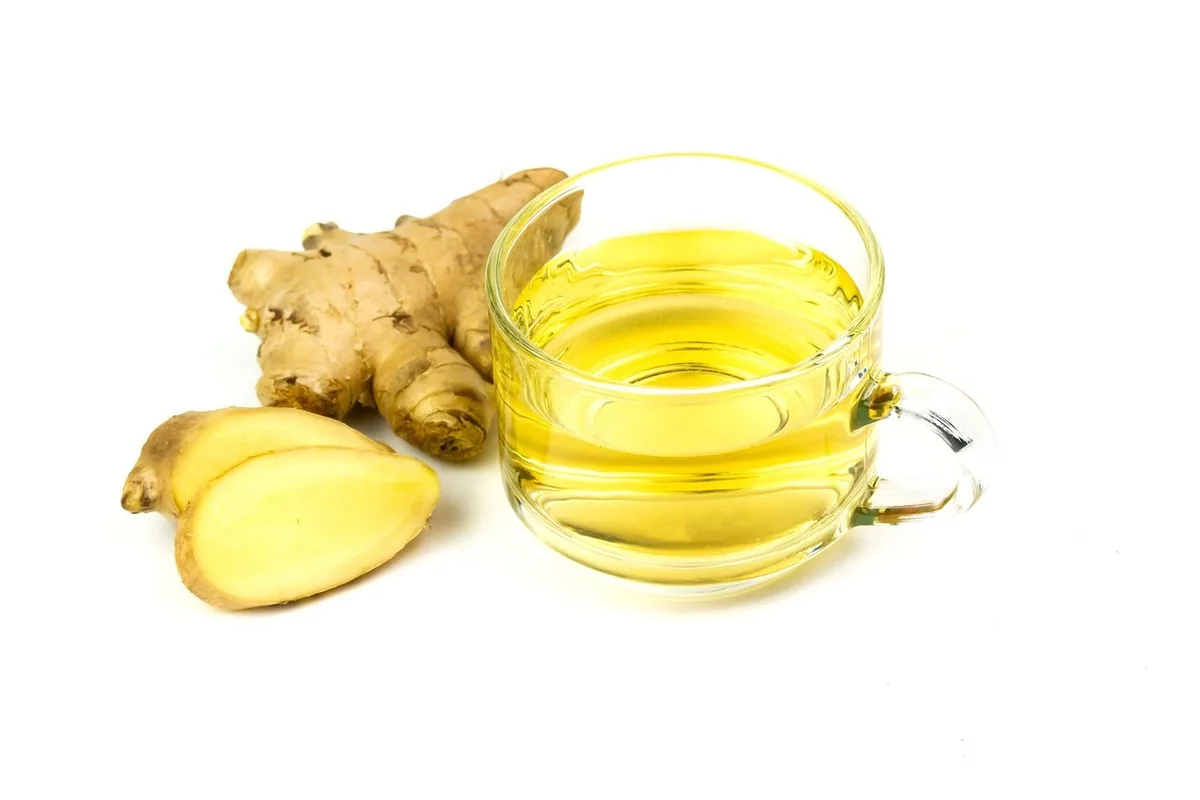
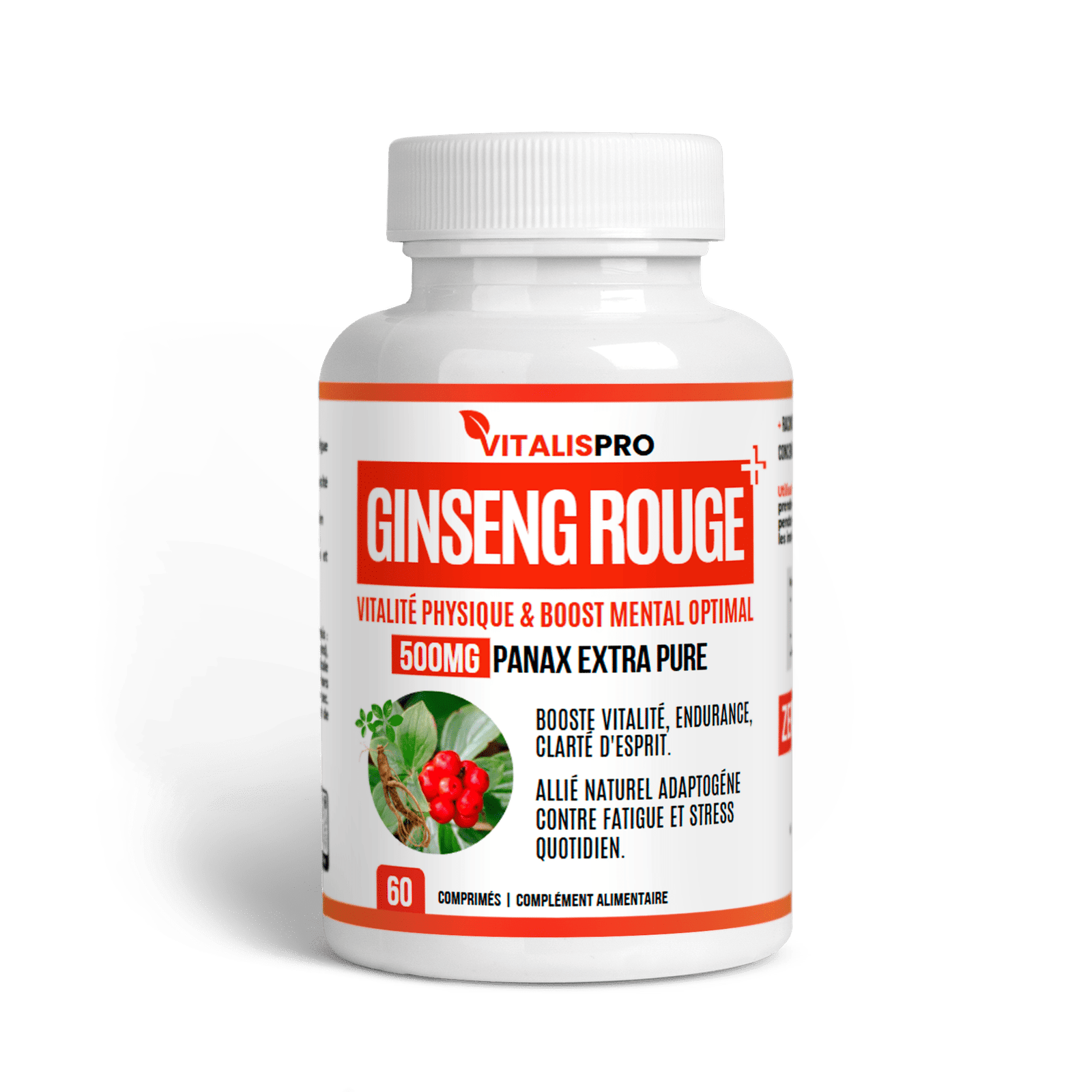
Red Ginseng: One Root, Two Thousand Years of History
Before it became a supplement, ginseng was first a story of patience. The root of Panax ginseng grows slowly in the mountain forests of Korea, China, and the Russian Far East. It takes four to six years to reach maturity: the longer it stays in the ground, the more it concentrates the compounds that define its reputation. This slow growth alone explains why the quality of a root has never been a trivial matter.
In traditional Chinese and Korean medicine, ginseng holds a singular place. It was classified among the superior tonics — those taken not to treat a declared illness, but to sustain vital energy, qi, and support longevity. First reserved for emperors and wealthy families, it eventually spread far beyond Asia to become today one of the most rigorously studied plants in modern research.
Ginseng is not a passing trend. It is an ancestral tonic whose efficacy modern science is now confirming — one millennial intuition at a time.
This meeting of tradition and laboratory is precisely what defines an adaptogen: a plant capable of helping the body better adapt to different forms of stress, whether physical, mental, or environmental. The concept was formalised in the mid-twentieth century, and ginseng became its most emblematic representative. Our team explored this broad functional family in its guide on ashwagandha, stress, and sleep — another complementary adaptogenic plant.
Red or White: The Same Root, Two Preparations
Here is a point that directly determines product quality, and one that must be understood above all else. Red ginseng and white ginseng come from the same plant: Panax ginseng. What distinguishes them is not the species, but the preparation method applied to the root after harvesting.
White ginseng is simply peeled and air-dried. Red ginseng, by contrast, is steamed before drying: this thermal process gives it its characteristic amber hue and, more importantly, deeply transforms its ginsenoside profile. Steam processing generates specific compounds — including certain rare ginsenosides — that are present in higher concentrations in the red form. This transformation is what made red ginseng the reference whenever energy and vitality are concerned. Our team watches this distinction closely at the sourcing stage, as it does for every plant in the Energy & Vitality category.
One more point to watch: the term “ginseng” is sometimes misused to designate other plants entirely, such as eleutherococcus, long called “Siberian ginseng.” Yet it is a botanically distinct species with a different profile. The true ginseng — the one most rigorously studied by research — remains Panax ginseng.
What Red Ginseng Actually Contains
Behind the name lies a remarkably rich chemistry. Red ginseng does not act through a single molecule but through an ensemble of compounds that work in concert. Understanding this composition helps distinguish a pure, mature root from a diluted powder sold under the same name.
The star compounds are the ginsenosides, a family of saponins unique to the Panax genus. Dozens have been identified, and it is these that research connects to most of the observed effects. The root also provides polysaccharides, peptides, phenolic compounds, and polyacetylenes. This complex cocktail — not a single isolated active — is what gives ginseng its singular profile.
A landmark scientific review surveyed the plant’s pharmacology and confirmed the diversity of these compounds and the mechanistic pathways under investigation. It can be accessed via this Panax ginseng review on PubMed1. The researchers’ message is consistent: ginsenoside concentrations depend on root age, the part used, and preparation — which justifies a rigorous approach to traceability.
Acting on Adaptation to Stress
This nuance captures the plant most accurately. Red ginseng is not a stimulant in the way coffee or an energy drink is: it does not whip the body forward only to let it crash. Its interest — studied from the adaptogenic angle — is helping the body better regulate its response to stress and fatigue, rather than overriding it.
Researchers explore several pathways: an effect on the stress axis, support of antioxidant defences, an influence on cellular energy production and circulation. This characteristic makes red ginseng a foundational option, whose benefits are appreciated over time. Our team refuses to trade in spectacular promises: the purity of the raw material and consistency from batch to batch matter as much as any marketing claim. We apply this sourcing philosophy to every plant in the range, as we explained in our guide on maca, energy, and libido — an Andean root with a neighbouring but distinct profile.
The Science: What the Studies Actually Say
This is where everything is decided. The internet overflows with spectacular claims about ginseng. Our role is to be honest about what research demonstrates, what it suggests, and what remains uncertain. Below, in plain language, are the four areas where the evidence is most compelling: energy and fatigue, cognition, libido, and general resilience.
Energy and Fatigue Resistance
This is ginseng’s historical territory — and the area where data converges most clearly. Several clinical trials have evaluated its effect on fatigue, particularly persistent fatigue not linked to an identified medical cause. Results are encouraging: ginseng is associated with an improvement in perceived fatigue in a proportion of participants, with a generally favourable tolerability profile.
A systematic review synthesised this work on ginseng and fatigue. It can be accessed via this full-text review on PubMed Central2. The researchers’ finding is nuanced but positive: ginseng supports fatigue resistance without replacing sleep, rest, or addressing any underlying cause. This honesty is, in our view, the condition for trustworthy information.
Focus and Cognitive Function
The second area of study concerns the brain. Several trials measured the effect of ginseng on cognitive markers: reaction time, working memory, mental arithmetic ability, and sense of mental clarity. The data suggests support for cognitive performance, particularly in conditions of fatigue or high mental load.
A Cochrane review — the reference standard for independent evaluation — examined ginseng and cognition. It can be accessed via this full-text synthesis on PubMed Central3. Here again the researchers urge caution and call for further trials, while noting signals of interest. For those interested in supporting memory and concentration, our team has also produced a guide on ginkgo biloba, memory, and circulation — a plant that complements ginseng.
Libido and Sexual Wellbeing
This is arguably red ginseng’s most emblematic use — and it rests on serious foundations. Several randomised trials, conducted primarily in men, have evaluated its support of sexual wellbeing and libido. The findings are among the most consistent in the plant vitality literature.
A systematic review synthesised these trials. It can be accessed via this review on red ginseng and sexual function on PubMed4. The authors conclude that favourable signals exist, while noting study heterogeneity and the need for larger trials. Red ginseng acts here as a foundational support for intimate wellbeing, within a holistic approach that includes sleep, physical activity, and stress management. For a complete panorama, our team has brought together the plants of male performance in a dedicated guide to men’s vitality.
Physical Performance and Endurance
Beyond mental fatigue, red ginseng also interests those who tax their bodies. Studies have explored its effect on physical performance and recovery — particularly the sense of endurance during prolonged effort. The pathways advanced by researchers are consistent with its adaptogenic profile: support for cellular energy production, modulation of the stress response to exercise, and a contribution to antioxidant defences put under strain during training. The data warrant further investigation, but they paint the picture of a plant for whole-body resilience — useful to mind and body alike.
This is also why red ginseng finds a place in the routines of very different people: the student during revision periods, the professional under heavy load, the athlete seeking natural and consistent support, or simply anyone going through a temporary energy dip. Its versatility is not coincidental: it flows from its adaptogenic mechanism, which helps the body cope rather than forcing a single lever.
Immunity and General Resilience
A fourth, less well-known area of study concerns support of natural defences. The polysaccharides in ginseng are the subject of research on immune modulation, and some trials have observed an effect on general resilience — notably during seasonal stress periods. The data need further consolidation, but they complete the picture of a plant for broad resilience rather than a single-effect agent.
This overview calls for a measured reading. Red ginseng is not a quick-fix cure: it is a foundational plant whose benefits express themselves over time and within a coherent lifestyle. This very honesty guides the way Alphavital formulates and presents its products.
The Alphavital Formulation: Purity Before Promises
With the science established, the decisive question remains: which ginseng to choose? Because the difference between a mature root, properly prepared and traceable, and a diluted powder sold under the same name is considerable — even when the label carries the same designation. Trust is built on this dividing line.
Alphavital has made a choice of simplicity: a pure red ginseng root at 500 mg per capsule, without supplementary ingredients. Rather than stacking actives to impress on the label, our team relies on quality raw material, a dosage consistent with traditional use and research, and real traceability. Consistency from batch to batch is, in our view, the genuine marker of seriousness.
| Criterion | The Alphavital Standard |
|---|---|
| Plant | Red ginseng — Panax ginseng (steam-processed) |
| Dosage | 500 mg per capsule |
| Form | Capsule, for simple daily use |
| Approach | Pure, clean root with no fillers — sourcing traceability verified |
| Studied use | Physical and mental energy, fatigue resistance, focus, libido |
This commitment to purity is not a slogan: it is a method. Our team applies it in the same way to every plant in the range, from maca’s support to functional mushrooms. Red ginseng is its purest expression — in the literal sense of the word.
Red Ginseng Day to Day: Dosage, Course of Use, and Precautions
Understanding the science is valuable; knowing how to integrate it into your day is better still. Red ginseng does not act like an immediate stimulant: it is a foundational course of use, built on regularity. Here are the guidelines our team shares.
When and How to Take It
Alphavital recommends taking it in the morning or early in the day, with a large glass of water, preferably with a meal. Why morning? Because ginseng supports alertness and vigilance: taken too late, it may interfere with falling asleep in sensitive individuals. Regularity takes precedence over quantity: it is consistency, day after day, that gives the root the opportunity to express its value.
Like any adaptogen, red ginseng rewards long-term use. The benefits observed in studies typically emerge after four to eight weeks of regular intake. A standard course therefore spans several weeks — sometimes with planned breaks — rather than a few days. It is a foundational investment in your energy, not a one-off boost.
Precautions and Responsible Use
Transparency also requires discussing limits. Red ginseng is not suitable for every situation. Pregnant or breastfeeding women, people on medication — notably anticoagulants, blood-pressure drugs, or diabetes treatments — and those with specific health conditions should seek the advice of a healthcare professional before taking it. With late-day intake, some sensitive individuals may experience heightened alertness: in that case, morning remains the best time.
These guidelines are not formalities. They reflect a conviction: a serious plant deserves serious information. For safety guidance on herbal supplements, you can also consult the National Library of Medicine5 and the European health-claims framework established by the EFSA6.
Red Ginseng Within a Complete Approach to Vitality
Red ginseng is a remarkable root, but it never works alone. In tradition as in practice, it is most often part of a whole-body approach to energy and performance — alongside other plants with complementary profiles.
In that spirit, Alphavital designed a programme bringing together several plants of male vitality. The aim is not to pile up actives for the sake of it, but to cover the major axes of vitality together: energy, balance, physical performance, and intimate wellbeing. Ginseng contributes its adaptogenic dimension and energy support; the other plants complete the picture.
This logic of reasoned synergy — rather than indiscriminate stacking — lies at the heart of the Alphavital approach. It in turn requires quality raw materials and genuine traceability for each component. That is the condition for a programme that keeps its promise without ever overselling.
It must also be stated plainly that no supplement will ever replace the foundations of lasting energy: sufficient, regular sleep; a varied diet; consistent physical activity; and daily stress management do far more for vitality than any capsule taken in isolation. Red ginseng fits into this whole — it accompanies, supports, and complements, but substitutes nothing. It is precisely because our team holds this conviction that it prefers a pure, honest root to spectacular promises. Vitality is not a product you buy: it is a balance you build, day by day, and a good supplement simply helps reinforce it.

What Those Who Have Tried It Report
The feedback our team receives is worth more than any discourse. Here are three testimonials, shared with the permission of their authors.
I was going through an intense period at work, with a fatigue that would not lift even on weekends. I took red ginseng every morning for two months. Without claiming miracles, I found that my energy was more stable throughout the day, with fewer afternoon slumps. — Karim, Casablanca
Before my exam periods, I struggled to concentrate for long stretches. I added ginseng to my morning routine. What struck me most was a better consistency in my focus, without the jittery edge that coffee gives me. — Imane, Rabat
In my fifties, I was looking for something natural and serious for overall drive and vitality. I chose the complete programme to cover all angles. Three months on, I feel sharper, more present, with more momentum in my everyday life. — Hassan, Marrakech
These accounts illustrate a simple truth: the most lasting results come from combining a sound lifestyle with, when helpful, a well-chosen supplement.
Red ginseng benefits: what the studies actually measured
Ginseng research is large, but much of it is in cells or animals. The human trials below are the ones that tested the question most readers ask: does it help with everyday tiredness and focus? Here is who took part, how much they took, and what was really found.
| Study (author, year) | Who, how much, how long | What was found |
|---|---|---|
| Kim, 2013 | 90 adults with long-lasting tiredness of no known cause; 1 g or 2 g ginseng extract a day; 4 weeks | Mental fatigue scores improved more than with placebo. The total fatigue score did not differ significantly. |
| Lee, 2025 | 46 healthy middle-aged adults; 960 mg Korean red ginseng extract a day; 3 weeks | Self-rated fatigue fell more than with placebo. Cortisol and lactic acid did not change. No extra side effects. |
| Reay, 2005 | 30 healthy young adults; one dose of 200 mg or 400 mg; tested over a demanding hour | 200 mg improved a mental arithmetic task and reduced mental tiredness. Blood sugar dropped after both doses. |
| Arring, 2018 | Review of 10 trials in people living with fatigue | Low risk of side effects and modest evidence of benefit. Better trials are needed. |
Three points stand out. First, the clearest signal is on the mental side of tiredness: in the largest trial, people rated their mental fatigue lower after four weeks, while the overall score did not move enough to be sure7. Second, a recent trial in healthy adults with no diagnosis found a lower fatigue rating after only three weeks of red ginseng, with no more side effects than placebo8. Third, a single dose was tested during an hour of hard mental work: people did better on a subtraction task and felt less mentally drained, and their blood sugar went down9. A review of ten trials sums it up fairly: promising, safe in the short term, but not yet strong10.
What this does not show. These trials are small and short, from one to four weeks. They measured how tired people felt, not their physical strength or endurance. Two of them used a standard Panax ginseng extract rather than red ginseng specifically. None of them shows that ginseng replaces sleep, a balanced plate, or a check-up when tiredness lasts for months. A fatigue that does not lift deserves a blood test first, for iron or vitamin D for example. Ginseng fits after that, as support for demanding weeks.
Ginseng for energy: how to take it and what to expect
Each Alphavital Red Ginseng capsule provides 500 mg of Panax ginseng extract. Two a day give 1 g, the lower amount used in the Kim trial and close to the 960 mg used in the 2025 trial in healthy adults. This is why the Alphavital Red Ginseng course is built on one to two a day rather than more.
- Start with one a day for the first week, with breakfast. Move to two if you feel you need it, taking the second one at lunch.
- Watch your tea and coffee. If you already drink several glasses of strong tea, start with one a day and see how you feel.
- Judge at the end of the first month. In the trials, the differences were measured after three to four weeks, not after a few days. A full course runs two to three months.
- During Ramadan, take it with iftar rather than late at night, so it does not shorten an already short sleep.
- Tie it to a fixed meal. Every trial above used daily intake. Taking it at the same breakfast each day is the simplest way not to miss a dose, and missed days are the main reason a course feels like it did nothing.
Tiredness often has more than one cause. When it comes with paleness or a diet low in iron, ginseng alone covers only part of it. The Anti-Fatigue & Energy Programme was built for that case: red ginseng works on the feeling of mental and physical tiredness, while spirulina brings iron and moringa a dense base of vitamins and minerals. One works on how tired you feel, the others on what the body may be missing. The routine is simple: ginseng and moringa with breakfast, spirulina at lunch or dinner.
Some people feel their energy drop mostly during effort: climbing stairs, a football match, a long day on their feet. For them, L-Arginine 500 mg takes a different path, as an amino acid studied for blood flow and recovery after exercise. It can sit next to ginseng, one in the morning for the day, the other around training. The full Daily Energy range groups these options by need.
Who should check with a doctor first
The precautions above already cover pregnancy, breastfeeding and common medicines. Two more points are worth knowing. In healthy young adults, a single dose of ginseng lowered blood sugar within an hour9. If you take a medicine that lowers blood sugar, ask your doctor first and check your readings more often during the first weeks. And if you take antidepressants, or have high blood pressure that is not under control, talk to a doctor before starting any energising plant.
Frequently Asked Questions About Red Ginseng
What are the benefits of red ginseng in Morocco?
Red ginseng is studied for its support of physical and mental energy, fatigue resistance, focus, and libido. As the reference adaptogen, it helps the body better cope with different forms of stress. In Morocco, Alphavital offers it pure at 500 mg per capsule for daily, foundational use.
What is the difference between red ginseng and white ginseng?
Both come from the same plant, Panax ginseng. The difference lies in preparation: white ginseng is simply dried, whereas red ginseng is steamed before drying. This process alters its ginsenoside profile and gives it its amber colour. It is this red form that has become the benchmark for energy.
Does red ginseng support libido?
Several randomised trials, primarily in men, associate red ginseng with support of sexual wellbeing and libido. Systematic reviews report favourable signals while calling for further studies. Red ginseng acts as a foundational support within a holistic approach that includes sleep, physical activity, and stress management.
How long before red ginseng shows effects?
The benefits observed in studies typically appear after four to eight weeks of regular intake. Red ginseng does not work in a few days: it is a foundational course of use. A period of one to two months is generally useful for evaluating your own response, with regularity mattering more than quantity.
What is the recommended dosage for red ginseng in Morocco?
Alphavital recommends 1 to 2 capsules of 500 mg of red ginseng per day, preferably in the morning or early in the day with a large glass of water and with a meal. This dosage, available in Morocco, places regularity above quantity. A standard course spans several weeks.
Are there precautions for using red ginseng?
Yes. Pregnant or breastfeeding women, people on medication — notably anticoagulants, blood-pressure drugs, or diabetes treatments — and those with specific health conditions should seek the advice of a healthcare professional before taking it. With late-day intake, some sensitive individuals may notice heightened alertness: in that case, morning remains the best time.
Can I take red ginseng with tea or coffee?
Yes, at normal amounts. Keep ginseng in the morning or at midday and avoid stacking it with many glasses of strong tea in the afternoon. If you feel jittery or sleep less well, cut the late tea first.
What are the side effects of red ginseng?
In trials, side effects were rare and mild. In the 2025 trial in healthy adults, they were no more frequent than with placebo, and blood and urine tests stayed normal8.
Is red ginseng only for men?
No. In the largest fatigue trial, 69 of the 90 participants were women7. Red ginseng suits anyone going through demanding weeks: students before exams, parents with short nights, people with long working days, or older adults who want steadier energy.
In Summary
Red ginseng is the reference adaptogen: a root whose value modern science is progressively confirming — support for physical and mental energy, fatigue resistance, focus, and libido. The benefits are real but gradual, and they express themselves fully within a healthy lifestyle alongside sound sleep and regular activity.
Quality makes all the difference. A mature root, properly steam-processed, a controlled dosage, and genuine traceability separate a good red ginseng from a mere powder. That is the path Alphavital has chosen, with an approach that is transparent and faithful to the science. Taking care of your energy, focus, and vitality is not following a trend: it is a foundational investment in yourself.
About the author. Houda Khaldi is Natural Nutrition Editorial Advisor at Alphavital. She translates scientific research into clear, actionable guidance for everyday life in Morocco.
Disclaimer. The information presented is provided for informational purposes only, on the basis of sourced research (PubMed, EFSA, NLM). The Alphavital team are not healthcare professionals. Please consult a qualified healthcare professional before any use, if you are on a current treatment, pregnant or breastfeeding, or have a medical condition. Food supplements are not a substitute for a varied, balanced diet and a healthy lifestyle.
Sources and References
- Attele AS, et al. Ginseng pharmacology: multiple constituents and multiple actions. Biochem Pharmacol. 1999;58:1685-1693. PubMed
- Ginseng and fatigue: systematic review of clinical trials, full text. PubMed Central
- Ginseng and cognitive function: Cochrane synthesis, full text. PubMed Central
- Jang DJ, et al. Red ginseng for treating erectile dysfunction: a systematic review. Br J Clin Pharmacol. 2008;66:444-450. PubMed
- Dietary supplements: public health guidance. MedlinePlus (National Library of Medicine)
- EFSA — European framework on health claims for food supplements. European Food Safety Authority (EFSA)
- Kim HG, Cho JH, Yoo SR, et al. Antifatigue effects of Panax ginseng C.A. Meyer: a randomised, double-blind, placebo-controlled trial. PLoS One. 2013;8(4):e61271. PubMed 23613825
- Lee YG, Hong W, Cho YM, et al. Anti-fatigue effects of Korean Red Ginseng extract in healthy Japanese adults: a randomized, double-blind, placebo-controlled study. J Ginseng Res. 2025;49(3):237-247. PubMed 40453352
- Reay JL, Kennedy DO, Scholey AB. Single doses of Panax ginseng (G115) reduce blood glucose levels and improve cognitive performance during sustained mental activity. J Psychopharmacol. 2005;19(4):357-365. PubMed 15982990
- Arring NM, Millstine D, Marks LA, Nail LM. Ginseng as a treatment for fatigue: a systematic review. J Altern Complement Med. 2018;24(7):624-633. PubMed 29624410
Food supplements do not replace a varied, balanced diet or a healthy lifestyle. The Alphavital team is not made up of healthcare professionals. Consult a qualified healthcare professional before use.