


Probiotics are live micro-organisms that, taken in sufficient amounts, support the balance of the gut flora, the shared foundation of digestion and immunity. Here, with no overblown promises, is what science establishes about the benefits of probiotics, and how to make the most of them day to day in Morocco.
You see them everywhere: in pharmacies, on yoghurt shelves, across social media. Yet telling marketing apart from scientific reality is not always easy. The question deserves a clear, honest answer, rooted in real life, the kind where a festive meal sits heavy on the stomach, or a winter puts your defences to the test between Casablanca and Fès.
This guide sorts fact from noise. It explains what a probiotic really is, separates what is genuinely studied from what is merely claimed, details the documented benefits for digestive comfort and immunity, and shows how the Moroccan table and a serious formula like Alphavital’s fit within one and the same logic of inner balance.
By Chérif Belhassane, Scientific Nutrition Adviser · Published 2 July 2026 · 15-minute read
Contenu de la page
- 1 Key takeaways
- 2 Probiotics: what are they, really?
- 3 Probiotics: the benefits science establishes
- 4 The gut flora, conductor of the balance
- 5 Digestion and immunity: one and the same ground
- 6 The Moroccan table, a natural ally of the flora
- 7 The Alphavital formula: 10 billion cultures, prebiotics and vitamins C/D3
- 8 Probiotics in Morocco: how to choose, and at what price?
- 9 Precautions and a sound routine
- 10 Three readers share their story
- 11 Frequently asked questions about probiotics
- 11.1 What are the benefits of probiotics?
- 11.2 When should you take probiotics?
- 11.3 Probiotics or prebiotics: what is the difference?
- 11.4 Do probiotics strengthen immunity?
- 11.5 How long before you see effects?
- 11.6 Which probiotic to choose in Morocco, and at what price?
- 11.7 Are there any contraindications?
- 12 In summary
Key takeaways
- Probiotics are live cultures that, at a sufficient dose, support the balance of the gut flora (the microbiome).
- Their best-documented benefits concern digestive comfort and antibiotic-associated diarrhoea; the effects are strain-dependent.
- For immunity, vitamins C and D contribute to the normal function of the immune system, an EFSA-approved claim.
- Prebiotics (fibre) feed the cultures: without them, even the best probiotics run empty.
- Alphavital combines 10 billion cultures, prebiotics and vitamins C and D3 in a formula designed for digestion and immunity in Morocco.

Probiotics: what are they, really?
A probiotic has a simple definition: live micro-organisms that, when given in adequate amounts, confer a benefit on the host. This definition, adopted by the major scientific bodies, rests on three key words: live, sufficient amount, and beneficial. Remove any one of them and the word loses its meaning.
In practice, we are mostly talking about bacteria from well-known families such as lactobacilli and bifidobacteria, sometimes yeasts. They occur naturally in fermented foods and in supplements. Their job, once they reach the gut, is to temporarily reinforce the population of good bacteria and to take part in the barrier effect against unwanted species.
Probiotics, prebiotics, postbiotics: don’t confuse them
Three similar-sounding words cause a lot of confusion. Probiotics are the bacteria themselves. Prebiotics are the fibres that feed them, a kind of fertiliser for the flora. Postbiotics, finally, are the beneficial compounds these bacteria produce as they ferment fibre. The three form a single chain, and it is their synergy that matters, not any isolated link.
This distinction is no detail. Providing cultures without fibre is like sowing without watering. That is why the most accomplished formulas pair probiotics and prebiotics in a single step. We detail this mechanism in our reference guide on probiotics and the microbiome in Morocco.
| Term | What it is | Role |
|---|---|---|
| Probiotics | Live cultures (bacteria, yeasts) | Reinforce the useful flora |
| Prebiotics | Non-digestible fibre | Feed the cultures |
| Postbiotics | Compounds from fermentation | Nourish the gut wall |
Probiotics: the benefits science establishes
Let’s be direct: not every benefit attributed to probiotics is equal. Some rest on solid clinical trials, others are still exploratory. Making that distinction is a mark of respect for the reader. Here is where the data is robust.
Digestive comfort, the best-documented ground
It is on digestion that the evidence is strongest. Several reviews report that certain culture strains contribute to better gut comfort, a more regular transit and less bloating. The crucial point is that these effects are strain-dependent: each bacterium has its own field of action, and you cannot transfer one strain’s benefit to another. The number of cultures and the traceability of batches therefore matter as much as their mere presence.
A probiotic is not a universal magic wand. It is a precise tool whose effect depends on the strain, the dose and the regularity of intake.
Antibiotic-associated diarrhoea, one of the most established findings
Antibiotics save lives, but they do not discriminate: in wiping out bad bacteria, they also decimate the good ones, hence the frequent diarrhoea that accompanies these treatments. A large meta-analysis pooling dozens of clinical trials showed that taking cultures during antibiotic treatment is associated with a significant reduction in this risk.1 The golden rule remains to follow the advice of the health professional who prescribes: a supplement never replaces a medicine. Preserving your flora also meets a broader public-health stake, the fight against antibiotic resistance described by the World Health Organization.2
Immunity: what is studied, what is claimed
Here precision matters. The gut flora is in close dialogue with the immune system: a majority share of immune cells is concentrated around the gut, a fact now well documented in research.3 Studies, including a Cochrane review, have explored the value of certain cultures for the comfort of the upper respiratory tract in winter, with encouraging results that still require confirmation.4
For immunity in the regulatory sense, the firmest anchor comes from vitamins. Vitamin C and vitamin D contribute to the normal function of the immune system, an effect recognised and listed in the European register of health claims.5 This is not a slogan: it is an approved claim, which we quote as it stands. That is precisely why Alphavital added vitamins C and D3 to its culture formula.

The gut flora, conductor of the balance
To understand the benefits of probiotics, look at what they come to support: the gut microbiome. This staggering population of micro-organisms, hundreds of species and tens of thousands of billions of cells, weighs around two kilograms. Long overlooked, this genuine organ is now recognised as a central player in health.
Its role is threefold. It first helps digest what our body cannot break down alone, particularly fibre. It then manufactures certain vitamins, such as vitamin K and several B-group vitamins. Finally, it educates the immune system, teaching it to tell the harmless from the threatening. Inserm devotes a full dossier to the gut microbiome, detailing these digestive, metabolic and immune functions.6
To grasp the scale of the phenomenon, nothing beats a visual. In this short Inserm video, the gut microbiome is explained simply: how these bacteria take part in digestion and in the education of our natural defences.
Diversity, the marker experts agree on
One point unites the scientific community: the richness of the microbiome matters more than anything. A diverse flora, hosting many species, is more resilient. It weathers challenges better, whether a passing infection, a dietary excess or a course of antibiotics. A depleted flora, dominated by a few species, proves more fragile by contrast.
And this diversity is built, meal after meal. The most recent work establishes a consistent link between the variety of plants eaten and bacterial richness. The more colourful and varied the plate, the more so the flora. It is one of the most actionable lessons from all the research, and it costs nothing but a little attention to what goes into the basket.
Digestion and immunity: one and the same ground
It was long believed that digestion on one side and immunity on the other followed two separate logics. Research has swept that idea away. The junction point has a name: the gut. There, on a wall only one cell layer thick, a decisive part of our overall balance is played out.
The mechanism is elegant. The good bacteria occupy the ground, consume resources and prevent unwanted species from proliferating: this is the barrier effect. In parallel, they gently stimulate the defence cells lodged in the wall, keeping them trained and responsive. When they ferment fibre, they produce short-chain fatty acids, including butyrate, the preferred fuel of colon cells. These molecules nourish the wall, reinforce its tightness and calm inflammation.
To care for your digestion is to care for your immunity. The two share the same ground, the same conductor and the same fuel: a nourished, diverse flora.
This logic sheds light on a simple truth. We do not, on one hand, build up digestion and, on the other, support immunity. We have a single project: maintaining the balance of our gut. We developed this in our dossier on digestion and immunity in Morocco.
The Moroccan table, a natural ally of the flora
Before any supplement, there is the table. And Moroccan cooking, in many ways, is a friend of the gut. The paradox is that modern life sometimes pulls us away from these ancestral habits. Bringing them back is one of the most rewarding moves for digestion and immunity.
Prebiotic fibre, everywhere in our pantry
Without fibre, even the best cultures run empty. Fortunately, the Moroccan pantry is full of it. Garlic and onion, the base of nearly every dish, are naturally rich in prebiotics. Legumes, lentils, chickpeas and broad beans, are excellent sources. Add whole grains, fruit and a wide range of vegetables, and the flora is well served. Harira, rich in legumes and vegetables, is the perfect illustration.

Fermented foods, a heritage treasure
Long before anyone spoke of probiotics, our grandmothers were already fermenting. Lben, the fermented milk that accompanies so many meals, is the most emblematic example. Brined olives, preserved lemon and certain traditional fresh cheeses also provide cultures. Plain yoghurt remains a reliable, accessible staple. Elsewhere in the world, sauerkraut, kefir and kimchi play the same role: feeding the flora with live cultures.
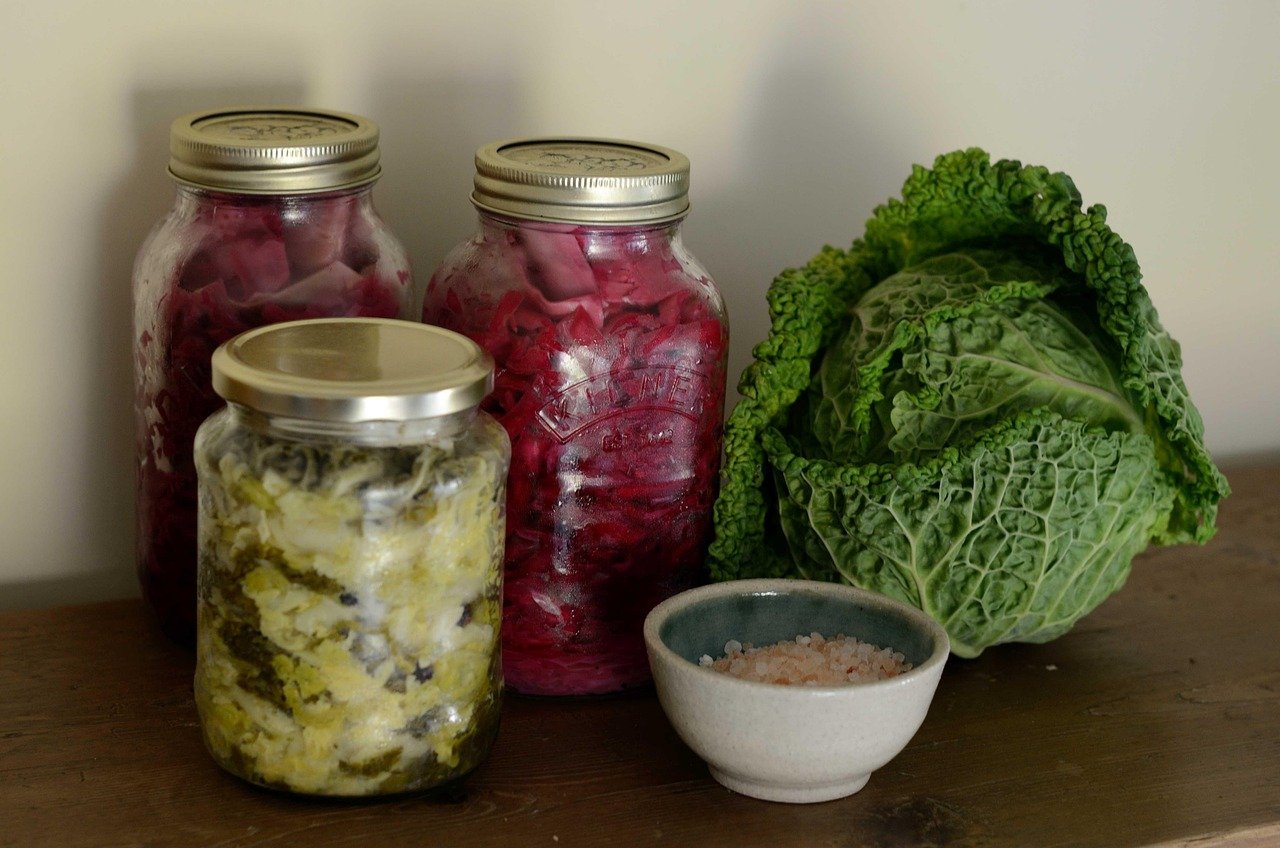
These foods have a double merit: they are part of our culture and they feed the flora. Bringing them back is not following a trend, it is reconnecting with know-how that science now validates. Mint tea and olive oil, rich in polyphenols, complete the picture: these plant compounds are partly transformed by the microbiome and contribute to its diversity.
| Category | Moroccan examples | Benefit for the flora |
|---|---|---|
| Prebiotic fibre | Lentils, chickpeas, garlic, onion | Feed the good bacteria |
| Fermented foods | Lben, olives, plain yoghurt | Provide live cultures |
| Polyphenols | Mint tea, olive oil, fruit | Support diversity |
| Whole grains | Barley, whole wheat, oats | Fermentable fibre |
The Alphavital formula: 10 billion cultures, prebiotics and vitamins C/D3
The plate first, always. But there are situations where a well-formulated supplement provides a relevant boost: after a difficult digestive episode, at a change of season, during a period of intense stress, or simply to maintain the flora regularly. Still, it takes a serious formula.
That is the philosophy that guided our team’s work. In a single daily step, Alphavital brings together 10 billion cultures (10 billion CFU), paired with prebiotics that feed them, and completed by vitamins C and D3. This trio is no accident: vitamins C and D contribute to the normal function of the immune system according to the European authorities.5 Every batch is traced and analysed, in a spirit of transparency.

How to take it
Alphavital advises a regular daily intake, preferably in the morning, with a large glass of water. One bottle covers a one-month course. Consistency beats intensity: it is repetition, over several weeks, that builds the benefits of a culture course. An occasional missed dose does not undo your efforts, but chronic irregularity does.
This formula belongs to Alphavital’s Digestive Comfort and Immunity & Vitality ranges, designed as a coherent whole where each product answers a precise need of the same inner ground.
Probiotics in Morocco: how to choose, and at what price?
On the Moroccan market, the offer has widened, and finding your way is not always easy. A good probiotic is recognised first by a few objective markers, more reliable than promises. Alphavital builds its formulas around those same markers.
| Criterion | What matters | The Alphavital benchmark |
|---|---|---|
| Number of cultures | Expressed in billions of CFU | 10 billion per dose |
| Prebiotics | Present to feed the cultures | Yes, in the same formula |
| Immune support | Approved claim | Vitamins C and D3 (EFSA) |
| Traceability | Analysed batches | Every batch traced |
| Course format | Clear duration | One bottle = one month |
As for price, the logic is simple: the real cost is judged by the course, not the bottle. A formula that already pairs dosed cultures, prebiotics and vitamins spares you stacking several products. The price of Alphavital Probiotics depends on the course format chosen; it is shown transparently on the product page, with delivery across Morocco. To compare the whole range, the Alphavital shop brings together every format.

Precautions and a sound routine
Probiotics are well tolerated by most people. A few precautions still apply. In case of pregnancy or breastfeeding, a chronic condition, a weakened immune system or ongoing treatment, the advice of a health professional is essential before starting. At the start of a course, mild gurgling or bloating may appear; they usually fade within a few days, as the flora adjusts.
To get the most from a balance approach, three habits make the difference. Start with the plate, adding fibre, fermented foods and varied vegetables. Stay regular, over several weeks. And look after the surrounding lifestyle: enough sleep, hydration between meals, and stress management. None of these habits is spectacular; their strength lies in repetition. A question before you start? Our team replies via the Alphavital contact page.
The feedback our team receives is worth more than any speech. Here are three accounts, shared with their authors’ consent.
After a course of antibiotics, my digestion was all over the place. I started the cultures alongside, as I’d been advised, and comfort came back much faster than usual. — Karim, Casablanca
I thought all probiotics were the same. Once I understood the prebiotic and regularity story, I finally saw the difference. Three weeks, and my stomach settled. — Salma, Rabat
In my fifties, I relied on vitamins every winter. This year I added a nourished flora and a formula with vitamins C and D3. I won’t claim a miracle, but the contrast is real. — Hassan, Marrakech
Frequently asked questions about probiotics
What are the benefits of probiotics?
The best-documented benefits concern digestive comfort: a more regular transit, less bloating, and a reduced risk of antibiotic-associated diarrhoea. The effects are strain-dependent. For immunity, the firmest anchor comes from vitamins C and D, which contribute to the normal function of the immune system according to EFSA.
When should you take probiotics?
Most formulas are taken once a day, preferably in the morning with a large glass of water. What matters is not the exact timing but regularity: it is the daily intake, over several weeks, that builds the benefits. Alphavital advises a one-month course, renewable at the change of season.
Probiotics or prebiotics: what is the difference?
Probiotics are the live cultures; prebiotics are the fibres that feed them. The two go hand in hand: providing cultures without fibre is like sowing without watering. The most accomplished formulas, like Alphavital’s, combine both in a single product for a coherent action.
Do probiotics strengthen immunity?
The gut flora is in close dialogue with the immune system, a majority share of whose cells sits around the gut. Certain cultures are being studied in this area, with encouraging results to be confirmed. For recognised support, vitamins C and D3, present in the Alphavital formula, contribute to the normal function of the immune system.
How long before you see effects?
For digestive comfort, many notice an improvement after two to four weeks of regular intake. Some feel better sooner, others later. Consistency is decisive: benefits build with repetition, not in a single day. A course of at least one month is a good benchmark.
Which probiotic to choose in Morocco, and at what price?
A good probiotic is recognised by the number of cultures (in billions of CFU), the presence of prebiotics and clear batch traceability. The Alphavital formula combines 10 billion cultures, prebiotics and vitamins C and D3, for a one-month course per bottle. The price, shown on the product page, is judged by the full course, delivery in Morocco included.
Are there any contraindications?
These supplements are generally well tolerated. As a precaution, in case of pregnancy, breastfeeding, a weakened immune system, a chronic condition or ongoing treatment, seek a health professional’s advice before starting. Mild bloating at the start of a course is possible and temporary.
In summary
The benefits of probiotics are neither a miracle nor an illusion. On digestive comfort and antibiotic-associated diarrhoea, the data is solid. On immunity, the flora plays a real role, and vitamins C and D provide a clear regulatory anchor. It all rests on one foundation: a nourished, diverse gut flora, which we maintain first through the plate.
This is the coherence Alphavital has chosen, by combining 10 billion cultures, prebiotics and vitamins C and D3 in a transparent formula, faithful to science and designed for everyday Moroccan life. Caring for your flora is not following a trend: it is one of the most rewarding moves for your overall well-being.
About the author. Chérif Belhassane is Scientific Nutrition Adviser at Alphavital. He translates scientific research into clear, actionable guidance for everyday Moroccan life, with a constant commitment to sourcing and measured claims.
Disclaimer. The information provided is for general guidance, based on sourced research (PubMed, EFSA, WHO, Inserm). The Alphavital team is not made up of health professionals. Consult a qualified health professional before any use, in case of ongoing treatment, pregnancy or breastfeeding, or a medical condition. Food supplements do not replace a varied, balanced diet or a healthy lifestyle.
Sources and references
- Hempel S. et al. — Probiotics for the prevention and treatment of antibiotic-associated diarrhea: a systematic review and meta-analysis (JAMA). PubMed
- Antibiotic resistance, a public-health stake. World Health Organization
- Wiertsema S. et al. — The interplay between the gut microbiome and the immune system, review. PubMed Central
- Hao Q. et al. — Probiotics for preventing acute upper respiratory tract infections (Cochrane review). PubMed
- Register of health claims (vitamins C and D, immune system). EFSA
- Gut microbiome (gut flora) dossier — digestive, metabolic and immune functions. Inserm
