


Stress & Sleep
A short night is never just a short night. It comes back the next afternoon as a heavy head, a short temper and a coffee that no longer works. Most people who try magnesium glycinate are not chasing sleep for its own sake: they want their days back. This guide shows what the trials really measured, how to read the label, and what to expect from the very first evening.
You are staring at the ceiling at two in the morning. Your body is exhausted, but your mind keeps spinning. The alarm will go off soon, and you already know the day will start in a fog. Thousands of Moroccans live through this scene every night. It is often attributed to stress, a phone, or one coffee too many. Yet one quiet but decisive player tends to be overlooked: magnesium.
This mineral is involved in more than three hundred reactions in the body. It plays a role in muscle relaxation, nervous system balance, and energy production. Yet a large share of the population does not consume enough of it. And among all the forms available, one stands out for its tolerance and perceived effectiveness: magnesium glycinate. This guide is about that precise form and its value for sleep and calm.
Contenu de la page
- 1 Key Takeaways
- 2 Magnesium: The Silent Conductor
- 3 Magnesium Glycinate: Why This Form Changes Everything
- 4 The Science: What Magnesium Actually Does for Sleep and Nerves
- 5 Why the Moroccan Lifestyle Drains Our Reserves
- 6 Filling the Plate with Magnesium: Moroccan Habits
- 7 When a Magnesium Glycinate Supplement in Morocco Makes Sense
- 8 Getting the Most from Magnesium Glycinate: A Practical Guide
- 9 Magnesium and Stress: A Pair to Consider Together
- 10 Three Readers Share Their Experience
- 11 What the sleep studies on magnesium actually measured
- 12 How to read a magnesium glycinate label
- 13 Your first evening, first week and first month
- 14 Which magnesium for which kind of night?
- 15 Frequently Asked Questions about Magnesium Glycinate
- 16 In Summary
Key Takeaways
- Magnesium is involved in more than 300 enzymatic reactions, including nervous system regulation, muscle relaxation, and energy metabolism.
- Magnesium glycinate combines the mineral with glycine, a calming amino acid. This form is known for excellent absorption and digestive gentleness, without the laxative effect of other salts.
- Magnesium helps reduce fatigue and supports normal psychological function, two claims recognized by the European Food Safety Authority (EFSA).
- In Morocco, modern lifestyles, stress, and a diet sometimes low in vegetables contribute to insufficient magnesium intake.
- Alphavital offers a magnesium glycinate formula designed for the evening, to support relaxation, sleep, and daily bone and muscle health.


Magnesium: The Silent Conductor
Magnesium rarely makes headlines. Yet without it, almost nothing works properly in the body. This mineral is a cofactor — an indispensable piece for the correct functioning of countless chemical reactions. Scientists have catalogued more than three hundred. Energy production in cells, protein synthesis, nerve impulse transmission, muscle contraction and release: magnesium is everywhere.
Think of an orchestra conductor. They play no instrument, yet without them the symphony descends into chaos. Magnesium plays that role. When it is lacking, it is not one system that suffers, but several at once. Fatigue sets in, muscles tighten, mood dulls, and sleep becomes disrupted. That is why a deficiency often goes unnoticed: its signs are so varied they tend to be attributed to something else.
Magnesium is not a comfort nutrient. It is a structural mineral present in every one of our cells, indispensable to nervous system and muscle function.
The adult body contains approximately twenty-five grams of magnesium. Most is stored in the bones, the rest in muscles and soft tissues. A tiny fraction circulates in the blood, which actually makes deficiency difficult to detect with a simple blood test. The body draws on its reserves to maintain a stable blood level, masking depletion that may persist for months.
Why So Many People Run Low
Multiple studies share the same finding: magnesium intake is frequently below recommended levels in westernized populations. A landmark review highlights that this subclinical deficiency — meaning without obvious immediate symptoms — is more common than people realize, as detailed in this analysis of magnesium status referenced on PubMed1. Several reasons account for this.
First, the modern diet. Ultra-processed foods, low in vegetables, provide little magnesium. Grain refining eliminates much of it. Second, depleted agricultural soils yield produce less nutrient-dense than in previous generations. Finally, certain situations increase requirements or losses: chronic stress, intense physical activity, heavy sweating in the heat, and large quantities of coffee and tea. In Morocco, where summer imposes intense perspiration and the urban pace puts the nervous system under constant strain, several of these factors compound simultaneously.
Warning Signs Worth Noticing
A magnesium deficiency does not manifest suddenly. It creeps in gradually, through small signs that tend to be dismissed. Below are the signals most commonly described in the literature and by those affected.
| Area | Common Signs | Magnesium Connection |
|---|---|---|
| Sleep | Difficulty falling asleep, night awakenings | Role in nervous relaxation |
| Muscles | Cramps, eyelid twitching, tension | Regulation of contraction |
| Mood | Irritability, feeling of unease | Nervous system balance |
| Energy | Persistent fatigue upon waking | Energy metabolism |
None of these signs alone proves a magnesium shortfall. But their combination warrants attention. And above all, they serve as a reminder: magnesium is not a wellness detail — it is a cornerstone of nerve and muscle function.
Magnesium Glycinate: Why This Form Changes Everything
Here is the point that many people miss. Magnesium is never sold on its own: it is always bound to another molecule, forming what is called a salt. Oxide, citrate, bisglycinate, malate — these names on labels are not trivial details. They determine how well the mineral is absorbed and how well it is tolerated. Not all magnesium supplements are equal.
Magnesium glycinate, sometimes called bisglycinate, is the mineral bound to glycine. Glycine is not just any partner: it is an amino acid well known for its calming effect on the nervous system. The combination of the two produces a particularly stable molecule that easily crosses the intestinal wall. The result: high absorption and, often the deciding factor, excellent digestive tolerance.
Magnesium glycinate brings together the best of both worlds: a well-absorbed mineral, and glycine, a calming amino acid that makes it the form of choice for the evening.
Comparing Forms of Magnesium
Nothing clarifies the picture like a comparison table. Each form has its own characteristics. The table below summarizes what sets glycinate apart from the most common salts, across the two criteria that matter most for everyday comfort: absorption and digestive gentleness.
| Form | Absorption | Digestive Tolerance |
|---|---|---|
| Glycinate (bisglycinate) | High | Very gentle, ideal for the evening |
| Citrate | Good | Acceptable, occasionally laxative |
| Malate | Good | Somewhat energizing, better in the morning |
| Oxide | Low | Often causes intestinal discomfort |
The difference is not theoretical. Magnesium oxide, widely used due to its low cost, is poorly absorbed and frequently causes a laxative effect. This is why so many people believe they cannot tolerate magnesium, when in fact they could not tolerate a poorly chosen form. Glycinate, by contrast, is gentle on the stomach and does not disrupt digestion. This quality of tolerance was one of the core criteria guiding the formulation work at Alphavital.

The Dual Advantage of Glycine
Glycine deserves a closer look. This amino acid does more than act as a carrier for magnesium. It works as a calming neurotransmitter and contributes to better sleep quality. Several studies have examined its role in relaxation and the onset of sleep. By combining magnesium and glycine, magnesium glycinate therefore brings together two complementary relaxation pathways in a single molecule. This synergy explains its growing reputation among those seeking deeper sleep without dependency or morning grogginess.
The Science: What Magnesium Actually Does for Sleep and Nerves
The internet overflows with promises about magnesium. Our role is to remain precise: distinguishing what research establishes clearly from what remains to be confirmed. Here, in plain language, are the areas where the data are robust and the framework set by the authorities.
Nervous System and Stress Management
The link between magnesium and the nervous system is one of the best documented. The mineral participates in the regulation of neurotransmitters and modulates the stress response. When the body is under tension, it consumes and excretes more magnesium; and a magnesium deficiency in turn increases sensitivity to stress. A cycle forms. A synthesis review explores precisely this dialogue between magnesium, stress, and anxiety, as reported in this full-text analysis available on PubMed Central2.
On the regulatory side, the framework is clear and cautious. The European Food Safety Authority recognizes that magnesium contributes to normal psychological function, to the normal functioning of the nervous system, and to the reduction of tiredness and fatigue. These claims appear in the official register, as documented in the EFSA register of health claims related to magnesium3. These validated formulations — not excessive promises — guide our editorial line.

Sleep and Falling Asleep
This is arguably the most sought-after use. Magnesium acts on several sleep pathways. It contributes to muscle relaxation, calms excessive nervous activity, and takes part in the mechanisms that prepare the body for night. Several clinical trials have examined its effect on sleep quality, notably in elderly individuals prone to insomnia. One frequently cited study observed improvements in sleep parameters following supplementation, as reported in this clinical trial referenced on PubMed4.
Honesty about the scope of these findings is essential. Sleep research is complex, and effects depend on the individual’s baseline, the dose, and the form used. Magnesium is not a sleeping pill and does not act as one. It does not force sleep. Rather, it creates favorable conditions by calming what prevents sleep from arriving naturally. This is a crucial distinction, and it is precisely this gentle approach that appeals to most people. For a deeper look at sleep mechanisms, Inserm provides a comprehensive resource on sleep and its cycles6.
To understand the fundamentals of a good night’s sleep, the following educational video explains in clear terms how sleep cycles work.
Muscles, Cramps, and Recovery
Magnesium is the natural antagonist of calcium at the muscle level. Simplified: calcium triggers contraction, magnesium enables release. When magnesium is lacking, muscles struggle to relax, which encourages cramps, tension, and that unpleasant sensation of heavy or restless legs in the evening. The mineral contributes to normal muscle function, a claim also recognized by European authorities. For active people, athletes, or simply those experiencing nocturnal cramps, this role is far from trivial.

Bones, Energy, and Beyond
Often overlooked, the majority of the body’s magnesium resides in the bones. The mineral contributes to the maintenance of normal bones, alongside calcium and vitamin D. It also participates in normal energy-yielding metabolism, which explains the connection between deficiency and persistent fatigue. Magnesium is therefore a transversal nutrient: it does not support just one aspect of health, but links sleep, nerves, muscles, energy, and bones in a single balance. ANSES specifies recommended magnesium intakes by age in its report on nutritional reference values for vitamins and minerals5.
Why the Moroccan Lifestyle Drains Our Reserves
Morocco combines several factors that put magnesium under pressure. Identifying them is already the first step toward protecting reserves.
Heat first. Summers in Marrakech, Fez, or Agadir trigger heavy sweating, and sweat carries minerals with it, including magnesium. Athletes and outdoor workers are particularly affected. Then urban stress. Casablanca traffic, professional pressure, screens everywhere in the evening: all of this keeps the nervous system on alert and depletes reserves. Finally, shifts in diet. The move toward processed products, at the expense of traditional legumes, green vegetables, and nuts, mechanically reduces intake.
Heat, urban stress, and impoverished diets: three forces that silently erode our magnesium reserves every day.
Coffee and tea, so central to our culture, warrant a mention. Consumed in large quantities, they slightly increase urinary excretion of magnesium. The point is not to ban them — mint tea shared with family is a precious pleasure — but to keep balance in mind. Stress, again, plays a central role. For those wishing to explore the nervous dimension further, our team has gathered its insights in the guide on stress, sleep, and natural calm.
Filling the Plate with Magnesium: Moroccan Habits
Before any supplement, there is the table. And traditional Moroccan cuisine is rich in good sources of magnesium. They simply need to be given back the place they deserve.

Magnesium Champions
Certain foods concentrate the mineral more than others. Nuts lead the list: almonds, walnuts, hazelnuts — present in abundance in pastries and celebratory dishes. Seeds such as pumpkin seeds and sesame are also very rich in it; sesame, whether in pastry form or sprinkled on bread, is part of our food heritage. Dark chocolate with a high cocoa content is a gourmand and beloved source.
| Category | Moroccan Examples | Benefit |
|---|---|---|
| Nuts | Almonds, walnuts, hazelnuts | Very high in magnesium |
| Legumes | Lentils, chickpeas, broad beans | Magnesium and fiber |
| Green vegetables | Spinach, chard, parsley | Magnesium and chlorophyll |
| Seeds | Sesame, pumpkin | High concentration |
| Whole grains | Whole wheat, oats | Richer than refined |

Legumes and Greens: Forgotten Pillars
Legumes are an accessible treasure. Lentils, chickpeas, and broad beans — the foundation of countless Moroccan dishes — deliver both magnesium and fiber. A good bissara, a harira rich in legumes, a plate of lentils: these are simple, economical gestures to support daily intake. Leafy green vegetables such as spinach and chard also rank among the best sources, because the chlorophyll that gives them their colour contains magnesium at its core.
The message is clear: a varied, colourful, plant-rich plate is the first line of defence. No supplement replaces this foundation. But when intake remains insufficient despite best efforts, or when needs increase, targeted support makes complete sense.
When a Magnesium Glycinate Supplement in Morocco Makes Sense
Diet first, always. But certain situations justify extra support. This is the case during periods of intense stress, persistent sleep difficulties, recurring cramps, sustained physical activity, or simply when the plate can no longer cover increased needs. Summer heat, which magnifies losses through sweating, is another window where magnesium deserves attention.
What matters is finding a serious formula. Three criteria make the difference: a well-absorbed and well-tolerated form, such as glycinate rather than oxide; a clear and appropriate dose, in line with regulatory guidelines; and genuine traceability, lot by lot. This is precisely the philosophy that guided our team.

The Alphavital Response
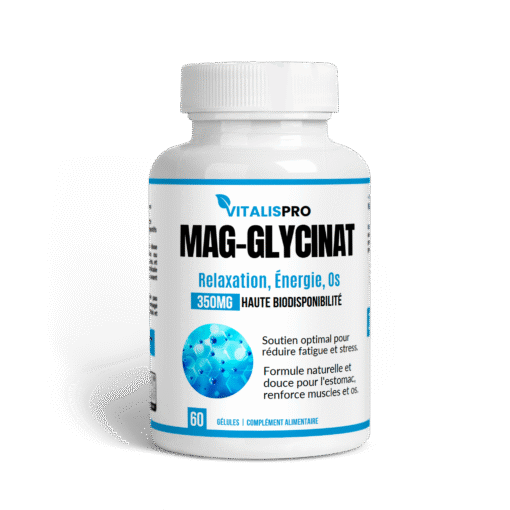
Alphavital chose magnesium glycinate, the gentlest form for digestion and the best absorbed. The formula is designed for the evening, to support relaxation, sleep onset, and muscle comfort. It is intended for those who want to calm their nervous system without resorting to heavy solutions, while simultaneously supporting their bones and muscles.
Each batch is tracked and tested, and dosages respect the framework set by the authorities. Alphavital recommends a daily intake, preferably in the evening, approximately thirty to sixty minutes before bedtime, with a full glass of water. Regularity over several weeks accompanies the gradual rebalancing of reserves. This formula is part of our Stress and Sleep range, designed as a coherent set.
A good magnesium formula is not just a number on a label. It brings together the right form, the right dose, and genuine traceability.
For those dealing with established stress, magnesium pairs well with an adaptogenic plant. Our team proposes Ashwagandha, the adaptogen of serenity for this purpose, with full details in the complete guide to ashwagandha in Morocco. For a global approach to calm and mental clarity, the Anti-Stress and Sleep programme combines ashwagandha, magnesium glycinate, and moringa in a single daily ritual.
Getting the Most from Magnesium Glycinate: A Practical Guide
A few practical benchmarks help avoid common mistakes and make the most of a course of supplementation.
When and How to Take It
The evening is the preferred time for magnesium glycinate. Its gentleness and the presence of glycine make it a natural ally for end of day, to be taken half an hour to an hour before bed. A large glass of water accompanies the dose. For those who mainly experience daytime fatigue, a morning-evening split can be considered, but the evening remains the most relevant window for sleep and relaxation.

How Long Should a Course Last?
Replenishing depleted reserves takes time. A course of several weeks — often one to three months — allows the body to gradually fill its deficit. Many notice improved sleep or reduced edginess after two to four weeks of regular intake. Consistency matters above everything: it is daily repetition that establishes lasting benefits, not an occasional dose.
Precautions to Keep in Mind
Magnesium in glycinate form is very well tolerated by most people. A few precautions apply nonetheless. In cases of kidney insufficiency, magnesium may accumulate and requires medical advice before use. During pregnancy, breastfeeding, with a chronic condition, or while taking medication — particularly certain antibiotics or osteoporosis treatments — the advice of a healthcare professional is essential, as magnesium may interact with their absorption. Observing this is the mark of responsible use.
To understand what happens when sleep becomes elusive, the following video describes in a few minutes the mechanisms of insomnia and the levers of a better night.
Magnesium and Stress: A Pair to Consider Together
Magnesium and stress share a two-way relationship worth understanding clearly. Under tension, the body releases stress hormones that accelerate magnesium excretion. Less magnesium means a reduced capacity to buffer stress, which amplifies the perception of it. The loop closes. Breaking this cycle requires acting on both fronts simultaneously.
This is why our team often approaches magnesium as a complement to other levers: an adaptogenic plant such as ashwagandha to help the body better handle pressure, sound sleep hygiene, regular physical activity, and breathing moments. Magnesium is not a standalone solution; it is a key piece of a holistic approach to calm. For those who want to act on the whole picture, the combined programme brings these allies together in a single daily ritual.

The feedback our team receives is worth more than any number of claims. Here are three testimonials, shared with their authors’ consent.
It used to take me an hour or more to fall asleep. I tried magnesium glycinate in the evening without expecting much. After three weeks, I lie down and drift off without a fight. And above all, no heaviness in the morning. — Yassine, Casablanca
Intense sport was giving me terrible nocturnal cramps in my calves. Since taking magnesium regularly, they have almost completely gone. I had no idea a mineral could change so many things. — Nadia, Tangier
During a heavy period of work stress, I was on edge and sleeping badly. I combined magnesium glycinate with ashwagandha. What struck me was a sense of restored calm — without feeling sedated. I feel more grounded. — Réda, Rabat
These stories illustrate a simple truth: the most lasting results come from combining diet, lifestyle, and, when helpful, a well-chosen supplement. A question before you start? Our team responds directly via the Alphavital contact page.
What the sleep studies on magnesium actually measured
“Magnesium helps you sleep” is repeated everywhere, but rarely with the details: who was tested, how much they took, for how long, and what changed. Here are five human studies, including the ones with modest or mixed results.
| Study (author, year) | Who, how much, how long | What was found |
|---|---|---|
| Schuster, 2025 | 155 adults aged 18 to 65 who slept poorly; 250 mg magnesium as bisglycinate; 4 weeks | Insomnia score fell 3.9 points versus 2.3 with placebo. A small effect, larger in people who ate little magnesium.7 |
| Abbasi, 2012 | 46 older adults with insomnia; 500 mg magnesium; 8 weeks | Insomnia score, time to fall asleep and sleep efficiency improved versus placebo. Total sleep time did not change significantly.4 |
| Nielsen, 2010 | 100 adults aged 51 to 85 with poor sleep; 320 mg magnesium as citrate; 7 weeks | Sleep improved as much with placebo as with magnesium. Magnesium did raise blood levels in people who started low.8 |
| Mah, 2021 (meta-analysis) | 151 older adults in 3 trials; amounts and durations varied | People fell asleep about 17 minutes faster. The gain in total sleep was not significant. Evidence rated low quality.9 |
| Bannai, 2012 | Adults in good health with sleep cut by a quarter; 3 g glycine at bedtime; 3 nights | Less fatigue and better alertness the next day than with placebo. Glycine is the carrier in magnesium glycinate.10 |
What this does not show. Magnesium is not a sleeping pill, and none of these trials suggests it works like one. Only one trial tested the glycinate form itself, and its effect was modest. The others used other forms or mixed groups of people. The glycine study used far more glycine than any magnesium capsule contains, so it explains the idea behind the pairing, not the size of the effect. People who already eat plenty of magnesium and sleep well should not expect a big change. And sleep trouble that lasts for weeks deserves a medical check, not only a supplement.
How to read a magnesium glycinate label
Most confusion about magnesium glycinate dosage comes from the label itself, because it can show two very different numbers.
- The compound weight. This is magnesium and glycine weighed together. Magnesium makes up only about 14% of magnesium bisglycinate by weight. So 1,000 mg of the compound gives roughly 140 mg of actual magnesium.
- The elemental magnesium. This is the figure that counts. It is often written “of which magnesium” or “elemental magnesium”. The trials above all report this number.
Two reference points help. The EU daily reference intake for magnesium is 375 mg, and food already covers part of it. Whatever the form, stay within the dose on the label: loose stools are the usual sign of too much magnesium.
A label may also combine several forms of magnesium. That is fine as long as each one is declared. Alphavital’s MAG-COMPLEX does this openly, listing its four forms milligram by milligram. If you want one single, gentle form for the evening, plain glycinate is the simpler choice.
Your first evening, first week and first month
Alphavital’s advice is 1 to 2 capsules a day in the evening, with dinner or about 30 minutes before bed, with a large glass of water. Here is what to watch for, step by step.
- The first evening. Most people feel their body loosen about 30 minutes after the first capsule. That is the moment to go to bed, not to start another episode or scroll the phone.
- The next morning. Judge the day, not only the night. Did you wake up less heavy? Did the afternoon slump come later, or not at all? A calmer night shows up first as a steadier, more energetic day.
- Days 7 to 14. If you feel little on one capsule, move to two in the evening. Do not go beyond two a day.
- Week 4. This is when the bisglycinate trial measured its main result. Take stock: how long you take to fall asleep, how often you wake, and how much energy you still have at 4 pm.
- Months 2 and 3. A full course runs two to three months. At this stage, a regular routine matters more than any single night.
During Ramadan, bedtime moves. Take the capsule with the meal you eat closest to sleep, so the 30-minute window still lands near bedtime. If you take antibiotics, thyroid medicine or a medicine for bone density, keep a gap of a few hours between them and magnesium, and ask your pharmacist for the exact spacing.
Which magnesium for which kind of night?
| What your evenings look like | What fits | Why |
|---|---|---|
| Your mind keeps going once the light is off, and your stomach is sensitive | Magnesium Glycinate | One gentle form, taken in the evening |
| Physical days, tight calves, and you wake up feeling you did not recover | Sleep and Recovery Bundle | Magnesium helps you unwind; zinc, taken at the same dinner, has been studied for sleep quality with mostly positive results11 |
| Long, pressured days, and you want a higher total amount of magnesium | MAG-COMPLEX | Four forms in one capsule, 1 to 2 a day, late afternoon or with dinner |
To compare every form in one place, you can browse all our magnesium products side by side. And if stress, rather than tense muscles, is what keeps you awake, our guide to natural stress relief and sleep looks at that side of the problem.
Frequently Asked Questions about Magnesium Glycinate
How much magnesium glycinate should I take for sleep?
Look at the elemental magnesium on the label, not the compound weight. The only trial on the bisglycinate form used 250 mg of magnesium a day. Alphavital’s advice is 1 to 2 capsules in the evening, starting with one.
What are the side effects of magnesium glycinate?
At usual amounts, most people notice nothing, or sometimes a softer stool. Loose stools and nausea become more likely when you take more than the label advises or stack several magnesium products. People with kidney problems should not take magnesium without medical advice, because the kidneys remove the excess.
Will magnesium glycinate make me groggy in the morning?
It is not a sedative, so it should not leave you foggy. The aim is the opposite: a quieter night that gives you a clearer morning and more energy through the day. In the glycine study above, people who had slept too little reported less fatigue the next day, not more. If you still feel heavy in the morning, take the capsule earlier in the evening.
Can I take magnesium glycinate with zinc or ashwagandha?
Yes. Zinc and magnesium are taken together at dinner in the Sleep and Recovery Bundle. Ashwagandha and magnesium glycinate are combined in the Anti-Stress and Sleep pack: one fixed dose of ashwagandha at night, and another during the day when stress rises. Avoid stacking several products that all contain magnesium or zinc without adding up the totals.
In Summary
Magnesium is a central mineral, present in every cell, indispensable to the nervous system, muscles, energy, and bones. Yet many of us fall short, due to an impoverished diet, stress, and — at our latitudes — heat. Among all available forms, magnesium glycinate stands out for its high absorption and great digestive gentleness, making it the natural ally of deep sleep and a more serene day.
It is supported first through diet: nuts, legumes, green vegetables, and seeds — treasures from the Moroccan larder. And when a boost is useful, a serious, well-dosed, traceable formula comes into its own. This is the path Alphavital has chosen, with a transparent approach faithful to the science. Taking care of your magnesium is not following a trend: it is returning to the body an essential mineral that modern life so often takes away.
Disclaimer. The information presented is provided for informational purposes, based on sourced research (PubMed, EFSA). The Alphavital team does not consist of healthcare professionals. Consult a qualified healthcare professional before any use, in cases of ongoing treatment, pregnancy, breastfeeding, kidney insufficiency, or any health condition. Food supplements are not a substitute for a varied, balanced diet and healthy lifestyle.
Sources and References
- DiNicolantonio J.J. et al. — Subclinical magnesium deficiency: a principal driver of cardiovascular disease and a public health crisis. PubMed
- Pickering G. et al. — Magnesium Status and Stress: The Vicious Circle Concept Revisited. PubMed Central
- EFSA — Scientific Opinion on the substantiation of health claims related to magnesium. EFSA
- Abbasi B. et al. — The effect of magnesium supplementation on primary insomnia in elderly: a double-blind placebo-controlled clinical trial. PubMed
- ANSES — Nutritional reference values for vitamins and minerals (magnesium). ANSES
- Inserm — Information resource on sleep and its cycles. Inserm
- Schuster J, Cycelskij I, Lopresti A, Hahn A. Magnesium Bisglycinate Supplementation in Healthy Adults Reporting Poor Sleep: A Randomized, Placebo-Controlled Trial. Nat Sci Sleep. 2025;17:2027-2040. PubMed 40918053
- Nielsen FH, Johnson LK, Zeng H. Magnesium supplementation improves indicators of low magnesium status and inflammatory stress in adults older than 51 years with poor quality sleep. Magnes Res. 2010;23(4):158-68. PubMed 21199787
- Mah J, Pitre T. Oral magnesium supplementation for insomnia in older adults: a Systematic Review & Meta-Analysis. BMC Complement Med Ther. 2021;21(1):125. PubMed 33865376
- Bannai M, Kawai N, Ono K, et al. The effects of glycine on subjective daytime performance in partially sleep-restricted healthy volunteers. Front Neurol. 2012;3:61. PubMed 22529837
- Jazinaki MS, Gheflati A, Moghadam MRSF, et al. Effects of zinc supplementation on sleep quality in humans: A systematic review of randomized controlled trials. Health Sci Rep. 2024;7(10):e70019. PubMed 39377022
Houda Khaldi is the Natural Nutrition Editorial Advisor at Alphavital. She translates peer-reviewed research into clear, actionable guidance for everyday Moroccan life, and refuses any wording that would overstate what the evidence supports. She is not a healthcare professional; her work is documentary and editorial.