

Moringa intrigues as much as it seduces. Hailed as “the tree of life” by some, dismissed as a mere green powder by others, it deserves better than a slogan. Here, without exaggerated promises, is what science actually establishes about moringa, how to use it day to day, its precautions, and the role it can play in a balanced approach — under the climate and eating habits of Morocco.
Contenu de la page
- 1 Key takeaways
- 2 What is moringa?
- 3 An ancient plant, a modern reading
- 4 What does moringa actually contain?
- 5 How does moringa work in the body?
- 6 The best-documented effects
- 7 Dosage and directions for use
- 8 Precautions and points of vigilance
- 9 Moringa is not a medicine
- 10 The Alphavital answer
- 11 The Moroccan factor: why moringa concerns us
- 12 Moringa and vitality: what the studies say
- 13 Moringa and pregnancy: caution above all
- 14 Moringa and Moroccan cuisine: a natural synergy
- 15 Who may moringa suit?
- 16 Where to buy a reliable moringa in Morocco (price and quality)
- 17 Three readers tell us their story
- 18 Frequently asked questions about moringa in Morocco
- 18.1 Does moringa make you lose weight?
- 18.2 How much moringa per day?
- 18.3 Moringa powder or tablets: which to choose?
- 18.4 Is moringa compatible with my treatments?
- 18.5 Can moringa be taken during Ramadan?
- 18.6 Is moringa halal?
- 18.7 How long before feeling the effects?
- 18.8 What price for a quality moringa in Morocco?
- 19 In summary
Key takeaways
- Moringa (Moringa oleifera) is a tropical tree whose leaves are remarkably rich in micronutrients: vitamins, minerals, plant proteins and antioxidant compounds.
- Its nutritional density explains most of its value. The leaves provide notably vitamin C, non-heme iron, plant calcium and polyphenols.
- The most solid data concern its antioxidant profile and nutritional contribution; other avenues (metabolism, digestive comfort) still need confirmation through larger trials.
- Moringa is not a medicine and replaces no prescribed treatment. It accompanies a varied diet, without any spectacular promise.
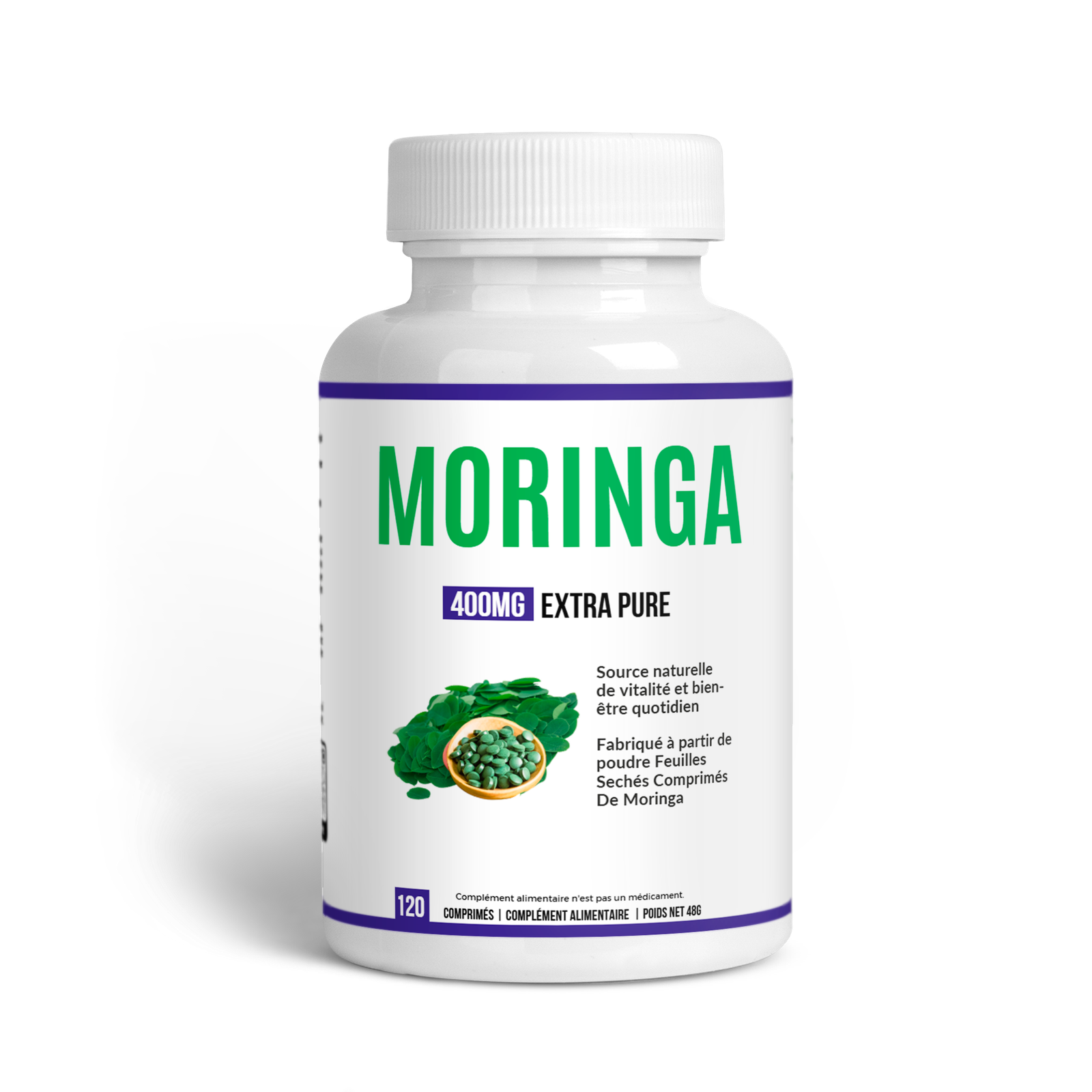
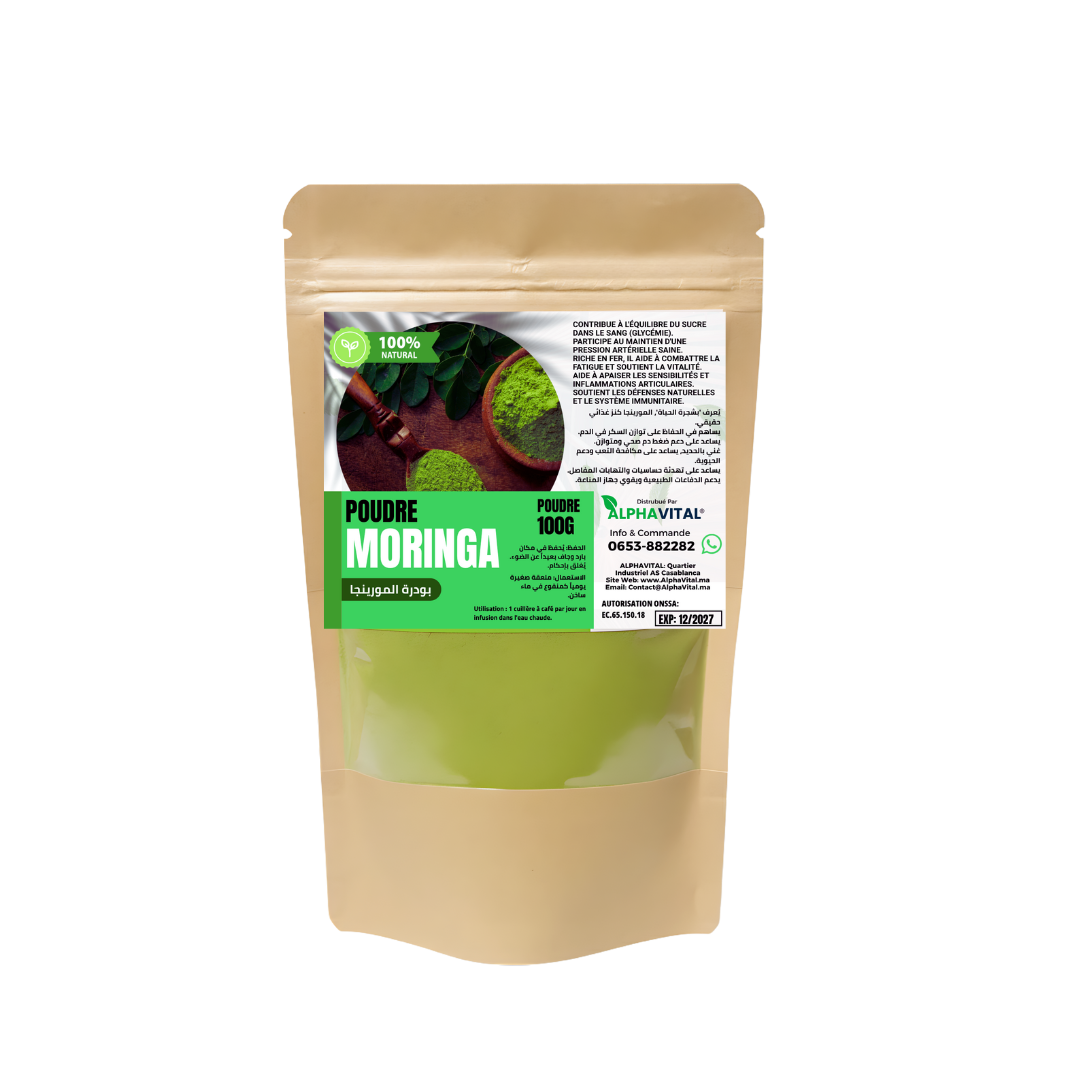
- Alphavital offers a dosed and traceable moringa, in 400 mg tablets as well as in pure powder, with a fully transparent composition.
What is moringa?
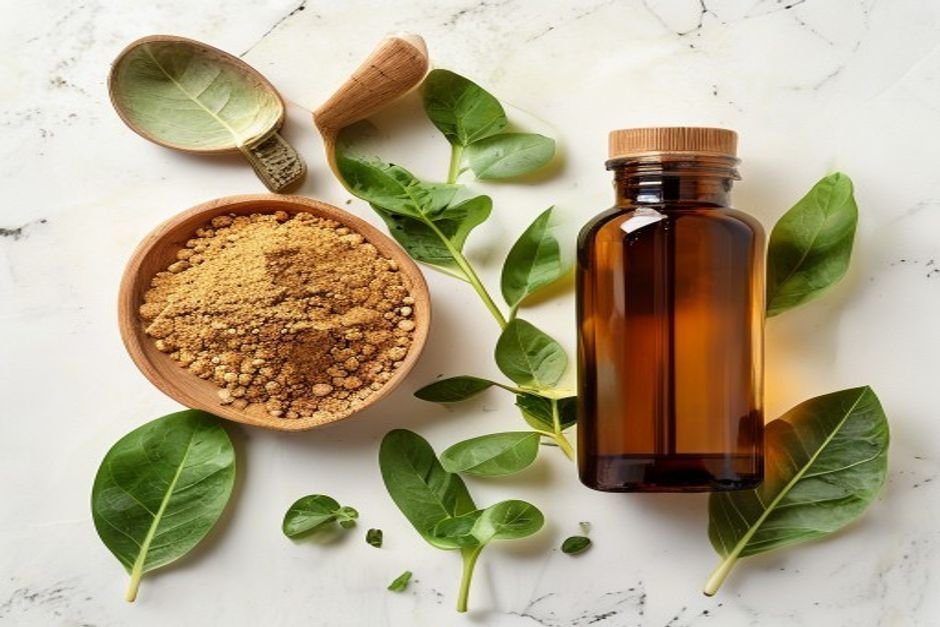
Moringa refers above all to a single species, Moringa oleifera, a fast-growing tree native to the foothills of the Himalayas, now cultivated across all tropical and subtropical regions. It is sometimes nicknamed the “horseradish tree” for the pungent taste of its roots, or the “drumstick tree” for its long pods. But it is its leaves that have drawn the attention of nutrition researchers: once dried and ground into powder, they concentrate a rare range of nutrients.
This richness is not a marketing argument. Several composition analyses published in peer-reviewed journals have measured the leaves’ content in vitamins A and C, iron, calcium, potassium and plant proteins. Moringa also supplies antioxidant compounds — flavonoids, polyphenols, vitamin C — that help the body better resist everyday oxidative stress. It is this combination of nutritional density and protective compounds that sets moringa apart from a simple “green vegetable”.
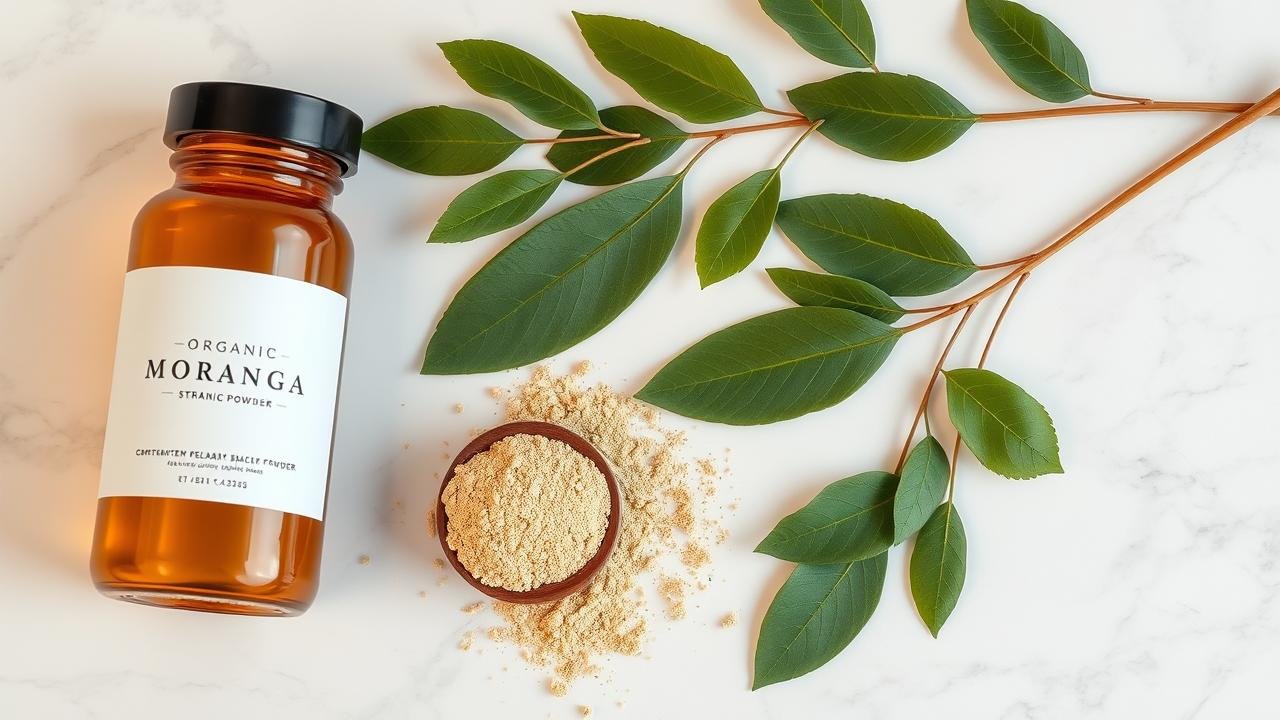
On the market it appears in three main forms: leaf powder, versatile, to add to a drink or a dish; tablets or capsules, practical for a precise dose without the vegetal taste; and seed oil, reserved for external cosmetic use. For regular nutritional use, tablets and powder complement each other: the former for simplicity, the latter for flexibility in cooking.
An ancient plant, a modern reading
Moringa is not a recent discovery. It has been used for centuries in traditional Ayurvedic medicine and in many West African and South Asian cuisines, where its leaves go into everyday sauces and soups. In several countries it long served as a local nutritional resource, available and drought-resistant. This longevity of use is not scientific proof, but it has legitimately drawn the attention of researchers.
Modern research has taken up the subject with its own tools: precisely measuring the composition of the leaves, assessing the bioavailability of their nutrients, exploring their effects in controlled trials. It is this dual reading — an ancient food heritage and a gradual scientific characterisation — that makes moringa interesting today. Alphavital sits within this continuity: respecting traditional knowledge, but retaining only what current data allow us to affirm, without overstatement or shortcuts.
What does moringa actually contain?
The nutritional value of moringa lies in its density: for a low caloric intake, its leaves provide an unusual variety of micronutrients. Rather than repeating the often-exaggerated spectacular comparisons, let us look at what the analyses actually document. The dried leaves are a useful source of provitamin A (beta-carotene), vitamin C, several B-group vitamins, iron, calcium, magnesium and potassium. They also contain proteins comprising the essential amino acids, which remains relatively rare for a plant.
To this is added a range of bioactive compounds: flavonoids such as quercetin and kaempferol, phenolic acids, and glucosinolates that give moringa its characteristic flavour. These molecules are studied for their antioxidant properties: they participate in defending cells against oxidative stress, that imbalance between free radicals and the body’s repair capacity. A review of the literature synthesised these data and highlighted the plant’s nutritional and antioxidant potential, while recalling that many results still come from preclinical studies.
Moringa iron: an asset, with nuances
Among the minerals it provides, iron often draws attention, particularly for women. Moringa supplies so-called non-heme iron, of plant origin. This iron is less well absorbed than the heme iron of animal origin, but its assimilation improves markedly in the presence of vitamin C, which the EFSA recognises as increasing iron absorption. And moringa itself contains vitamin C: the plant thus naturally combines a mineral and its absorption factor. This does not make moringa a treatment, but it makes it a coherent nutritional complement within a balanced diet.
This nuance matters. A confirmed iron deficiency requires diagnosis and follow-up by a health professional, never a simple green powder. Moringa can support an intake, not correct a diagnosed deficiency. This is precisely the line of caution Alphavital defends: presenting moringa for what it is, a nutrient-dense food, and not as a medical answer.
How does moringa work in the body?
Unlike an isolated molecule that targets a single mechanism, moringa works through the sum of its contributions. Its action does not rest on a single active principle, but on the convergence of nutrients and bioactive compounds that each play a recognised physiological role. This is a nutritional logic, not a pharmacological one, and that distinction changes everything in how we understand it.
The first lever is the supply of cofactor micronutrients. Iron and vitamin C take part in normal energy metabolism and in reducing fatigue; with moringa bringing both together in the same leaf, one favours the absorption of the other. The second lever is the antioxidant action of its polyphenols and its vitamin C: by neutralising part of the free radicals, these compounds help cells better resist everyday oxidative stress, as described in a review of the literature. The third lever, still exploratory, concerns the influence on metabolism: preliminary work is examining the effect of certain moringa compounds on sugar management, but without any firm conclusion in humans to date.
For the reader, the lesson is simple: moringa does not “do” one spectacular thing, it supports several normal functions of the body in the background thanks to its nutritional density. This is a difference in kind from easy promises: it works with physiology, never against it, and its effects are expressed all the better when diet and lifestyle are already coherent.
The best-documented effects
- On the antioxidant front, moringa supplies vitamin C, beta-carotene and polyphenols. Vitamin C contributes to protecting cells against oxidative stress, a claim recognised by the EFSA.
- On vitality and fatigue, its iron and vitamin C content is relevant: iron and vitamin C contribute to reducing fatigue and to normal energy metabolism (EFSA claims).
- On immunity, the vitamin C and certain minerals in moringa contribute to the normal functioning of the immune system, particularly useful at seasonal changes.
- On sugar metabolism, exploratory work exists, but the data remain preliminary and do not allow any affirmation. Moringa accompanies, it does not regulate.
- On digestive comfort and the liver, mostly preclinical studies explore interesting avenues, still far from a firm conclusion in humans.
To understand in pictures what the research says about moringa, and to distinguish what is established from what remains to be confirmed, this video analysis, conducted by an independent reference in evidence-based nutrition, sums up the situation well.
It is on this logic of real nutritional density and precise dosing that our team built its reference formula, conceived as a steady and transparent daily support for Moroccan life.
Dosage and directions for use
What dose and at what time
Moringa in tablet form most often comes in units of 400 mg of leaves. For ordinary nutritional use, an intake of 400 to 1,200 mg per day, split into one to three servings depending on the goal, is a reasonable benchmark. Leaf powder is generally used at the rate of one to two teaspoons per day, diluted in a drink or added to a dish. As with any supplement, regularity matters more than an occasional large quantity.
- Start gently: beginning with a moderate dose — one tablet or half a teaspoon of powder — lets the body get used to it, particularly digestively.
- Rather in the morning: moringa provides nutrients that support energy metabolism. A morning or lunchtime serving suits sensitive people better than the evening.
- With a meal: taking moringa during a meal favours tolerance and the assimilation of its minerals, especially iron paired with vitamin C.
- Over time: the nutritional benefits are appreciated over several weeks. A four- to eight-week course, followed by a short break, is a realistic rhythm.
| Goal | Form and indicative dose | Timing |
|---|---|---|
| General nutritional intake | 400 to 800 mg in tablets | Morning, at breakfast |
| Vitality and fatigue support | 800 mg, with vitamin C | Morning, with a meal |
| Culinary use | 1 to 2 tsp of powder | Drink or dish, during the day |
| Maintenance course | 400 mg in tablets | Midday, moderate and continuous |
This table sets common-sense benchmarks, not medical advice. Since every profile is different, the opinion of a health professional remains relevant, especially in the case of an ongoing treatment.
Precautions and points of vigilance
Moringa, consumed as leaves, is generally well tolerated at usual doses. A few situations nonetheless call for caution:
- During pregnancy or breastfeeding, low-dose leaves are generally considered safe, but the bark and roots should be avoided. When in doubt, the opinion of a health professional is essential.
- In the case of anticoagulant treatment, seek medical advice before any regular use, as a precaution.
- In the case of treatment acting on blood sugar, careful monitoring is recommended if moringa is combined, as preliminary data suggest a possible interaction.
- An excess can cause passing digestive discomfort. Starting with a low dose helps the body adapt.
- As with any supplement, a course is done in periods, with breaks, ideally assessed with a health professional.
Moringa is not a medicine
One sometimes reads that moringa is a “natural solution” against this or that ailment. This presentation is misleading. Moringa is a food supplement rich in micronutrients, not a treatment. It replaces no prescribed medicine, and any decision regarding an ongoing treatment belongs exclusively to a health professional. Its value is nutritional: filling intake gaps, supporting an already balanced diet, providing antioxidants. Nothing spectacular, but something solid and sustainable over time.
The Alphavital answer
For its moringa, Alphavital has made precise choices:
- Selected leaves: Alphavital favours Moringa oleifera leaves harvested and dried in conditions that preserve their nutrients.
- Purity and traceability: each batch undergoes controls, for a product free of needless additives and compliant with Moroccan health requirements.
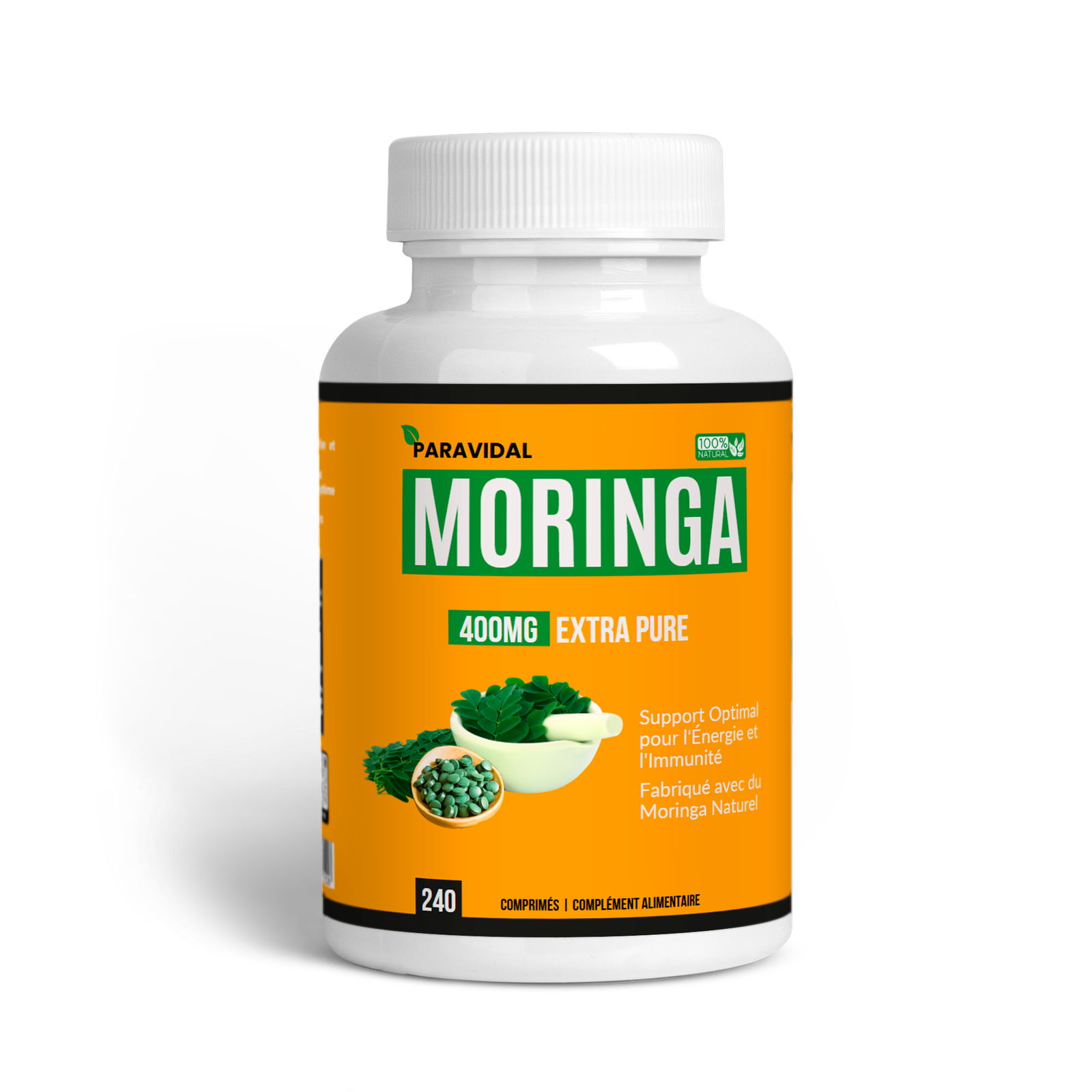
- The choice of form: 400 mg tablets for precision and simplicity, pure powder for freedom of use in cooking.
- A responsible message: Alphavital presents moringa as a nutritional support, never as a miracle solution. A varied diet and physical activity remain the foundation.
The Moroccan factor: why moringa concerns us
Our diet has changed a great deal in a generation. White bread, processed products and fast sugar have gained ground, sometimes at the expense of green vegetables, legumes and fresh fruit. To this is added, in the cities, an increasingly sedentary life. This context creates sometimes insufficient intakes of certain micronutrients, in particular iron in women of childbearing age, or vitamin C outside the citrus seasons.
It is precisely in this setting that interest in moringa is growing. Not as a miracle answer, but as a support for a broader approach: putting vegetables back on the plate, moving a little each day, and supporting the body with simple benchmarks. Moringa fits into this logic of accompaniment, never of replacing a coherent lifestyle.
Recognising a quality moringa
Not all moringas offered on the market are equal, and the difference comes down to concrete criteria. The first is the part of the plant used: it is the leaves that concentrate the nutritional value, not the stems or added fillers. The second is traceability: a serious product indicates the origin and has each batch tested. The third is dosage transparency: the quantity of leaves per tablet must be clearly stated.
It is on these three criteria that Alphavital built its moringa: selected leaves, batch-by-batch controls, and a clearly stated 400 mg dose. This requirement is not just another commercial argument; it directly conditions what the body actually receives. A poorly sourced moringa cut with fillers will not provide the nutrients that make it valuable.
The plate first, the supplement second
No tablet corrects an unbalanced diet. The first strength is the vegetables of our souks, the legumes of Moroccan cooking (lentils, chickpeas, broad beans), olive oil and sufficient hydration. Moringa comes second, as a steady support, once those foundations are in place. This is the order Alphavital defends, against easy promises. A green powder will never replace a thoughtful plate.
A typical day with moringa
To make things concrete, here is what a day where moringa fits in simply might look like. On waking, a breakfast that prioritises proteins and fibre; a moringa tablet, or half a teaspoon of powder in a freshly squeezed orange juice, to pair iron and vitamin C. During the day, regular hydration and, if possible, a twenty- to thirty-minute walk. In the evening, a light dinner, eaten early. This routine is nothing spectacular; it is precisely its regularity that counts, week after week.
Moringa requires no complicated protocol. It is added to an already engaged lifestyle and reinforces its coherence. It is this simplicity that makes it sustainable over time, unlike the drastic diets one abandons after a few weeks.
Moringa and vitality: what the studies say
It is doubtless on the front of vitality and micronutrient intake that moringa is most coherent. The iron and vitamin C it provides contribute to reducing fatigue and to normal energy metabolism, claims recognised by the EFSA. A review of the literature also highlights its antioxidant potential, while calling for higher-quality clinical trials in humans.
These data must be read with measure. Many results come from laboratory or animal-model studies; human clinical trials remain few and sometimes small. In other words, moringa does not act in a vacuum: its value is revealed in support of a sensible diet. This is why Alphavital readily links moringa to other daily pillars, as detailed on our About page, which presents our approach to balance.
Moringa and pregnancy: caution above all
This is a frequent question. Moringa leaves, at a moderate dietary dose, are generally considered well tolerated. The bark and roots, however, are not advised during pregnancy, as they contain compounds with possible adverse effects. As a precaution, a pregnant or breastfeeding woman should seek the advice of a health professional before starting a moringa course, even leaf-based. This line of caution is not an empty formula; it is the responsible position Alphavital defends.
Moringa and Moroccan cuisine: a natural synergy
Moringa integrates surprisingly well into Moroccan cooking. Its powder can lift a legume soup, be added to a fruit smoothie, or be mixed into a msemen dough or a homemade bread. Its vegetal, slightly herbaceous taste blends with the spices we already use. This cultural compatibility is an asset: a supplement that fits into existing habits has a far better chance of being sustained over time than an isolated product, taken “on the side” and quickly forgotten.
For the reader, the lesson is simple: moringa is not a laboratory object, it is a food. Putting it back on the plate, rather than reducing it to a capsule taken mechanically, makes it a coherent ally of a diet already rich in vegetables and legumes, so present in our culinary traditions.
This culinary anchoring also helps avoid a common pitfall: treating a supplement as a separate ritual, disconnected from meals, and therefore quickly abandoned. By folding moringa into dishes that are already part of the weekly routine — a soup, a smoothie, a homemade bread — the intake becomes almost effortless. It is precisely this absence of friction that determines whether a nutritional habit lasts a season or a single week. Alphavital encourages this practical, food-first reading rather than a clinical one, because it is the one that holds up in real Moroccan kitchens over the long run.
Who may moringa suit?
Moringa is not a universal product. It may interest a healthy adult concerned with the nutritional density of their diet, particularly when they eat few green vegetables. It may accompany those who feel a passing fatigue linked to their pace of life, or who want to support their iron and vitamin C intake at seasonal changes. Conversely, it does not replace medical care, does not correct a diagnosed deficiency, and calls for caution in pregnant women, young children, or in the case of an ongoing treatment.
| Situation | Is moringa indicated? |
|---|---|
| Healthy adult, diet low in green vegetables | May suit, as a nutritional support |
| Passing fatigue, seasonal changes | May accompany, without replacing rest and diet |
| Pregnancy, breastfeeding | Leaves at a moderate dose with medical advice; roots/bark not advised |
| Anticoagulant treatment or treatment acting on blood sugar | Medical advice recommended before any regular use |
| Diagnosed iron deficiency | Requires medical follow-up, not a supplement alone |
Where to buy a reliable moringa in Morocco (price and quality)
Not all moringas are equal. Quality depends on the part of the plant used, the drying, and the controls carried out on each batch. Alphavital offers its moringa directly on its online store, in 400 mg tablets as well as in pure powder, with delivery everywhere in Morocco and cash on delivery. Each batch is controlled, and the composition is presented in full transparency.
To go further, Alphavital declines moringa into combined formulas, such as the moringa ParaVidaal enriched with vitamin C or combined programmes for digestion and vitality. To discover our entire range dedicated to energy and well-being, the Alphavital store brings together our controlled formulas. And our Contact page remains available for any question about sourcing or use.
Nutritional balance never rests on a single product. It is built over time, through small repeated decisions. Moringa can find its place there, alongside a thoughtful diet and a little movement each day, with a message that never oversells what science has not demonstrated. It is this coherence, from sourcing to information, that makes the difference over the long term.
Three readers tell us their story
“I added Alphavital’s moringa powder to my morning smoothie, with a squeezed orange. After a few weeks, I feel less tired at the end of the day. The vegetal taste doesn’t bother me, well blended into a fruit.”
— Hanane, Casablanca
“What convinced me was the honest message: a nutritional intake, not a magic promise. I take one tablet at lunch, it’s become a simple marker in my amateur-athlete routine.”
— Mehdi, Rabat
“I was looking for a serious moringa, with a clear dose. I appreciate the transparency on the composition and the fact that it’s presented as a supplement, not a remedy. I pair it with a diet richer in vegetables.”
— Loubna, Marrakech
These testimonials are personal feedback and do not constitute proof of efficacy. Everyone reacts differently, and moringa is always appreciated over time, as a complement to a coherent lifestyle. Above all, they illustrate one thing: moringa is a routine companion, not an instant solution.
Frequently asked questions about moringa in Morocco
Does moringa make you lose weight?
No, not directly. Moringa is a nutrient-dense food, not a slimming product. It can fit into a balanced diet and regular physical activity, which remain the only levers of sustainable weight management. No capsule replaces these fundamentals.
How much moringa per day?
For ordinary nutritional use, 400 to 1,200 mg per day in tablets, or one to two teaspoons of powder, is often the benchmark. Starting with a moderate dose then adjusting, ideally with the advice of a health professional, is the most reasonable approach.
Moringa powder or tablets: which to choose?
Tablets suit those who want a precise dose without the vegetal taste. The powder offers more freedom: it goes into a drink, a smoothie or a dish, and lets you bring moringa into your cooking. Both forms are complementary, depending on habits.
Is moringa compatible with my treatments?
Moringa may interact with anticoagulants and with treatments acting on blood sugar. In the case of an ongoing treatment, medical advice is essential before taking it regularly.
Can moringa be taken during Ramadan?
Yes. The intake is then taken at Suhoor (the pre-dawn meal) or after Iftar, during a meal. Its supply of micronutrients and iron can support vitality during the fasting day, within a balanced diet.
Is moringa halal?
Yes. Moringa is a plant, 100% of plant origin. For capsule versions, it is enough to check that the shell is of plant origin (HPMC) rather than animal gelatin, which is the case for Alphavital formulas.
How long before feeling the effects?
The nutritional benefits are appreciated over time. Some people report a sense of vitality after one to two weeks; for a regular intake, a four- to eight-week course is a realistic benchmark, followed by a short break.
What price for a quality moringa in Morocco?
The price depends on the quality of the leaves, the origin and the controls carried out on each batch. A powder cut with fillers does not provide the same density as a pure, traceable product. The price of Alphavital moringa is indicated in full transparency on the product page of the store.
In summary
Moringa is a plant food of rare nutritional density, which draws attention for its supply of vitamins, minerals, proteins and antioxidants. The best-established effects belong to the nutritional ground — vitality, immunity, iron intake paired with vitamin C — and are expressed all the better when the diet is already balanced. A dosed and traceable version allows a regular and reliable intake.
Moringa is not a medicine and replaces no treatment. It is in this logic of honesty that Alphavital formulated its moringa: a steady, transparent nutritional support, conceived as a help and not as a promise. Medical advice remains relevant before any prolonged use, particularly under treatment, during pregnancy or breastfeeding.
If we had to sum up in one sentence: moringa is a nutrient-dense food to put back in its rightful place. Neither miracle remedy nor gadget, it makes full sense for a person already engaged in a balanced approach — a plate rich in vegetables, daily movement, sufficient sleep. In Morocco, where our eating habits are changing and where urban sedentariness weighs, this kind of support deserves to be known for what it really is, without exaggeration. This is exactly the promise Alphavital keeps: clear information, controlled products, and a message that respects the intelligence of its readers.
About the author. This article was written by Laila Cherkaoui, natural nutrition editorial adviser at Alphavital. She translates scientific research into clear, applicable benchmarks for everyday Moroccan life.
Disclaimer. The information presented is provided for indicative purposes, on the basis of sourced research (PubMed, EFSA, authorities). The Alphavital team is not composed of health professionals. Consult a qualified health professional before any use, in the case of an ongoing treatment, pregnancy or breastfeeding, or a medical condition. Food supplements do not replace a varied, balanced diet or a healthy lifestyle.
Sources and references
- Gopalakrishnan L. et al. — Moringa oleifera: nutritional profile and bioactive compounds. PubMed
- Leone A. et al. — Nutritional value of Moringa oleifera leaves. PubMed
- Vitamin C: contribution to reducing fatigue and to iron absorption (authorised claims). EFSA
- Moringa oleifera: uses, nutrients and precautions. Healthline