

The question comes up constantly in the gyms of Casablanca, Rabat and Agadir: how do you get enough protein without putting meat on your plate at every meal? And above all, are plant sources truly up to the task of building muscle? Here, without exaggerated promises and without needless jargon, is what science actually establishes about plant-based protein, how to use it day to day, and the place it can hold in a Moroccan athlete’s routine.
Contenu de la page
- 1 Key takeaways
- 2 What is plant-based protein, exactly?
- 3 An old question, a modern reading
- 4 Why protein matters so much for the athlete
- 5 The best plant protein sources available in Morocco
- 6 Spirulina: the queen of plant proteins
- 7 L-Arginine: the athlete’s favourite amino acid
- 8 Moringa: protein and micronutrients combined
- 9 The science: what studies really show
- 10 Complete versus incomplete: clearing up the confusion
- 11 Plant protein and recovery: the window that matters
- 12 Common mistakes to avoid
- 13 How to combine plant sources for a complete profile
- 14 Dosage and a typical nutrition plan
- 15 Precautions and points of vigilance
- 16 Protein is not a miracle product
- 17 The Alphavital answer
- 18 Beyond muscle: health, budget and the planet
- 19 The Moroccan factor: eat better, move more
- 20 Who can plant proteins suit?
- 21 Protein supplements: when to actually use them
- 22 Where to buy reliable plant protein in Morocco, and at what price
- 23 Three athletes tell their story
- 24 Frequently asked questions about plant protein
- 24.1 Can you build muscle on plant protein alone?
- 24.2 Can spirulina replace classic protein powder?
- 24.3 Do plant proteins cause bloating?
- 24.4 How much protein should I aim for per day?
- 24.5 Is L-Arginine a doping agent?
- 24.6 How long before feeling an effect?
- 24.7 Are these supplements suitable for female athletes?
- 24.8 Are these products found in pharmacies in Morocco?
- 25 In summary
Key takeaways
- Well-combined plant proteins cover all nine essential amino acids and support muscle gain just as well as animal sources, at equal intake.
- Spirulina concentrates 57 to 70% complete protein by dry weight, with 85 to 90% bioavailability.
- For a 75 kg athlete, the useful target is 1.6 to 2.2 g of protein per kilo, i.e. 120 to 165 g per day.
- Protein contributes to the growth and maintenance of muscle mass (authorised claim, EU Regulation 432/2012).
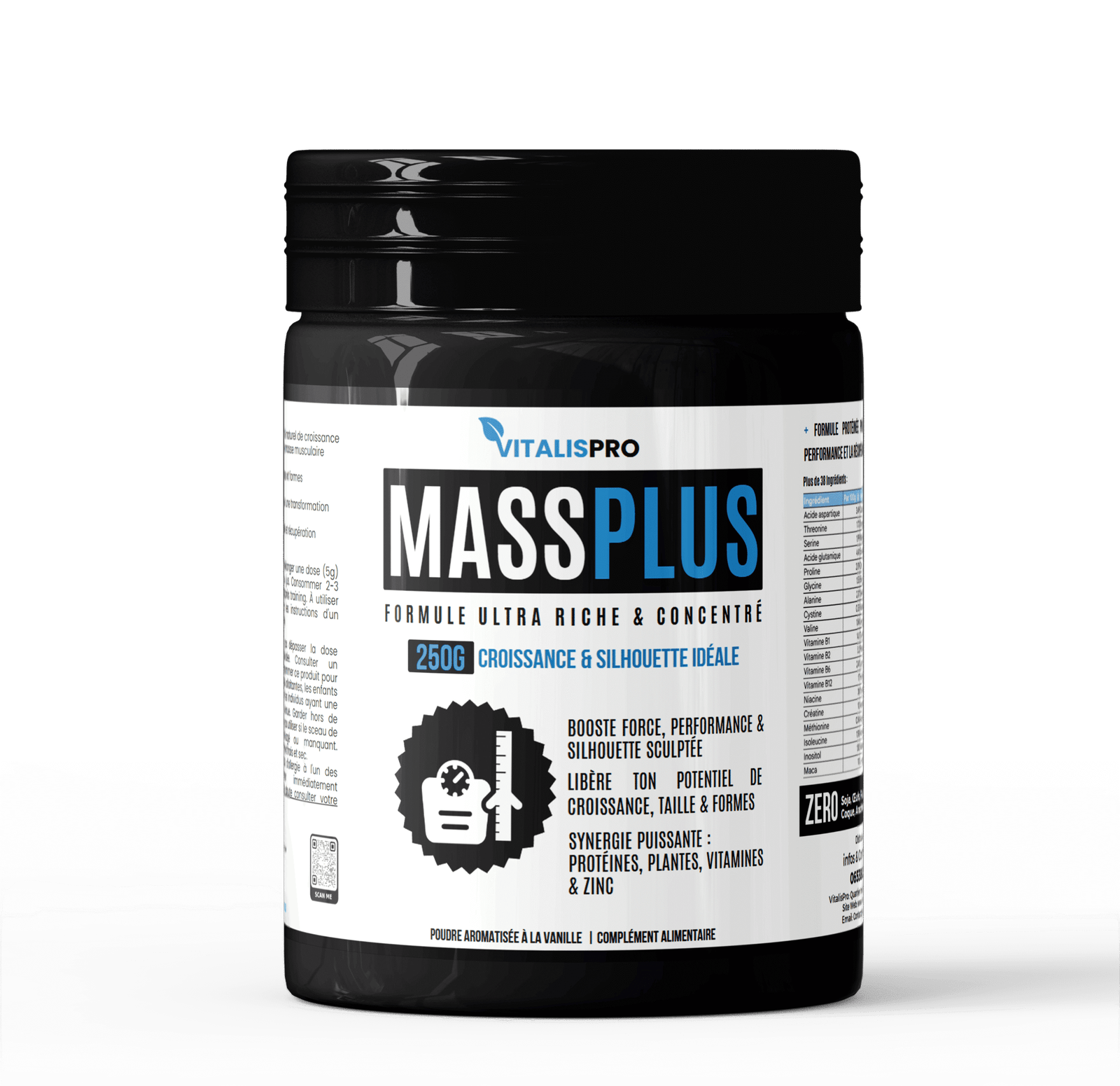
- Alphavital formulates a targeted plant-based range — spirulina, B-complex, L-Arginine — designed for the energy and recovery of the Moroccan athlete.
What is plant-based protein, exactly?
What is a protein in the first place? A protein is a long chain of amino acids folded into a precise shape. Of the twenty amino acids that make up living matter, nine are called essential: the body cannot make them and must obtain them from food. A protein is described as “complete” when it supplies these nine amino acids in sufficient quantities. Animal proteins almost always are; plant proteins, taken in isolation, more rarely so — hence the importance, as we will see, of combining them intelligently.
In reality, proteins are far more than the “muscle bricks” people talk about in the gym. They are macromolecules involved in hundreds of processes: repairing fibres after exercise, producing digestive enzymes, building hormones, transporting oxygen via haemoglobin, and running the immune system. Meeting your protein needs is therefore not only about “getting big”: it is about maintaining an entire biological machinery.
An often-overlooked detail deserves to be stated up front: at the cellular level, it matters little whether an amino acid comes from a chickpea or a chicken breast. Once a protein is digested and broken down into its amino acids, the body no longer “knows” where they came from. What matters is the presence of the nine essential amino acids, in sufficient quantity and at the right time. This simple idea alone dismantles the myth that muscle requires meat. What it requires are amino acids — and the plant kingdom is full of them, provided you know how to combine.
One technical nuance remains: protein quality is also measured by its digestibility and its indispensable amino acid score (the DIAAS index, which replaced the older PDCAAS). Soy and pea proteins post good scores; cereals and certain legumes, more modest ones in isolation. This is precisely why combining — and, where needed, supplementing — makes all the difference.
An old question, a modern reading
The idea that meat is indispensable to muscle is culturally entrenched, in Morocco as elsewhere. Yet the athletes of Mediterranean and North African cultures long relied on legumes, whole grains and seeds. Couscous with chickpeas, harira with lentils, sourdough bread with sesame paste: combinations that, unknowingly, already built complete protein profiles. Contemporary science has merely confirmed, with measurements to back it, the intuition of these culinary traditions.
Why protein matters so much for the athlete
For an average Moroccan athlete weighing 75 kg and training four times a week, needs fall between 1.6 and 2.2 grams of protein per kilo of body weight — i.e. 120 to 165 g per day. That is a volume hard to reach through food alone, especially when trying to limit red meat. Health authorities recognise, under EU Regulation 432/2012, that protein contributes to the growth and maintenance of muscle mass, and to the maintenance of normal bones.
Distribution matters as much as the total. Rather than a single large intake, the body benefits from servings spread across the day — typically 25 to 40 g per meal — to stimulate muscle protein synthesis regularly. It is a logic of consistency, not occasional excess.
The best plant protein sources available in Morocco
The good news is that most of these sources are already in our kitchens, souks and grocery stores. Here is a numbered overview, by content per 100 g and by local availability.
| Source | Protein / 100 g | Availability in Morocco |
|---|---|---|
| Spirulina (powder) | 57–70 g | Online shops, natural stores |
| Pumpkin seeds | 30 g | Souk, grocers |
| Hemp seeds | 31 g | Parapharmacies |
| Moringa (powder) | 27 g | Natural stores |
| Almonds | 21 g | Everywhere |
| Tofu / soy | 8–17 g | Supermarkets |
| Legumes (lentils, chickpeas) | 8–9 g | Everywhere |
| Quinoa (cooked) | 4 g | Organic shops |
Two practical lessons emerge from this table. First, the leafy and algae sources (spirulina, moringa) and the seeds (pumpkin, hemp) punch far above their weight gram for gram, which makes them efficient additions even in small amounts. Second, the everyday staples of the Moroccan pantry — lentils, chickpeas, white beans — though lower in concentration, are eaten in large portions and therefore contribute the bulk of daily plant protein for most households. The smart strategy combines both: a generous base of legumes and grains, topped up with a concentrated source like spirulina.
Take a concrete example. A student in Fès who eats little meat, for both ethical and budgetary reasons, combines lentils and rice in the evening, a yoghurt in the morning, a handful of almonds at midday and a spoonful of spirulina in his juice. Without any particular effort, he clears the 100 g daily protein mark. It is realistic, affordable, and rooted in a cuisine he already knows.
Spirulina: the queen of plant proteins
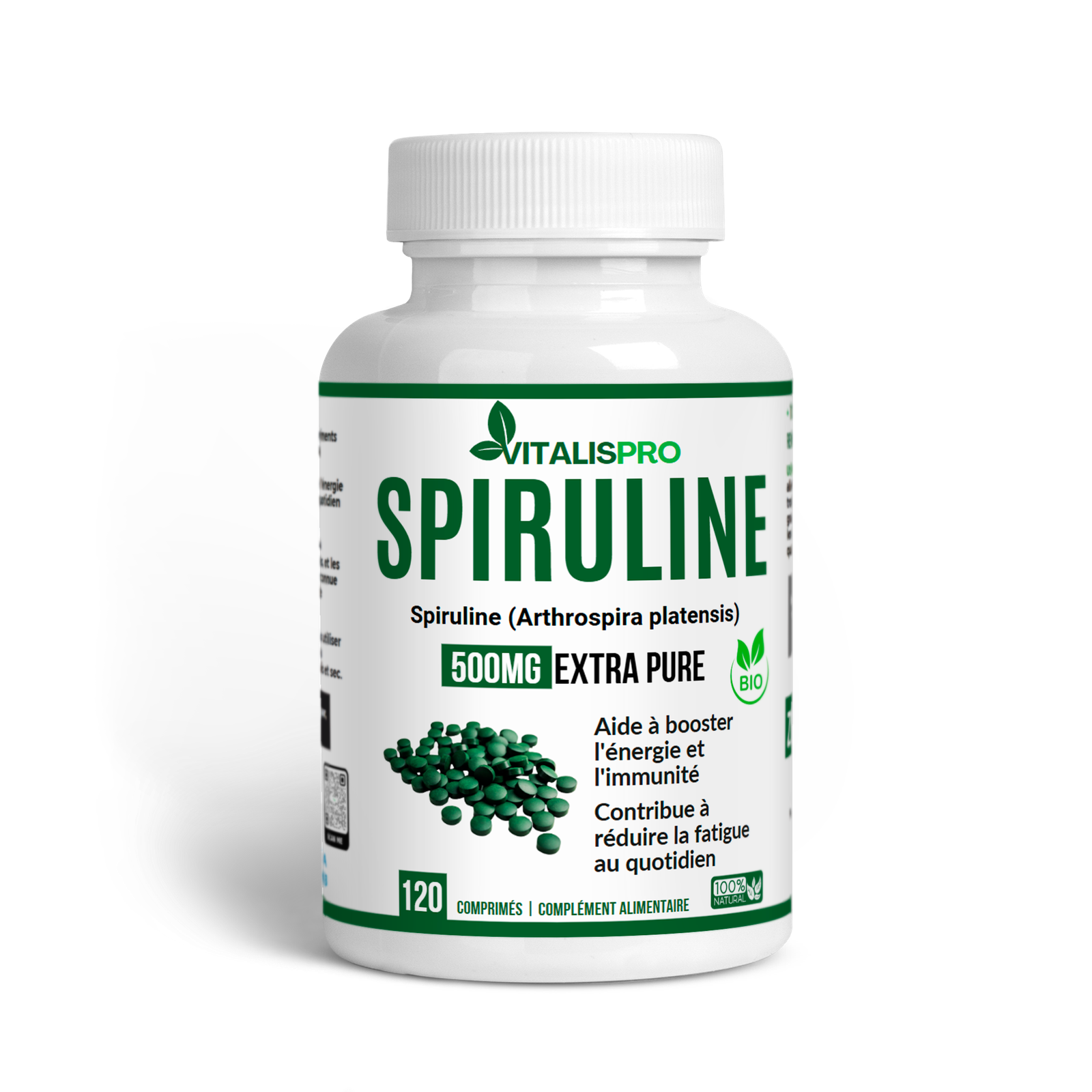
Spirulina is a micro-algae containing between 57% and 70% protein by dry weight — proportionally more than chicken (31%), beef (26%) or egg (13%). Beyond quantity, it is the quality that stands out: spirulina supplies the nine essential amino acids, making it a complete protein in its own right, rare in the plant kingdom.
Its protein bioavailability is equally remarkable: protein is absorbed at 85–90%, versus 70–80% for legumes, whose cell walls and anti-nutrients slow assimilation. In practice, 5 to 10 g of spirulina per day — one to two teaspoons of powder, or the equivalent in capsules — provide 3 to 7 g of complete protein, easily slipped into a smoothie, a yoghurt or a simple daily dose.
Spirulina is not only about protein. Its richness in iron makes it particularly valuable for athletes prone to exercise-related anaemia, and its antioxidant pigments (phycocyanin) help defend cells against the oxidative stress generated by intense training.
It is precisely this logic of a complete, highly assimilable, 100% plant-based protein that guided Alphavital in formulating its reference spirulina.
L-Arginine: the athlete’s favourite amino acid
L-Arginine is not, strictly speaking, a “plant protein”: it is an amino acid, a building block of proteins, particularly prized by athletes. Its interest rests on several well-described mechanisms.
- Nitric oxide (NO) precursor: arginine promotes vasodilation, hence the supply of oxygen and nutrients to working muscles — what practitioners call the muscle “pump”.
- Recovery support: by taking part in protein synthesis, it accompanies the repair of fibres after training.
- Aerobic performance: several studies report an endurance gain in supplemented athletes, linked to improved circulatory efficiency.
- Circulation support: by improving blood flow, arginine contributes to general vascular function.
The useful range sits between 3 and 6 g per day, ideally 30 to 45 minutes before training. More and more Moroccan practitioners are turning to it as a natural alternative to pre-workouts heavily dosed with caffeine and stimulants of sometimes dubious profile. Arginine does not “dope”: it accompanies the physiology of effort.
Moringa: protein and micronutrients combined
Moringa, which we detail in our dedicated moringa guide, deserves a place here. Its powder supplies all the essential amino acids in interesting proportions, and its micronutrient density makes it a versatile ally for the athlete: iron (prevention of exercise anaemia), magnesium (muscle recovery and nerve function), antioxidants (cellular protection against the oxidative stress of intense training).
For athletic use, moringa is thought of less as a primary protein source than as a background supplement, enriching the overall nutritional profile of a training day. Its blend of iron, magnesium and antioxidants makes it especially relevant during heavy training blocks, when oxidative stress and mineral losses climb. Like spirulina, it works best as a steady, daily companion rather than an occasional fix.
The science: what studies really show
For decades, the dominant idea held that plant proteins were “inferior” for building muscle. Recent work strongly qualifies that verdict. Several controlled trials, comparing athletes fed animal or plant proteins at equivalent intake and training, find no significant difference in strength and lean mass gains when the total daily protein is met. In other words, at 1.6–2.2 g/kg with structured training, the source matters less than quantity and consistency.
The most robust scientific caveat concerns leucine, the amino acid that triggers muscle protein synthesis. Plant proteins generally contain slightly less than whey; this is offset by a marginally higher intake or by combining sources (pea + rice, for instance), which rebalances the profile. It is a dosing adjustment, not a physiological impossibility.
Regarding spirulina, composition analyses confirm an exceptional protein content (57–70% of dry weight) and a complete amino acid profile, making it one of the rare intrinsically complete plant proteins. On L-Arginine, literature reviews report an effect on nitric oxide production and vasodilation, with endurance benefits varying by protocol and dose. Caution remains warranted: these effects support effort, they do not replace it.
Finally, an obvious point that science also validates: no supplement compensates for insufficient training, poor sleep or a chronic calorie deficit. Plant proteins are one nutritional lever among others, to be integrated into a coherent lifestyle.
Complete versus incomplete: clearing up the confusion
Much of the anxiety around plant protein stems from a misunderstanding of the words “complete” and “incomplete”. An “incomplete” protein is not a “bad” protein: it simply has a lower proportion of one or two essential amino acids. Lentils are slightly short on methionine; rice is slightly short on lysine. Eaten together, even hours apart, they cover each other perfectly. The notion that you must consciously “combine proteins at every single meal” — popular in the 1970s — has since been corrected by the science: the body maintains a circulating pool of amino acids and draws on it as needed over the day.
For the practical athlete, this means one thing: focus on variety and total intake rather than obsessing over each plate. A week eating lentils, chickpeas, whole grains, seeds, a little soy and a daily spoon of spirulina effortlessly delivers the full amino acid spectrum. Supplementation then targets the gaps — leucine density, iron, a high performance ceiling — rather than replacing a varied diet.
It is also worth retiring the idea that plant protein is “harder to digest” across the board. Some whole legumes are, due to fibre and anti-nutrients; but spirulina, sprouted or soaked legumes, and isolated plant proteins are highly digestible. Soaking, sprouting and proper cooking dramatically improve both digestibility and mineral absorption — traditional Moroccan preparation methods that, once again, the science endorses.
Plant protein and recovery: the window that matters
After an intense session, the muscle is temporarily more receptive to amino acids: the famous “anabolic window”. Long presented as a few-minute emergency, it is now understood as a broader span — several hours — during which a protein intake supports the repair and adaptation of fibres. For the plant-based athlete, the point is therefore not to rush, but to ensure an intake of 25 to 40 g within an hour or two after exercise.
Spirulina, quickly assimilable, and pea or rice proteins are practical choices for this recovery window. Paired with a carbohydrate source (a banana, dates — a Moroccan classic), they help replenish glycogen stores and protein synthesis. It is a simple routine: a well-composed post-session smoothie often beats any miracle powder sold at a premium.
A word on iron, an underestimated factor in recovery. Intensive training, especially endurance sports and impact disciplines, increases iron losses and the risk of exercise anaemia, particularly in women. Spirulina, naturally rich in iron, and regular legume consumption help preserve this status, provided a vitamin C source is added to improve absorption of plant iron.
Common mistakes to avoid
Three pitfalls recur among athletes switching to plant protein. Knowing them saves months of trial and error.
- Underestimating total protein: many think they “eat plant-based” without counting, and plateau at 70–80 g a day, far from their real needs. The fix: estimate your intake over a week, then adjust.
- Neglecting variety: relying on a single source (only lentils, for instance) impoverishes the amino acid profile. Complementarity is the golden rule.
- Stacking powders at random: piling up supplements without coherence is costly and adds nothing over a simple, well-dosed routine. Three chosen products beat a full shelf.
How to combine plant sources for a complete profile
The key to plant proteins comes down to one word: complementarity. Each source is “incomplete” in its own way — legumes lack methionine, cereals lack lysine. But combined, they complete each other and form an amino acid profile equivalent to an animal protein.
- Cereals + legumes: rice and lentils, bread and hummus, couscous and chickpeas — perfectly complementary Moroccan classics.
- Seeds + legumes: sesame and chickpeas (tahini and falafel), a duo with an excellent amino acid profile.
- Spirulina + any meal: complete in itself, it lifts the protein profile of the whole dish.
Good news: there is no need to bring these combinations together within a single meal. Pairing them across the day is amply sufficient, the body holding a pool of circulating amino acids it draws on as needed.
Dosage and a typical nutrition plan
What dose, and when
The goal is twofold: reach the daily protein total and spread the intake. Here is a concrete example for a training day, calibrated at 130 g of protein for a 75 kg athlete.
- Breakfast: two eggs, a plain yoghurt and 5 g of spirulina in a juice — about 25 g.
- Before training: one dose of L-Arginine and a handful of almonds — about 8 g.
- After training: moringa and pea protein in a banana-and-plant-milk smoothie — about 25 g.
- Lunch: lentil tagine, Moroccan bread and salad — about 35 g.
- Dinner: fish or poultry, rice and vegetables — about 37 g.
Total: about 130 g. It is achievable, tasty, and deeply rooted in Moroccan culinary culture — without relying on a steak at every meal.
Precautions and points of vigilance
Plant proteins are safe for the vast majority of athletes, but a few common-sense markers apply.
- Digestive tolerance: legumes can cause bloating in some people; spirulina, moringa and plant protein capsules, however, are very well tolerated.
- Hydration: a high protein intake puts demand on the kidneys; it therefore goes with good hydration, particularly important in Morocco’s hot climate.
- Plant iron quality: iron from plants (non-heme) absorbs better in the presence of vitamin C — one more reason to pair spirulina with citrus.
- Pregnancy, breastfeeding, ongoing condition or treatment: seek the advice of a qualified health professional before any supplementation.
Protein is not a miracle product
No powder, however high-quality, replaces training, sleep and consistency. Plant proteins are neither a stimulant nor a magic formula: they are nutritional tools which, integrated into a coherent lifestyle, support your goals. The supplement comes after the plate, never in its place — which is exactly the philosophy Alphavital defends.
The Alphavital answer
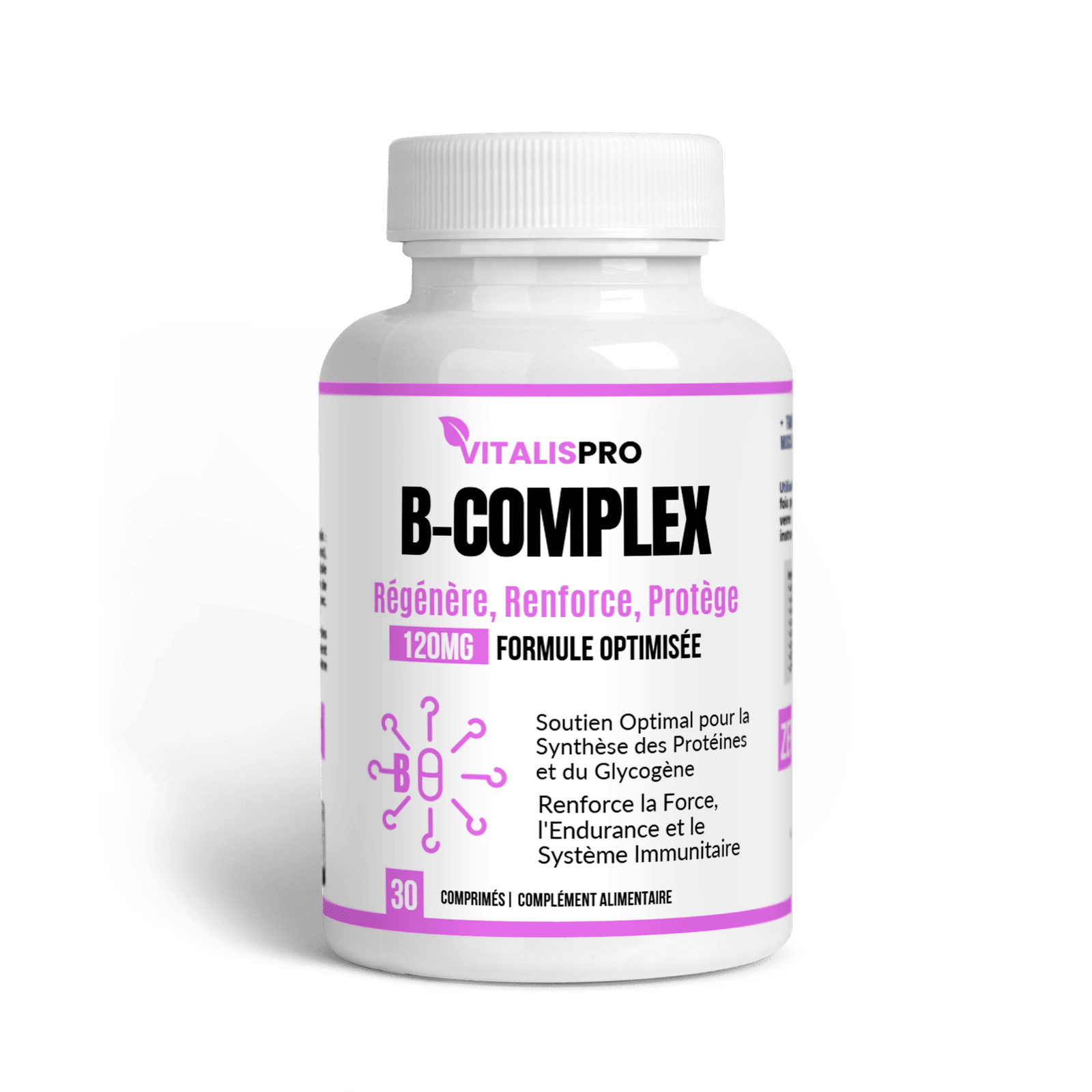
Rather than a promise of spectacular results, Alphavital builds a clear, honest plant-based range, designed to fit into the real routine of a Moroccan athlete. Spirulina for the protein base and iron; the B-vitamin complex for energy metabolism; L-Arginine for the pre-workout phase. Three complementary levers, dosed and transparent.
B vitamins contribute to normal energy metabolism and to the reduction of tiredness (authorised claims, EFSA) — valuable support for anyone stacking sessions. That is the purpose of our B-complex.
Beyond muscle: health, budget and the planet
Choosing plant proteins is not only a performance strategy. It is also a deeper choice that meets three very concrete concerns of Moroccans today. First, cardiovascular health: a diet richer in legumes, seeds and vegetables, and more measured in processed red meat, is associated in population studies with a better lipid profile and a lower inflammatory burden.
Then the budget. In a context where the price of meat weighs on family baskets, legumes remain one of the cheapest protein sources per kilo. A spirulina cure or a B-vitamin complex complete this base at a modest daily cost, where daily quality meat consumption quickly strains the budget.
Finally, the environmental footprint. Producing plant protein uses far less water and land than livestock farming. For a country like Morocco, facing water stress, this parameter is not trivial. Eating more plant-based is also a gesture of consistency with the territory’s resources. Athletic performance and responsibility do not clash: they meet on the plate.
The Moroccan factor: eat better, move more
Recognising a quality plant protein
A reliable spirulina is recognised by its traceability, the absence of contaminants (heavy metals, microcystins) and a stable protein content. Alphavital selects its raw materials on these criteria and clearly states its doses, rather than hiding a formula behind a vague trade name.
The plate first, the supplement second
Moroccan cuisine already brims with relevant protein combinations: harira, loubia, couscous with legumes, sesame bread. The supplement steps in to bridge a gap — a high performance goal, a recovery window, a strict vegan diet — not to replace a well-built diet.
A typical day with plant protein
In practice, spirulina is happily taken in the morning, the B-complex at breakfast to support energy metabolism, and L-Arginine pre-session. This simple routine fits in without upending habits — consistency beats complexity.
Who can plant proteins suit?
| Profile | Main benefit |
|---|---|
| Amateur athlete (3 sessions/week) | Cover needs without excess meat |
| Athlete in preparation | Reach 150 g+/day and refine recovery |
| Vegetarian or vegan | Secure the nine essential amino acids |
| Person cutting red meat | Maintain muscle mass (EU 432/2012) |
| Athlete prone to fatigue | Iron support (spirulina) and B vitamins |
Protein supplements: when to actually use them
The supplement is only useful in precise situations. No need to multiply powders if the plate suffices. Three cases clearly justify a targeted supplementation:
- High performance goals: when needs easily exceed 150 g a day, hard to cover by food alone.
- Post-effort recovery: in the 30-to-60-minute window after training, where a quick protein intake supports repair.
- Strict vegan diet: to secure the intake of essential amino acids and iron.
Where to buy reliable plant protein in Morocco, and at what price
The Alphavital plant-based range is available on our online shop, with fast delivery throughout Morocco and cash on delivery. On price, serious plant supplementation remains accessible. A spirulina cure costs a few dirhams a day, well below the cost of daily quality meat consumption — not to mention the lower environmental footprint. The right reflex: compare the price per gram of actually assimilated protein, not just the price of the jar. A traced, properly dosed spirulina, even a little pricier upfront, often costs less in use than a cheap product poor in actives.
Beyond price, it is the coherence of a range that creates value: being able to pair, from a single transparent supplier, spirulina for the protein base, the B-complex for energy metabolism and L-Arginine for effort, avoids the haphazard stacking of mismatched products. That is the approach Alphavital chose to build for the Moroccan athlete.
Three athletes tell their story
“I cut back on red meat without losing performance. Spirulina in the morning and the B-complex have become simple markers in my preparation.”
— Mehdi, Casablanca
“What convinced me was the honesty of the message: no promise of muscle in two weeks, just serious tools. I use spirulina in cures.”
— Imane, Rabat
“L-Arginine before the session replaced my caffeine-loaded pre-workout. I sleep better and feel a better pump in training.”
— Othmane, Marrakech
“A vegetarian and a runner, I was looking to secure my iron and protein. Alphavital’s spirulina helped me hold my goals without a flat blood panel.”
— Salma, Agadir
Frequently asked questions about plant protein
Can you build muscle on plant protein alone?
Yes. Comparative studies show muscle gains equivalent between omnivorous and vegan diets, at equal protein intake and training. The key is reaching the required quantities and ensuring amino acid complementarity across the day.
Can spirulina replace classic protein powder?
Partly. Spirulina is complete, but its leucine content — the amino acid that triggers muscle synthesis — is slightly lower. Paired with a balanced diet and, if needed, pea protein, it forms a solid base.
Do plant proteins cause bloating?
Legumes can cause bloating in some people, especially in large amounts. Spirulina, moringa and plant protein capsules are generally very well tolerated.
How much protein should I aim for per day?
For an athlete, count 1.6 to 2.2 g per kilo of body weight, spread across several servings of 25 to 40 g. A sedentary person has lower needs, around 0.8 to 1 g per kilo.
Is L-Arginine a doping agent?
No. It is an amino acid naturally present in food. At usual doses (3 to 6 g before effort), it supports circulation and recovery without featuring among banned substances.
How long before feeling an effect?
On performance and recovery, consistency prevails: a few weeks of steady intake, coupled with structured training, give more reliable markers than a one-off dose.
Are these supplements suitable for female athletes?
Yes, protein needs are calculated the same way per kilo of body weight. Spirulina is also valuable for iron status, often more fragile in women.
Are these products found in pharmacies in Morocco?
Pharmacy availability is variable. Alphavital favours direct online sales, with transparent doses and delivery throughout Morocco.
In summary
Plant proteins are a viable, economical and often nutritionally rich option for Moroccan athletes. By combining a diet of legumes, whole grains and seeds, then targeted supplementation with spirulina, B vitamins and L-Arginine, you can support your performance goals without relying on meat at every meal. The plate first, the supplement second — and consistency above all. Build the habit, measure your real intake honestly, and let targeted, well-dosed products fill the genuine gaps rather than chasing every passing trend that happens to appear on the supplement shelf this season.
About the author. This article was written by Chérif Belhassane, editor-in-chief for health & wellness at Alphavital. He translates scientific research into clear, actionable markers for everyday Moroccan life.
Disclaimer. The information presented is provided for guidance only, on the basis of sourced research (PubMed, EFSA, authorities). The Alphavital team is not made up of healthcare professionals. Consult a qualified health professional before any use, in case of ongoing treatment, pregnancy or breastfeeding, or a medical condition. Food supplements do not replace a varied, balanced diet or a healthy lifestyle.
Sources and references
- Protein and maintenance of muscle mass — authorised health claims (EU Regulation 432/2012). EUR-Lex
- Nutritional composition and protein quality of spirulina (Arthrospira). PubMed
- Plant-based diets and performance / muscle mass in athletes. PubMed
- L-Arginine, nitric oxide and exercise performance. PubMed
- Recommended protein intake and distribution for athletes. PubMed
