

La question revient sans cesse dans les salles de sport de Casablanca, de Rabat ou d’Agadir : comment couvrir ses besoins en protéines sans poser un morceau de viande à chaque repas ? Et surtout, les sources végétales sont-elles réellement à la hauteur pour construire du muscle ? Voici, sans promesse exagérée et sans jargon inutile, ce que la science établit sur les protéines végétales, comment les utiliser au quotidien, et la place qu’elles peuvent tenir dans la routine d’un sportif marocain.
Contenu de la page
- 1 À retenir
- 2 Qu’est-ce que la protéine végétale, au juste ?
- 3 Une vieille question, une lecture moderne
- 4 Pourquoi les protéines comptent autant pour le sportif
- 5 Les meilleures sources de protéines végétales disponibles au Maroc
- 6 La spiruline : la reine des protéines végétales
- 7 La L-Arginine : l’acide aminé favori des sportifs
- 8 La science : ce que montrent vraiment les études
- 9 Le moringa : protéines et micronutriments réunis
- 10 Protéines végétales et récupération : la fenêtre qui compte
- 11 Les erreurs fréquentes à éviter
- 12 Comment combiner les sources végétales pour un profil complet
- 13 Posologie et plan nutritionnel type
- 14 Précautions et points de vigilance
- 15 Les protéines ne sont pas un produit miracle
- 16 La réponse Alphavital
- 17 Le facteur marocain : manger mieux, bouger plus
- 18 À qui les protéines végétales peuvent-elles convenir ?
- 19 Compléments protéiques : quand les utiliser vraiment
- 20 Où acheter des protéines végétales fiables au Maroc, et à quel prix
- 21 Au-delà du muscle : santé, budget et planète
- 22 Trois sportifs nous racontent
- 23 Questions fréquentes sur les protéines végétales
- 23.1 Peut-on construire du muscle avec uniquement des protéines végétales ?
- 23.2 La spiruline peut-elle remplacer la protéine en poudre classique ?
- 23.3 Les protéines végétales font-elles « gonfler » le ventre ?
- 23.4 Quelle quantité de protéines viser par jour ?
- 23.5 La L-Arginine est-elle un dopant ?
- 23.6 Combien de temps avant de ressentir un effet ?
- 23.7 Ces compléments conviennent-ils aux femmes sportives ?
- 23.8 Trouve-t-on ces produits en pharmacie au Maroc ?
- 24 En résumé
À retenir
- Les protéines végétales bien combinées couvrent l’ensemble des neuf acides aminés essentiels et soutiennent la prise de masse au même titre que les sources animales, à apport égal.
- La spiruline concentre 57 à 70 % de protéines complètes en poids sec, avec une biodisponibilité de 85 à 90 %.
- Pour un sportif de 75 kg, la cible utile se situe entre 1,6 et 2,2 g de protéines par kilo, soit 120 à 165 g par jour.
- Les protéines contribuent au développement et au maintien de la masse musculaire (allégation autorisée, Règlement UE 432/2012).
- Alphavital formule une gamme végétale ciblée — spiruline, complexe B, L-Arginine — pensée pour l’énergie et la récupération du sportif marocain.
Qu’est-ce que la protéine végétale, au juste ?
Qu’est-ce que la protéine, d’abord ? Une protéine est une longue chaîne d’acides aminés repliée dans une forme précise. Sur les vingt acides aminés qui composent le vivant, neuf sont dits essentiels : l’organisme ne sait pas les fabriquer et doit les puiser dans l’alimentation. Une protéine est qualifiée de « complète » lorsqu’elle apporte ces neuf acides aminés en quantités suffisantes. Les protéines animales le sont presque toujours ; les protéines végétales, prises isolément, le sont plus rarement — d’où l’importance, comme nous le verrons, de les combiner intelligemment.
En réalité, les protéines sont bien plus que les « briques musculaires » dont on parle dans les salles. Ce sont des macromolécules engagées dans des centaines de processus : réparation des fibres après l’effort, production d’enzymes digestives, fabrication d’hormones, transport de l’oxygène par l’hémoglobine, fonctionnement du système immunitaire. Couvrir ses besoins protéiques, ce n’est donc pas seulement « prendre du muscle » : c’est entretenir une machinerie biologique entière.
Un détail souvent négligé mérite d’être posé d’emblée : à l’échelle de la cellule, peu importe que l’acide aminé provienne d’un pois chiche ou d’un blanc de poulet. Une fois la protéine digérée et décomposée en ses acides aminés, l’organisme ne « sait » plus d’où ils viennent. Ce qui compte, c’est la présence des neuf acides aminés essentiels, en quantité suffisante et au bon moment. Cette idée simple démonte à elle seule le mythe selon lequel le muscle exigerait de la viande. Ce qu’il exige, ce sont des acides aminés — et le règne végétal en regorge, à condition de savoir composer.
Reste une nuance technique : la qualité d’une protéine se mesure aussi à sa digestibilité et à son score d’acides aminés indispensables (l’indice DIAAS, qui a remplacé l’ancien PDCAAS chez les nutritionnistes). Les protéines de soja et de pois affichent de bons scores ; les céréales et certaines légumineuses, des scores plus modestes pris isolément. C’est précisément pourquoi la combinaison — et, au besoin, la supplémentation — fait toute la différence.
Une vieille question, une lecture moderne
L’idée que la viande serait indispensable au muscle est culturellement ancrée, au Maroc comme ailleurs. Pourtant, les athlètes des cultures méditerranéennes et nord-africaines se sont longtemps appuyés sur les légumineuses, les céréales complètes et les graines. Le couscous aux pois chiches, la harira aux lentilles, le pain au levain accompagné de purée de sésame : autant d’associations qui, sans le savoir, construisaient déjà des profils protéiques complets. La science contemporaine n’a fait que confirmer, mesures à l’appui, l’intuition de ces traditions culinaires.
Pourquoi les protéines comptent autant pour le sportif
Pour un sportif marocain moyen pesant 75 kg et s’entraînant quatre fois par semaine, les besoins se situent entre 1,6 et 2,2 grammes de protéines par kilo de poids corporel — soit 120 à 165 g par jour. C’est un volume difficile à atteindre par la seule alimentation, surtout lorsqu’on cherche à limiter la viande rouge. Les autorités de santé reconnaissent d’ailleurs, dans le cadre du Règlement UE 432/2012, que les protéines contribuent au développement et au maintien de la masse musculaire, ainsi qu’au maintien d’une ossature normale.
La répartition compte autant que le total. Plutôt qu’un seul gros apport, l’organisme tire bénéfice de prises réparties sur la journée — typiquement 25 à 40 g par repas — pour stimuler régulièrement la synthèse protéique musculaire. C’est une logique de constance, pas d’excès ponctuel.
Les meilleures sources de protéines végétales disponibles au Maroc
La bonne nouvelle, c’est que la plupart de ces sources sont déjà dans nos cuisines, nos souks et nos épiceries. Voici un panorama chiffré, par teneur pour 100 g et par facilité d’accès local.
| Source | Protéines / 100 g | Disponibilité au Maroc |
|---|---|---|
| Spiruline (poudre) | 57–70 g | Boutiques en ligne, magasins naturels |
| Graines de courge | 30 g | Souk, épiceries |
| Graines de chanvre | 31 g | Parapharmacies |
| Moringa (poudre) | 27 g | Boutiques naturelles |
| Amandes | 21 g | Partout |
| Tofu / soja | 8–17 g | Grandes surfaces |
| Légumineuses (lentilles, pois chiches) | 8–9 g | Partout |
| Quinoa (cuit) | 4 g | Magasins bio |
Prenons un exemple concret. Un étudiant à Fès qui mange peu de viande, pour des raisons à la fois éthiques et budgétaires, combine lentilles et riz le soir, un yaourt le matin, une poignée d’amandes à midi et une cuillère de spiruline dans son jus. Sans effort particulier, il franchit la barre des 100 g de protéines quotidiennes. C’est réaliste, c’est abordable, et cela s’ancre dans une cuisine qu’il connaît déjà.
La spiruline : la reine des protéines végétales
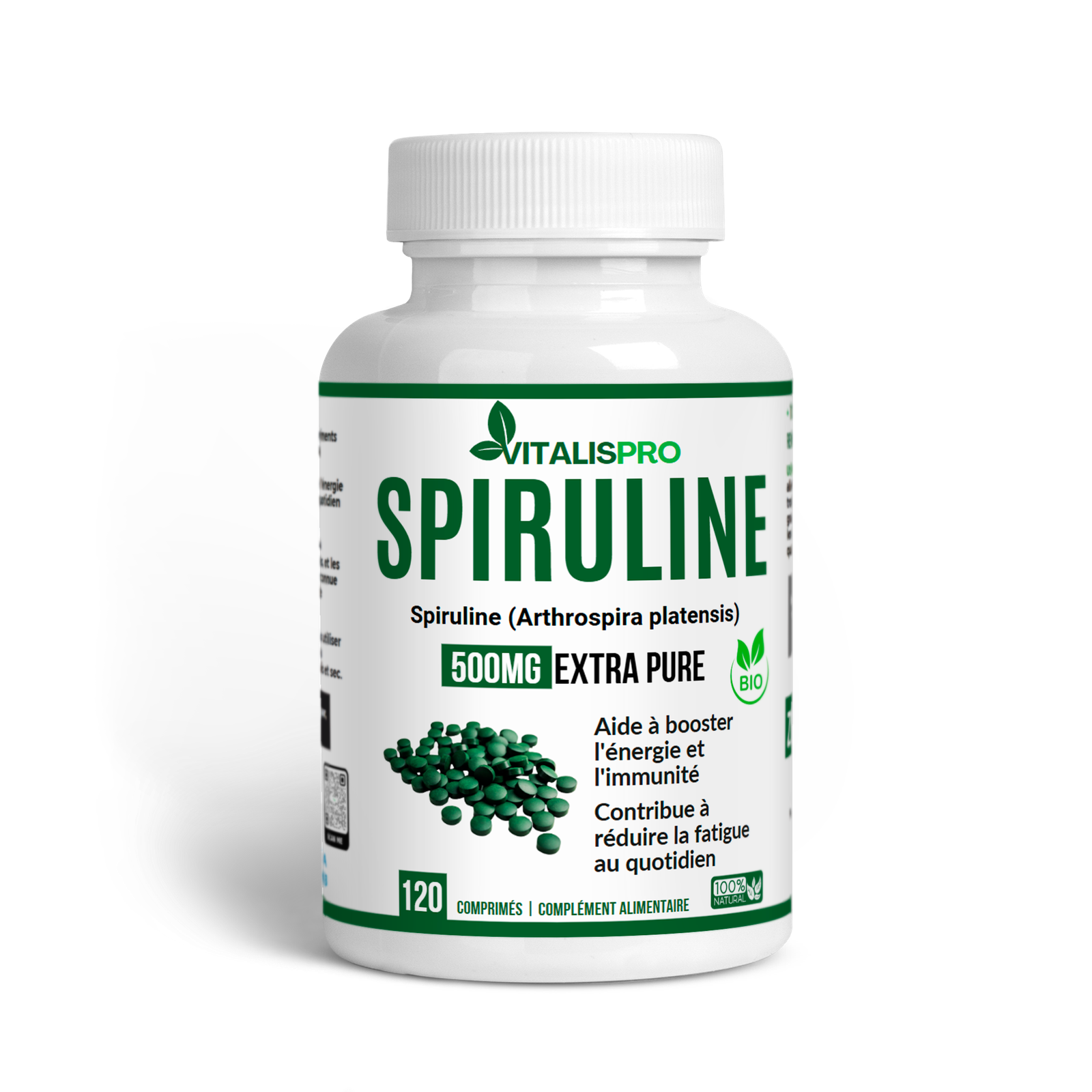
La spiruline est une micro-algue qui contient entre 57 % et 70 % de protéines en poids sec — soit davantage, proportionnellement, que le poulet (31 %), le bœuf (26 %) ou l’œuf (13 %). Au-delà de la quantité, c’est la qualité qui frappe : la spiruline apporte les neuf acides aminés essentiels, ce qui en fait une protéine complète à part entière, rare dans le règne végétal.
Sa biodisponibilité protéique est elle aussi remarquable : les protéines y sont absorbées à 85–90 %, contre 70–80 % pour les légumineuses, dont les parois cellulaires et les anti-nutriments freinent l’assimilation. En pratique, 5 à 10 g de spiruline par jour — une à deux cuillères à café de poudre, ou l’équivalent en gélules — apportent 3 à 7 g de protéines complètes, faciles à glisser dans un smoothie, un yaourt ou une simple prise quotidienne.
La spiruline n’est pas qu’une affaire de protéines. Sa richesse en fer la rend particulièrement intéressante pour les sportifs sujets à l’anémie de l’effort, et ses pigments antioxydants (phycocyanine) participent à la défense des cellules contre le stress oxydatif généré par l’entraînement intense.
C’est précisément cette logique de protéine complète, hautement assimilable et d’origine 100 % végétale, qui a guidé Alphavital dans la formulation de sa spiruline de référence.
La L-Arginine : l’acide aminé favori des sportifs
La L-Arginine n’est pas, à proprement parler, une « protéine végétale » : c’est un acide aminé, brique élémentaire des protéines, particulièrement prisé des sportifs. Son intérêt tient à plusieurs mécanismes bien décrits.
- Précurseur de l’oxyde nitrique (NO) : l’arginine favorise la vasodilatation, donc l’apport d’oxygène et de nutriments aux muscles à l’effort — ce que les pratiquants appellent la « congestion » musculaire.
- Soutien de la récupération : en participant à la synthèse protéique, elle accompagne la réparation des fibres après l’entraînement.
- Performance aérobie : plusieurs travaux rapportent un gain d’endurance chez des athlètes supplémentés, en lien avec une meilleure efficacité circulatoire.
- Soutien de la circulation : en améliorant le flux sanguin, l’arginine participe au bon fonctionnement vasculaire général.
La fourchette utile se situe entre 3 et 6 g par jour, idéalement 30 à 45 minutes avant l’entraînement. De plus en plus de pratiquants marocains s’y intéressent comme alternative naturelle aux pré-entraînements ultra-dosés en caféine et en stimulants au profil parfois douteux. L’arginine ne « dope » pas : elle accompagne la physiologie de l’effort.
La science : ce que montrent vraiment les études
Pendant des décennies, l’idée dominante voulait que les protéines végétales soient « inférieures » pour la construction musculaire. Les travaux récents nuancent fortement ce verdict. Plusieurs essais contrôlés, comparant des sportifs nourris aux protéines animales ou végétales à apport et entraînement équivalents, ne retrouvent pas de différence significative sur les gains de force et de masse maigre lorsque le total protéique quotidien est atteint. Autrement dit, à 1,6–2,2 g/kg et avec un entraînement structuré, la source compte moins que la quantité et la régularité.
Le point de vigilance scientifique le plus solide concerne la leucine, l’acide aminé qui déclenche la synthèse protéique musculaire. Les protéines végétales en contiennent généralement un peu moins que la whey ; on compense par un apport légèrement supérieur ou par une combinaison de sources (pois + riz, par exemple), qui rééquilibre le profil. C’est un ajustement de dosage, pas une impossibilité physiologique.
Concernant la spiruline, les analyses de composition confirment une teneur protéique exceptionnelle (57–70 % du poids sec) et un profil d’acides aminés complet, ce qui en fait l’une des rares protéines végétales intrinsèquement complètes. Sur la L-Arginine, les revues de littérature rapportent un effet sur la production d’oxyde nitrique et la vasodilatation, avec des bénéfices d’endurance variables selon les protocoles et les doses. La prudence reste de mise : ces effets soutiennent l’effort, ils ne le remplacent pas.
Enfin, il faut rappeler une évidence que la science valide aussi : aucun complément ne compense un entraînement insuffisant, un sommeil dégradé ou un déficit calorique chronique. Les protéines végétales sont un levier nutritionnel parmi d’autres, à intégrer dans une hygiène de vie cohérente.
Le moringa : protéines et micronutriments réunis
Le moringa, que nous détaillons dans notre guide dédié au moringa, mérite une place ici. Sa poudre apporte l’ensemble des acides aminés essentiels dans des proportions intéressantes, et sa densité en micronutriments en fait un allié polyvalent pour le sportif : fer (prévention de l’anémie de l’effort), magnésium (récupération musculaire et fonction nerveuse), antioxydants (protection cellulaire face au stress oxydatif de l’entraînement intense).
Pour un usage sportif, le moringa se pense moins comme une source protéique principale que comme un complément de fond, qui enrichit le profil nutritionnel global d’une journée d’entraînement.
Protéines végétales et récupération : la fenêtre qui compte
Après une séance intense, le muscle est temporairement plus réceptif aux acides aminés : c’est la fameuse « fenêtre anabolique ». Longtemps présentée comme une urgence de quelques minutes, elle est aujourd’hui comprise comme une plage plus large — quelques heures — pendant lesquelles un apport protéique soutient la réparation et l’adaptation des fibres. Pour le sportif végétal, l’enjeu n’est donc pas de se précipiter, mais d’assurer un apport de 25 à 40 g dans l’heure ou les deux heures suivant l’effort.
La spiruline, rapidement assimilable, et les protéines de pois ou de riz constituent des choix pratiques pour cette plage de récupération. Associées à une source de glucides (une banane, des dattes — un classique au Maroc), elles favorisent la reconstitution des réserves de glycogène et la synthèse protéique. C’est une routine simple : un smoothie post-séance bien composé fait souvent mieux que n’importe quelle poudre miracle vendue à prix d’or.
Un mot sur le fer, enjeu sous-estimé de la récupération. L’entraînement intensif, en particulier les sports d’endurance et les disciplines à impact, augmente les pertes en fer et le risque d’anémie de l’effort, surtout chez les femmes. La spiruline, naturellement riche en fer, et une consommation régulière de légumineuses aident à préserver ce statut, à condition d’associer une source de vitamine C pour améliorer l’absorption du fer végétal.
Les erreurs fréquentes à éviter
Trois pièges reviennent souvent chez les sportifs qui passent aux protéines végétales. Les connaître, c’est gagner des mois de tâtonnements.
- Sous-estimer le total protéique : beaucoup pensent « manger végétal » sans compter, et plafonnent à 70–80 g par jour, loin de leurs besoins réels. La solution : estimer ses apports pendant une semaine, puis ajuster.
- Négliger la variété : se reposer sur une seule source (uniquement des lentilles, par exemple) appauvrit le profil d’acides aminés. La complémentarité est la règle d’or.
- Empiler les poudres au hasard : multiplier les compléments sans cohérence coûte cher et n’apporte rien de plus qu’une routine simple et bien dosée. Mieux vaut trois produits choisis qu’une étagère pleine.
Comment combiner les sources végétales pour un profil complet
La clé des protéines végétales tient en un mot : complémentarité. Chaque source est « incomplète » à sa manière — les légumineuses manquent de méthionine, les céréales de lysine. Mais associées, elles se complètent et forment un profil d’acides aminés équivalent à une protéine animale.
- Céréales + légumineuses : riz et lentilles, pain et houmous, couscous et pois chiches — des classiques marocains parfaitement complémentaires.
- Graines + légumineuses : sésame et pois chiches (tahini et falafel), un duo au profil d’acides aminés excellent.
- Spiruline + n’importe quel repas : complète en elle-même, elle rehausse le profil protéique de l’ensemble du plat.
Bonne nouvelle : il n’est pas nécessaire de réunir ces associations au sein d’un même repas. Les réunir sur l’ensemble de la journée suffit amplement, l’organisme disposant d’un pool d’acides aminés circulants qu’il mobilise au besoin.
Posologie et plan nutritionnel type
Quelle dose, à quel moment
L’objectif est double : atteindre le total protéique quotidien et répartir les apports. Voici un exemple concret pour une journée d’entraînement, calibré sur 130 g de protéines pour un sportif de 75 kg.
- Petit-déjeuner : deux œufs, un yaourt nature et 5 g de spiruline dans un jus — environ 25 g.
- Avant l’entraînement : une dose de L-Arginine et une poignée d’amandes — environ 8 g.
- Après l’entraînement : moringa et protéines de pois dans un smoothie banane et lait végétal — environ 25 g.
- Déjeuner : tajine de lentilles, pain marocain et salade — environ 35 g.
- Dîner : poisson ou volaille, riz et légumes — environ 37 g.
Total : environ 130 g. C’est atteignable, savoureux, et profondément ancré dans la culture culinaire marocaine — sans dépendre d’un steak à chaque repas.
Précautions et points de vigilance
Les protéines végétales sont sûres pour la grande majorité des sportifs, mais quelques repères de bon sens s’imposent.
- Tolérance digestive : les légumineuses peuvent provoquer des ballonnements chez certaines personnes ; la spiruline, le moringa et les gélules de protéines végétales sont en revanche très bien tolérés.
- Hydratation : un apport protéique élevé sollicite les reins ; il s’accompagne donc d’une bonne hydratation, particulièrement importante sous le climat chaud marocain.
- Qualité du fer végétal : le fer des végétaux (non héminique) s’absorbe mieux en présence de vitamine C — une raison de plus d’associer spiruline et agrumes.
- Grossesse, allaitement, pathologie ou traitement en cours : demandez l’avis d’un professionnel de santé qualifié avant toute supplémentation.
Les protéines ne sont pas un produit miracle
Aucune poudre, aussi qualitative soit-elle, ne remplace l’entraînement, le sommeil et la régularité. Les protéines végétales ne sont pas un dopant ni une formule magique : ce sont des outils nutritionnels qui, intégrés à une hygiène de vie cohérente, soutiennent vos objectifs. Le complément vient après l’assiette, jamais à sa place — c’est exactement la philosophie que défend Alphavital.
La réponse Alphavital
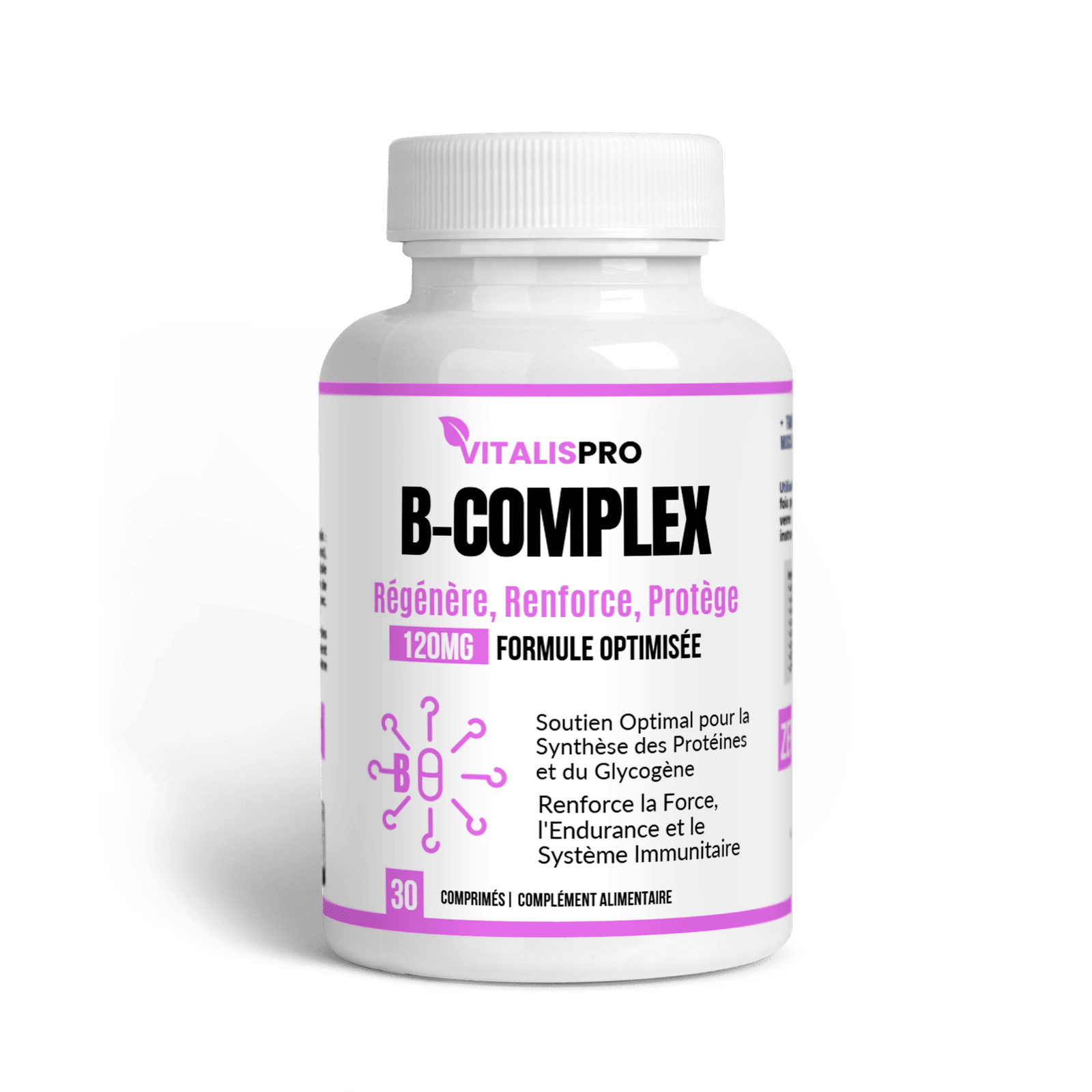
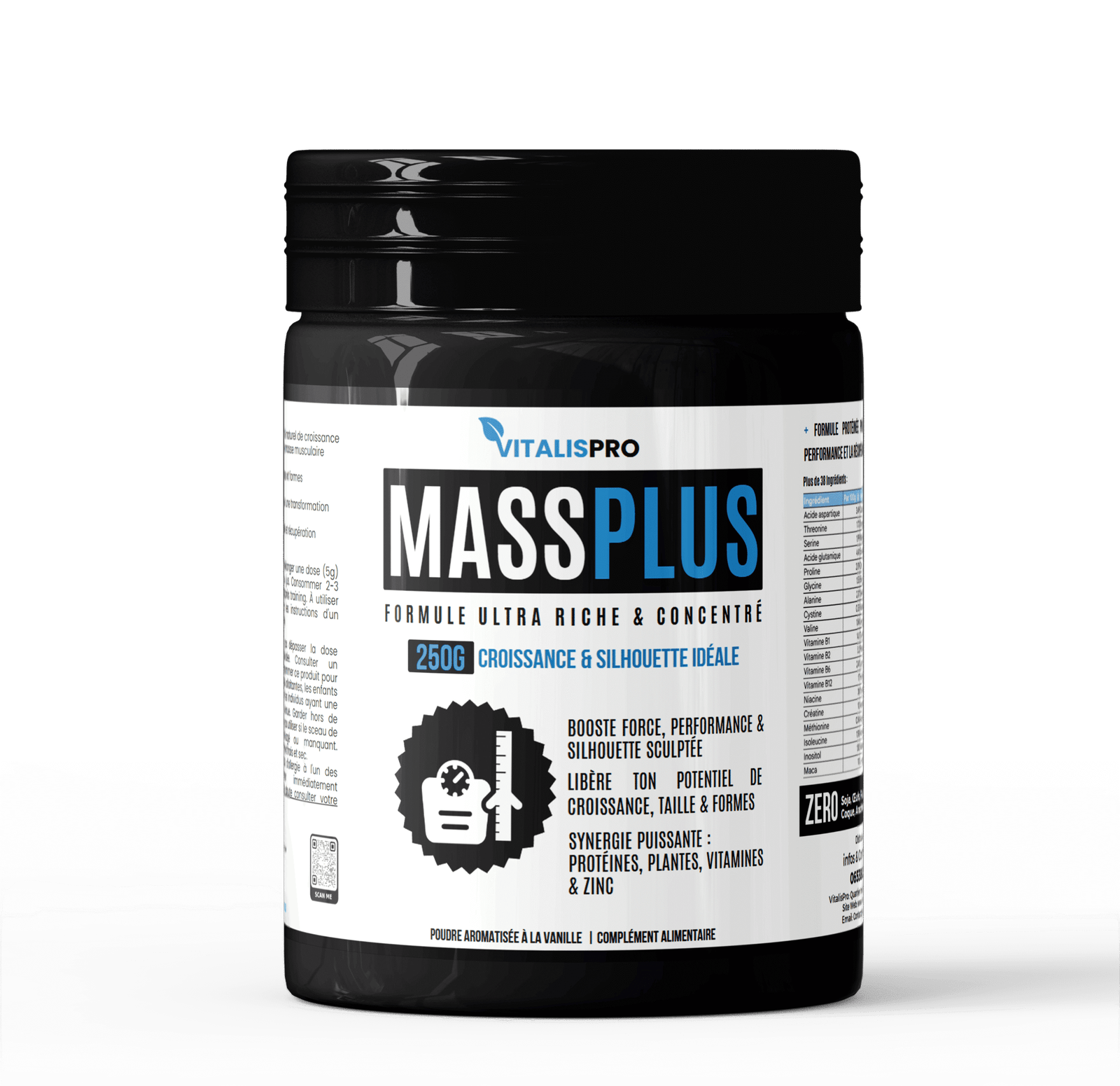
Plutôt qu’une promesse de résultats spectaculaires, Alphavital construit une gamme végétale lisible et honnête, pensée pour s’emboîter dans la routine réelle d’un sportif marocain. La spiruline pour la base protéique et le fer ; le complexe de vitamines B pour le métabolisme énergétique ; la L-Arginine pour la phase pré-entraînement. Trois leviers complémentaires, dosés et transparents.
Les vitamines B contribuent à un métabolisme énergétique normal et à la réduction de la fatigue (allégations autorisées, EFSA) — un soutien précieux pour qui enchaîne les séances. C’est l’objet de notre complexe B.
Le facteur marocain : manger mieux, bouger plus
Reconnaître une protéine végétale de qualité
Une spiruline fiable se reconnaît à sa traçabilité, à l’absence de contaminants (métaux lourds, microcystines) et à une teneur protéique stable. Alphavital sélectionne ses matières premières sur ces critères et affiche clairement ses dosages, plutôt que de masquer une formule derrière un nom commercial flou.
L’assiette d’abord, le complément ensuite
La cuisine marocaine regorge déjà de combinaisons protéiques pertinentes : harira, loubia, couscous aux légumineuses, pain au sésame. Le complément intervient pour combler un écart — un objectif de performance élevé, une fenêtre de récupération, un régime végétalien strict — et non pour remplacer une alimentation construite.
Une journée type avec les protéines végétales
Concrètement, la spiruline se prend volontiers le matin, le complexe B au petit-déjeuner pour soutenir le métabolisme énergétique, et la L-Arginine en pré-séance. Cette routine simple s’intègre sans bouleverser les habitudes — la régularité prime sur la complexité.
À qui les protéines végétales peuvent-elles convenir ?
| Profil | Intérêt principal |
|---|---|
| Sportif amateur (3 séances/semaine) | Couvrir les besoins sans excès de viande |
| Athlète en préparation | Atteindre 150 g+/jour et soigner la récupération |
| Végétarien ou végétalien | Garantir les neuf acides aminés essentiels |
| Personne réduisant la viande rouge | Maintenir la masse musculaire (UE 432/2012) |
| Sportif sujet à la fatigue | Soutien fer (spiruline) et vitamines B |
Compléments protéiques : quand les utiliser vraiment
Le complément n’est utile que dans des situations précises. Inutile de multiplier les poudres si l’assiette suffit. Trois cas justifient clairement une supplémentation ciblée :
- Objectifs de performance élevés : lorsque les besoins dépassent facilement 150 g par jour, difficiles à couvrir par la seule alimentation.
- Récupération post-effort : dans la fenêtre de 30 à 60 minutes après l’entraînement, où un apport protéique rapide accompagne la réparation.
- Régime végétalien strict : pour sécuriser l’apport en acides aminés essentiels et en fer.
Où acheter des protéines végétales fiables au Maroc, et à quel prix
La gamme végétale Alphavital est disponible sur notre boutique en ligne, avec une livraison rapide partout au Maroc et le paiement à la livraison. Plutôt que de courir les parapharmacies à la recherche d’une spiruline d’origine incertaine, vous accédez à des produits dont la composition et les dosages sont affichés sans ambiguïté.
Sur le plan du prix, une supplémentation végétale sérieuse reste accessible. Une cure de spiruline représente quelques dirhams par jour, bien en deçà du coût d’une consommation quotidienne de viande de qualité — sans parler de l’empreinte environnementale moindre. Le bon réflexe : comparer le prix au gramme de protéines réellement assimilées, pas seulement le prix du flacon. Une spiruline tracée et correctement dosée, même un peu plus chère à l’achat, revient souvent moins cher à l’usage qu’un produit bon marché mais pauvre en actifs.
Au-delà du prix, c’est la cohérence d’une gamme qui fait la valeur : pouvoir associer, chez un même fournisseur transparent, la spiruline pour la base protéique, le complexe B pour le métabolisme énergétique et la L-Arginine pour l’effort, évite l’empilement hasardeux de produits hétéroclites. C’est l’approche qu’Alphavital a choisi de construire pour le sportif marocain.
Au-delà du muscle : santé, budget et planète
Choisir les protéines végétales, ce n’est pas seulement une stratégie de performance. C’est aussi un choix de fond qui rejoint trois préoccupations très concrètes des Marocains d’aujourd’hui. D’abord la santé cardiovasculaire : une alimentation plus riche en légumineuses, en graines et en végétaux, et plus mesurée en viande rouge transformée, s’associe dans les études de population à un meilleur profil lipidique et à une moindre charge inflammatoire.
Ensuite le budget. Dans un contexte où le prix de la viande pèse sur le panier des familles, les légumineuses restent l’une des sources de protéines les moins chères au kilo. Une cure de spiruline ou un complexe de vitamines B viennent compléter cette base à un coût quotidien modeste, là où une consommation carnée quotidienne de qualité grève rapidement le budget.
Enfin l’empreinte environnementale. La production de protéines végétales mobilise nettement moins d’eau et de terres que l’élevage. Pour un pays comme le Maroc, confronté au stress hydrique, ce paramètre n’est pas anecdotique. Manger plus végétal, c’est aussi un geste de cohérence avec les ressources du territoire. La performance sportive et la responsabilité ne s’opposent pas : elles se rejoignent dans l’assiette.
Trois sportifs nous racontent
« J’ai réduit la viande rouge sans perdre en performance à la salle. La spiruline le matin et la protéine végétale après mes séances m’aident à mieux récupérer. Le lendemain d’un entraînement de jambes, je me sens moins courbaturé qu’avant. »
— Jamal, Nador
« Coureuse le week-end, je cherchais à compléter mes apports sans multiplier les steaks. La protéine végétale d’Alphavital se mélange bien à mon smoothie et ne pèse pas sur l’estomac avant une sortie. Ma récupération après les longues distances s’est nettement améliorée. »
— Sara, Béni Mellal
« La L-Arginine avant la séance a remplacé mon pré-workout bourré de caféine. Je dors mieux le soir et je garde de l’énergie pendant mes séances de musculation. Pour quelqu’un qui veut soutenir sa masse musculaire proprement, c’est un bon compromis. »
— Abderrahim, Settat
« Végétarienne et adepte du vélo, je voulais sécuriser mon apport en protéines. La spiruline d’Alphavital m’accompagne au quotidien depuis le printemps. Je me sens plus tonique dans mes montées, sans la baisse de régime que je connaissais avant. »
— Aicha, Larache
Questions fréquentes sur les protéines végétales
Peut-on construire du muscle avec uniquement des protéines végétales ?
Oui. Les études comparatives montrent des gains musculaires équivalents entre régimes omnivores et végétaliens, à apport protéique et entraînement égaux. La clé est d’atteindre les quantités nécessaires et d’assurer la complémentarité des acides aminés sur la journée.
La spiruline peut-elle remplacer la protéine en poudre classique ?
Partiellement. La spiruline est complète, mais sa teneur en leucine — l’acide aminé déclencheur de la synthèse musculaire — est un peu inférieure. Associée à une alimentation équilibrée et, si besoin, à des protéines de pois, elle constitue une base solide.
Les protéines végétales font-elles « gonfler » le ventre ?
Les légumineuses peuvent provoquer des ballonnements chez certaines personnes, surtout en grande quantité. La spiruline, le moringa et les gélules de protéines végétales sont en général très bien tolérés.
Quelle quantité de protéines viser par jour ?
Pour un sportif, comptez 1,6 à 2,2 g par kilo de poids corporel, répartis en plusieurs prises de 25 à 40 g. Un sédentaire a des besoins moindres, autour de 0,8 à 1 g par kilo.
La L-Arginine est-elle un dopant ?
Non. C’est un acide aminé naturellement présent dans l’alimentation. Aux doses usuelles (3 à 6 g avant l’effort), elle accompagne la circulation et la récupération sans figurer parmi les substances interdites.
Combien de temps avant de ressentir un effet ?
Sur la performance et la récupération, la régularité prime : quelques semaines d’apport constant, couplées à un entraînement structuré, donnent des repères plus fiables qu’une prise ponctuelle.
Ces compléments conviennent-ils aux femmes sportives ?
Oui, les besoins protéiques se calculent de la même manière au kilo de poids corporel. La spiruline est par ailleurs intéressante pour le statut en fer, souvent plus fragile chez les femmes.
Trouve-t-on ces produits en pharmacie au Maroc ?
La disponibilité en pharmacie est variable. Alphavital privilégie la vente en ligne directe, avec des dosages transparents et une livraison partout au Maroc.
En résumé
Les protéines végétales sont une option viable, économique et souvent nutritionnellement riche pour les sportifs marocains. En combinant une alimentation faite de légumineuses, de céréales complètes et de graines, puis une supplémentation ciblée en spiruline, en vitamines B et en L-Arginine, on peut soutenir ses objectifs de performance sans dépendre de la viande à chaque repas. L’assiette d’abord, le complément ensuite — et la régularité avant tout.
À propos de l’auteur. Cet article a été écrit par Chérif Belhassane, rédacteur en chef santé & bien-être chez Alphavital. Il traduit la recherche scientifique en repères clairs et applicables au quotidien marocain.
Avertissement. Les informations présentées sont fournies à titre indicatif, sur la base de recherches sourcées (PubMed, EFSA, autorités). L’équipe Alphavital n’est pas composée de professionnels de santé. Consultez un professionnel de santé qualifié avant tout usage, en cas de traitement en cours, de grossesse ou d’allaitement, ou de pathologie. Les compléments alimentaires ne se substituent pas à une alimentation variée et équilibrée ni à un mode de vie sain.
Sources et références
- Protéines et maintien de la masse musculaire — allégations de santé autorisées (Règlement UE 432/2012). EUR-Lex
- Composition nutritionnelle et qualité protéique de la spiruline (Arthrospira). PubMed
- Régimes à base de plantes et performance / masse musculaire chez les sportifs. PubMed
- L-Arginine, oxyde nitrique et performance à l’effort. PubMed
- Apports protéiques recommandés et répartition pour le sportif. PubMed