

Cardiovascular Health
Coenzyme Q10, commonly abbreviated as CoQ10, is a molecule the body manufactures itself, sitting at the very heart of energy production in every one of our cells. In Morocco, interest in CoQ10 is growing among people who notice their energy declining after forty, who want to support their heart naturally, or who wonder about fatigue while taking statin therapy. Here is what science actually establishes about CoQ10, and how Alphavital translates that data into a clearly dosed, transparent, and traceable formula.
There is a quiet molecule inside us, present in almost every cell, rarely mentioned in everyday conversations about health. Coenzyme Q10 does not enjoy the fame of well-known vitamins, and it does not appear on everyday food labels. It works in silence, deep within our cells, where the energy that keeps us on our feet is literally manufactured. Without it, our muscles, our brain, and above all our heart could not function as they do.
In Morocco, the topic is gradually gaining ground. In conversations among forty-somethings who notice a drop in their vitality, among people attentive to heart health, or among those following a treatment and trying to understand their fatigue, coenzyme Q10 keeps coming up as a recurring question. Our team regularly receives messages about it. What exactly is it? Why is it discussed after forty? What is the connection with statins? This article answers those questions, drawing on the public scientific literature and guided by a simple principle: never promise what the science does not support.
Contenu de la page
- 1 Key Takeaways
- 2 Coenzyme Q10: What Are We Actually Talking About?
- 3 Cellular Energy Production, Simply Explained
- 4 The Science: What the Research Actually Says
- 5 CoQ10 After 40: Why the Interest?
- 6 CoQ10 and Statins: The Most Frequently Asked Question
- 7 Contexts in Which Research Has Focused on CoQ10
- 8 Beyond Omega-3: Completing the Heart and Circulation Hub
- 9 Coenzyme Q10 in Morocco: A Real Need
- 10 How to Use Coenzyme Q10 Correctly
- 11 The Alphavital Answer
- 12 Three Readers Share Their Experience
- 13 Frequently Asked Questions About Coenzyme Q10
- 14 In Summary
- 15 Ubiquinol vs. Ubiquinone: The CoQ10 Form Debate, Settled Honestly
- 16 A Practical Buyer Guide to CoQ10 in Morocco
- 17 CoQ10 Across the Lifespan: Different Needs at Different Stages
- 18 CoQ10 and the Moroccan Cardiovascular Reality
Key Takeaways
- Coenzyme Q10 (CoQ10) is a molecule naturally present in nearly all our cells; the body produces it itself, primarily to generate energy.
- CoQ10 participates in cellular energy production inside the mitochondria — the energy hubs concentrated in highly active organs such as the heart.
- The body’s natural CoQ10 production tends to decline with age, which explains the interest it attracts from the forties onwards.
- CoQ10 is among the most studied nutrients in the field of heart health and cellular energy, with a vast body of public scientific literature.
- Alphavital offers a coenzyme Q10 dosed at 100 mg per capsule, at one capsule per day preferably with a meal containing fats, within a transparent and quality-controlled approach.
Coenzyme Q10: What Are We Actually Talking About?
Before being a supplement, coenzyme Q10 is first and foremost a molecule of our own biology. Unlike vitamins, which we must obtain from food without exception, CoQ10 has the distinctive property of being manufactured by the human body itself. It is present in virtually every one of our cells — which earned it its former name, ubiquinone, from the Latin ubique, meaning “everywhere.” That word says it all: coenzyme Q10 is, in the literal sense, present everywhere inside us.
Yet its concentration is not uniform. CoQ10 is found in greatest quantities in the organs that consume the most energy: the heart above all, but also the liver, kidneys, and muscles. This distribution is no accident. Where the body needs to produce a great deal of energy, it needs a great deal of coenzyme Q10. This logic explains the intimate, well-documented connection between this molecule and the cardiac muscle — the most tireless organ in the body.
Coenzyme Q10 is not a passing trend. It is a molecule of our own biology, present in almost every cell, and one of the most studied compounds in energy metabolism.
This dual identity — an ancient molecule of our physiology and an object of contemporary science — explains the enduring attention researchers devote to it. Coenzyme Q10 belongs to the broader family of heart and vitality nutrients, alongside other actives our team has covered in depth, such as in our dossier on omega-3, heart, brain, and vision. Where omega-3s are essential fats that must be eaten, CoQ10 is a molecule the body produces itself — but whose manufacture can weaken over time.
Why the Body Needs It So Much
One point deserves clarification, because it conditions everything else. Coenzyme Q10 is not a decorative nutrient: it holds a central position in the machinery that produces our cells’ energy. To understand its importance, one must descend into the cell itself, all the way to tiny structures called mitochondria. These are the ones that convert what we eat and breathe into usable energy — and CoQ10 plays an indispensable role there as a transporter.
The problem is that the body’s natural production of coenzyme Q10 is not guaranteed forever. Research indicates that this manufacturing capacity tends to decline with age, and that other factors can affect available levels. It is precisely this finding that places CoQ10 at the centre of attention from the forties onwards. The extensive literature devoted to this molecule can be explored via this PubMed search on coenzyme Q10 and the heart1. In the marketplace, the difference between a CoQ10 with a clear, readable dose and a vague mention is enormous, even when both labels carry the same name — and this is precisely the boundary our team monitors during sourcing.

Cellular Energy Production, Simply Explained
Behind the word “energy” lies a precise and fascinating chemistry — one that is, at its core, quite easy to grasp. What makes us walk, think, and keep our hearts beating is not an abstract force: it is a molecule called ATP, continuously manufactured by our cells. And the production of that ATP passes through a chain of steps in which coenzyme Q10 occupies a key link.
Think of the mitochondria as tiny power stations nestled inside every cell. Within these stations, a succession of reactions converts oxygen and nutrients into energy. Coenzyme Q10 acts as a shuttle that ferries components from one step to the next, keeping the chain turning. Without this shuttle, energy production slows. This is exactly why the most energy-hungry organs — starting with the heart — are also the richest in CoQ10.
The energy of our cells is not a metaphor. It is a molecule, produced every second by our mitochondria, and coenzyme Q10 is one of its essential gears.
This mechanism illuminates why CoQ10 support attracts so much interest from people experiencing a drop in vitality. The fatigue felt after forty is multifactorial — sleep, stress, diet, physical activity — but cellular energy production is its biological foundation. This same logic guided our team when we explored other pillars of vitality, as in our dossier on shilajit, energy, and vitality.
The Meaning of Transparent Dosing
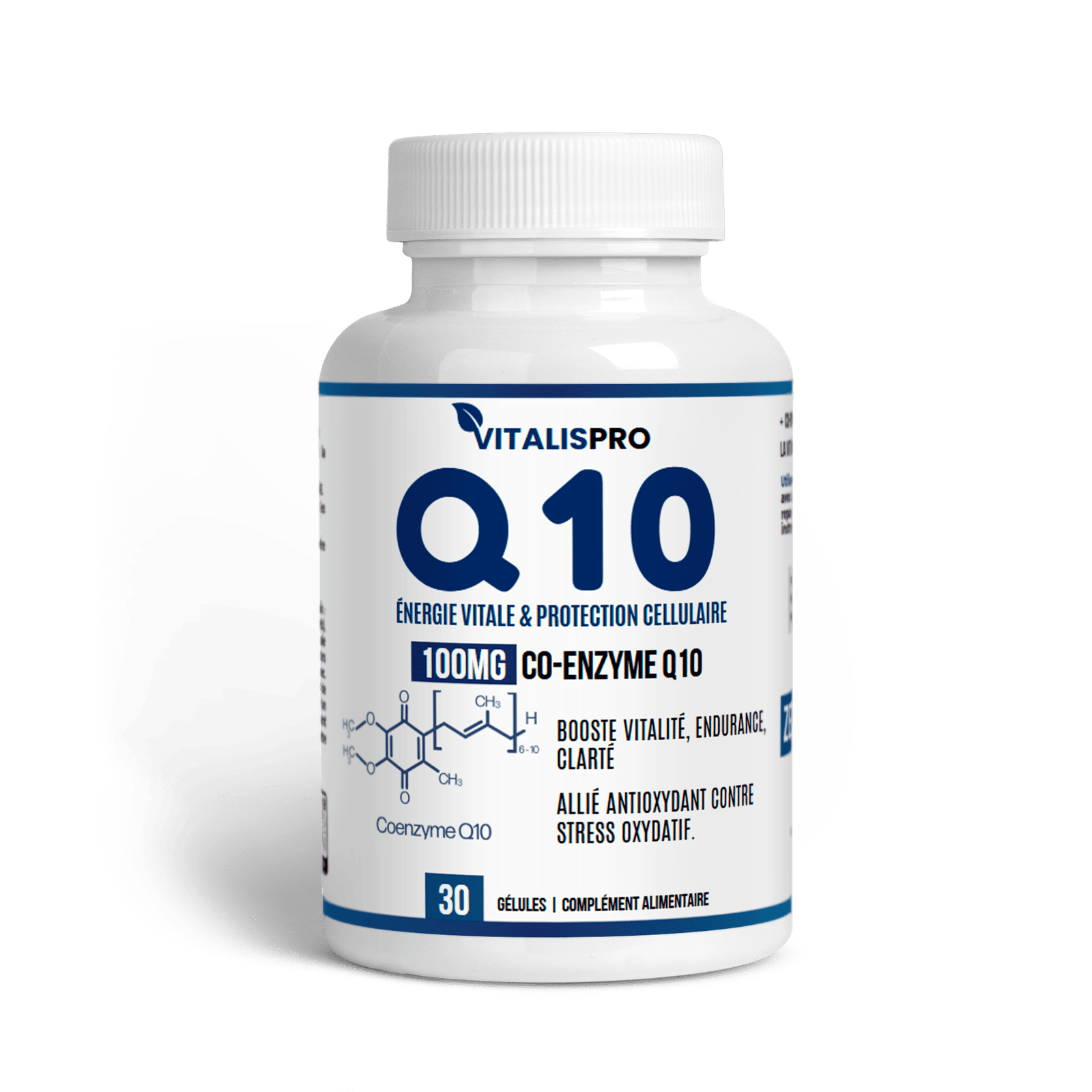
The term may sound technical, but it is central to the subject. Transparent dosing means that the actual quantity of coenzyme Q10 per capsule is displayed clearly — not buried in a vague mention. Without that precision, two supplements bearing the same “CoQ10” label can deliver very different amounts of active compound.
For this reason, our team refuses to reason in vague terms. A suggestive name on a box means nothing without a legible figure behind it. The real CoQ10 content and consistency from batch to batch matter as much as the word on the label. This philosophy of transparency applies to every product in our range. For CoQ10, it translates into a clear dose: 100 mg of coenzyme Q10 per capsule, stated plainly in black and white.
The Science: What the Research Actually Says
This is where everything comes together. The internet overflows with spectacular claims about coenzyme Q10. Our role is to remain honest about what the research establishes, what it suggests, and what remains to be confirmed. CoQ10 is a special case: its biological role in energy production is solidly established, while certain applications remain under active investigation. Below, in plain language, is the current state of knowledge.

Cellular Energy: An Established Biochemical Role
This is the firmest ground, and the one that commands scientific consensus. Coenzyme Q10’s role in the energy-production chain within the mitochondria is not a hypothesis: it is an established biochemical mechanism, taught in every cell biology course. CoQ10 is an indispensable link in the manufacture of ATP — the cell’s energy currency.
This foundation matters because it sets coenzyme Q10 apart from many trendy actives. Its primary function — participating in cellular energy production — belongs to established physiology, not speculation. Reference nutrition resources, such as the Office of Dietary Supplements (NIH) fact sheet on coenzyme Q102, underline this central role in energy metabolism. It is this mechanism that underpins all nutritional interest in CoQ10.
Coenzyme Q10 does not invent new energy. It participates in a machine the body already possesses, deep within its cells.
The Heart: A Dense Research Field
Here is the second major chapter, and the one that attracts the most attention. The heart is the organ richest in coenzyme Q10 — which is no surprise: it beats relentlessly, and that activity demands continuous energy production. This elevated concentration is what placed CoQ10 at the centre of a vast body of literature on cardiac health.
Careful reading is required here. The research on coenzyme Q10 and the heart is dense and active, yet honesty demands clarity about its scope. Coenzyme Q10 is a food supplement, not a drug: it is studied for its role in supporting a physiological function, in the context of a healthy lifestyle. This literature is accessible via this PubMed search on coenzyme Q10 and cardiovascular health3. Alphavital respects this distinction scrupulously in all its communications.
For a pedagogical explanation of these mechanisms, the following video presents coenzyme Q10’s role in energy production and its connection to the heart with appropriate caution.
Blood Pressure and the Cardiovascular System
This is a domain that calls for particular caution. Coenzyme Q10 is the subject of research addressing various aspects of the cardiovascular system, including blood pressure. These studies exist and are serious, but their conclusions remain cautious and sometimes nuanced across different trials. Our editorial line is clear: we present this field as an area of study, never as a promise.
It is essential to state this plainly: coenzyme Q10 is not a treatment for blood pressure, and it does not in any way replace medical follow-up or a prescribed treatment. Anyone concerned about their blood pressure must defer to a healthcare professional. CoQ10 sits in the category of food supplement — that is, nutritional support accompanying a healthy lifestyle — not a recommended response. This distinction is not a formality: it is the boundary between an honest discourse and an abusive claim.
Antioxidant and Everyday Wellbeing
Beyond these fields, coenzyme Q10 is also studied for its properties within the body — notably its behaviour as a molecule capable of participating in cellular balance. Here again, these avenues are the subject of active research, but conclusions call for nuance. A serious nutrient deserves serious discourse: we present these topics as fields of study, without turning them into marketing arguments.
What Remains to Be Confirmed
Honesty demands stating this clearly. Coenzyme Q10 is associated with numerous avenues still under exploration: certain aspects of physical performance, muscle comfort, cellular ageing, and skin. These domains are being studied, but conclusions remain cautious and do not permit any promise. Our line stays the same: we rely on CoQ10’s established biochemical role in cellular energy production, and we present the rest as research fields. An honest promise is worth more than a spectacular one.
CoQ10 After 40: Why the Interest?
If coenzyme Q10 keeps coming up in conversations from the forties onwards, this is no marketing accident. It is connected to a biological reality. The body’s capacity to manufacture CoQ10 by itself is not constant throughout life: research indicates that it tends to decline with age. This gradual decrease often coincides with the period when many people notice a change in their energy level.
It is of course important to keep a sense of proportion. Mid-life fatigue has no single cause: sleep, professional stress, diet, and lack of physical activity all play a leading role. But cellular energy production constitutes the foundation on which everything rests, and coenzyme Q10 is one of its components. This is why so many people, as they age, take an interest in naturally supporting this machinery.
Forty is not an ending; it is a turning point. Supporting your cells’ energy production is caring for your vitality capital over the long term.
In Morocco, this turning point takes on a particular colouring. The breakneck pace of large cities, sometimes imbalanced diets, the weight of family and professional responsibilities: all these factors weigh on perceived energy. The month of Ramadan, with its complete overhaul of daily schedules, also profoundly alters daily life, and many seek fundamental support for their vitality during that period. Coenzyme Q10, a foundational molecule rather than a short-lived stimulant, finds its full meaning here. Our team approaches it in the same spirit as it does fatigue in our dossier on fatigue, anaemia, and natural energy.

CoQ10 and Statins: The Most Frequently Asked Question
This is without doubt the question our team receives most often regarding coenzyme Q10, and it deserves a precise and careful answer. Statins are very widely prescribed medications that act on cholesterol. Several scientific studies have observed that these treatments can be accompanied by lower coenzyme Q10 levels in the body. This observation is what sparked the interest — and the numerous research projects — around the connection between CoQ10 and statins.
Let us be perfectly clear on this point, because it concerns health. Coenzyme Q10 is not a substitute for statins, and it does not in any way alter the necessity of following a prescribed treatment. No decision regarding statin therapy should ever be made without the advice of the healthcare professional who prescribed it. The observed link between statins and CoQ10 levels is a subject of scientific study, not a recommendation for self-medication. This literature is accessible via this PubMed search on coenzyme Q10 and statins4.
The rule is simple and non-negotiable: anyone taking statins, or any other treatment, must seek their doctor’s advice before considering a coenzyme Q10 supplement.
Our role as editors is not to advise on medical treatment — we have neither the competence nor the legitimacy for that. Our role is to inform honestly about what coenzyme Q10 is and about the existence of this research, then to refer systematically to a healthcare professional. This is exactly the posture Alphavital adopts: transparency about the molecule, absolute caution on treatments, and total respect for the dialogue between patient and physician.
Contexts in Which Research Has Focused on CoQ10
A word of caution is warranted from the outset. There are no “signs of coenzyme Q10 deficiency” that anyone could self-diagnose at home. CoQ10 is not a vitamin whose deficit is routinely measured, and any fatigue or energy drop can have countless causes. What follows is therefore not a self-diagnosis grid, but a simple presentation of the contexts in which research has taken an interest in coenzyme Q10.
Scientific studies have looked at coenzyme Q10 in situations where the body’s energy demand is high or where its natural production may be lower: advancing age, intense physical activity, and certain particular contexts. But none of these situations alone constitutes a sign to interpret without professional advice. Persistent fatigue in particular should always prompt a consultation, as it can reveal causes entirely unrelated to coenzyme Q10.
| Context Studied | What Can Be Said |
|---|---|
| Advancing age | Natural CoQ10 production tends to decline; interest in foundational support. |
| Sustained physical effort | High energy demand; a research subject, not a promise. |
| Statin therapy | Observed link with CoQ10 levels; medical advice is essential. |
| Persistent fatigue | Multifactorial cause; consulting a healthcare professional is the priority. |
The lesson from this table is consistent: coenzyme Q10 belongs to a healthy-lifestyle support approach, never to a self-diagnosis logic. Fatigue is not something to manage alone with a supplement. This caution is what distinguishes a serious brand from opportunistic discourse, and it is the spirit in which our team also approaches daily energy in our dossier on maca, energy, and vitality.
Beyond Omega-3: Completing the Heart and Circulation Hub
Coenzyme Q10 does not work alone in the world of heart and circulation support. Other actives share this terrain, and our team is regularly asked about the differences between them. Many readers already know omega-3, which has become a reflex for the heart. CoQ10 complements this foundation from a different angle: not through the supply of an essential fat, but through support of energy production within the cardiac muscle itself.
Rather than opposing these actives, it is more accurate to understand each one’s speciality. Omega-3s supply EPA and DHA — fatty acids the body does not manufacture. Coenzyme Q10, by contrast, is a cellular energy molecule that the body produces, but whose manufacture can weaken. Together, they illuminate two complementary facets of cardiovascular health.
| Active | Nature | Primary Terrain |
|---|---|---|
| Coenzyme Q10 | Molecule produced by the body | Cellular energy, heart support |
| Omega-3 (EPA/DHA) | Essential fatty acids (fish) | Normal heart, brain, and visual function |
| Ginkgo biloba | Leaf extract | Memory, concentration, microcirculation |
| Pumpkin seed oil | Vegetable oil | Urinary comfort and circulatory support |
Each of these actives has its own history and profile. Omega-3 covers cardiac function through fatty acid supply. Ginkgo biloba focuses on memory and microcirculation. Pumpkin seed oil provides circulatory and urinary support. Coenzyme Q10 acts at the heart of energy production. This holistic approach is central to our reflection on the body’s overall balance.
These actives do not compete. They complement each other, each illuminating a different facet of heart and circulatory health.
It is precisely this complementarity logic that structures our heart-dedicated range. Omega-3 is often the first reflex; coenzyme Q10 enriches that base by addressing cellular energy production — a terrain omega-3 does not cover. The idea is never to pile up promises, but to cover the full terrain coherently.
Coenzyme Q10 in Morocco: A Real Need
Why the growing Moroccan interest in coenzyme Q10? The answer lies in several realities of our lifestyle. The molecule is present in notable quantities in very few foods, and its production by the body tends to decline with age. Add to that the pace of large cities, the stress of daily life, and growing attention to heart health — particularly in families where this subject is present.
Population ageing also plays a role. With advancing years, caring for one’s energy and heart becomes a core concern for many Moroccan families. Coenzyme Q10, a foundational nutrient that accompanies cellular energy production, finds its place here. Our team is often at pains to point out: a CoQ10 intake works over time, by helping the body support a function it already possesses — not by pushing it artificially beyond its limits.
A Nutrient, Not a Magic Wand
Let us be clear on a point our team repeats constantly. Coenzyme Q10 is not a drug, and it does not by itself correct an unbalanced lifestyle. A capsule, however well-dosed, replaces neither sleep, nor physical activity, nor a varied diet. It is part of a whole.
This is indeed what public health resources remind us: a food supplement replaces neither a treatment nor a balanced diet — a framework well summarised by the dietary supplements section of MedlinePlus5. Coenzyme Q10 is a support, a prop — not a effective solution. This nuance makes all the difference between honest discourse and an empty promise, and it underpins each of our articles.

How to Use Coenzyme Q10 Correctly
A few practical pointers help avoid the most common mistakes and allow you to get the most from a course of supplements. Proper use matters as much as the product itself.
Coenzyme Q10: Dosage and Intake in Morocco
Coenzyme Q10 is better absorbed in the presence of fats, as it is a fat-soluble molecule. Alphavital recommends one capsule per day, dosed at 100 mg of coenzyme Q10, preferably with a meal containing fats. Consistency comes before everything else: daily intake over several weeks is what establishes the underlying effect sought. There is no need to multiply doses or try to push the quantity.
How Long Should a CoQ10 Course Last?
Coenzyme Q10 is a foundational nutrient, not an immediate-action stimulant. Its benefit, linked to cellular energy production, is best envisioned over the long term rather than over a few days. A typical course spans two to three months, renewable, to give the body time to benefit from a regular supply. There is no universally magical duration: listening to your body and seeking healthcare professional advice remain the best guides.
Coenzyme Q10: Precautions and Common Sense
Coenzyme Q10 is generally well tolerated, but certain precautions are necessary. The recommended dose should not be exceeded. Pregnant or breastfeeding women, and especially people following a treatment — statins or anticoagulants in particular — or suffering from a medical condition, must seek healthcare professional advice before starting. This product is not intended for children under 18 years of age, and it should be kept out of their reach. This caution is not a formality: it is a condition of responsible use, all the more so for a molecule studied in connection with the heart and cardiovascular treatments.
To complement this reading, the following video presents coenzyme Q10 — its role in energy production, its connection to the heart, and the caution that remains warranted regarding its uses.
The Alphavital Answer
Diet, physical activity, and sleep first — always. But when natural support makes sense, a serious formula is still required. This is exactly the philosophy that guided our team’s work on coenzyme Q10.
Alphavital Coenzyme Q10 — Clearly Dosed and Transparent
Alphavital offers a coenzyme Q10 dosed at 100 mg per capsule, at one capsule per day, preferably with a meal containing fats. Two requirements guided its design: a clear, readable CoQ10 dose, and a single daily dose that is easy to integrate into everyday life. By openly stating the milligrams of CoQ10, Alphavital allows you to know precisely what you are taking — no vague mentions, no marketing oversell.
This formula is part of our Cardiovascular Health range, conceived as a coherent whole. For those starting out, coenzyme Q10 alone is often a good first step alongside omega-3: it supports cellular energy production, allows you to observe your own response, and builds on a solid foundation.
A good coenzyme Q10 is not simply an evocative name on a box. It brings together a readable dose, a simple intake, and an assumed commitment to transparency.
Completing the Heart and Circulation Foundation
For those who want broader heart and circulation support, our team thinks of coenzyme Q10 as complementing omega-3, not replacing it. The two cover distinct terrain: one provides essential fatty acids, the other supports cellular energy production. Together in a coherent routine, they form a foundational base for anyone wishing to care for their heart naturally — from their forties onwards in particular.
This holistic logic is aimed at those who want a structured approach rather than an accumulation of products. To explore the full offering, our Energy and Vitality category brings together all our natural solutions dedicated to vitality and drive.
The feedback our team receives speaks more eloquently than any discourse. Here are three testimonials, shared with the consent of their authors.
Turning fifty, I wanted to care for my heart naturally, alongside the omega-3 I was already taking. I incorporated one coenzyme Q10 capsule each day at lunch for three months. Without claiming any effective, what I appreciated most was the simplicity of the habit and the clarity of the dose displayed on the label. — Karim, Casablanca
I wanted to understand this CoQ10 story that everyone talks about after forty. I first asked my doctor, who gave the green light, then took one capsule each morning with breakfast. What struck me was being able to stay the course with a product whose composition I fully understood. — Salma, Rabat
I chose to combine coenzyme Q10 with omega-3 to support my heart and energy as I age. Three months on, I have mostly built the habit of this daily appointment, and I value knowing exactly what each capsule contains. — Nadia, Marrakech
These accounts illustrate a simple truth: the most durable results come from combining lifestyle with — when useful and validated by a professional — a well-chosen supplement. A question before you start? Our team responds directly via the Alphavital contact page.
Frequently Asked Questions About Coenzyme Q10
In Summary
Coenzyme Q10 is a molecule the body manufactures itself, present in almost every cell, and placed at the very heart of cellular energy production. Its biochemical role in ATP manufacture within the mitochondria is solidly established. Its concentration is highest in the heart — the most active organ — which explains the dense research interest in its connection to cardiac health. And because its natural production tends to decline with age, CoQ10 holds particular attention from the forties onwards.
Caution remains essential regarding uses still under investigation, and even more so on the statin question: anyone on treatment must defer to their doctor. Beyond omega-3, coenzyme Q10 enriches the heart and circulation base from a novel angle — that of cellular energy. This is the path Alphavital has chosen: a readable 100 mg dose, simple intake, and an assumed transparency. Caring for your heart and energy is not following a trend: it is a lasting investment in your vitality.
Disclaimer. The information presented is provided for informational purposes only, based on sourced research (PubMed, NIH, MedlinePlus). The Alphavital team does not comprise healthcare professionals. Consult a qualified healthcare professional before any use, if you are following a treatment — statins or anticoagulants in particular — if you are pregnant or breastfeeding, or if you have a medical condition. Food supplements do not replace a varied, balanced diet or a healthy lifestyle.
Sources and References
- Coenzyme Q10 and the heart — public scientific literature (cellular energy production, cardiac health). PubMed (National Library of Medicine)
- Coenzyme Q10 — fact sheet on the molecule, its role in energy metabolism, and intakes. Office of Dietary Supplements (NIH)
- Coenzyme Q10 and cardiovascular health — public scientific research. PubMed (National Library of Medicine)
- Coenzyme Q10 and statins — scientific literature on the observed connection. PubMed (National Library of Medicine)
- Dietary supplements: public health benchmarks. MedlinePlus (National Library of Medicine)
Houda Khaldi is the Natural Nutrition Editorial Advisor at Alphavital. She translates peer-reviewed research into clear, actionable guidance for everyday Moroccan life, and refuses any wording that would overstate what the evidence supports. She is not a healthcare professional; her work is documentary and editorial.
Ubiquinol vs. Ubiquinone: The CoQ10 Form Debate, Settled Honestly
Walk into any pharmacy or visit any supplement website and you will quickly encounter two words applied to CoQ10 products: ubiquinone and ubiquinol. Marketers claim these are fundamentally different, often suggesting that ubiquinol is vastly superior. The scientific literature tells a more nuanced story.
Ubiquinone is the oxidised form of CoQ10 — the molecule as it exists outside the cell. Ubiquinol is the reduced (active) form — the electron carrier that actually operates within the mitochondrial energy chain. When you take ubiquinone as a supplement, the body converts it to ubiquinol. When you take ubiquinol, it is absorbed directly in that active form.
The practical question is whether the conversion step matters clinically. The research suggests that for most healthy adults, ubiquinone is converted efficiently enough that the difference in blood CoQ10 levels after supplementation is modest, not dramatic. Where ubiquinol has shown a more pronounced bioavailability advantage is in older adults (whose conversion capacity may be reduced) and at very high doses. For the typical 100 mg daily supplement dose taken with a fat-containing meal — the format Alphavital uses — the evidence does not show a clear, consistent superiority of ubiquinol over ubiquinone.
The honest takeaway: both forms raise plasma CoQ10 levels effectively at standard doses. If you are over 65, ubiquinol may be worth exploring. For most people in their forties and fifties, ubiquinone at 100 mg with fat is a well-supported and cost-effective choice.
A Practical Buyer Guide to CoQ10 in Morocco
Given that CoQ10 supplements vary enormously in quality, price, and transparency, we have compiled a set of concrete criteria our team uses when evaluating any CoQ10 product — ours or those of other brands.
1. Is the dose stated clearly?
The most fundamental criterion. The label must state the milligrams of CoQ10 per capsule explicitly. Any product that says “coenzyme Q10 extract” without a milligram figure is hiding something. At 100 mg per capsule, one daily dose is within the range studied in the most robust clinical literature.
2. Is there a fat-delivery mechanism?
CoQ10 is fat-soluble. Products that provide it in a plain powder capsule — without an oil-based carrier or without instructing the consumer to take it with a fatty meal — will have systematically lower bioavailability than those with a fat delivery system. Look for either an oil-in-capsule formulation or a clear “take with a meal containing fats” instruction.
3. What is the excipient list?
The list of ingredients beyond the active compound should be as short and recognisable as possible. Fillers, flow agents, and preservatives with long chemical names are not inherently dangerous, but an unnecessarily complex excipient list is a signal of manufacturing priorities that are cost-driven rather than quality-driven.
4. Is there third-party testing or a quality certification?
For products sold in Morocco without the full pharmaceutical supply chain oversight of European pharmacy products, any mention of independent quality testing (ISO, GMP certification, or certificate of analysis availability) adds credibility. Without it, you are relying entirely on the manufacturer for CoQ10 content accuracy.
5. Is the price realistic?
CoQ10 is an expensive raw material to produce at high purity. Suspiciously cheap CoQ10 supplements often reflect either a very low dose, a low purity, or a product whose “CoQ10” content does not reflect what is stated on the label. Price alone is not a quality signal — but a price far below the market average should trigger scrutiny.
CoQ10 Across the Lifespan: Different Needs at Different Stages
Coenzyme Q10 is not equally relevant at every age, and understanding this helps calibrate whether supplementation makes sense for your current situation.
Under 35: The body’s natural CoQ10 synthesis is at its most robust. Dietary sources — organ meats, sardines, mackerel, beef, spinach — contribute meaningfully to CoQ10 status in younger adults with balanced diets. Supplementation at this stage is not typically indicated unless there is a specific context (intense athletic training, prescription statin use, documented low levels).
35–50: The natural decline in CoQ10 synthesis begins, typically slowly. This is the decade when many people first notice fatigue that seems disproportionate to their sleep or workload. Supporting CoQ10 levels through diet and potentially supplementation becomes a reasonable consideration — particularly for those under significant occupational stress, training regularly, or with cardiovascular concerns. For those exploring energy support at this life stage, our guide on fatigue, anaemia and natural energy offers a broader picture of what might be at play.
50 and beyond: The decline in endogenous CoQ10 production is more established and the research interest more concentrated. This is also the decade when statin prescriptions are most common, and when cardiac health concerns become central to many people’s health awareness. Regular CoQ10 supplementation — ideally discussed with a healthcare provider — fits naturally into a comprehensive cardiovascular and vitality support routine at this stage.
In Morocco, the context is shaped by additional factors. Organ meats — liver, kidney, heart — which are among the richest dietary sources of CoQ10, are traditional components of Moroccan cuisine (mechoui, offal dishes at Aid Al-Adha, kefta). Regular consumption of these foods genuinely contributes to dietary CoQ10 intake in a way that is less common in Western dietary patterns. That said, modern urban Moroccan diets increasingly move away from organ meats, and sardines — abundant, affordable, and rich in CoQ10 and omega-3 — represent a key local resource worth preserving in the diet regardless of supplement use.
CoQ10 and the Moroccan Cardiovascular Reality
Cardiovascular disease (CVD) is the leading cause of mortality in Morocco, accounting for approximately 35 % of all deaths according to the World Health Organization country data. This statistic places cardiac health at the forefront of public health priorities — and it contextualises why growing numbers of Moroccan adults are seeking nutritional approaches to support their cardiovascular system alongside medical management.
It is essential to be clear: coenzyme Q10 is not a treatment for cardiovascular disease. Any Moroccan adult with a diagnosed cardiovascular condition — hypertension, coronary artery disease, heart failure, arrhythmia — requires regular medical follow-up and, where appropriate, prescribed pharmacological treatment. No supplement replaces that follow-up.
What CoQ10 represents, in this context, is a nutritional support consideration for adults who are proactively caring for their heart health as part of a lifestyle approach — alongside a Mediterranean-style diet (rich in olive oil, fish, legumes, and vegetables), regular moderate physical activity, avoidance of smoking, and weight management. The Moroccan dietary tradition, when followed in its original form, is already close to the Mediterranean model that cardiovascular research consistently endorses. CoQ10 can complement that foundation from the cellular energy angle that diet does not directly address.
For a complete picture of heart-supportive nutrition, our guide to omega-3 for heart, brain and vision covers the essential fatty acid dimension that works synergistically with CoQ10 support.
