

The first sign is rarely the pain itself. It is the small changes: taking the lift instead of the stairs, pausing before getting out of the car, choosing the chair that is easiest to stand up from. Joint pain supplements are often sold with big promises, while the trials are more measured. This guide shows what was really tested, what helped most, and how to judge your own results over three months.
There is a scene many people know by heart. In the morning, before even setting foot on the floor, the knee protests. The hip stays locked for a few seconds, waiting to get going. Then, like a mechanism warming up, the joint loosens and the day begins. This transient stiffness, this pain that returns with exertion or in damp weather — millions of Moroccans live with it without always putting a name to it.
The name, more often than not, is osteoarthritis. A gradual wearing away of cartilage, that smooth cushion lining the ends of our bones. Yet reducing osteoarthritis to mere mechanical wear would be a mistake, and the research of the past twenty years has made that plain. A joint is a living organ in which cartilage, bone, and low-grade inflammation constantly communicate. Understanding that dialogue is already a way of taking back control. Our editorial team receives questions every week about joint pain and its natural treatment in Morocco, and the topic deserves better than the shortcuts one reads everywhere.
By Houda Khaldi, Editorial Advisor in Natural Nutrition · Published 17 June 2026 · 19 min read
Contenu de la page
- 1 Key takeaways
- 2 The joint: a living mechanism we have long misunderstood
- 3 The three drivers of pain: cartilage, inflammation, and age
- 4 Collagen: the invisible framework of your joints
- 5 The underestimated role of vitamin D3 and K2
- 6 Mobility, flexibility, and comfort: what the science actually says
- 7 Calming the terrain: the anti-inflammatory approach, Moroccan-style
- 8 Building a joint routine that holds over time
- 9 Using your joint support correctly: a practical guide
- 10 Three readers share their experiences
- 11 What the joint studies actually measured
- 12 How to judge a joint routine: your 12-week log
- 13 Shark Cartilage alone or the Joint Comfort pack?
- 14 Frequently asked questions about joint pain and osteoarthritis
- 14.1 What is the difference between osteoarthritis and arthritis?
- 14.2 Does marine collagen really help the joints?
- 14.3 What is the purpose of shark cartilage in a joint formula?
- 14.4 Why associate vitamin D3 with a joint formula?
- 14.5 Should you avoid movement when joints are painful?
- 14.6 Does diet play a role in joint pain?
- 14.7 How long before feeling a benefit?
- 14.8 What is the best supplement for joint pain?
- 14.9 Can I take joint supplements with a blood thinner?
- 14.10 Should I take joint supplements with food?
- 14.11 Glucosamine or chondroitin: which one matters more?
- 15 In summary
Key takeaways
- Osteoarthritis is not simple mechanical wear: it is an imbalance throughout the entire joint, where cartilage breaks down faster than it repairs, accompanied by low-grade inflammation.
- Three major factors combine: cartilage degradation, inflammation sustained inside the joint, and age, which slows the natural repair of tissues.
- Collagen is the structural protein of cartilage. With age, its production declines, weakening the joint cushion.
- Several natural supports are studied for joint comfort: marine collagen, shark cartilage (a source of chondroitin and glucosamine), and vitamin D3 combined with K2, which contributes to maintaining normal bones and muscle function.
- Alphavital has developed a dedicated approach to joint relief, designed as a daily support for mobility and flexibility, alongside movement and a balanced diet.
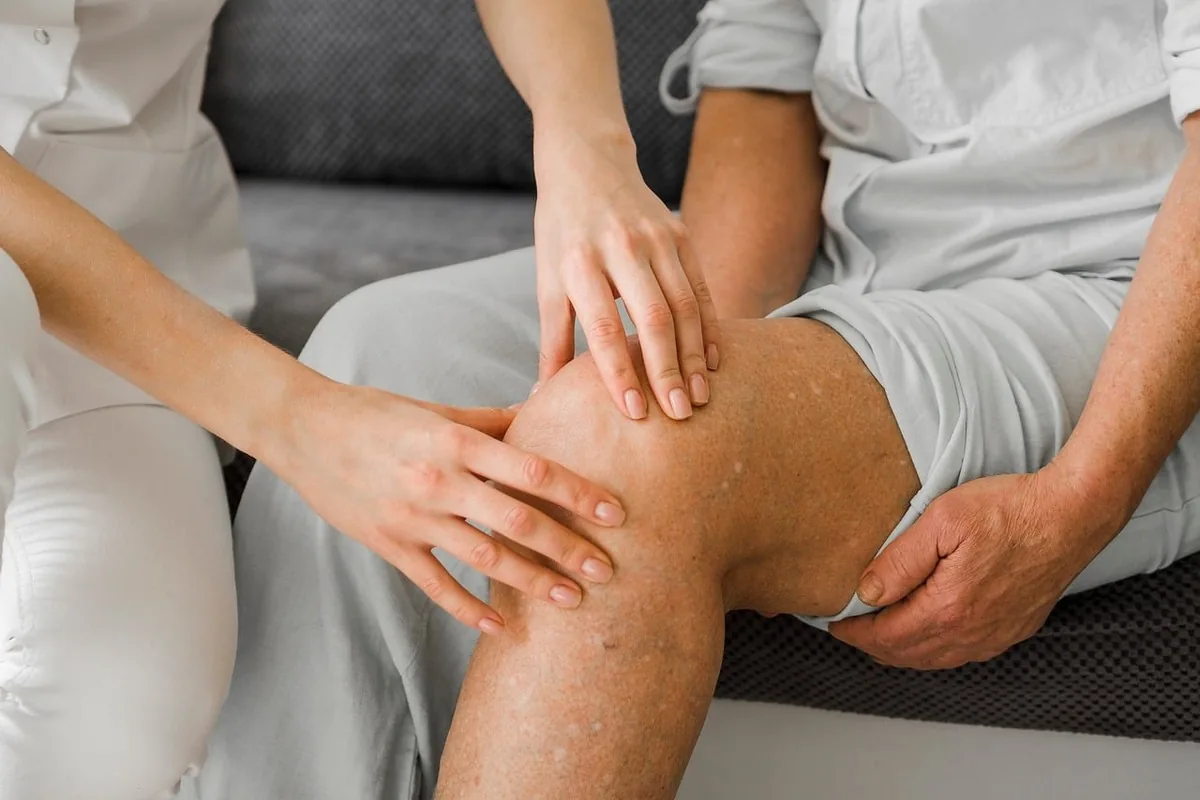
The joint: a living mechanism we have long misunderstood
Let us begin by clearing up a persistent misconception. For a long time, the arthritic joint was compared to a worn mechanical part, like the bearing of an old machine. That image dies hard, but it is incomplete. A joint is not an inert hinge: it is a living tissue, irrigated by biological signals, capable of repairing itself to a degree, and equally capable of becoming inflamed.
To understand joint pain, we first need to visualise what happens inside a healthy knee or hip. At the end of each bone, a thin layer of cartilage covers the surface. This cartilage is smooth, slippery, almost pearlescent. It serves two essential roles: absorbing shocks and allowing the bones to glide against each other without friction — with less resistance than two pieces of ice placed one on top of the other. Around this mechanism, a joint fluid called synovial fluid lubricates and nourishes the cartilage, which has no blood vessels of its own.
Cartilage is composed mainly of water, specialised cells called chondrocytes, and a matrix made of collagen and water-retaining molecules. Collagen forms a framework of fibres that gives cartilage its resilience. Chondrocytes spend their lives maintaining this matrix: producing new material and eliminating the old. As long as this balance holds, the cartilage stays healthy.
Osteoarthritis is not passive wear of cartilage. It is an active imbalance in which degradation outpaces repair.
The problem arises when this balance breaks down. In osteoarthritis, chondrocytes can no longer keep up. The matrix degrades faster than it rebuilds. Cartilage thins, loses its flexibility, and develops fissures. Gradually, the protective cushion allows the bones to approach each other dangerously. This modern understanding, validated by research, is summarised in the reference dossier of the French national institute for medical research on osteoarthritis1.
Why pain is not always proportional to wear
Here is a surprising fact science has brought to light that often puzzles people. Cartilage itself contains no nerves: it is insensitive to pain. So where does the ache come from? From everything that surrounds the cartilage. When it degrades, the underlying bone reacts, the membrane lining the joint becomes irritated, and the ligaments and muscles compensate and fatigue. It is this ensemble that hurts, not the worn cartilage itself.
This explains a paradox well known to clinicians: some people show severely damaged cartilage on imaging yet suffer little, while others have moderate damage but vivid pain. Joint pain is a complex affair in which inflammation plays a leading role. And it is precisely on this inflammatory ground that a large part of comfort and mobility is determined.
The three drivers of pain: cartilage, inflammation, and age
To see things clearly, let us separate the three major factors that combine in osteoarthritis. Understanding each one individually allows us to act intelligently rather than simply endure.
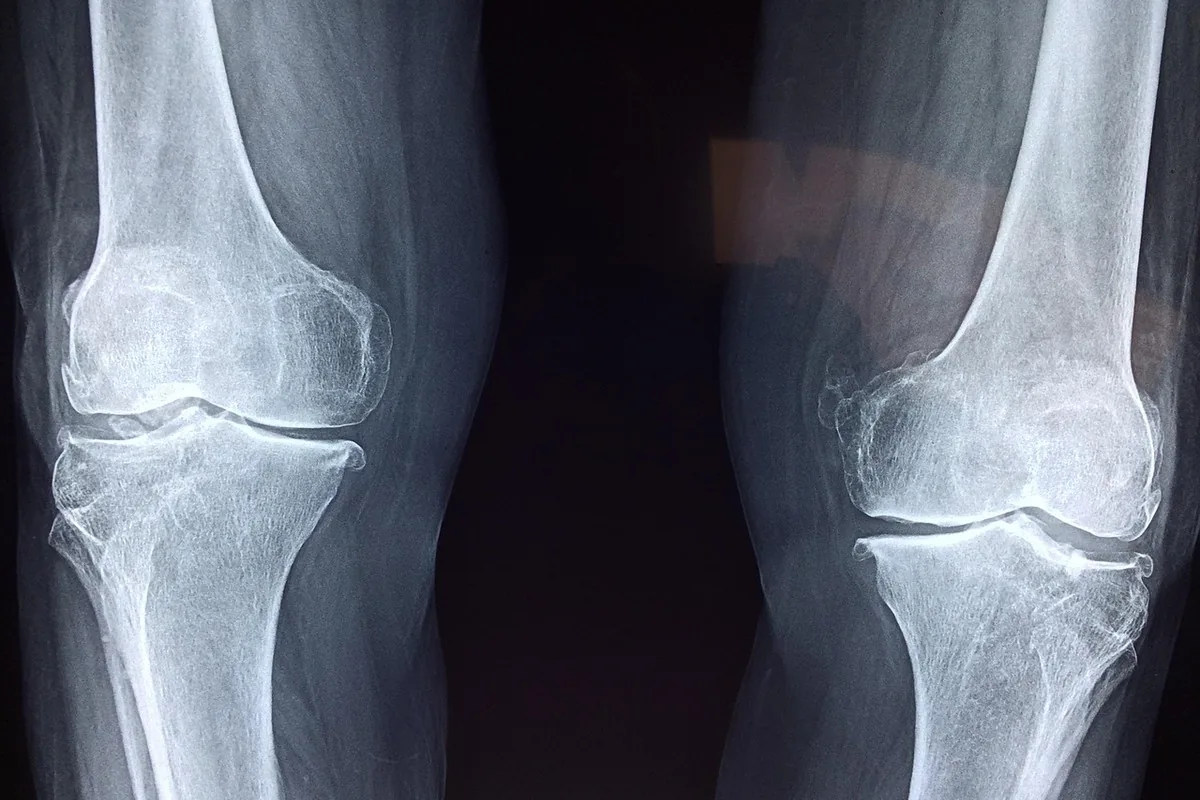
First driver: cartilage degradation
This is the heart of the problem. Over time, and under the effect of repeated strain, the cartilage matrix loses its cohesion. The collagen fibres that formed its framework loosen and fragment. The water-retaining molecules diminish, and the cartilage, less hydrated, loses its shock-absorbing power. Little by little, the smooth surface becomes rough, then eroded.
Several factors accelerate this degradation. Excess weight, first, which multiplies the load on knees and hips with every step: a few extra kilograms represent a considerable burden over time. Old injuries, too — an untreated sprain, a fracture near a joint — that leave lasting weakness. And intense occupational demands: carrying loads, repeated squatting positions common in many trades. Each of these factors deepens the imbalance between cartilage destruction and repair.
Second driver: inflammation
Long overlooked, inflammation is now recognised as a central actor in osteoarthritis. It has been found that fragments of degraded cartilage trigger a low-intensity but persistent inflammatory reaction inside the joint. The synovial membrane becomes inflamed, releasing messenger molecules that in turn accelerate cartilage degradation. It is a vicious cycle: wear fuels inflammation, which fuels wear.
This low-grade inflammation explains why osteoarthritis goes through flares — periods when the joint becomes warmer, more swollen, more painful. It also explains why diet and lifestyle matter so much: a body that is globally inflamed, through excess weight, smoking, or a poor diet, tends to sustain joint inflammation. Calming this terrain is one of the most promising levers for joint comfort, as the reference organisation on arthritis details in its resources on the anti-inflammatory diet2.
Degrading cartilage feeds a quiet inflammation that in turn accelerates degradation. Breaking this cycle is one of the great objectives of joint comfort.
Third driver: age
Age is not an absolute fatality, but it carries great weight. Over the years, several things change. The body’s production of collagen slows, and cartilage, like skin, renews itself less efficiently. Chondrocytes become less active, less numerous, less effective at repairing the matrix. Cartilage hydration diminishes. And the muscle mass that protects and stabilises the joint tends to decline if not maintained.
This is why osteoarthritis most often appears after forty or fifty, becoming increasingly common with advancing age. But age never acts alone: it reveals and amplifies accumulated vulnerabilities. An active person at a healthy weight, who has preserved their musculature and maintained adequate nutritional intake, often traverses the decades with far more supple joints than a sedentary person of the same age. Time is not a sentence: it is one factor among others, on which indirect action is possible.
| Driver | What happens | Lever for action |
|---|---|---|
| Cartilage degradation | The collagen matrix fragments | Weight management, cartilage support |
| Inflammation | Wear-inflammation vicious cycle | Anti-inflammatory diet, movement |
| Age | Declining repair and collagen production | Activity, targeted nutrition, muscle |
Collagen: the invisible framework of your joints
This is undoubtedly the centrepiece of the entire joint puzzle. Collagen is the most abundant protein in our body. We find it in the skin, tendons, and bones, and of course in cartilage, where it forms a mesh of fibres that gives the tissue its resilience and elasticity. Without collagen, cartilage would be a shapeless mass; it is collagen that makes it both a firm and flexible cushion.

The quiet tragedy of osteoarthritis is that our collagen production slows with age. From the thirties onwards, production gradually declines, and that decline deepens over time. Cartilage, deprived of sufficient renewal of its framework, loses its robustness little by little. This is exactly the same phenomenon that wrinkles skin, but this time it plays out at the heart of our knees and hips, hidden from view.
Why marine collagen attracts research attention
Not all collagens are alike. We speak of marine collagen when it is extracted from the skin and scales of fish. What interests researchers in marine collagen is its good bioavailability: its small-sized peptides are well absorbed by the body. Once assimilated, these amino acid fragments supply the body with the building blocks it needs, and also appear to send a signal prompting cells to maintain their own tissues.
Research on collagen peptides and joint comfort is active. Several studies have explored their relevance for people experiencing joint discomfort related to activity or age, as reported in this review on collagen and joint health referenced on PubMed3. Caution remains warranted regarding the precise magnitude of effects, and our team never promises miracles. But the biological coherence is solid: supplying the right building blocks to a tissue whose framework wears slowly makes sense.
Shark cartilage: chondroitin and glucosamine combined
Shark cartilage is a natural source of two compounds well known in joint health: chondroitin and glucosamine. These compounds, called glycosaminoglycans, are natural constituents of human cartilage. Glucosamine participates in the production of molecules that retain water in cartilage, and chondroitin contributes to its elasticity and resistance to compression.
The idea, here again, is one of supplying raw materials. By providing the body with compounds that cartilage uses naturally, the aim is to support the maintenance of this tissue. These ingredients are among the most studied for joint comfort, and their use as a food supplement has a long and widespread history. Our editorial position remains measured: these compounds accompany joint comfort; they do not rebuild vanished cartilage.
Marine collagen, chondroitin, and glucosamine do not repair cartilage by magic. They provide the body with the materials it uses to maintain its own tissues.
For those interested in collagen from the perspective of skin and beauty as much as joints, our team has compiled its reference guide on marine collagen and anti-ageing in Morocco, a useful companion to this article.
The underestimated role of vitamin D3 and K2
Cartilage naturally comes to mind when talking about joints. But a joint also rests on the bone that supports it and the muscles that stabilise it. This is where a duo enters the picture whose understanding research has renewed: vitamin D3 and vitamin K2.

Vitamin D3 is essential for calcium absorption and the maintenance of normal bones: this is a validated claim by the European Food Safety Authority, as noted in its register of health claims on vitamin D4. The bone beneath the cartilage, known as subchondral bone, plays a key role in osteoarthritis: a solid, well-mineralised bone supports the joint better. Vitamin D also contributes to maintaining normal muscle function, and toned muscles are the best guardians of a joint because they absorb part of the load.
Vitamin K2, for its part, contributes to the maintenance of normal bones, as recognised by EFSA in its scientific opinion on vitamin K claims5. It activates proteins that help fix calcium in bone where it benefits joint structure. The D3 and K2 tandem therefore has a joint-related logic as much as a skeletal one, which is why it appears so consistently in mobility-focused formulas.
The paradox in Morocco is well known: despite generous sunshine, vitamin D deficiency is frequent, owing to indoor living, covering garments, and skin pigmentation. Our team has devoted a complete guide to this issue on vitamin D3 and K2 for bones and immunity in Morocco, a companion read that captures the full skeletal dimension.
Mobility, flexibility, and comfort: what the science actually says
Let us now move to specifics. For each natural lever, let us distinguish what is solidly established from what remains under investigation. That is the condition for honest information, and it is a standard our team never compromises.
Targeted nutrition: foundational support, not repair
Cartilage compounds — collagen, chondroitin, and glucosamine — act as foundational support. Their value is measured over time, in weeks and months, not days. They are not immediate-action painkillers. Their logic is nutritional: maintaining the joint terrain, supplying raw materials, accompanying joint comfort across time. This is an approach of patience, rooted in an overall healthy lifestyle rather than the search for a spectacular effect.
Movement: cartilage’s best ally
Here is a counter-intuitive truth that science has firmly established. When a joint hurts, instinct pushes towards immobilisation. That is often the worst thing to do over time. Cartilage, which has no blood vessels, feeds on movement: each flexion, each step compresses and releases the cartilage, circulating the nourishing fluid like a sponge being squeezed and released. An immobilised joint is a poorly nourished joint.

This is why health authorities recommend regular, adapted physical activity as a cornerstone of osteoarthritis management. Walking, swimming, cycling, gentle muscle-strengthening exercises: all maintain cartilage, reinforce the protective muscles, and ease inflammation. The reference organisation on arthritis details these benefits in its resources on exercise and osteoarthritis6. Movement is not the enemy of the painful joint: it is its greatest ally, provided it is well dosed.
Weight: the factor over which we have the greatest leverage
Every kilogram matters, and far more than one imagines. With each step, the knee bears several times body weight; going downstairs, that load multiplies further. Lightening the load directly relieves the joint. Maintaining a healthy weight is arguably the most effective single gesture for preserving knees and hips over the long term. On this subject, our team has compiled guidance in the article dedicated to natural weight loss and metabolism in Morocco, intimately linked to joint comfort.
Calming the terrain: the anti-inflammatory approach, Moroccan-style
Since inflammation plays a central role, diet becomes a major lever. And the good news is that traditional Moroccan cooking overflows with foods that have soothing properties — provided we give them a place of choice.
Olive oil, the jewel of our culinary heritage, contains compounds with recognised soothing properties. Oily fish — sardines above all, abundant and accessible on our coastlines — provide omega-3 fatty acids that help balance the inflammatory terrain. Colourful vegetables and fruits, rich in antioxidants, help neutralise the oxidative stress that accompanies inflammation. And our spices, turmeric and ginger foremost among them, have been studied for their properties for a long time.
Conversely, certain foods tend to sustain inflammation: excess refined sugars, ultra-processed products, poor-quality fats. Rebalancing the plate in favour of the former and at the expense of the latter creates a more serene terrain for the joints. To support inflammatory balance through omega-3, our guide to omega-3 for heart, brain, and vision explores this essential dimension in depth.
| Prioritise | Why | Moroccan sources |
|---|---|---|
| Oily fish | Omega-3, inflammatory balance | Sardine, mackerel, tuna |
| Olive oil | Soothing compounds | Local extra-virgin olive oil |
| Colourful vegetables | Antioxidants | Peppers, squash, Swiss chard |
| Spices | Studied properties | Turmeric, ginger |
Building a joint routine that holds over time
The best results never come from a single gesture, but from a coherent combination sustained over time. Here is how our team envisions a complete approach to joint comfort, without excessive promises.
When targeted support is warranted
Diet first, movement always. But there are situations where a well-formulated supplement becomes a relevant support. The first concerns advancing age, when collagen production slows and cartilage renews itself less efficiently. The second involves people under heavy physical demands — through sport or work — whose joints endure repeated strain. The third concerns those who feel early joint discomfort and wish to address it proactively, in a preventive spirit.
A serious formula is essential. Three criteria make the difference: ingredients with compounds genuinely useful to cartilage, a coherent dosage, and genuine transparency on composition. That is precisely the philosophy that guided our team’s work.
The Alphavital answer
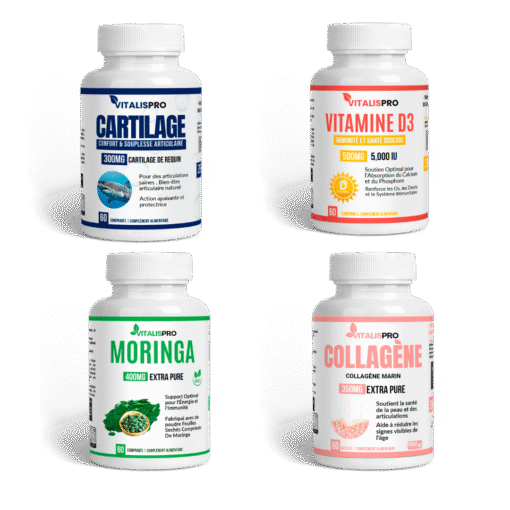
Alphavital has designed an approach that brings together the essentials in a single daily gesture: collagen, the framework of cartilage; shark cartilage, a source of chondroitin and glucosamine; and vitamin D3, which contributes to maintaining normal bones and normal muscle function. Together with moringa, this combination of four products translates the complete logic of the joint: nourish the cartilage, support the bone that bears it, maintain the muscle that protects it.
Vitamin D contributes to normal calcium absorption, the maintenance of normal bones, and normal muscle function — effects recognised by the European food safety authorities.4 Alphavital recommends a regular daily intake, integrated into a routine, because consistency outweighs intensity for this type of foundational support. This formula is part of our Bone and Joint Health range, conceived as a coherent whole.
A sound joint approach does not reduce to a capsule. It brings together movement, a soothing diet, weight management, and, when useful, a carefully chosen targeted support.
For those who also aim for muscle relaxation and restful sleep — often disrupted by joint discomfort — our magnesium glycinate, dedicated to sleep and bone support, complements this approach well: magnesium contributes to maintaining normal bones and normal muscle function.
Using your joint support correctly: a practical guide
A few practical guidelines avoid the most common mistakes and allow you to get the most from your approach, with complete peace of mind.
Regularity above all
Cartilage supports act over time. A daily intake at a consistent time, integrated into a routine, is infinitely more effective than sporadic doses. This is a patience investment: benefits, when they appear, are measured over several weeks, not overnight. There is no point waiting for an immediate effect; think of this approach as long-term maintenance, like patient gardening.
How long
It depends on the objective. To accompany discomfort related to age or activity, a regular approach over several months makes sense, evaluated calmly over time. There is no universal duration: listening to your body, observing your comfort level, and — in the case of persistent pain — the advice of a healthcare professional remain the best guides.
Precautions to know
Joint supports based on collagen, shark cartilage, and vitamins are well tolerated at the doses found in supplements for the general public. A few precautions are nonetheless necessary. People with fish or shellfish allergies must check the composition, as marine collagen and shark cartilage are of marine origin. Since vitamin D is stored in the body, never combine several sources without supervision. In cases of pregnancy, breastfeeding, ongoing treatment, or a pathology, the advice of a healthcare professional is essential before beginning. Above all, intense joint pain that swells, reddens, or persists should always lead to a consultation: no supplement replaces medical advice. The US National Institutes of Health details reference intakes in its vitamin D fact sheet7.
The feedback our team receives is often worth more than long speeches. Here are three testimonials, shared with the authors’ consent, illustrating common situations.
My knees reminded me of their presence every morning, especially in winter. My doctor mentioned early osteoarthritis and advised me to move more, not less. I resumed daily walks and adjusted my diet. A few months later, the mornings are noticeably more supple. — Abdelilah, Rabat
At fifty-five, I understood that my collagen was no longer renewing itself the way it used to. I appreciated having an approach that brings together cartilage and bone support in a single daily gesture — it is easier to sustain over time. — Naïma, Casablanca
I stand on my feet all day and my hips were pulling by evening. I spoke to a healthcare professional, lost a few kilograms, and established a regular routine. Nothing spectacular — just quieter ends to the day and a staircase that is less daunting. — Khalid, Marrakech
These accounts share a common moral: the best results come from the combination of movement, a soothing diet, weight management, and, when useful and guided, a well-chosen support. A question before you begin? Our team responds directly via the Alphavital contact page.
What the joint studies actually measured
Joint supplements are some of the most tested products on the shelf, and the results are mixed. Here are five large studies and reviews, with what they found and where they fell short. Most were run in people with knee osteoarthritis, the group researchers study the most.
| Study (author, year) | Who, how much, how long | What was found |
|---|---|---|
| Clegg, 2006 | 1,583 adults with painful knees; glucosamine, chondroitin, both, a pain medicine or placebo; 24 weeks | Overall, the supplements did not beat placebo. In people with moderate to severe pain, the combination did better than placebo.8 |
| Singh, 2015 (Cochrane review) | 43 trials; nearly 5,000 people took chondroitin; 1 month to 3 years | Pain scores were somewhat better than with placebo. Evidence quality varied from low to high.9 |
| García-Coronado, 2019 (meta-analysis) | Placebo-controlled trials of oral collagen in osteoarthritis | Collagen improved stiffness, the overall symptom score and a separate pain scale (VAS). The pain and function sub-scores of the main questionnaire did not change.3 |
| Fransen, 2015 (Cochrane review) | 54 trials of land-based exercise in knee osteoarthritis | Exercise reduced pain by about 12 points on a 100-point scale and improved daily function.10 |
| Messier, 2013 | 454 adults aged 55 and over, overweight, with knee pain; diet, exercise or both; 18 months | Diet plus exercise gave less pain and better function than either alone. Weight loss lowered the load on the knee.11 |
What this does not show. Supplements did not perform like pain medicines in these trials, and none of them rebuilt worn cartilage. Their effects were small to moderate and varied a lot between studies. The clearest gains came from moving more and, for people carrying extra weight, from losing some of it. A supplement fits best as one part of that routine, not as a replacement for it. Also note that shark cartilage as a whole food was not tested in these trials: they used purified glucosamine, chondroitin or collagen.
How to judge a joint routine: your 12-week log
“Do I feel better?” is hard to answer after three months, because pain moves with the weather, the workload and sleep. A short log gives you a clear answer. Fill it in before you start, then at weeks 4, 8 and 12.
- Morning stiffness. How many minutes after getting up until your knees or hips move freely?
- Stairs. Score from 0 to 10 how hard one flight of stairs feels, going down as well as up.
- Walking. How many minutes can you walk at a normal pace before you want to stop?
- Evenings. Score your joint comfort at the end of a full day, from 0 to 10.
Keep the rest of your routine steady during these weeks: the same daily walk, the same shoes, the same habits at the table. If two or three of your four scores improve by week 12, the routine is worth keeping. If nothing moves, talk to a health professional rather than adding more products.
Small changes at home that spare your knees
Some everyday movements put far more load on the knees than walking does. Many of them are common in Moroccan homes:
- Cooking or washing on a very low stool. Deep squats load the knee heavily. A higher stool or a table at waist height takes much of that load away.
- Sitting on floor cushions at a low table. Getting up from the floor is one of the hardest moves for sore knees. Keep one normal chair at the table for the days when your knees complain.
- Kneeling on hard floors. A soft mat or folded cushion under the knees makes a real difference to comfort.
- Carrying heavy shopping up the stairs. Two lighter trips are kinder to the joints than one heavy one.
None of these changes will show up in a trial, but they reduce the daily strain that your log is measuring.
Shark Cartilage alone or the Joint Comfort pack?
Both are taken with meals and work as a two-to-three-month course. The choice depends on what you need besides the cartilage support.
| Your situation | What fits | How to take it |
|---|---|---|
| You want one simple product for joint comfort and mobility | Shark Cartilage | 2 to 3 capsules a day, with meals |
| You also want to support your bones, your muscles and your daily energy | Joint Comfort pack | Four products, spread over your meals (see below) |
The pack works as a team. Marine collagen and shark cartilage bring the building materials that joint tissue uses. Vitamin D3 contributes to normal bones and normal muscle function, so it supports the bone and the muscles that carry each step. Moringa leaf, naturally rich in nutrients, backs the energy you need to keep walking every day, which the exercise trials above show is the strongest lever of all.
A practical way to spread the pack over the day: at breakfast, one marine collagen capsule, the vitamin D3 capsule with some fat such as olive oil or eggs, and moringa; at lunch, the shark cartilage and moringa; in the afternoon, the second collagen capsule. In detail, that is marine collagen 2 a day, shark cartilage 2 to 3, vitamin D3 1, and moringa 2 to 4 tablets with or after meals. To compare every product for bones and joints, see our Bone & Joint Health range.
One check before you start: if you take a blood thinner such as warfarin, ask your doctor first. Case reports link glucosamine to a stronger blood-thinning effect.12
Frequently asked questions about joint pain and osteoarthritis
What is the difference between osteoarthritis and arthritis?
They are two distinct things that are often confused. Osteoarthritis is a progressive degradation of cartilage in which inflammation is low-grade and secondary. Arthritis, in the strict sense, refers to marked joint inflammation, sometimes of autoimmune origin such as rheumatoid arthritis. Both can be painful, but their mechanisms and management differ. Only a healthcare professional can make the correct diagnosis.
Does marine collagen really help the joints?
Collagen is the natural framework of cartilage, and its production declines with age. Well-absorbed marine collagen peptides supply the body with the building blocks it uses to maintain its tissues. Research into their value for joint comfort is active and encouraging, even if caution remains warranted regarding the magnitude of effects. It is foundational support to be considered over several weeks, not an immediate painkiller.
What is the purpose of shark cartilage in a joint formula?
Shark cartilage is a natural source of chondroitin and glucosamine — two compounds found naturally in human cartilage. Glucosamine participates in the production of molecules that retain water in cartilage, and chondroitin contributes to its elasticity. By supplying them, the aim is to support cartilage maintenance. These ingredients are among the most studied and most widely used for joint comfort.
Why associate vitamin D3 with a joint formula?
Because a joint is not limited to cartilage: it rests on the supporting bone and the stabilising muscle. Vitamin D3 contributes to maintaining normal bones and normal muscle function — claims recognised by European authorities. A solid bone and toned muscles protect the joint. In Morocco, where vitamin D deficiency is common despite the sunshine, this support is particularly meaningful.
Should you avoid movement when joints are painful?
No — and often the opposite is true. Cartilage has no blood vessels: it feeds on movement, which circulates the nourishing fluid like a squeezed sponge. Gentle, regular activity — walking, swimming, cycling — maintains cartilage, strengthens protective muscles, and eases inflammation. During an acute painful flare, however, relative rest is appropriate, and advice from a healthcare professional is recommended.
Does diet play a role in joint pain?
Yes, through the mechanism of inflammation. A diet rich in oily fish, olive oil, colourful vegetables, and spices such as turmeric helps calm the inflammatory terrain, while refined sugars and ultra-processed products tend to sustain it. Traditional Moroccan cuisine provides an excellent anti-inflammatory foundation, provided these foods are given priority. Maintaining a healthy weight also directly relieves the knees and hips.
How long before feeling a benefit?
Cartilage supports act over time — weeks and months, not a few days. They are not immediate-action painkillers but long-term maintenance. Regularity is the key: a daily intake, integrated into a routine, maintained over time. If pain is intense, persistent, or accompanied by swelling and redness, consult a healthcare professional without delay.
What is the best supplement for joint pain?
No single product wins every trial. Chondroitin and oral collagen show the most consistent small benefits on pain and stiffness. Regular exercise improved pain more than any supplement studied.10 The best plan combines the two.
Can I take joint supplements with a blood thinner?
Ask your doctor before starting. Case reports and safety records describe a raised INR, a measure of blood clotting time, in people taking glucosamine with warfarin.12 Your doctor may want to check your blood more often during the first weeks.
Should I take joint supplements with food?
Yes. Shark cartilage, marine collagen and moringa are all taken with meals, and vitamin D3 is best with a meal that contains some fat, because vitamin D dissolves in fat. Food also makes the capsules easier on the stomach.
Glucosamine or chondroitin: which one matters more?
In the largest trial, neither one alone did clearly better than placebo across everyone, but the two together helped people with moderate to severe knee pain.8 Shark cartilage is a natural source of both, although shark cartilage itself was not tested in that trial.
In summary
Joint pain and osteoarthritis are not a simple, inevitable mechanical wearing-down. They result from an active imbalance between cartilage degradation and repair, sustained by quiet inflammation and amplified by age, which slows our collagen production. Understanding these three drivers is already a way of reclaiming levers for action.
We maintain our joints first through movement, which nourishes cartilage; through a soothing diet rich in oily fish, olive oil, and spices; and through weight management, which lightens the load. When a boost is useful, a serious formula — bringing together collagen as the cartilage framework, shark cartilage as a source of chondroitin and glucosamine, and vitamin D3 for bone and muscle — makes complete sense. This is the path Alphavital has chosen, with a transparent approach faithful to the science.
About the author. Houda Khaldi is an Editorial Advisor in Natural Nutrition at Alphavital. She translates scientific research into clear, actionable guidance for everyday life in Morocco.
Disclaimer. The information presented is provided for informational purposes, based on sourced research (PubMed, EFSA, ANSES, INSERM). The Alphavital team does not include healthcare professionals. Consult a qualified healthcare professional before any use, in the case of ongoing treatment, pregnancy or breastfeeding, a medical condition, or allergy to fish and shellfish. Intense or persistent joint pain requires medical attention. Food supplements are not a substitute for a varied and balanced diet or a healthy lifestyle.
Sources and references
- INSERM — Osteoarthritis: mechanisms of cartilage degradation, risk factors, and management. INSERM
- Arthritis Foundation — Anti-inflammatory diet and joint comfort. Arthritis.org
- García-Coronado JM, et al. Effect of collagen supplementation on osteoarthritis symptoms: a meta-analysis of randomized placebo-controlled trials. Int Orthop. 2019;43:531-538. PubMed
- EFSA Panel on Dietetic Products, Nutrition and Allergies — Health claims relating to vitamin D (calcium absorption, bones, muscles, immunity). EFSA Journal
- EFSA Panel on Dietetic Products, Nutrition and Allergies — Health claims relating to vitamin K (maintenance of normal bones). EFSA Journal
- Arthritis Foundation — Benefits of physical exercise in osteoarthritis. Arthritis.org
- Vitamin D — consumer fact sheet (reference intakes, sources, status). NIH Office of Dietary Supplements
- Clegg DO, Reda DJ, Harris CL, et al. Glucosamine, chondroitin sulfate, and the two in combination for painful knee osteoarthritis. N Engl J Med. 2006;354(8):795-808. PubMed 16495392
- Singh JA, Noorbaloochi S, MacDonald R, Maxwell LJ. Chondroitin for osteoarthritis. Cochrane Database Syst Rev. 2015;1:CD005614. PubMed 25629804
- Fransen M, McConnell S, Harmer AR, et al. Exercise for osteoarthritis of the knee. Cochrane Database Syst Rev. 2015;1:CD004376. PubMed 25569281
- Messier SP, Mihalko SL, Legault C, et al. Effects of intensive diet and exercise on knee joint loads, inflammation, and clinical outcomes among overweight and obese adults with knee osteoarthritis: the IDEA randomized clinical trial. JAMA. 2013;310(12):1263-73. PubMed 24065013
- Knudsen JF, Sokol GH. Potential glucosamine-warfarin interaction resulting in increased international normalized ratio: case report and review of the literature and MedWatch database. Pharmacotherapy. 2008;28(4):540-8. PubMed 18363538
Food supplements do not replace a varied, balanced diet or a healthy lifestyle. The Alphavital team is not made up of healthcare professionals. Consult a qualified healthcare professional before use.