
Ginkgo biloba, the tree that survived the mass extinction of the dinosaurs, is today one of the most studied botanical extracts in the world for its role in supporting memory, concentration and cerebral circulation. In Morocco, interest in ginkgo biloba is growing among those seeking to maintain their mental clarity naturally. Here is what science actually says — and how Alphavital translates that data into a serious, precisely dosed and fully traceable formula.
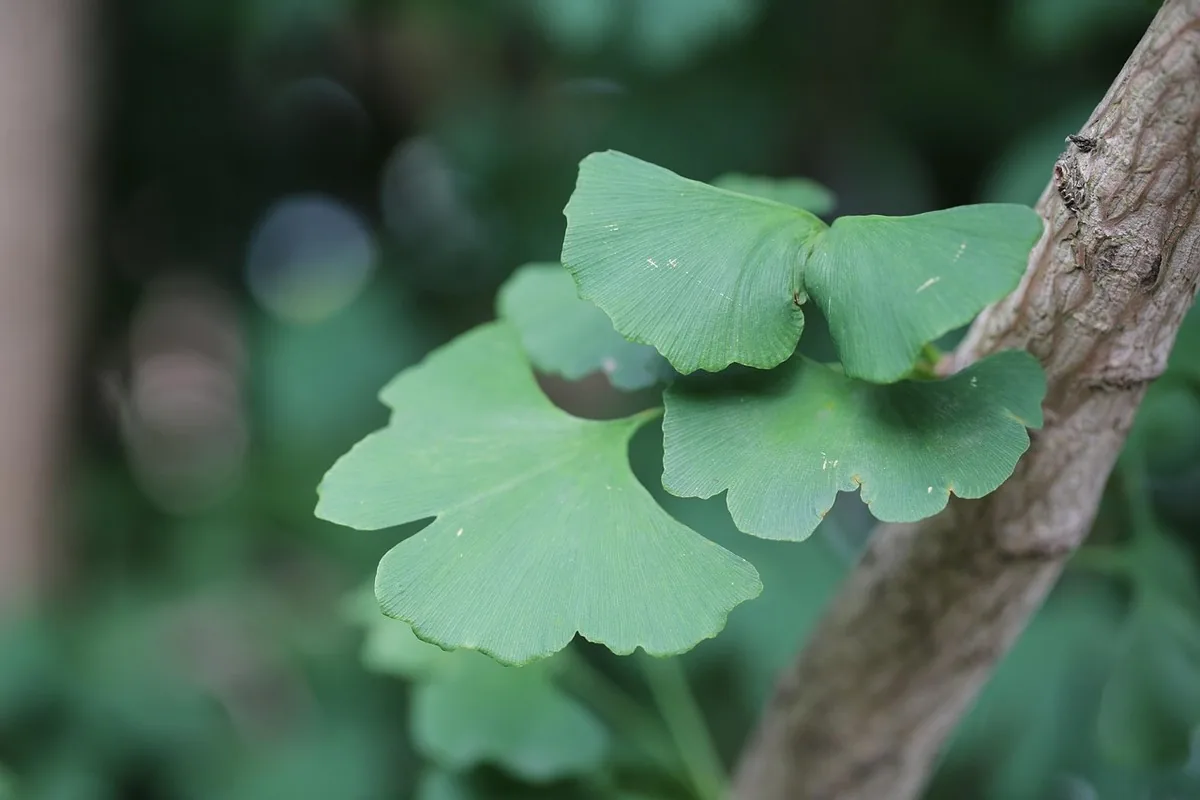
There is a tree on Earth that lived through the extinction of the dinosaurs. Ginkgo biloba, the sole surviving member of a lineage more than two hundred million years old, is often called a living fossil. Its fan-shaped leaves, divided into two lobes, already decorated the forests of the Jurassic. This extraordinary longevity fed, in China and later in the West, a longstanding fascination with the tree’s supposed benefits for memory and mental acuity.
In Morocco, the name is increasingly on people’s lips. Among students in Casablanca as exam season approaches, among Rabat professionals noticing their focus fading by late afternoon, among families anxious about their elders’ first moments of forgetfulness, ginkgo biloba comes up again and again. Our team receives questions about it every week. Is this serious science? What does the research actually say? How should it be taken? This article answers those questions, drawing on available studies and one simple principle: we never promise what science does not support.
By Houda Khaldi, Natural Nutrition Editorial Adviser · Updated 12 June 2026 · 18-minute read
Contenu de la page
- 1 Key Takeaways
- 2 Ginkgo Biloba: The Tree That Endured Through the Ages
- 3 What Ginkgo Biloba Actually Contains
- 4 The Science: What Studies Actually Say
- 5 Ginkgo, Omega-3, Lion’s Mane: Finding Your Way
- 6 Ginkgo Biloba in Morocco: A Real Need in a Specific Context
- 7 How to Use Ginkgo Biloba Correctly
- 8 The Alphavital Answer
- 9 Three Readers Share Their Experience
- 10 Frequently Asked Questions About Ginkgo Biloba
- 10.1 What exactly is Ginkgo biloba?
- 10.2 Does Ginkgo biloba genuinely improve memory?
- 10.3 Ginkgo biloba reviews and results: how long before effects are seen?
- 10.4 What is the dosage for Ginkgo biloba capsules in Morocco?
- 10.5 Ginkgo biloba: what are the contraindications in Morocco?
- 10.6 Should you choose Ginkgo biloba alone or the complete programme?
- 10.7 Is Ginkgo biloba useful for circulation?
- 11 In Summary
Key Takeaways
- Ginkgo biloba is a tree whose leaves are used for their active compounds known as flavonoids and terpenoids — natural plant-derived antioxidants.
- It is one of the most extensively documented plant extracts in the scientific literature, studied notably for its support of memory, concentration and normal blood circulation, including toward the brain.
- Observed benefits emerge primarily with regular intake over several weeks, not within a few days.
- The quality of an extract depends on the purity of the leaf and consistency from batch to batch: not all ginkgo products are equal.
- Alphavital offers a Ginkgo biloba at 120 mg per capsule, at one capsule per day, batch-traced, alongside a complete cognitive programme combining several active ingredients.

Ginkgo Biloba: The Tree That Endured Through the Ages
Before it became a supplement, Ginkgo biloba is first and foremost a story of survival. Native to China, it is today the sole survivor of the order Ginkgoales, a plant family that was once found across the entire planet. Where countless species vanished, it persisted — to the point of being cultivated for centuries near Buddhist temples, where it was accorded sacred status.
In traditional Chinese medicine, the seeds were primarily used. Modern medicine, however, turned its attention to the leaves, from which the compounds of interest to today’s laboratories are extracted. It was in Europe, from the 1960s onward, that the first standardised leaf extracts were developed and subjected to rigorous study protocols. Since then, ginkgo has ranked among the most prescribed and most analysed medicinal plants in the world.
Ginkgo biloba is not a passing trend. It is one of the best-documented plant extracts in modern research.
This dual identity — ancestral plant and subject of contemporary science — explains the enduring enthusiasm around ginkgo. It belongs to the large family of actives studied for cognitive support, alongside other plants our team has covered in depth, such as in its guide on lion’s mane, memory and concentration.
Why the Leaf, Not the Seed
One point deserves clarification, because it determines the quality of the finished product. In ginkgo, it is the leaves that concentrate the molecules studied for cognition and circulation: the flavonoids and terpenoids. The seeds, used in certain culinary traditions, serve a different purpose and are not the raw material for a serious extract.
This requirement explains why a good ginkgo product always comes from a carefully prepared leaf extract. On the market, the difference between a pure leaf powder and a diluted blend is enormous, even if the label displays the same name. This boundary is precisely what our team watches closely at the sourcing stage.

What Ginkgo Biloba Actually Contains
Behind the name lies a remarkably rich plant chemistry. Researchers have isolated several families of molecules in the ginkgo leaf, and it is these that explain the scientific interest in the plant. Understanding this composition helps distinguish a good extract from a simple powder without value.
The two most studied families are flavonoids, powerful plant antioxidants, and terpenoids, including ginkgolides and bilobalide, which are considered characteristic markers of the plant. It is this combination — not a single isolated molecule — that gives ginkgo its particular profile and its relevance to microcirculation.
A landmark scientific review surveyed the pharmacology of the plant and confirms the diversity of these active compounds and the research avenues explored regarding their action on the body. It can be consulted via this synthesis on Ginkgo biloba extract indexed on PubMed1. The researchers’ message is consistent: the quality of an extract depends on the richness and regularity of these markers, which justifies a rigorous production approach.
The Concept of a Quality Extract
The word may sound technical, but it is central to the subject. A quality extract is one whose content of active compounds is known, controlled and reproducible from one batch to the next. Without this consistency, two capsules bearing the same “Ginkgo biloba” label can have very different effects.
That is why our team refuses to reason solely in terms of the milligrams displayed on a label. A high dose from a poor-quality leaf is worth less than a controlled dose from a rich, traceable extract. The purity of the raw material and batch-to-batch consistency matter as much as the figure on the packaging. This traceability philosophy is one we apply to every plant in our range, as we explained in our B Complex profile — the fuel for energy and recovery.
The Science: What Studies Actually Say
This is where everything hinges. The internet overflows with spectacular promises about ginkgo biloba. Our role is to be honest about what research demonstrates, what it suggests, and what remains uncertain. Here, in plain language, are the areas where the evidence is most robust.

Memory and Cognitive Functions
This is the most studied domain, and the one attracting the most attention. Numerous clinical trials have explored the effect of ginkgo leaf extract on memory, attention and information processing speed, particularly in adults experiencing age-related decline. Results vary depending on populations and protocols, but several bodies of work describe a support of cognitive performance after prolonged regular intake.
A frequently cited systematic review synthesised this data in people experiencing age-related cognitive impairment. This work is available via this systematic review on Ginkgo biloba extract and cognition indexed on PubMed2. One hypothesis advanced by the researchers is that improved cerebral microcirculation and the antioxidant action of flavonoids together contribute to this support.
Ginkgo does not create new capacities. It seems rather to help the brain make better use of the ones it already has.
This distinction is essential, and it shapes our communication. Supporting a function is not the same as promising a guaranteed transformation. This is why Alphavital speaks of support of memory and concentration, never of a guaranteed performance pledge. In our view, this honesty is the hallmark of a brand worthy of trust.
For a pedagogical overview of these mechanisms, this French-language video reviews the evidence on ginkgo as a memory support and the caution that remains warranted.
https://www.youtube.com/watch?v=2Iyl9pHzYAk
Circulation and Microcirculation
Here is the second major chapter, perhaps the most characteristic of ginkgo. The plant has long been studied for its action on blood flow, and in particular on microcirculation — the circulation within the smallest vessels, which finely irrigate tissues including those of the brain and extremities. Several bodies of work describe a support of normal peripheral circulation.
This action on small vessels explains why ginkgo has been explored for the comfort of heavy legs, cold extremities or certain discomforts linked to sluggish circulation. Health authorities recognise the traditional use of the ginkgo leaf in supporting normal circulation, as recalled in the European Medicines Agency monograph, accessible via this official EMA monograph on Ginkgo leaf (Ginkgonis folium)3.

Antioxidant Properties and Cellular Protection
Ginkgo flavonoids are antioxidants — molecules that help neutralise oxidative stress, the cellular wear process involved in ageing. Several studies explore this protective role in connection with maintaining cognitive functions over time.
What can reasonably be said is that ginkgo is studied as a possible support for cognitive capital, through this dual antioxidant and circulatory action. It does not replace sleep, regular intellectual activity, or a diet rich in good nutrients. Our team presents it as a complement to a lifestyle that nurtures the brain, never as a shortcut.
Auditory Comfort and Age-Related Wellbeing
This is a use that modern research has also explored. Several studies have examined the role of ginkgo in auditory comfort and certain age-related discomforts, often in connection with its action on microcirculation. Here too the picture is coherent without being definitive: the benefits described are real across several studies, but vary depending on individual profiles and dosages.
What Remains to Be Confirmed
Honesty requires stating this clearly. Ginkgo biloba is also associated with areas still under exploration: prevention of cognitive decline in older adults, mood, certain metabolic parameters. These domains are being studied, but conclusions remain cautious and sometimes contradictory across studies. Our editorial line is constant: we present these topics as research fields, without turning them into commercial promises. A serious plant deserves a serious discourse.
Ginkgo, Omega-3, Lion’s Mane: Finding Your Way
Ginkgo is not alone in the world of cognitive support. Other actives share this territory, and our team is regularly asked about their differences. Rather than setting them in opposition, it is more accurate to understand the speciality of each.
| Active Ingredient | Origin | Primary Territory |
|---|---|---|
| Ginkgo biloba | Leaf, China | Memory, concentration, microcirculation |
| Omega-3 (DHA) | Fish oil | Maintenance of normal brain function |
| Lion’s mane | Mushroom | Concentration, mental clarity |
| Moringa | Leaf, India | Vitality, micronutrient supply |
Each of these actives has its own story and profile. Fish oil omega-3s deliver DHA, which EFSA recognises as contributing to the maintenance of normal brain function. Lion’s mane focuses on mental clarity. Moringa brings an abundance of micronutrients. Ginkgo, for its part, stands out through its more targeted action on memory and cerebral microcirculation.
These actives do not compete. They complement one another, each illuminating a different facet of brain health.
It is precisely this logic of complementarity that guided our team when designing a programme dedicated to concentration and memory. The idea is not to pile up promises but to cover the entire cognitive field: circulation, supply of good fatty acids and nutritional support for the brain. This holistic approach is at the heart of our thinking on the body’s overall balance.

Ginkgo Biloba in Morocco: A Real Need in a Specific Context
Why this Moroccan interest in ginkgo biloba? The answer lies in several realities of our lifestyle. Mental overload, the relentless pace of major cities, sleep deprivation, hours spent in front of screens: all factors weighing on concentration and memory, sometimes from as early as one’s thirties.
Add to this a seasonal dimension. Exam periods mobilise students and families around a single objective: holding the intellectual distance. The month of Ramadan, with its complete upheaval of sleep and meal schedules, also puts the brain to the test, particularly during the first days of adaptation. In this context, many look for deep-acting support capable of accompanying these transitions rather than masking mental fatigue with stimulants.
Population ageing also plays its role. With age, the first everyday moments of forgetfulness — a word that escapes, an appointment that fades — become a concern for many Moroccan families who want to support their elders. Ginkgo, a long-term terrain supplement rather than a one-off boost, finds its place here. Our team says it often: an extract studied for microcirculation works over time, helping the body function better, not pushing it artificially beyond its limits.
A Plant, Not a Magic Wand
Let us be clear on a point our team repeats constantly. Ginkgo biloba is not a medicine, and it does not by itself correct a lifestyle that exhausts the brain. A leaf, however well documented, cannot replace sleep, intellectual activity or a balanced diet. It is part of a whole.
This is indeed what the most robust studies show: benefits appear when supplementation accompanies a healthy lifestyle, not when it claims to compensate for one. Public health resources remind us that a food supplement replaces neither treatment nor a balanced diet, a framework well summarised by the dietary supplements section of MedlinePlus6. Ginkgo is a support, a foundation, not a effective solution. This nuance makes all the difference between an honest discourse and an empty promise.
How to Use Ginkgo Biloba Correctly
A few practical benchmarks help avoid the most common mistakes and get the most from a course of supplementation. Correct use matters as much as the product itself.
Ginkgo Biloba Dosage in Morocco
Ginkgo is generally taken in the morning or early in the day. Alphavital recommends one 120 mg capsule per day, with a large glass of water, preferably with a meal. Consistency comes before everything else: daily repetition over several weeks is what establishes the benefits observed in studies.
How Long Should a Ginkgo Biloba Course Last
The effects described in research most often appear after four to eight weeks of continuous intake, sometimes longer for cognitive benefits. A typical course therefore spans one to several months. There is no universally magic duration: listening to one’s body and seeking advice from a healthcare professional remain the best guides.
Ginkgo Biloba: Contraindications and Precautions
Ginkgo is generally well tolerated, but certain precautions apply. It is particularly important to seek advice from a healthcare professional when taking anticoagulants or blood-thinning medications, as ginkgo may interact with them, as well as before surgical procedures. It is not intended for pregnant or breastfeeding women. People with a chronic condition or on ongoing treatment must seek medical advice before starting. This caution is summarised in the Ginkgo biloba reference entry in NCBI Bookshelf (StatPearls)5. This caution is not a formality: it is a condition of responsible use.
To complement this reading, this French-language video presents Ginkgo biloba: its origin, its uses and what research establishes about its effects on memory and circulation.
https://www.youtube.com/watch?v=NlR3Hi0c4Cs
The Alphavital Answer
Diet, sleep and intellectual activity first — always. But when natural support makes sense, what is needed is a serious formula. That is exactly the philosophy that guided our team’s work on Ginkgo biloba.
Alphavital Ginkgo Biloba: Precisely Dosed and Fully Traced
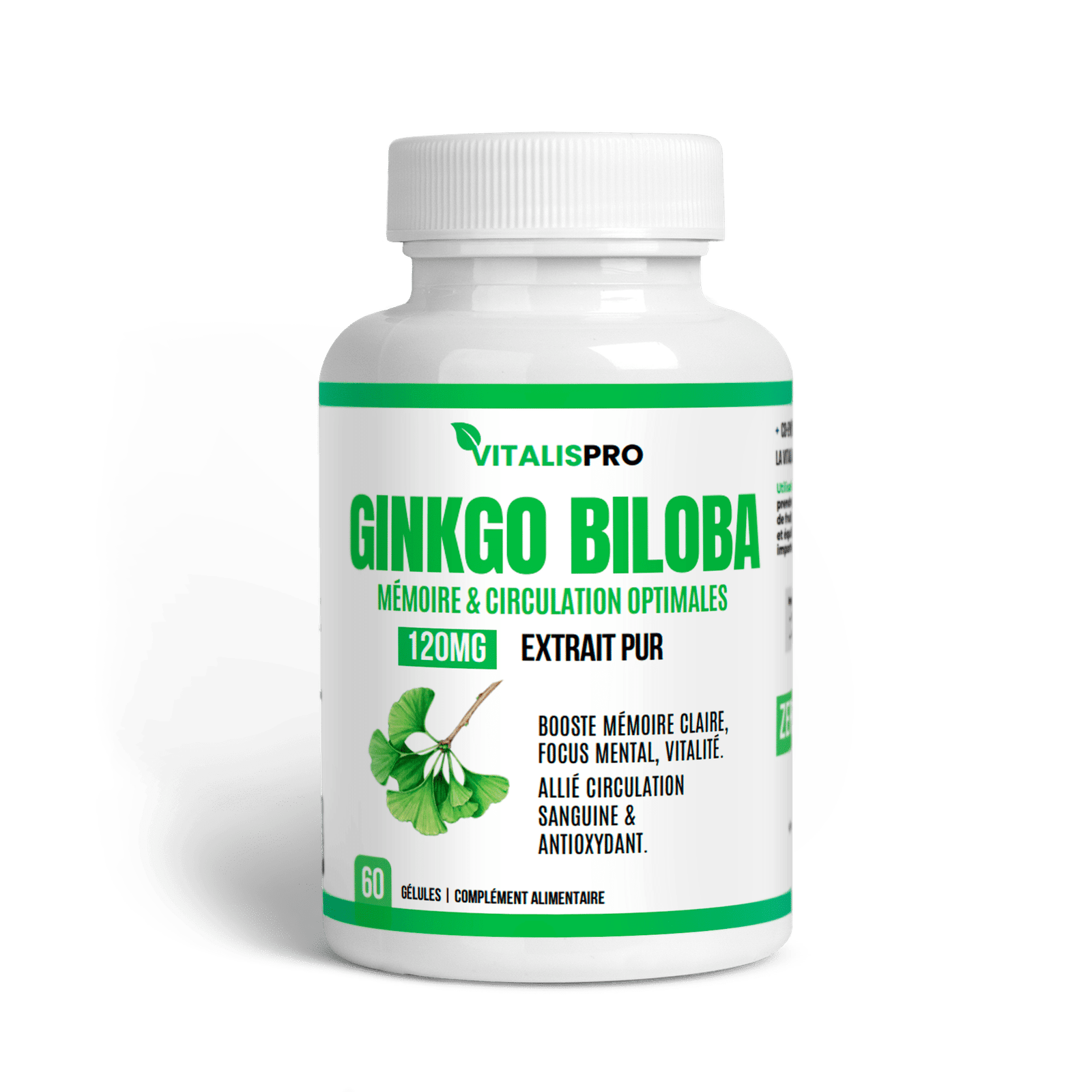
Alphavital offers a Ginkgo biloba at 120 mg per capsule, derived from the plant’s leaf and rich in flavonoids and terpenoids. Three requirements guided its design: raw material from the leaf, a clear and consistent dosage at one capsule per day, and genuine traceability batch by batch. Every batch is analysed, and we refuse any compromise on purity. The formulation matches what appears on the label: by dosing the full extract and listing the actives honestly, Alphavital lets you know exactly what you are taking.
This formula is part of our Concentration & Memory range, designed as a coherent whole. For those just beginning, ginkgo alone is often the best starting point: it allows discovery of the plant, observation of one’s own response, and building on a solid foundation.
A good Ginkgo biloba is not reducible to a number on the label. It brings together a pure leaf, a controlled dosage and genuine traceability.
The Complete Cognitive Programme, for Those Who Want to Go Further
For those seeking broader support of concentration and memory, our team also offers a complete programme that combines ginkgo with two other pillars: omega-3 and moringa. The idea is to cover the entire cognitive field by bringing together actives with complementary actions rather than multiplying them at random.
This programme is aimed at those who want a comprehensive, structured and coherent approach. It naturally extends the discovery begun with ginkgo alone, and is built on the same quality standards. To explore the full offering, our Brain Health category brings together all our natural solutions dedicated to mental clarity.
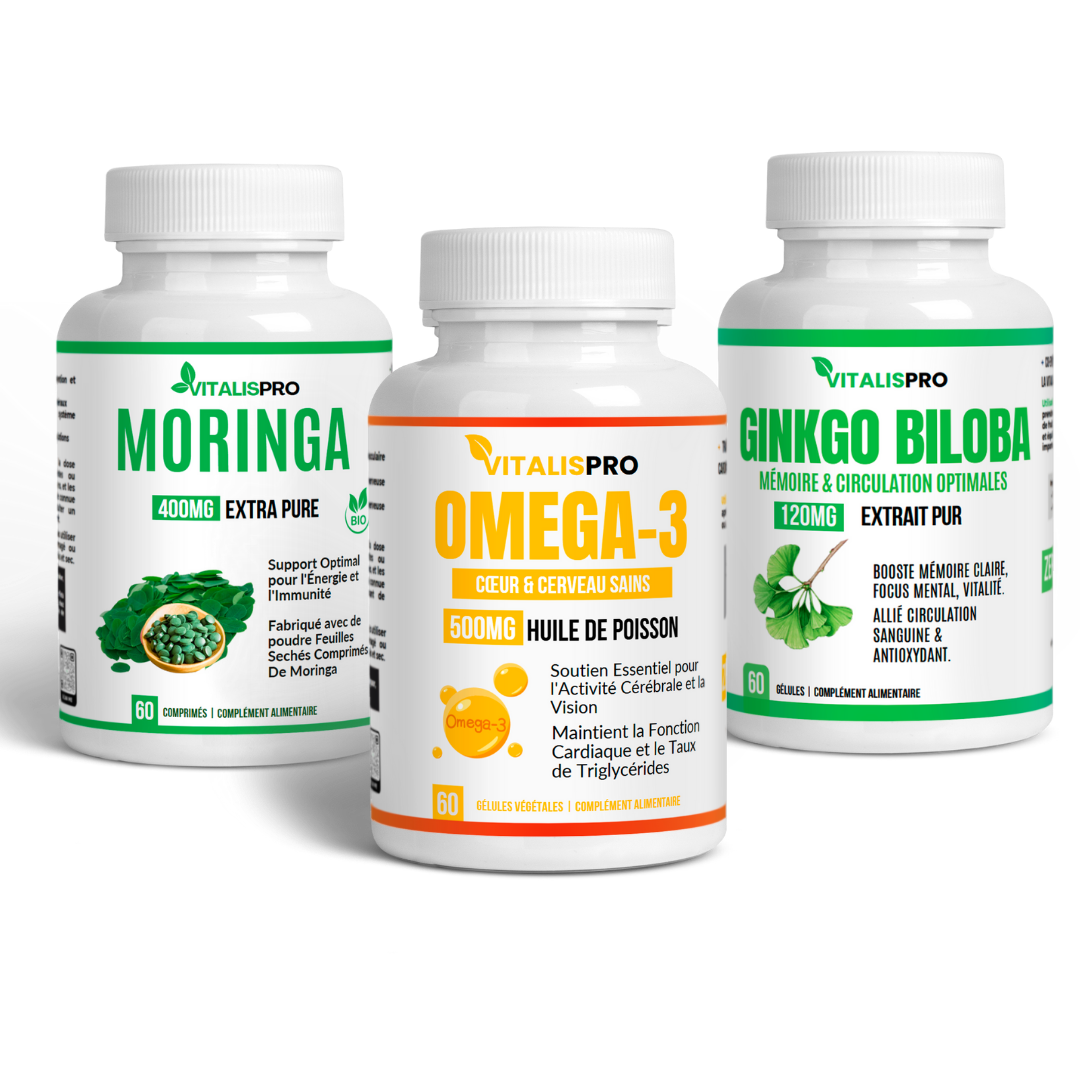
The feedback our team receives is worth more than any discourse. Here are three testimonials, shared with the consent of their authors.
I was preparing for a competitive exam and noticed my concentration flagging in the late afternoon. I incorporated ginkgo into my study days for two months, alongside proper sleep. Without claiming a effective, I hold on much better in the evenings now. — Salma, Casablanca
When I reached sixty, I was looking for something natural and serious to support my memory. I took ginkgo alone, one capsule every morning. What struck me most was a gradual sense of mental clarity building week by week. — Abdellatif, Fes
I often have cold extremities and a very demanding job. I chose the complete programme to cover several fronts at once. Three months later, I feel calmer and more present in my days. — Nadia, Marrakech
These accounts illustrate a simple truth: the most lasting results come from combining a healthy lifestyle with, when useful, a well-chosen supplement. A question before you start? Our team responds directly via the Alphavital contact page.
Frequently Asked Questions About Ginkgo Biloba
What exactly is Ginkgo biloba?
Ginkgo biloba is a tree native to China, considered a living fossil, whose leaves are used for their active compounds including flavonoids and terpenoids — plant-derived antioxidants. Traditionally used for memory and circulation, it is today one of the most clinically studied plant extracts for cognitive support and microcirculation.
Does Ginkgo biloba genuinely improve memory?
Several clinical trials associate the ginkgo leaf extract with support of memory, attention and concentration, particularly after prolonged regular intake and in adults experiencing age-related decline. The described effect is not a spectacular transformation but a support of existing functions, attributed to its antioxidant and circulatory action.
Ginkgo biloba reviews and results: how long before effects are seen?
Benefits observed in studies most often appear after four to eight weeks of regular intake, sometimes longer for cognition. Reviews and results reported on ginkgo biloba converge on this point: it does not work within a few days — it is a long-term foundation supplement. Daily consistency is decisive for evaluating one’s own response.
What is the dosage for Ginkgo biloba capsules in Morocco?
Alphavital recommends one 120 mg capsule per day, preferably in the morning or early in the day, with a large glass of water and with a meal. This ginkgo biloba capsule dosage, available in Morocco, bets on regularity rather than quantity. A typical course extends over several weeks to allow benefits time to establish.
Ginkgo biloba: what are the contraindications in Morocco?
Ginkgo is generally well tolerated, but it is inadvisable when taking anticoagulants or blood thinners, before surgical procedures, and it is not intended for pregnant or breastfeeding women. In the case of a chronic condition or ongoing treatment, advice from a healthcare professional is essential before starting. A supplement never replaces medical follow-up.
Should you choose Ginkgo biloba alone or the complete programme?
Ginkgo alone is often the best starting point for discovering the plant and observing one’s own response. The complete programme, which combines ginkgo, omega-3 and moringa, is aimed at those looking for broader support of concentration and memory. Both are built on the same quality and traceability standards.
Is Ginkgo biloba useful for circulation?
Ginkgo is one of the most studied extracts for supporting normal blood circulation, particularly microcirculation within the smallest vessels. This action explains its exploration for the comfort of heavy legs and cold extremities. The EMA recognises the traditional use of the ginkgo leaf in supporting normal circulation.
In Summary
Ginkgo biloba is an ancestral tree whose interest modern science has been exploring for decades: support of memory and concentration, action on cerebral microcirculation, antioxidant properties. The benefits are real but gradual; they manifest most clearly in those whose mental clarity is regularly called upon, and they belong fully within the framework of a healthy lifestyle.
Quality makes all the difference. A pure leaf, a controlled dosage and genuine traceability separate a good ginkgo from a simple powder. This is the path Alphavital has chosen, with a transparent approach faithful to the science. Taking care of your memory and circulation is not following a trend: it is a deep investment in intellectual vitality.
About the author. Houda Khaldi is Natural Nutrition Editorial Adviser at Alphavital. She translates scientific research into clear, applicable guidance for everyday Moroccan life.
Disclaimer. The information presented is provided for informational purposes only, based on sourced research (PubMed, EMA, EFSA). The Alphavital team does not include healthcare professionals. Consult a qualified healthcare professional before use, if on medication (particularly anticoagulants), during pregnancy or breastfeeding, or in the case of any health condition. Food supplements do not replace a varied and balanced diet or a healthy lifestyle.
Sources and References
- Mahadevan S., Park Y. — Multifaceted recommended benefits of Ginkgo biloba L.: composition and pharmacology, review. PubMed
- Systematic review — Ginkgo biloba extract and cognitive functions in adults with age-related decline. PubMed
- Ginkgo leaf (Ginkgonis folium) — monograph and traditional use in supporting circulation. European Medicines Agency (EMA)
- DHA and maintenance of normal brain function — authorised health claims (EU Reg. 432/2012). EFSA Journal
- Ginkgo biloba — profile, uses and precautions (anticoagulants, surgery). StatPearls, NCBI Bookshelf (NIH)
- Dietary supplements: public health guidance. MedlinePlus (National Library of Medicine)
Food supplements do not replace a varied, balanced diet or a healthy lifestyle. The Alphavital team is not made up of healthcare professionals. Consult a qualified healthcare professional before use.
