

Saw Palmetto — known in Morocco as “Doum” — is the berry of the dwarf palm Serenoa repens, one of the most extensively studied plants in the global scientific literature. In Morocco, it is sought out for two very concrete reasons: attention to hair health and day-to-day comfort for men as they age. Here, without hollow promises, is what science has genuinely explored, what it has not yet settled, and how Alphavital offers Doum in its simplest form: a pure powder.
There is a fruit that Mediterranean and North American tradition has passed down for generations. On the coasts of the south-eastern United States, the dwarf palm forms dense thickets whose small, dark berries served as both food and remedy for indigenous peoples for centuries. Across the Atlantic, in Morocco and throughout the Mediterranean basin, the doum palm has long held a place in domestic tradition. Two worlds, and a shared fascination with one humble plant.
In Morocco, this name surfaces constantly in online searches: “saw palmetto Morocco”, “doum hair”, “doum prostate”. These queries reflect genuine curiosity — and sometimes real concern. Our team receives the same questions every week. Is Doum credible? What does the research actually say? How is it prepared? This article answers with one strict rule: affirm nothing the science does not support, and stay firmly on the side of honest information.
By Houda Khaldi, Natural Nutrition Editorial Adviser · Published 17 June 2026 · 18-minute read
Contenu de la page
- 1 Key Takeaways
- 2 Doum: One Plant, Two Shores, Centuries of Use
- 3 What Dwarf Palm Berries Actually Contain
- 4 The Science: What Studies Have Explored — and What They Have Not Settled
- 5 Saw Palmetto, Nettle Root, Pumpkin Seeds: Finding Your Way
- 6 Saw Palmetto in Morocco: A Real Need, a Particular Context
- 7 How to Prepare and Use Doum
- 8 The Alphavital Response
- 9 Three Readers Share Their Experience
- 10 Frequently Asked Questions About Saw Palmetto (Doum)
- 10.1 What is Saw Palmetto, or Doum?
- 10.2 Does Saw Palmetto actually work for hair?
- 10.3 How do you prepare Doum powder?
- 10.4 Is Alphavital’s Saw Palmetto available in capsules or as a powder?
- 10.5 What precautions should I know about Doum?
- 10.6 What does Saw Palmetto cost in Morocco and how is it delivered?
- 11 In Summary
Key Takeaways
- Saw Palmetto (Serenoa repens), called Doum in Morocco, is the berry of a small dwarf palm; it is the fruits — rich in fatty acids and phytosterols — that are used.
- It is one of the most documented plants on PubMed and in the reference sheets of the NIH: the research exists, but conclusions remain cautious and sometimes contradictory.
- European authorities have approved no health claims for Serenoa repens: we are therefore discussing a plant of tradition, never a remedy.
- In Morocco, Doum is primarily sought for hair attention and mature men’s comfort; these are reasons for interest, not guaranteed benefits.
- Alphavital offers Doum in its purest form: a 100% dwarf palm powder, additive-free, prepared as a decoction in keeping with ancestral practice.
Doum: One Plant, Two Shores, Centuries of Use
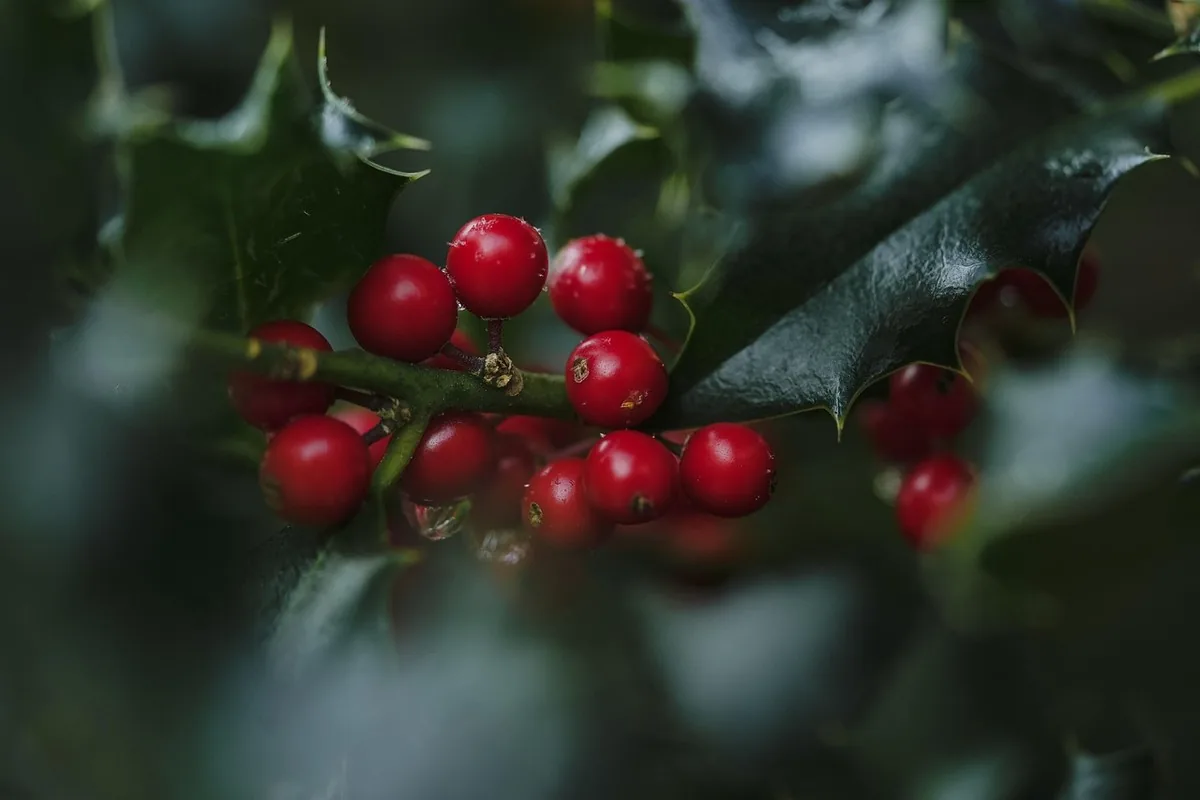
Before becoming a subject of research, Saw Palmetto is first a story of territory and memory. The dwarf palm that carries it, Serenoa repens, is a compact plant with fan-shaped leaves that thrives in sunny, sandy soils. Its value lies not in its silhouette but in its berries: small, fleshy fruits — first green, then almost black at full ripeness — harvested at the end of summer.
On the American continent, indigenous peoples had long consumed these berries. In Morocco and around the Mediterranean, the doum palm belongs to both landscape and traditional practice. This dual heritage, transmitted orally from generation to generation, eventually drew the gaze of laboratories curious to understand what popular knowledge had been repeating for so long. It is this dialogue between tradition and science that makes Doum so distinctive.
Doum is not an imported trend. It is a plant of tradition that modern research has sought to observe more closely, without always reaching a verdict.
This convergence is not unique to Saw Palmetto. Many ancient plants follow the same path: popular use, then scientific verification, then a zone of nuance where certainties and open questions coexist. Our team detailed this approach to rigorous observation in its dossier on ashwagandha, stress and sleep, where the same editorial caution applies.
Why the Berry, Not the Leaf
One point determines the quality of the finished product. In the dwarf palm, it is the berries — and they alone — that concentrate the compounds studied by research. The leaves and trunk contain virtually none of them. This is why a serious Doum product is always derived from the fruit, harvested at proper ripeness, when its fatty acid content is at its richest.
This requirement also explains why not all products labelled “Saw Palmetto” are alike. Between a pure berry powder and a diluted blend, the difference is considerable even when the label carries the same word. This is precisely the boundary our team monitors at the sourcing stage: raw material first, marketing second.

What Dwarf Palm Berries Actually Contain
Behind the commercial name lies a precise botanical composition, and it is this composition that explains the scientific interest in the plant. Researchers have primarily described, in the berry of Serenoa repens, a fraction rich in fatty acids (lauric acid, oleic acid, myristic acid) and phytosterols — plant compounds related to sterols — alongside flavonoids and polysaccharides.
The reference sheet from the NIH on Saw Palmetto, on the NCBI Bookshelf1, summarises this composition and the extensive literature surrounding it. The scientists’ message is consistent: it is the totality of these compounds — not any single isolated molecule — that characterises the plant. This is also why product quality depends first and foremost on the purity and maturity of the berries used.
The Concept of Purity Over Dosage
With many plants, the reasoning is in milligrams. With traditional Doum presented as a berry powder, the most pertinent question is not “how many milligrams” but “what level of purity”. A whole-berry powder, free of additives and excipients, states honestly what it is: a single-ingredient product that the user prepares themselves.
This is the philosophy our team adopted for this product. Rather than wrapping the berry in a complex formulation, Alphavital offers it plainly, as a 100% dwarf palm powder. You know exactly what you are putting in your cup. We apply this transparency about raw materials across the entire range, as we explained in our guide to plant proteins for athletes.
The Science: What Studies Have Explored — and What They Have Not Settled
This is where rigour is most necessary. Saw Palmetto is one of the most studied plants in the world, and the internet overflows with spectacular claims about it. Our role is not to relay those promises, but to present what research has genuinely observed — with all its nuances. And the first nuance is significant: European health authorities have approved no health claim for Serenoa repens. Everything that follows therefore belongs to ongoing research, not to established benefits.
Urinary Comfort in Mature Men
This is the most studied terrain, and the one that explains the plant’s historical appeal. Numerous studies have explored the role of Saw Palmetto in the urinary comfort of men as they age — a daily concern that many recognise without always discussing openly. The literature is extensive but also nuanced: some reviews describe encouraging results, while more recent, better-controlled studies observe no clear difference compared with a placebo.
A major synthesis by the Cochrane Collaboration — the world benchmark for medical evaluation — reviewed available trials on Serenoa repens and male urinary comfort. It is accessible through this systematic review on Serenoa repens indexed on PubMed2. Its conclusion calls for caution, and that is precisely why Alphavital never presents Doum as a solution, but as a plant of tradition. Honesty takes precedence over commercial argument.
Science has not had the final word on Saw Palmetto. That is precisely why we speak of a plant of tradition — not a remedy.
Attention to Hair
This is the other major reason Moroccans search for Doum. The mechanism most discussed in the literature concerns an enzyme called 5-alpha-reductase, involved in the metabolism of certain hormones. Several preliminary studies — often small in scale — have explored this pathway in relation to hair. But it must be said plainly: these data are limited, heterogeneous, and far from constituting proof. The research on this subject, indexed on PubMed under the term “serenoa repens hair”3, remains an open field rather than an established finding.
Our editorial position is therefore clear. We present hair attention as a genuine reason for interest among our visitors, never as an effect promised by our product. For targeted support of hair and nail beauty, our team naturally directs interest towards other formulations in the range with better-established frameworks — such as the brewer’s yeast enriched with zinc, selenium and B vitamins or Alphavital Biotin.
What Remains to Be Confirmed
Intellectual honesty demands drawing a clear boundary. Beyond the two main areas of interest, Saw Palmetto is sometimes associated with exploratory avenues that circulate online. For most of these, the data are too thin or too contradictory to draw any conclusion. Our editorial choice is constant: we present these subjects as fields of study, never as selling points. A plant that deserves respect deserves a serious discourse — and a serious discourse knows how to say “we don’t know yet”.
Saw Palmetto, Nettle Root, Pumpkin Seeds: Finding Your Way
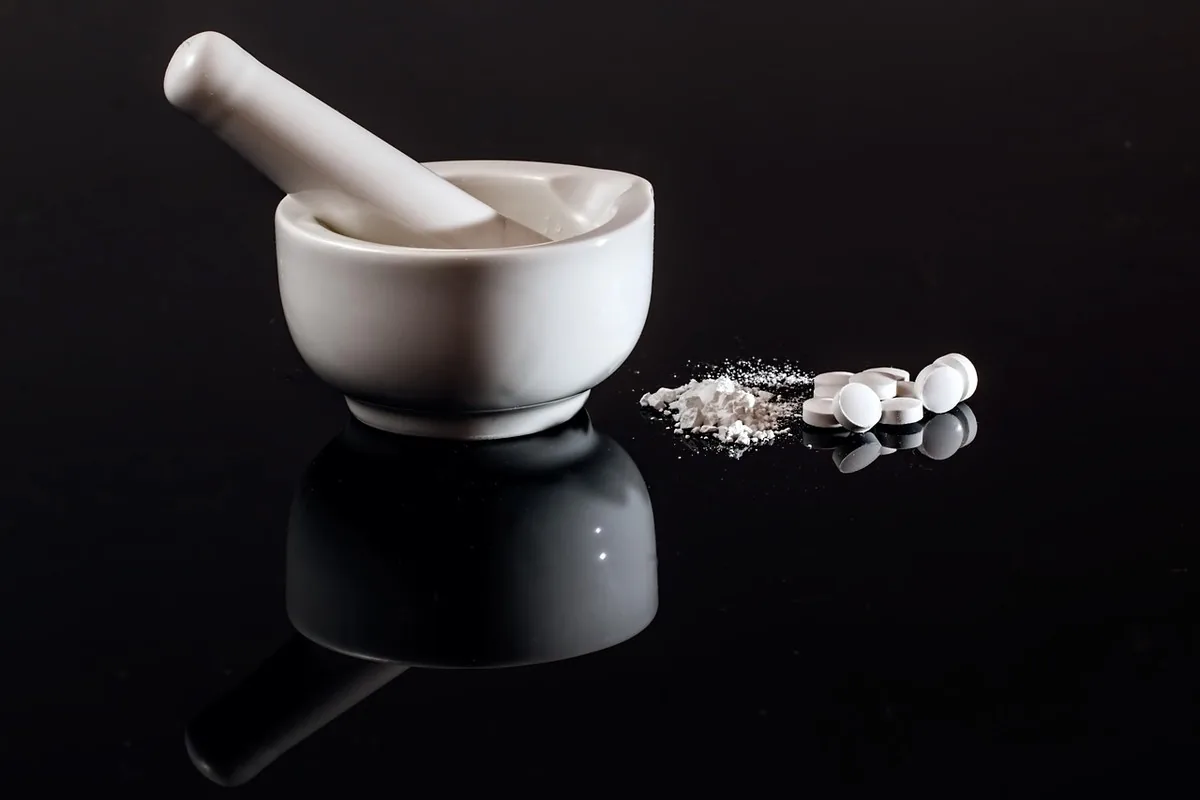
Doum is not alone in the territory of mature men’s comfort and hair attention. Other traditional plants share this space, and our team is regularly asked about their differences. Rather than opposing them, it is more instructive to understand each one’s place without overstating any. For a dedicated deep-dive on this plant oil, see our complete guide to pumpkin seed oil for urinary comfort and prostate.
| Traditional Plant | Part Used | Traditional Area of Interest |
|---|---|---|
| Saw Palmetto (Doum) | Dwarf palm berry | Mature men’s comfort, hair |
| Pumpkin Seeds | Seed | Urinary comfort, zinc intake |
| Nettle (Root) | Root | Daily male comfort |
| Brewer’s Yeast | Whole yeast | Hair and nail beauty |
Each has its own history and profile. Pumpkin seed oil brings fatty acids and zinc in the same logic of comfort. Brewer’s yeast, rich in zinc and selenium, targets hair beauty more specifically. Saw Palmetto, meanwhile, remains the most emblematic traditional plant for the comfort of the ageing man. These plants do not compete; each illuminates a different facet of the same need.
These plants are not in opposition. Each covers, in its own way, different dimensions of male comfort and hair beauty.
It is this logic of complementarity that guided our team when bringing together several of these actives in a comprehensive approach. The idea is not to stack promises, but to offer a coherent accompaniment to male comfort, integrated into a sound lifestyle. To explore the subject more broadly, our team detailed this approach in its dossier on pumpkin seeds, urinary comfort and heart health.
Saw Palmetto in Morocco: A Real Need, a Particular Context
Why this Moroccan interest in Doum? The answer lies in several realities. First, cultural familiarity: the doum palm is part of the natural landscape and collective memory, which lends the plant an immediate legitimacy in many people’s eyes. Second, a desire for discretion: male comfort and hair loss remain subjects often discussed in hushed terms, and a traditional plant requiring no prescription meets this need to address the topic without passing through certain doors.
A generational dimension adds to this picture. Men in their forties, fifties and beyond — mindful of their comfort and appearance — readily turn to natural solutions they can integrate themselves into their routine. Preparing a Doum decoction in the evening, as one prepares a pot of tea, has something reassuring and familiar about it. It is a gesture, not merely a product.
The country’s rhythm plays its role too. Long days, urban stress, a diet that is sometimes unbalanced: so many factors that invite a holistic approach to self-care. In this context, Doum finds its place not as a effective remedy but as a traditional support, to be woven sensibly into a mindful lifestyle. Our team says it often: a plant accompanies a healthy way of living — it never replaces it.
A Plant of Tradition, Not a Magic Wand
Let us be clear on a point our team repeats without cease. Saw Palmetto is not a medicine, and no plant on its own corrects a lifestyle that depletes the body. A berry, however respected by tradition, does not replace sleep, physical activity, or a balanced diet. It fits within a whole, or it serves little purpose.
Public health resources are clear on this: a food supplement is no substitute for medical treatment or a balanced diet. This is exactly the framework set out by the ANSES on food supplements4. Doum is a traditional support, to be integrated thoughtfully — never a solution that would excuse neglecting everything else. This nuance is the difference between honest information and an empty promise.
How to Prepare and Use Doum
A few practical benchmarks prevent the most common mistakes. With a plant powder, the preparation gesture matters as much as the product itself — it is what connects modern use to tradition.
The Decoction: The Ancestral Gesture
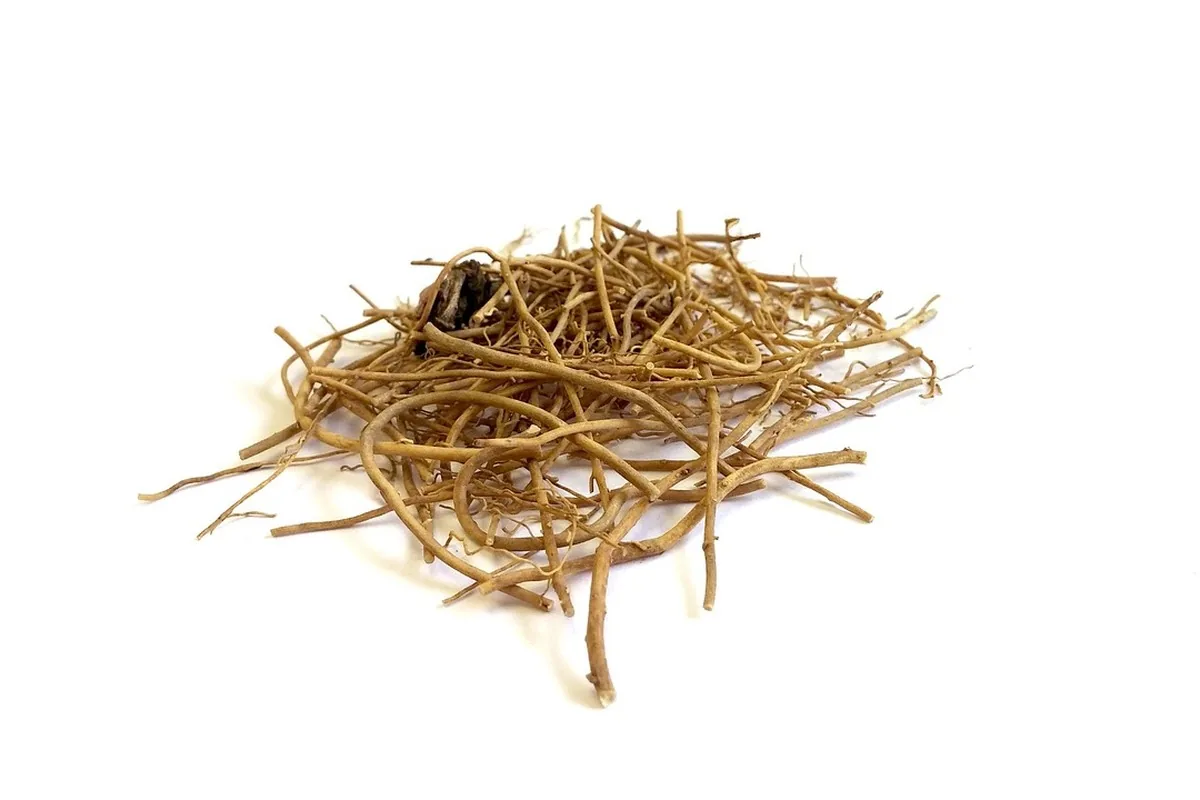
The traditional way to prepare Doum is the decoction. Use one teaspoon of dwarf palm powder per cup of water. Bring gently to a simmer and allow to steep for five to ten minutes, then strain and drink warm. The powder releases its compounds into the water, exactly as traditional practice has always done. It is a simple preparation requiring only a little patience.
Cold Infusion: The Gentle Alternative
For those who prefer a no-heat method, cold infusion works perfectly. Leave the powder to infuse in cold water for several hours — ideally overnight — then strain before drinking. This slower method preserves a part of the aroma and integrates easily into an evening routine. Alphavital recommends, in traditional use, one to two cups per day in short cycles rather than continuously.
Precautions and Common Sense
Saw Palmetto is a plant of tradition, but certain precautions apply. It is not recommended for pregnant or breastfeeding women. If you are taking any medication, have a health condition or relevant medical history, the advice of a qualified healthcare professional is essential before use. Do not exceed the recommended amount, and keep the product out of children’s reach. This caution is not a formality: it is the condition of responsible use, and our team states it without exception.
The Alphavital Response
A healthy lifestyle first, always. But when one wishes to reconnect with a traditional plant like Doum, a trustworthy raw material is essential. This is precisely the philosophy that guided our team’s work.
Alphavital Doum — Pure and Traceable
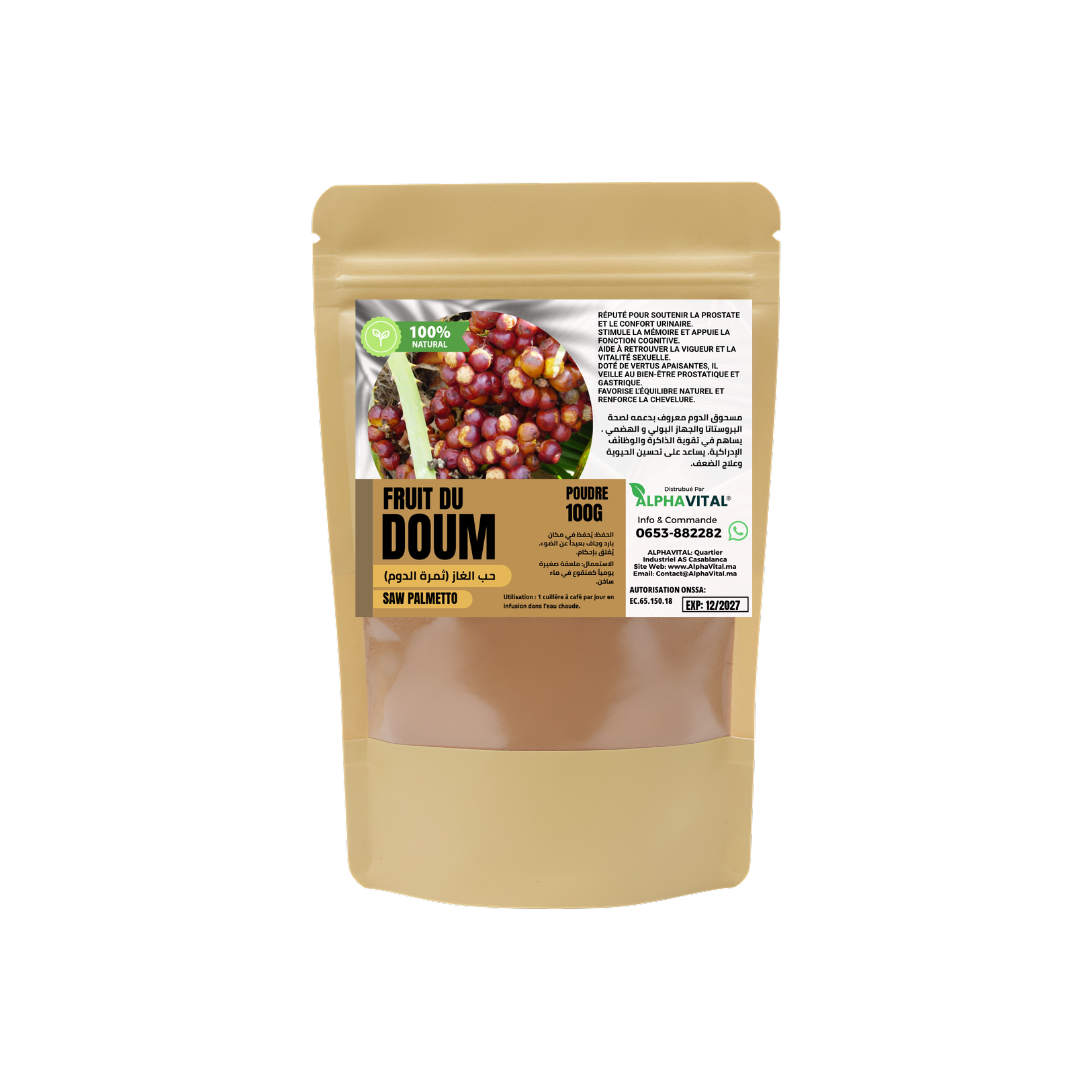
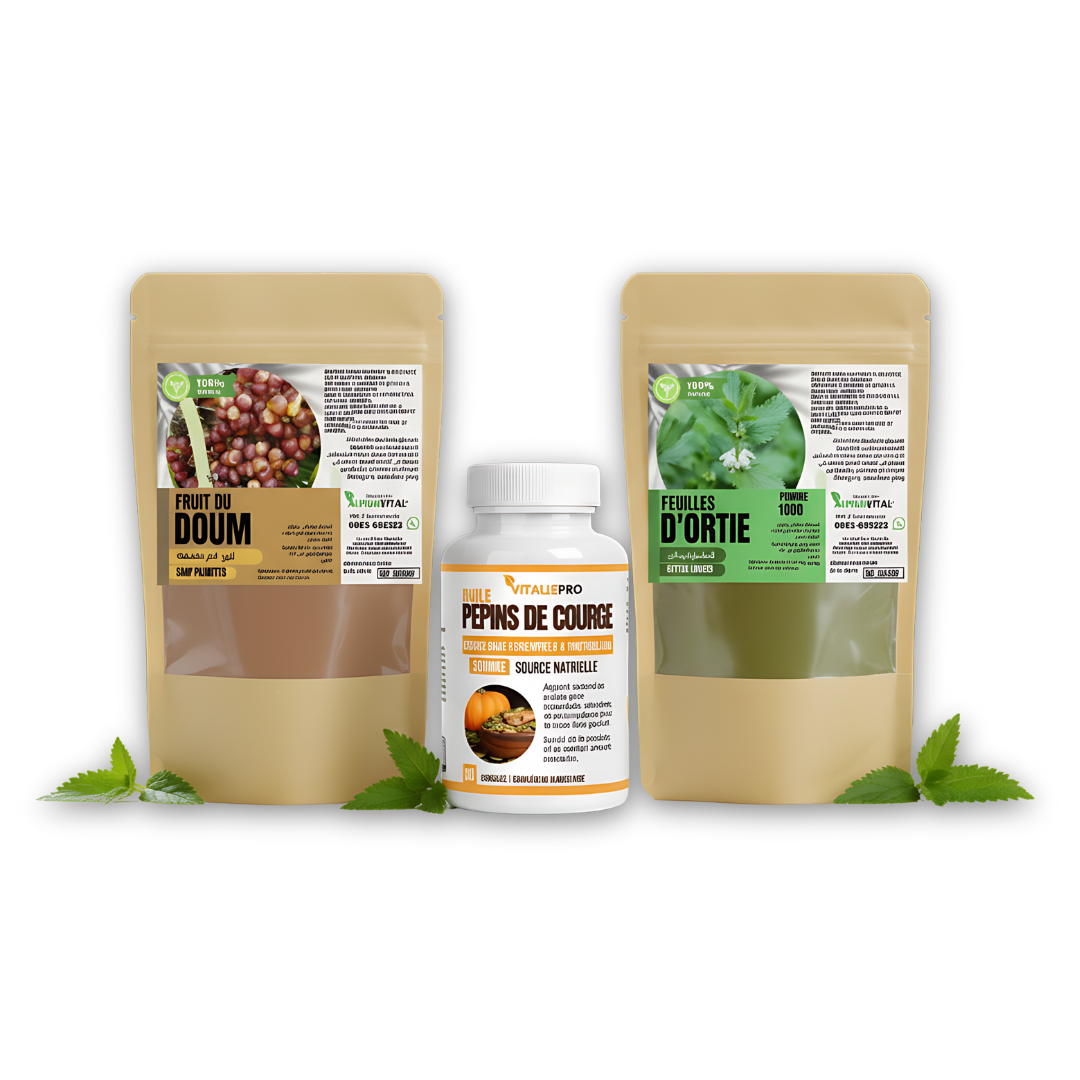
Alphavital offers Saw Palmetto in its simplest, most honest form: a 100% pure dwarf palm powder, free of additives, excipients and added flavours. One single ingredient, declared as such. Three requirements shaped this choice: a raw material derived from the berries and not from poorer parts of the plant; total transparency in the composition; and genuine traceability, batch by batch.
The product holds ONSSA authorisation, and every batch is tested before packaging to ensure consistent quality from one sachet to the next. For those discovering Doum for the first time, this pure format is the best starting point: it allows you to reconnect with the traditional decoction gesture and observe your own routine without unnecessary formulation. The complete product sheet, with full offer details, is available on the Alphavital Saw Palmetto product page.
A quality Doum is not just a name on a sachet. It combines a pure berry, complete transparency in the composition, and genuine traceability.
For Male Comfort — A Comprehensive Approach
For men seeking broader support for their daily comfort, our team has brought together several traditional plants in a coherent approach. The aim is not to multiply products but to associate complementary actives around a single comfort objective, integrated into a sound lifestyle. This approach is aimed at those already familiar with these plants who want a structured rather than scattered path.
It naturally extends the discovery of Doum alone, in the same commitment to quality and transparency. To explore our team’s full range of solutions in this area, the dedicated category brings together products designed for mature male comfort, from Doum to pumpkin seeds.
The feedback our team receives is worth more than any sales copy. Here are three testimonials, shared with the authors’ consent, and kept entirely clear of any health claims.
I had heard about Doum from my father, who used to prepare it at home. I wanted to find that gesture again with a truly pure powder. The evening decoction ritual has become a small moment of my own — and that alone is a great deal. — Khalid, Casablanca
What I appreciated was the transparency: one single ingredient — that is rare. I know exactly what I am preparing, with no endless ingredient list on the back of the sachet. The quality of the powder is visible and perceptible. — Abdelhak, Fez
I chose the multi-sachet format to follow a calm, long-term routine without running out. Preparation is simple, and the idea of reconnecting with a plant from our land appeals to me greatly. — Mostafa, Marrakech
These accounts illustrate a simple truth: the value of Doum lies as much in the gesture and tradition as in the product itself. A question before you start? Our team responds directly via the Alphavital contact page.
Frequently Asked Questions About Saw Palmetto (Doum)
What is Saw Palmetto, or Doum?
Saw Palmetto is the international name for the dwarf palm, Serenoa repens, traditionally called “Doum” in Morocco. The berries — rich in fatty acids and phytosterols — are the part used. It is one of the most documented plants in the public scientific literature, with reference sheets dedicated to it by the NIH. Alphavital offers it as a pure powder.
Does Saw Palmetto actually work for hair?
Research on dwarf palm and hair exists, but it remains limited and heterogeneous: no solid conclusions can be drawn, and no health claim is approved for Serenoa repens. In Morocco, hair attention is a frequent reason for interest — not a guaranteed benefit. For hair beauty, other formulations in the range are based on better-established compounds.
How do you prepare Doum powder?
As a decoction: one teaspoon of powder in a cup of water, simmered gently for five to ten minutes, then strained and drunk warm. As a cold infusion: leave the powder to steep in cold water for several hours, then strain. Traditional use calls for one to two cups per day in short cycles.
Is Alphavital’s Saw Palmetto available in capsules or as a powder?
Alphavital Doum comes as a 100% pure dwarf palm powder, single-ingredient, additive-free. This format allows reconnection with the traditional decoction gesture and guarantees total transparency in the composition: one ingredient, declared as such. It is ONSSA-certified and every batch is controlled before packaging.
What precautions should I know about Doum?
Saw Palmetto is not recommended for pregnant or breastfeeding women. If you are on any medication, have a health condition or relevant medical history, professional healthcare advice is essential before use. Do not exceed the recommended amount, and keep the product out of children’s reach. A food supplement never replaces medical supervision.
What does Saw Palmetto cost in Morocco and how is it delivered?
The Alphavital Saw Palmetto sachet is priced at 69 MAD on the product page. Delivery covers all of Morocco in 24 to 48 hours, with payment on delivery, and is free from 170 MAD of purchase. The price for each format is displayed in the offer panel at the top of the product page.
In Summary
Saw Palmetto, or Doum, is a plant of tradition that science has discussed at length without always reaching a verdict. European authorities have approved no health claim for Serenoa repens: we therefore present this berry as a cultural heritage and a gesture, never as a remedy. In Morocco, it is sought primarily for hair attention and mature male comfort; these are legitimate reasons for interest, not guaranteed benefits.
Purity makes all the difference. A pure dwarf palm berry, a transparent composition and genuine traceability are what separate a quality Doum from an anonymous powder. This is the path Alphavital has chosen — with an honest approach faithful to both tradition and science. Reconnecting with Doum is not following a trend: it is reclaiming a gesture from our land, integrated with good sense into a mindful, healthy lifestyle.
About the author. Houda Khaldi is Natural Nutrition Editorial Adviser at Alphavital. She translates scientific research into clear, actionable guidance for the Moroccan daily context.
Disclaimer. The information presented is provided for informational purposes only, based on sourced research (PubMed, NIH, ANSES). Serenoa repens holds no health claim authorised by European authorities: no recommended benefit is asserted here. The Alphavital team does not comprise healthcare professionals. Consult a qualified healthcare professional before use, particularly if you are on medication, pregnant or breastfeeding, or have a health condition. Food supplements are not a substitute for a varied, balanced diet or a healthy lifestyle.
For men looking to support everyday urinary comfort, Alphavital offers a saw palmetto formula for urinary and prostate comfort as part of a balanced lifestyle.
Sources and References
- Saw Palmetto (Serenoa repens) — composition, uses and literature. StatPearls, NCBI Bookshelf (NIH)
- Tacklind J. et al. — Serenoa repens and lower urinary tract symptoms in men: systematic review. Cochrane / PubMed
- Literature on Serenoa repens and hair (preliminary, heterogeneous data). PubMed
- Food supplements: framework, precautions and responsible use. ANSES (French Agency for Food, Environmental and Occupational Health Safety)
Food supplements do not replace a varied, balanced diet or a healthy lifestyle. The Alphavital team is not made up of healthcare professionals. Consult a qualified healthcare professional before use.