


Vitamin C is arguably the most well-known and most misunderstood supplement in Morocco. It is often reduced to a winter reflex — a glass of orange juice against the common cold. Yet behind this familiarity lies one of the most thoroughly documented micronutrients in science, whose roles reach far beyond immunity: reducing fatigue, protecting cells from oxidative damage, and above all enabling the synthesis of collagen, the protein that keeps skin firm. Here is what scientific authorities actually recognise about its benefits for immunity in Morocco, when and how to supplement sensibly, and how Alphavital delivers a full 500 mg dose per tablet.
There is a vitamin everyone thinks they know. We associate it with oranges, lemons, and the grandmother who hands you a freshly squeezed glass at the first sign of a sniffle. Vitamin C has been part of our health vocabulary since childhood, so much so that we no longer really ask questions about it. And that is precisely the problem: this familiarity has turned one of the most studied nutrients in the history of medicine into a cliché we repeat without truly understanding.
The reality is richer and more interesting. Vitamin C does not simply “boost defences.” It is an indispensable cofactor in specific chemical reactions within the body, among them the very manufacture of collagen, the structural protein that gives your skin its firmness, your blood vessels their elasticity and your tissues their integrity. It plays a role in combating fatigue. It protects your cells from oxidative wear. And the human body, unlike most animals, has lost the ability to produce it: it must therefore be supplied every day, without interruption, through food or a carefully chosen supplement.
In Morocco, the question resurfaces primarily at seasonal transitions, when fatigue sets in and colds circulate through the household. Should you supplement with Vitamin C? At what dose? For immunity alone, or also for skin and energy? This article answers those questions by drawing strictly on what scientific authorities recognise, and on a simple principle: assert nothing that the data does not support, and honestly name the boundary between a recognised role and a misplaced hope.
By Houda Khaldi, Natural Nutrition Editorial Adviser · Updated June 12, 2026 · 18 min read
Contenu de la page
- 1 Key Takeaways
- 2 Vitamin C: a nutrient the body cannot make
- 3 Vitamin C and immunity: what is recognised, and what is not
- 4 Collagen synthesis: the most solid and least known role
- 5 Anti-fatigue and antioxidant: the two other recognised grounds
- 6 Dietary sources and the limits of food alone
- 7 How to supplement with Vitamin C wisely in Morocco
- 8 Vitamin C in Morocco: a real need, a sensible approach
- 9 The Alphavital response
- 10 Three readers share their experiences
- 11 Frequently asked questions about Vitamin C
- 11.1 What exactly is Vitamin C?
- 11.2 Does Vitamin C genuinely strengthen immunity?
- 11.3 Is Vitamin C useful for skin and collagen?
- 11.4 What is the exact composition of Alphavital Vitamin C 500 mg?
- 11.5 How and when should Vitamin C be taken?
- 11.6 Can you take too much Vitamin C?
- 11.7 Are there any precautions or contraindications?
- 12 In summary
Key Takeaways
- Vitamin C (ascorbic acid) is an essential micronutrient the human body can neither produce nor store: it must be supplied regularly, every day, through food or a supplement.
- The EFSA, the European Food Safety Authority, recognises several roles for Vitamin C: it contributes to the normal function of the immune system, helps reduce fatigue, contributes to normal collagen formation (for the skin), protects cells from oxidative stress and enhances iron absorption.
- These roles are contributions within a varied diet, not guaranteed effects or supports: Vitamin C is not a shield against illness and does not make a cold disappear once it has taken hold.
- Collagen synthesis is one of its most solid and least well-known roles: without Vitamin C, the body simply cannot produce stable collagen.
- Alphavital offers a Vitamin C formulation at a full 500 mg dose per tablet, as L-ascorbic acid, ONSSA-approved, at a rate of one to two tablets per day with meals.

Vitamin C: a nutrient the body cannot make
Let us begin with a fact that often surprises people. The vast majority of animals produce their own Vitamin C in the liver from glucose, without needing to consume it. A goat, a dog, a cat all produce it spontaneously in considerable quantities. Humans, however, are completely incapable of this. Over the course of evolution, our lineage lost a gene essential to this synthesis. As a result, we belong to the small minority of species for whom Vitamin C is a strictly essential nutrient — meaning it must come from the outside, from the plate.
This peculiarity has a major practical consequence. Because the body neither produces nor durably stores it, Vitamin C must be supplied regularly. It is not a reservoir filled once and for all: it is a flow that must be maintained day after day. This physiological reality explains why supplementation, when it makes sense, should be thought of over the long term rather than as a short course of a few days.
Vitamin C, or ascorbic acid, is also one of the most studied micronutrients in the world. The public scientific literature on the subject is immense; its scale can be appreciated through this bibliographic search on Vitamin C and immune function referenced on PubMed1. This research density is an advantage: it allows us to separate what is solidly established from what belongs to popular belief. And Vitamin C is surrounded by as many myths as facts.
Most animals manufacture their Vitamin C. We do not. That is why it must come from food, every day, without interruption.
Why it is discussed mostly in winter, in Morocco as elsewhere
There is a very concrete reason for this seasonal reflex. Winter and seasonal transitions put the body to the test: sleep is sometimes disrupted, we are exposed to temperature swings, we spend more time indoors in close contact with others, and our diet often becomes heavier and less rich in fresh fruit and vegetables. Yet it is precisely these foods that supply Vitamin C. When the plate loses its colours, intake drops at the very moment fatigue is setting in.
In Morocco, this concern is very present at the first signs of cold weather. Many people look for a quiet, prescription-free foundation to support their natural defences and maintain energy through difficult weeks. Vitamin C fits naturally into this logic, provided it is understood for what it is: a foundational nutrient to be incorporated early and consistently, not a medicine to be reached for once one already feels unwell. That nuance makes all the difference.
Vitamin C and immunity: what is recognised, and what is not
This is the role for which Vitamin C is most celebrated, and also the one that generates the most misunderstanding. Let us set the record straight, carefully distinguishing what authorities recognise from what popular belief wrongly attributes to it.
The EFSA, the European Food Safety Authority, is the body that evaluates, on the basis of evidence, which claims can be associated with a nutrient. Regarding Vitamin C, it recognises that it contributes to the normal functioning of the immune system. The wording is precise and every word counts: “contributes” and “normal.” Vitamin C participates in the proper functioning of immunity as it should be, within the framework of a varied diet. The details of these physiological roles can be consulted in the EFSA scientific opinion on reference values and functions of Vitamin C2.
Biologically, this comes down to several facts. Vitamin C is present in high concentrations in certain immune cells, where it plays the role of antioxidant and cofactor. This is an active area of research, explored extensively in the scientific literature. But — and this is where caution is warranted — possessing interesting biological mechanisms is not the same as promising that a supplement will prevent you from falling ill.
Vitamin C contributes to normal immune function. It does not “boost” it beyond normal, and it is not a shield against illness.
The cold myth: what you need to know
Here is where we must be most honest. The popular idea that Vitamin C prevents catching a cold, or makes one disappear once it has taken hold, does not correspond to what authorities recognise. Vitamin C contributes to the normal function of the immune system; it is neither a vaccine, nor a treatment, nor a guarantee. Taking a mega-dose at the first sneeze does not “kill” the virus.
What can reasonably be said is that a regular and sufficient intake of Vitamin C helps the body function as it should, which makes sense during periods when diet is poorer and fatigue more pronounced. Our team therefore speaks of supporting natural defences within a wellness routine, and never of a guaranteed effect against illness. To build this immune foundation, Vitamin C sits alongside other pillars we detail elsewhere, such as spirulina for energy and immunity or, more broadly, our complete Immunity and Vitality range.
Collagen synthesis: the most solid and least known role
If Vitamin C had only one truly indisputable role, this would be it. And yet it is the one least known to the general public. To understand it, we need to talk about collagen — the most abundant protein in your body.
No stable collagen without Vitamin C
Collagen is the scaffold of your tissues. It is what gives skin its firmness, blood vessels their resilience, and tendons, gums and bones their strength. To produce stable, functional collagen, the body requires a specific chemical step called hydroxylation — and this step requires the presence of Vitamin C. This is a biochemical fact, not a hypothesis: without Vitamin C, the responsible enzymes cannot do their work correctly.
This is why the EFSA recognises that Vitamin C contributes to normal collagen formation for the normal function of skin, blood vessels, bones, cartilage, gums and teeth. This is one of the best-established roles of the nutrient, validated by the regulatory authority. When people speak of Vitamin C “for the skin,” they are not doing marketing: they are describing a documented physiological reality.
Without Vitamin C, the body simply cannot produce stable collagen. This is biochemistry, not a cosmetic promise.
The historical illustration: scurvy
To grasp the importance of this role, a brief detour through history is instructive. Scurvy, the disease that once decimated sailors on long voyages without fresh fruit, was nothing other than severe Vitamin C deficiency. And its symptoms — bleeding gums, fragile blood vessels, poor wound healing, loosening teeth — are all direct consequences of defective collagen. When naval physicians understood that a simple citrus fruit was enough to correct this deficiency disease, they had in their hands one of the first demonstrations of modern nutrition.
This reminder is not anecdotal. It shows that Vitamin C is not a “comfort” supplement whose role is vague: it is a nutrient whose absence has very real structural consequences for tissues. Conversely, a sufficient and regular intake is one of the foundations of skin and tissues that function normally. This is also why Vitamin C and collagen form a logical pair, one our team has combined in a dedicated formula: our marine collagen combined with Vitamin C for suppleness and anti-ageing.
Anti-fatigue and antioxidant: the two other recognised grounds
Beyond immunity and collagen, Vitamin C covers two further grounds recognised by the EFSA, which are of particular interest to those who feel depleted at seasonal changes.
Helping to reduce fatigue
The EFSA recognises that Vitamin C contributes to reducing fatigue. Here again, the wording is precise and measured: a contribution to fatigue reduction, within a varied diet, not a stimulant that would give you a sudden jolt. Vitamin C is not a dose of caffeine: it does not produce an artificial energy peak. It participates in normal energy metabolism, making it a foundational support rather than a stimulant.
This nuance matters greatly in positioning it correctly. If you are seeking an immediate burst of energy, Vitamin C is not the right tool. If you are seeking to maintain steadier baseline energy during a period when diet and sleep are under pressure, it has its place. For more pronounced fatigue situations, linked for example to a diet low in iron, the subject warrants a broader approach that we address in our guide on fatigue, anaemia and natural energy.
Protecting cells from oxidative stress
Vitamin C is also an antioxidant, and the EFSA recognises that it contributes to protecting cells against oxidative stress. Oxidative stress, in simple terms, is the wear that cells experience under the effect of unstable molecules called free radicals, produced naturally by the body’s metabolism but also by pollution, tobacco and an unbalanced lifestyle. Antioxidants like Vitamin C help neutralise these molecules, thereby contributing to cellular protection.
It is this antioxidant role that elegantly connects the others: protecting cells also means supporting a favourable environment for immunity, skin and energy. Vitamin C does not act in silos: its various roles illuminate one another, because they all stem from its particular chemistry. This recognised versatility is what makes it such a fundamental foundational nutrient.
Immunity, fatigue, collagen, cellular protection: these roles are not a marketing list — they all stem from the same chemistry of ascorbic acid.
A useful bonus: iron absorption
One last role, often forgotten, deserves mention because it is very concrete. Vitamin C enhances the absorption of non-haem iron, that is, iron of plant origin. Consumed at the same meal as a plant-based iron source — lentils, spinach, legumes — it significantly increases the body’s absorption of that iron. This is a validated effect that is particularly relevant for people whose diet is rich in plant foods. A simple squeeze of lemon juice over a plate of lentils is therefore not merely a matter of taste.

Dietary sources and the limits of food alone
Before thinking about supplements, we must always talk about food. This is the basic principle, and our team repeats it constantly: a supplement complements, it does not replace a varied diet.
Where to find Vitamin C in your diet
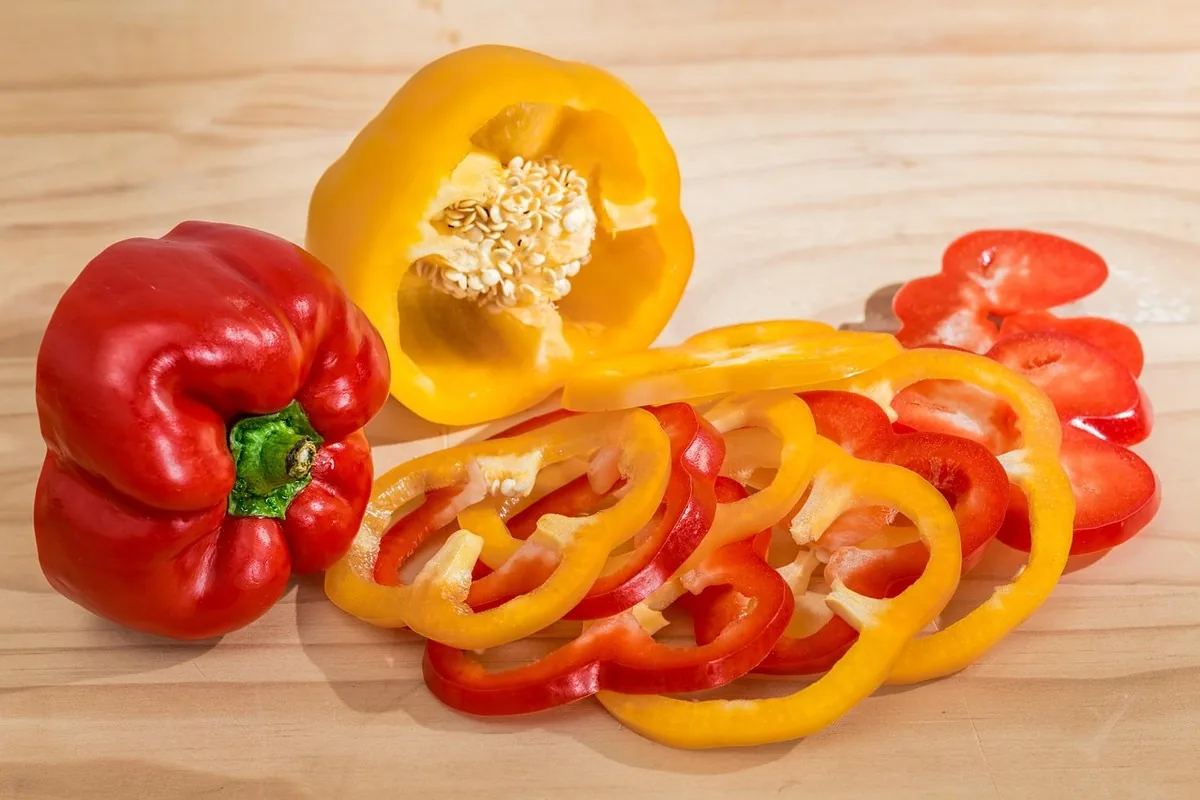
Vitamin C is found in far more foods than the orange alone. Red pepper, for example, is one of its richest sources, surpassing citrus fruits. Kiwi, strawberries, parsley, broccoli, cabbage and many other fresh fruits and vegetables contain appreciable quantities. A colourful, varied plate rich in fresh vegetables is by far the best foundation. In Morocco, the richness of the fruit and vegetable markets provides, in theory, everything needed.
But there is a pitfall: Vitamin C is fragile. It is sensitive to heat, light and air. Prolonged cooking, long storage, advance preparation: all of these destroy a portion of it. A vegetable rich in Vitamin C that has been overcooked or stored for too long has lost much of it. This is one reason why actual intake can be lower than one might think, even with a diet that looks adequate on paper.
When food alone does not always suffice
Certain situations increase needs or reduce intake. A diet poor in fresh fruits and vegetables, common in winter or under busy routines; smoking, which increases requirements; periods of prolonged fatigue or stress; a lifestyle that leaves little room for the ideal plate. In these cases, a supplementary intake of Vitamin C can make sense to secure the right status, provided it remains within the bounds of good judgement.
This is precisely the spirit in which our team approaches supplementation: a safety net, not a substitute for food. Vitamin C does not erase an unbalanced diet, and it replaces neither sleep, nor physical activity, nor stress management. It belongs within a coherent whole. This is also what health authorities remind us, as summarised in the ANSES guide dedicated to food supplements3.
How to supplement with Vitamin C wisely in Morocco
A few practical markers help avoid the most common mistakes and allow you to get the most from supplementation. Correct use matters as much as the choice of product itself.
What dose — and why more is not always better
It is often believed that with Vitamin C, “the more you take, the better.” This is a mistake. Vitamin C is water-soluble: beyond what the body uses, the surplus is largely eliminated in urine. Mega-doses therefore serve little purpose, and at very high doses they can even cause digestive discomfort in some people. The goal is not to saturate the body, but to comfortably cover its needs, every day.
This is the logic of a full but reasonable dose: Alphavital Vitamin C provides 500 mg of L-ascorbic acid per tablet, a generous intake well above basic daily requirements, without falling into mega-dose excess. The simplest and safest reference remains following the usage guidance on the packaging, never exceeding it.
When and how to take it
Vitamin C is best taken with meals, with a large glass of water. Taking it at the table rather than on an empty stomach is more comfortable for the stomach and integrates better into a consistent routine. For the Alphavital programme, the reference is one to two tablets per day, with meals. Start gently with one tablet, then adapt according to your situation, without exceeding the recommended dose.
The most important point, once again, is consistency. Because the body does not store Vitamin C, it is the daily intake, repeated over time, that maintains a good status. One large occasional dose followed by several days of nothing is not equivalent to a regular supply. It is constancy, not intensity, that establishes the desired support.
| Recognised role (EFSA) | What it means concretely |
|---|---|
| Immune system | Contributes to normal functioning of natural defences |
| Fatigue | Helps reduce fatigue, as foundational support |
| Collagen / skin | Contributes to normal collagen formation (skin, vessels, gums) |
| Oxidative stress | Contributes to protecting cells from oxidative wear |
| Iron | Enhances absorption of plant-based iron at the same meal |
Precautions to know
Vitamin C is generally well tolerated at usual doses. A few common-sense guidelines apply nonetheless. Do not exceed the recommended dose: at very high doses, digestive discomfort is possible. In cases of pregnancy, breastfeeding, ongoing medical treatment or existing conditions — particularly a history of kidney stones or iron overload — the advice of a healthcare professional is essential before starting. Store in a cool, dry place away from light and out of reach of children. These precautions are not formalities: they are part of responsible use.
Vitamin C in Morocco: a real need, a sensible approach
Why this marked Moroccan interest in Vitamin C? The answer lies in several realities of our way of life. The relentless pace of large cities, insufficient sleep, a diet that is sometimes unbalanced and poor in fresh fruits and vegetables during certain periods, chronic stress from work and commutes: all factors that can reduce intake at the very moment the body needs it most. Add to this the damp winters of the north and those weeks when colds circulate throughout the household.
There is also a strong cultural dimension. In Morocco, the idea of supporting the body with what nature offers is part of an ancient and respected collective memory. Vitamin C fits naturally into this sensibility, provided it is placed in an honest frame: an essential nutrient with recognised roles, to be supplied regularly, not a effective cure against illness. Many seek a quiet, prescription-free support, faithful to this heritage while meeting modern demands for quality and traceability.
A support, not a magic wand
Let us be clear on a point our team repeats constantly. Vitamin C is not a medicine, and it does not on its own correct a lifestyle that depletes the body. However well-documented it may be, it replaces neither sleep, nor physical activity, nor a balanced diet, nor stress management, nor medical advice when that is warranted. It is a support, one pillar among many — and it is precisely this honest framing that, in our view, distinguishes serious discourse from hollow promises.

The Alphavital response
Food, sleep and lifestyle first, always. But when supplementary Vitamin C makes sense, a serious formulation is essential. This is exactly the philosophy that guided our team’s work on this vitamin.
Vitamin C at a full 500 mg dose, ONSSA-approved
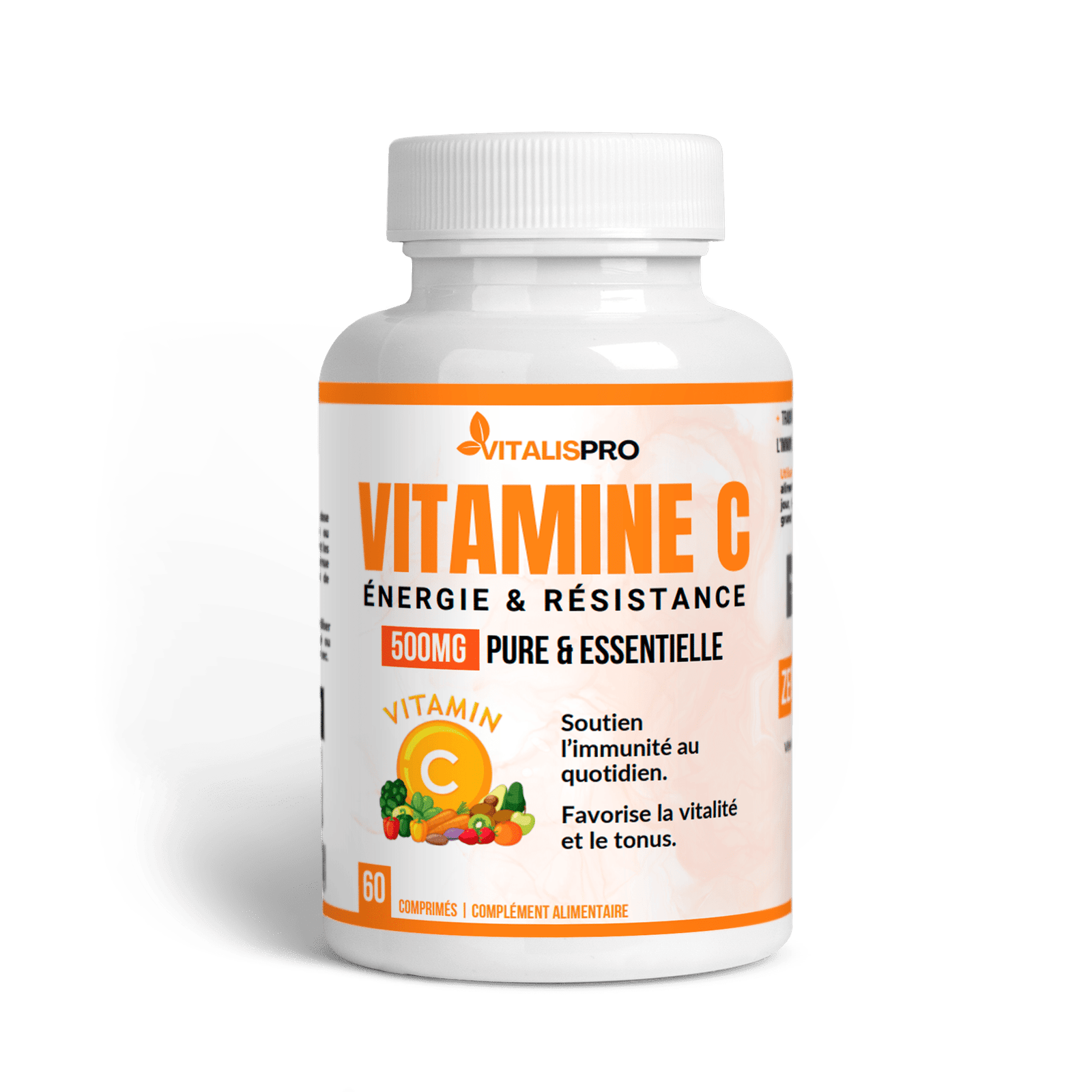
Alphavital offers a Vitamin C at a full 500 mg dose per tablet, in the form of L-ascorbic acid. Two requirements guided its design: a quality raw material, and a clear, consistent dosage — without marketing excess or recommended promises. The product holds ONSSA approval, a serious benchmark that matters when choosing a supplement in Morocco. By dosing the active ingredient fully at 500 mg, Alphavital allows you to know precisely what you are taking: no homeopathic dosage hidden behind a pretty name, no vague blend.
This formulation belongs to our Immunity and Vitality range, conceived as a coherent whole. It covers, in one simple daily intake, several of the recognised grounds for Vitamin C — immunity, fatigue, collagen, cellular protection — without promising anything that authorities do not recognise.
A good Vitamin C supplement is not reduced to a name on a label. It brings together a quality raw material, a controlled dose and an honest discourse.
Going further: combining Vitamin C and collagen
For those focusing specifically on skin and tissue suppleness, combining Vitamin C and collagen is a logical next step, since the former is indispensable to the production of the latter. Our team has designed a dedicated formula for this purpose, bringing together these two complementary actives: our marine collagen combined with Vitamin C for anti-ageing and suppleness. The idea remains the same: covering multiple facets of well-being by uniting actives that reinforce one another, rather than multiplying them at random.
And to support baseline energy during periods of fatigue, Vitamin C can be part of a broader approach, alongside spirulina and superfoods, as detailed in our anti-fatigue programme with ginseng, spirulina and moringa. The essential thing is to build a coherent whole, faithful to a genuine need, rather than stacking supplements.
The feedback our team receives is worth more than any discourse. Here are three testimonials, shared with their authors’ consent.
I used to skip breakfast regularly and ate little fruit in winter. Since incorporating a Vitamin C tablet with my midday meal it has become a simple reflex. Without claiming miracles, I feel a more consistent energy throughout the day. — Imane, Rabat
What I appreciated was the clarity: 500 mg per tablet, I know exactly what I am taking. I chose it primarily for the skin, after understanding the link with collagen. I maintain the routine without thinking about it. — Khalid, Casablanca
My diet is very plant-based, and I tended to lack vitality. Taking Vitamin C with meals, alongside my legume dishes, made sense once I understood the link with iron absorption. Three months later, I have kept this habit. — Sanaa, Marrakech
These accounts illustrate a simple truth: the most lasting results come from combining lifestyle choices with, when useful, a carefully chosen supplement maintained over time. A question before you start? Our team responds directly through the Alphavital contact page.
Frequently asked questions about Vitamin C
What exactly is Vitamin C?
Vitamin C, or ascorbic acid, is an essential micronutrient that the human body can neither produce nor store durably: it must therefore be supplied regularly through food or a supplement. It is one of the most documented vitamins in the public scientific literature (PubMed), and the EFSA recognises several of its roles. Alphavital has chosen to dose it fully at 500 mg per tablet.
Does Vitamin C genuinely strengthen immunity?
The EFSA recognises that Vitamin C contributes to the normal functioning of the immune system, within the framework of a varied diet. This means it participates in the proper functioning of natural defences, but it is neither a vaccine, nor a treatment, nor a guarantee against falling ill. The idea that it prevents or eliminates a cold does not correspond to what authorities recognise: it is foundational support, not a remedy.
Is Vitamin C useful for skin and collagen?
Yes, and this is one of its best-established roles. Vitamin C contributes to normal collagen formation, the protein that gives skin its firmness and tissues their resilience. Without it, the body cannot produce stable collagen: this is a biochemical fact recognised by the EFSA. This is why Vitamin C and collagen form a logical pair.
What is the exact composition of Alphavital Vitamin C 500 mg?
Each tablet provides 500 mg of Vitamin C in the form of L-ascorbic acid, as stated on the packaging label. By dosing the active ingredient fully at 500 mg, Alphavital allows you to know precisely what you are taking, in a routine that is easy to maintain over time. The product is ONSSA-approved.
How and when should Vitamin C be taken?
Take 1 to 2 tablets per day, with a large glass of water, preferably with meals. Start with 1 tablet per day, then adjust according to your situation, without exceeding the recommended dose. Consistency is paramount: because the body does not store Vitamin C, it is the daily intake, repeated over time, that maintains a good status.
Can you take too much Vitamin C?
Vitamin C is water-soluble: the surplus is largely eliminated in urine, so mega-doses offer little benefit and can cause digestive discomfort in some people. The goal is not to saturate the body but to comfortably cover its needs. Do not exceed the dose recommended on the packaging.
Are there any precautions or contraindications?
Do not exceed the recommended dose. In cases of pregnancy, breastfeeding, ongoing medical treatment or existing conditions — particularly a history of kidney stones or iron overload — seek the advice of a healthcare professional before use. Store in a cool, dry place, out of reach of children.
In summary
Vitamin C is far more than a winter reflex. It is an essential nutrient, among the most documented in science, for which authorities recognise several precise roles: it contributes to the normal functioning of immunity, helps reduce fatigue, contributes to normal collagen formation for the skin, protects cells from oxidative stress and enhances the absorption of plant-based iron. Because the body can neither produce nor store it, it must be supplied regularly, through food as a priority, and through a supplement when that makes sense.
The roles are real but they are contributions, not miracles: Vitamin C replaces neither sleep, nor a varied diet, nor medical follow-up when it is warranted. Quality makes all the difference: a serious raw material, a controlled and full 500 mg dose, ONSSA approval — these separate a good supplement from a formulation without benchmarks. This is the path Alphavital has chosen, with a transparent approach faithful to what research says, and to what it does not say. Supporting one’s immunity, energy and skin with Vitamin C is not following a trend: it is a long-term investment in well-being, day after day.
About the author. Houda Khaldi is Natural Nutrition Editorial Adviser at Alphavital. She translates scientific research into clear, actionable insights for everyday Moroccan life.
Disclaimer. The information presented is provided for guidance purposes only, based on sourced research (EFSA, PubMed, ANSES). The Alphavital team does not consist of healthcare professionals. The roles described for Vitamin C correspond to physiological functions recognised by the EFSA, within the framework of a varied diet; they do not constitute treatment or a recommended promise. Consult a qualified healthcare professional before use, in cases of ongoing treatment, pregnancy or breastfeeding, or existing medical conditions. Food supplements are not a substitute for a varied, balanced diet and a healthy lifestyle.
Sources and references
- Public scientific literature on Vitamin C and immune function. PubMed — US National Library of Medicine
- Scientific opinion on reference values and recognised physiological functions of Vitamin C (immunity, fatigue, collagen, oxidative stress, iron). EFSA — European Food Safety Authority
- Food supplements: regulatory framework, guidelines and usage precautions. ANSES — French Agency for Food Safety
Food supplements do not replace a varied, balanced diet or a healthy lifestyle. The Alphavital team is not made up of healthcare professionals. Consult a qualified healthcare professional before use.
