


Persistent fatigue that sleep never fixes, tingling in the hands and feet, unusual lapses in memory: vitamin B12 deficiency is one of the most insidious nutritional gaps — and one of the most common in Morocco among people who eat little or no animal food. This guide explains how to recognise the warning signs, understand the link with anaemia and the nervous system, and rebuild your reserves naturally, backed by science and supported by Alphavital.
Vitamin B12 is one of those nutrients nobody thinks about until it runs out. Yet it works constantly behind the scenes of your energy: it participates in the production of red blood cells, supports the proper function of the nervous system, and contributes to reducing fatigue. The problem is that the body cannot make it on its own — it draws B12 almost exclusively from animal-sourced food, then stores it in the liver. When intake drops, the reserves hold for a while, then give way. And when they do, symptoms set in silently.
In Morocco, the issue affects far more people than commonly assumed. Those who reduce their meat intake, vegetarians and vegans, older adults whose absorption declines, and people with a sensitive digestive system can all see their B12 levels fall without dramatic warning signs. The good news is that vitamin B12 deficiency can be recognised, confirmed with a simple blood test, and corrected — provided the signals are heeded in time. For the broader picture, this guide complements our guide on fatigue and anaemia in Morocco.
By Houda Khaldi, Natural Nutrition Editorial Advisor · Published 17 June 2026 · 18 min read
Contenu de la page
- 1 Key takeaways
- 2 Vitamin B12 deficiency and symptoms in Morocco: what the body is trying to say
- 3 The science: why B12 affects both the blood and the nerves
- 4 B12 deficiency and anaemia: the confusion with iron you need to avoid
- 5 At-risk populations: who should monitor their B12 levels in Morocco
- 6 Meeting B12 through food: sources and their limits
- 7 Supplementing with vitamin B12: the right approach
- 8 Beyond B12: the lifestyle habits that sustain energy
- 9 Three readers share their stories
- 10 The Alphavital response: completing the Vitamins and Minerals hub
- 11 Frequently asked questions about vitamin B12 deficiency in Morocco
- 11.1 What are the first symptoms of vitamin B12 deficiency?
- 11.2 Do vegetarians inevitably lack vitamin B12?
- 11.3 Does B12 deficiency cause anaemia?
- 11.4 How long does it take to correct a B12 deficiency?
- 11.5 Is spirulina a good source of vitamin B12?
- 11.6 Is medical advice required before supplementing with B12?
- 12 In summary
Key takeaways
- Vitamin B12 contributes to the normal function of the nervous system, to the normal formation of red blood cells, and to the reduction of fatigue: these effects are recognised by the European Food Safety Authority.
- Vitamin B12 deficiency develops slowly: chronic fatigue, tingling in the hands and feet, memory and concentration difficulties, pallor and shortness of breath are signals that should not be dismissed.
- B12 is found almost exclusively in animal foods (meat, liver, fish, eggs, dairy products): vegetarians, vegans, and older adults are at highest risk of deficiency.
- B12 and vitamin B9 (folate) work together in red blood cell formation: a B12 deficiency can lead to a specific type of anaemia called megaloblastic anaemia, distinct from iron-deficiency anaemia.
- Alphavital offers a targeted approach: standalone Vitamin B12 to rebuild stores, and the Iron, B9 and B12 formula when fatigue and depleted nutritional terrain go hand in hand.

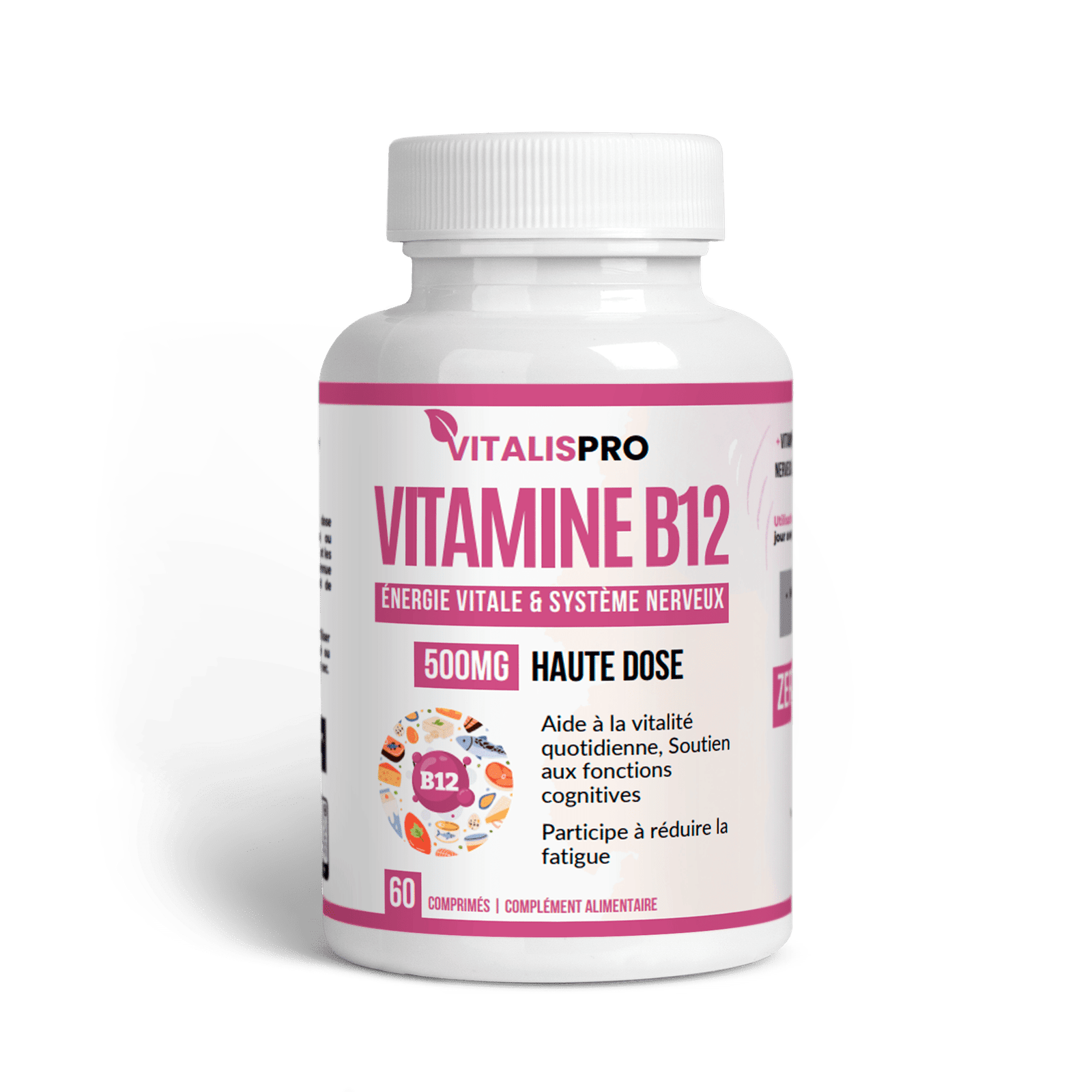
Vitamin B12 deficiency and symptoms in Morocco: what the body is trying to say
Let us start with a definition. Vitamin B12 — also called cobalamin — is a water-soluble vitamin essential for cell renewal, red blood cell production, and the maintenance of a healthy nervous system. It has two distinctive characteristics: the body cannot synthesise it, and it is found almost exclusively in animal products. Once absorbed, it is stored in the liver, which can hold enough reserves to last several months, sometimes a few years. It is precisely this reserve that makes early-stage deficiency so silent.
When intake drops over a prolonged period, the body draws on its stores without showing any sign. Then, when the reservoir runs dry, the first symptoms appear — routinely attributed to stress, lack of sleep, ageing, or a busy lifestyle. This very gap is what makes late diagnosis so common. The landmark review published in the New England Journal of Medicine highlights that vitamin B12 deficiency is widely under-diagnosed, as detailed in this reference article available on PubMed1.
Vitamin B12 deficiency does not shout — it whispers. It settles in over months, hiding behind normalised fatigue and tingling blamed on a bad posture. Recognising it early changes everything.
Symptoms that should raise the alarm
The manifestations of B12 deficiency touch two main territories: the blood and the nervous system, which explains the variety of signals. Here are those our team encounters most often in the messages it receives.
- Chronic fatigue and shortness of breath that rest does not relieve, linked to declining red blood cell production.
- Tingling, pins and needles, or numbness in the hands and feet — the hallmark of nerve involvement.
- Memory problems, difficulty concentrating, brain fog, or low mood.
- A pallid complexion, sometimes with a slight yellowish tint, and a smooth, red, sensitive tongue.
- Balance disturbances, a sensation of walking on cotton wool, muscular weakness.
- Palpitations, dizziness, and headaches related to impaired oxygenation.

None of these signs is conclusive on its own. But when they accumulate, they paint a coherent picture that warrants a check-up. The right move is not to guess — it is to see a doctor and request a blood test measuring vitamin B12 levels. The US National Library of Medicine provides a clear summary of the signs and tests for vitamin B12 deficiency on MedlinePlus2. One point deserves emphasis: some neurological symptoms, if neglected for too long, can persist — one more reason not to delay.
The science: why B12 affects both the blood and the nerves
Vitamin B12 directly addresses fatigue, anaemia, and nervous system disorders because it intervenes in two essential biological pathways. Understanding this dual role illuminates why its deficiency manifests so diversely, from exhaustion to tingling.
B12: architect of red blood cells
The body produces millions of red blood cells every second in the bone marrow. This production demands specific raw materials, and B12 is among the foremost, alongside vitamin B9 and iron. Vitamin B12 contributes to the normal formation of red blood cells and to normal energy metabolism — effects recognised by European authorities, as outlined in the EFSA scientific opinion on vitamin B123. When it is lacking, the bone marrow produces abnormal cells that are too large and immature: this is called megaloblastic anaemia, covered in detail below.
This function explains why B12 deficiency first manifests as underlying fatigue, shortness of breath, and pallor. The blood carries oxygen less efficiently, and the entire body operates at reduced capacity. B12 also contributes to reducing fatigue — another EFSA-recognised effect — which logically closes the loop between deficiency and exhaustion.
B12: guardian of the nervous system
The second territory of B12 is the nervous system. It participates in the maintenance of myelin, the protective sheath surrounding the nerves that enables rapid signal transmission. Vitamin B12 contributes to the normal functioning of the nervous system and to normal psychological functions — two claims validated by EFSA. When myelin is no longer properly maintained, nerve signals travel poorly, giving rise to the tingling, numbness, and balance problems.
This nervous system role also explains the impact on memory, concentration, and mood. A review published in the American Journal of Clinical Nutrition examined the links between vitamin B12 status and cognitive function, as reported in this synthesis available on PubMed4. This is the singular nature of B12: it does not merely fatigue the body — it can cloud the mind as well.
The blood and the nerves share the same dependence on B12. That is why a single deficiency can exhaust the body and blur the memory simultaneously: two symptoms, one cause.
B12 deficiency and anaemia: the confusion with iron you need to avoid
A vitamin B12 deficiency can cause anaemia, but it is not the same anaemia as iron deficiency. This distinction is critical, because it changes how the problem must be corrected. Confusing the two risks taking iron for months with no improvement, when the real gap lies elsewhere.
Megaloblastic anaemia: the signature of B12 deficiency
When B12 or B9 is lacking, the bone marrow can no longer produce normal red blood cells. It manufactures cells that are too large and immature — megaloblasts. The blood then contains fewer functional red blood cells, hence the anaemia. This macrocytic (large-cell) anaemia is distinguishable on a blood test from iron-deficiency anaemia, where red blood cells are, on the contrary, too small. For a clear overview of the different types of anaemia, the World Health Organization provides a reference fact sheet5.
Iron or B12: how not to miss the target
The table below summarises the key differences between the two most common types of anaemia. It does not replace a blood test, but it helps explain why a single symptom — fatigue — can conceal two distinct causes calling for two distinct responses.
| Criterion | Iron-deficiency anaemia | B12-deficiency anaemia |
|---|---|---|
| Red blood cell size | Too small (microcytic) | Too large (macrocytic) |
| Common origin | Periods, pregnancy, low dietary iron | Diet without animal products, impaired absorption |
| Nervous system signs | Rare | Tingling, memory issues, balance problems |
| Nutrient to correct | Iron (often with B9 and B12) | Vitamin B12 (sometimes with B9) |
| Confirmation | Ferritin, haemoglobin | Blood B12 level measurement |
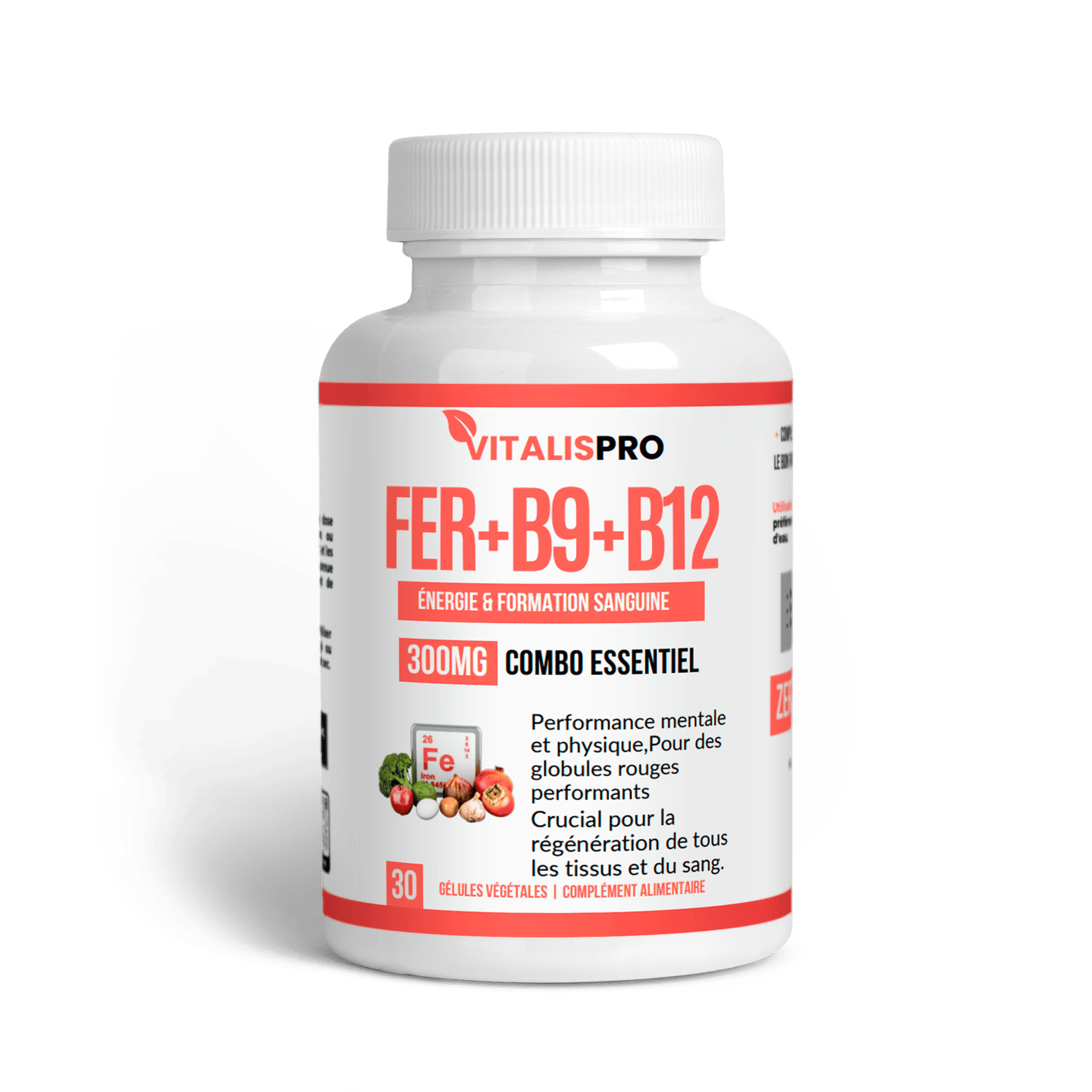
In practice, both deficiencies can coexist, particularly in people who eat few animal products. This is precisely why our team, in situations of fatigue combined with a depleted nutritional baseline, favours an approach associating iron, vitamin B9, and vitamin B12 rather than a single isolated nutrient. Only a blood test can establish the correct diagnosis and guide the correction.
At-risk populations: who should monitor their B12 levels in Morocco
Certain circumstances create a particular vulnerability to B12 deficiency. Knowing them allows anticipation rather than reaction. Three profiles stand out clearly: vegetarians and vegans, older adults, and people with a sensitive digestive system.
Vegetarians and vegans
This is the most exposed profile, and the reason is straightforward: vitamin B12 is almost absent from the plant kingdom. No fruit, vegetable, or grain constitutes a reliable source of active B12. Someone who eliminates meat, fish, eggs, and dairy deprives their body of its only natural source. Strict vegans are most at risk; vegetarians who retain eggs and dairy are somewhat less so, but still need to be vigilant. The reference review on B12 status in vegetarian diets, published in Nutrition Reviews, documents this vulnerability, as reported in this article available on PubMed6.

This reality does not question the merits of a plant-based diet rich in fibre, antioxidants, and legumes. It simply calls for addressing the one recognised nutritional weak point of these diets: B12. This is one of the rare cases where supplementation is broadly regarded as common sense, not a luxury.
Older adults
With age, B12 absorption declines. The culprit: reduced stomach acid, which normally liberates B12 from dietary proteins, and diminished digestive secretions required for its transfer into the bloodstream. As a result, an older person may eat animal foods yet still be deficient in B12, because their body extracts it less efficiently. This explains why deficiency affects a notable proportion of older adults, sometimes without any particular dietary restriction.
In older people, the symptoms of deficiency — fatigue, memory problems, unsteady gait — are all too easily attributed to ageing alone, which is a frequent error. B12 deficiency is a reversible cause that deserves investigation before being dismissed. Our team has gathered its guidance on energy after fifty in the Energy and Vitality section.
People with a sensitive digestive system
B12 absorption is a delicate process that depends on the stomach and the intestine. Any condition that disrupts this pathway can reduce effective intake, even with an otherwise adequate diet. People with an irregular transit, an unbalanced gut microbiome, or a history of digestive issues would benefit from monitoring their status. Looking after the microbiome is part of a broader strategy; our team shares its guidance in the guide dedicated to natural defences and foundational health.
Meeting B12 through food: sources and their limits
The first response to B12 deficiency remains dietary, when it is feasible. But it helps to know where to find B12, since its sources are concentrated in a single register: the animal world. Here is a tour of the richest foods.
Animal sources: the undisputed champions of B12
Liver is, by far, the richest food source of vitamin B12. Long fallen out of fashion, it deserves a careful comeback on our menus, in moderation. It is followed by other offal, red meat, fish and shellfish, eggs, and dairy products. A diet that regularly includes these foods covers B12 needs in most cases. The US National Institutes of Health provide a detailed fact sheet on reference intakes and sources of vitamin B127.
| Food group | Examples | Note |
|---|---|---|
| Offal | Liver, kidneys | The most concentrated sources of B12 |
| Meat and fish | Red meat, poultry, sardines, tuna | Regular, well-absorbed supply |
| Eggs and dairy | Eggs, milk, cheese, yoghurt | Key sources for vegetarians |
| Plant foods | None reliable | No naturally occurring active B12 |
A word on a persistent misconception: algae, spirulina, and certain fermented foods are sometimes presented as plant sources of B12. The science is cautious on this point. These foods contain mostly B12 analogues — closely related but inactive molecules — that do not reliably meet actual needs. For a diet without animal products, they do not constitute a dependable solution.
Why diet alone does not always suffice
Eating animal foods alone does not guarantee adequate B12 status on its own. Two situations fall outside the reach of diet. The first is a vegetarian or vegan diet, where the natural source is absent or sharply reduced. The second is impaired absorption, common in older adults and those with a sensitive digestive system, where B12 is present in food but poorly extracted. In both cases, a supplement becomes the simplest and most reliable tool.

Supplementing with vitamin B12: the right approach
When diet does not cover requirements, a vitamin B12 supplement is one of the simplest and best-documented steps in nutrition. A few reference points help ensure it is done right. Here is the essential.
Which form, and what dose
Vitamin B12 is available in several forms. Cyanocobalamin is the most studied, the most stable, and the most widely used in supplements: the body converts it into active forms. This proven form is the one Alphavital has chosen for its Vitamin B12 product. As for dosage, it is calibrated to rebuild and maintain stores within the framework set by the relevant authorities. Consistency matters more than a single large dose: it is regularity that restores the liver’s reserves.
How long, and how to take it
B12 is taken over the long term. Depending on the depth of the deficiency, several weeks to several months are needed to replenish stores and reduce the blood-related symptoms. Neurological manifestations, when recent, also tend to improve, but require patience. A follow-up blood test after the course confirms that levels have risen. In cases of severe or long-standing deficiency, professional health supervision is indispensable.
A good B12 supplement is not a one-off dose. It is taken over time, verified by a blood test, and complemented when useful by iron and folate — its natural partners for the blood.
B12 alone, or the iron, B9 and B12 trio
The choice depends on context. When the deficiency is isolated and linked to a diet without animal products or to impaired absorption, standalone Vitamin B12 is the most direct answer. When fatigue, anaemia, and a depleted nutritional baseline combine, the Iron, B9 and B12 formula comes into its own: it brings the raw material and its co-factors together in a single step. A blood test remains the compass that guides the right choice. Both formulas are part of our range dedicated to anaemia and iron and the Vitamins and Minerals category.
Beyond B12: the lifestyle habits that sustain energy
Vitamin B12 is an essential link, but it operates within a wider whole. Lasting energy rests on three pillars: a nutrient-dense diet, restorative sleep, and a lifestyle that does not chronically overload the body. Neglecting one weakens the entire structure.
Sleep: the primary fuel
No supplement compensates for consistently short nights. Sleep is when the body repairs itself and recharges. A regular bedtime, a cool and dark bedroom, and screens put away an hour before sleep: these simple habits carry considerable weight on the energy of the next day. For a deeper look at this dimension, our team has assembled its guidance in the stress and natural sleep guide.
Movement and stress
Regular moderate physical activity stimulates vitality and oxygenation, while chronic stress depletes energy and blurs concentration — mirroring some of the symptoms of B12 deficiency. Learning to unwind, through breathing exercises, regular breaks, or a quiet moment shared with family, is not a luxury: it is a complete energy strategy, complementary to good B-vitamin status.

The accounts our team receives speak louder than any discourse. Here are three testimonials, shared with the consent of those involved.
I have been vegetarian for years and put my fatigue down to a hectic pace of life. A blood test revealed a very low B12 level. Since I started taking a regular course, that morning fog has disappeared. — Salma, Rabat
At sixty-eight I told myself the tingling and fatigue were just age. My doctor looked at B12 and was right. A few months later, I feel noticeably steadier on my feet. — Ahmed, Casablanca
I had cut back on meat without thinking much about it. Memory slips pushed me to seek advice. The B12 test explained everything. Today I monitor my intake and feel present again. — Khadija, Tangier
These accounts illustrate a simple truth: the most lasting results come from combining an accurate diagnosis, sound nutrition, and, when useful, a well-chosen supplement. Have a question before you start? Our team responds directly via the Alphavital contact page.
The Alphavital response: completing the Vitamins and Minerals hub
Faced with vitamin B12 deficiency, Alphavital proposes a clear approach — conceived as a journey rather than an isolated product — anchored in the broader chapter of vitamins and minerals.
The first pillar is standalone Vitamin B12 in a proven cyanocobalamin form. It is aimed primarily at vegetarians, vegans, and older adults whose reserves diminish through insufficient intake or declining absorption. It contributes to the normal function of the nervous system, to the normal formation of red blood cells, and to the reduction of fatigue — effects recognised by the European food safety authorities. Every batch is traceable, and dosages respect the framework set by the authorities.
The second pillar is the combined approach. When fatigue, anaemia, and a depleted baseline converge, the Iron, Vitamin B9 and B12 formula brings together the raw material and its co-factors. This trio logic, true to the science and transparency that define Alphavital, offers a coherent response to situations where the deficit extends beyond a single vitamin. The choice between standalone B12 and the trio is best made in the light of a blood test result.
Frequently asked questions about vitamin B12 deficiency in Morocco
What are the first symptoms of vitamin B12 deficiency?
The earliest signals are chronic fatigue that rest does not relieve, tingling in the hands and feet, and difficulties with memory or concentration. Pallor, shortness of breath, and a smooth, sensitive tongue may also appear. These signs develop gradually: at the slightest doubt, ask for a blood test measuring B12 levels.
Do vegetarians inevitably lack vitamin B12?
Not inevitably, but they are the most exposed profile, since B12 is found almost exclusively in animal foods. Strict vegans face the highest risk; vegetarians who eat eggs and dairy are less vulnerable. In all cases, monitoring one’s level and considering a B12 supplement is widely regarded as sound practice.
Does B12 deficiency cause anaemia?
Yes, but a different anaemia from that caused by iron deficiency. Lack of B12 leads to megaloblastic anaemia, with red blood cells that are too large and immature, whereas iron deficiency produces cells that are too small. This is why a blood test is essential: taking iron does not correct a B12 deficiency.
How long does it take to correct a B12 deficiency?
It depends on the depth of the deficit. Blood-related symptoms typically recede within a few weeks to a few months of regular supplementation. Recent neurological manifestations also improve, but require patience. A follow-up blood test after the course confirms that levels have risen. Consistency is decisive.
Is spirulina a good source of vitamin B12?
No, despite a persistent misconception. Spirulina and algae contain mainly B12 analogues — molecules similar to B12 but inactive — that do not reliably meet actual needs. For a diet without animal products, it is far better to rely on a dedicated vitamin B12 supplement. Spirulina remains valuable for its iron and antioxidants, but not for B12.
Is medical advice required before supplementing with B12?
In cases of pronounced symptoms, pregnancy, breastfeeding, ongoing medication, or chronic illness, consult a qualified health professional before starting. Ideally, a blood test confirms the deficiency and guides the duration of the course. Professional follow-up is particularly recommended in cases of severe or long-standing deficiency, especially in older adults.
In summary
Vitamin B12 deficiency is among the most silent and most widespread nutritional gaps, particularly in vegetarians, vegans, and older adults in Morocco. It affects both the blood — producing a specific type of anaemia — and the nervous system, giving rise to the chronic fatigue, tingling, and memory problems that signal it. The science is clear: B12 contributes to the normal function of the nervous system, to red blood cell formation, and to the reduction of fatigue.
Diet remains the first line of defence when feasible, through liver, meat, fish, eggs, and dairy. But when intake is absent — as in vegetarian diets — or poorly absorbed — as in older adults — a B12 supplement becomes the simplest and most reliable tool. That is the path Alphavital has chosen, with a targeted vitamin B12 and a combined iron, B9 and B12 approach, faithful to science and transparency. Taking care of your B12 is not following a trend: it is protecting your energy, your memory, and your nerves, day after day.
About the author. Houda Khaldi is a Natural Nutrition Editorial Advisor at Alphavital. She translates scientific research into clear, actionable guidance relevant to everyday life in Morocco.
Disclaimer. The information presented is provided for informational purposes, on the basis of referenced research (PubMed, EFSA, WHO, NIH). The Alphavital team does not include healthcare professionals. Consult a qualified healthcare professional before use, if you are on medication, pregnant or breastfeeding, or have a chronic condition. Food supplements do not replace a varied, balanced diet or a healthy lifestyle.
Sources and references
- Stabler S.P. — Vitamin B12 deficiency, landmark review (New England Journal of Medicine). PubMed
- Vitamin B12 deficiency anaemia — signs, causes and tests. MedlinePlus (NIH)
- Scientific opinion on health claims related to vitamin B12 (nervous system, red blood cell formation, reduction of fatigue, energy metabolism). EFSA
- O’Leary F., Samman S. — Vitamin B12 and cognitive function, review (American Journal of Clinical Nutrition). PubMed
- Anaemia — fact sheet and types of anaemia. World Health Organization
- Pawlak R. et al. — Vitamin B12 status in vegetarian and vegan diets (Nutrition Reviews). PubMed
- Vitamin B12 — consumer fact sheet (reference intakes, sources, deficiency). NIH Office of Dietary Supplements
